

“Menopausal arthritis” is a phrase sometimes used to describe joint pain around menopause, but it is not a specific medical diagnosis.
If your knees ache, your fingers feel stiff in the morning or your shoulders seem less comfortable than before, it can be difficult to know whether hormonal changes, osteoarthritis or another condition is responsible.
Joint pain is commonly reported during perimenopause and menopause. However, the timing of your symptoms does not automatically explain their cause. Osteoarthritis and inflammatory conditions such as rheumatoid arthritis can also appear or become more noticeable during midlife.
(NIH)
Does Menopause Cause Arthritis?
Menopause can coincide with musculoskeletal symptoms, including aching joints and stiffness. Changing oestrogen levels may contribute to these symptoms, but the relationship between menopause and specific arthritic conditions is complex.
Joint pain does not necessarily mean you have arthritis, and having joint pain during menopause does not rule arthritis out. The pattern of pain, the presence of swelling, how long stiffness lasts and whether symptoms affect one or several joints can help a clinician decide what to investigate.
The term menopausal arthritis should therefore not be used as a substitute for identifying the underlying cause.
How Do Osteoarthritis and Inflammatory Arthritis Differ?
A. Osteoarthritis: When joints become painful with use
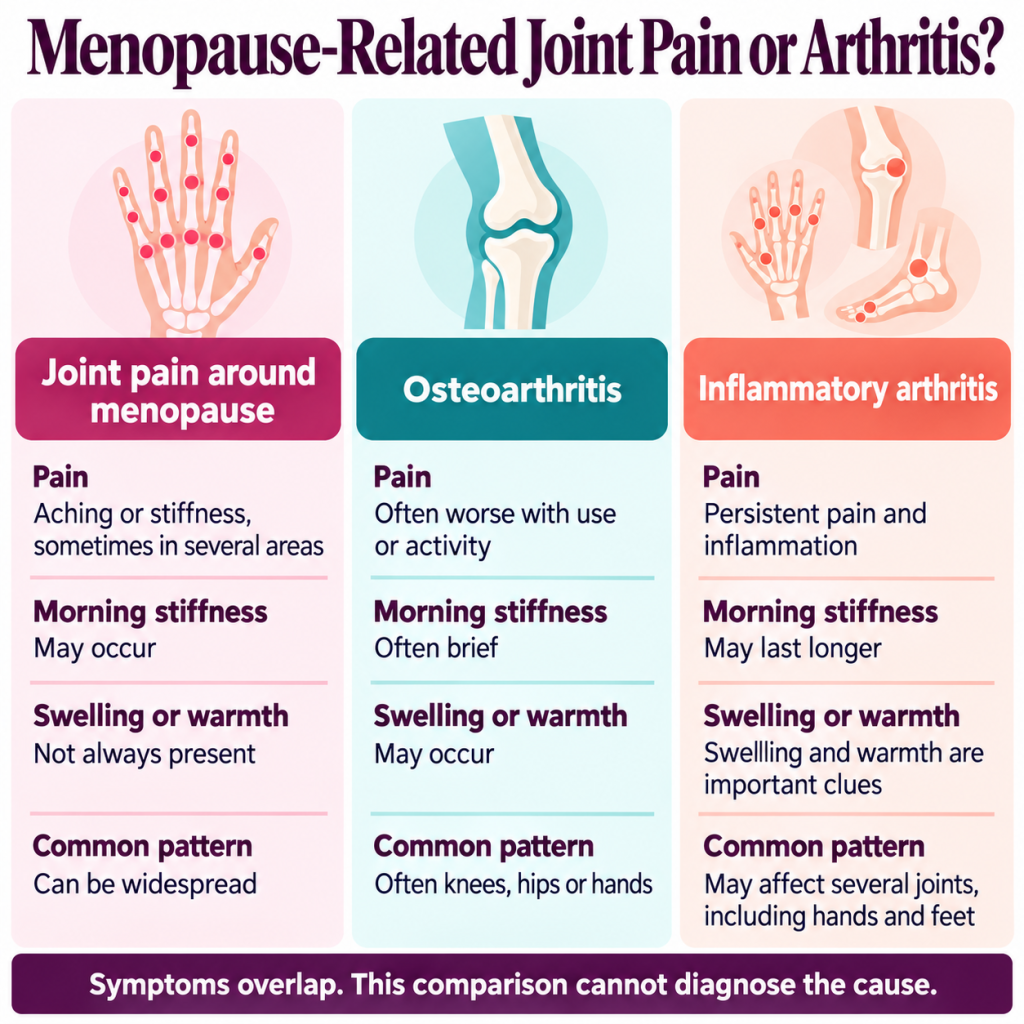
Osteoarthritis involves changes in the whole joint, including cartilage, bone and surrounding tissues. It commonly affects the knees, hips and hands.
Pain may worsen with activity or towards the end of the day, while stiffness after rest is often relatively brief. Some joints may become enlarged or swollen, and movement may feel less comfortable.
Age, previous joint injuries, genetics and other factors influence osteoarthritis risk. Menopause may overlap with the period when symptoms emerge, but timing alone cannot establish that hormonal changes caused the condition.
(NHS)
B. Rheumatoid arthritis: When inflammation needs attention
Rheumatoid arthritis is an autoimmune inflammatory condition that can damage joints without appropriate treatment. It often affects smaller joints in the hands and feet, sometimes on both sides of the body.
Possible menopausal arthritis symptoms that warrant closer assessment include persistent joint swelling, warmth, tenderness, difficulty making a fist and morning stiffness that lasts longer than expected. Fatigue and feeling generally unwell may also occur.
Inflammatory arthritis does not always follow a textbook pattern. Not everyone has symmetrical symptoms, and early disease can be subtle. Do not wait for every classic symptom to appear before seeking medical advice. Early diagnosis and treatment can help prevent joint damage.
(NHS)
What Does Morning Stiffness Tell You?
Morning stiffness is useful information, but it is not a diagnosis.
Stiffness that eases relatively quickly after getting moving may occur with osteoarthritis. Stiffness lasting around an hour or longer, particularly when accompanied by swollen or warm joints, raises greater concern for an inflammatory condition.
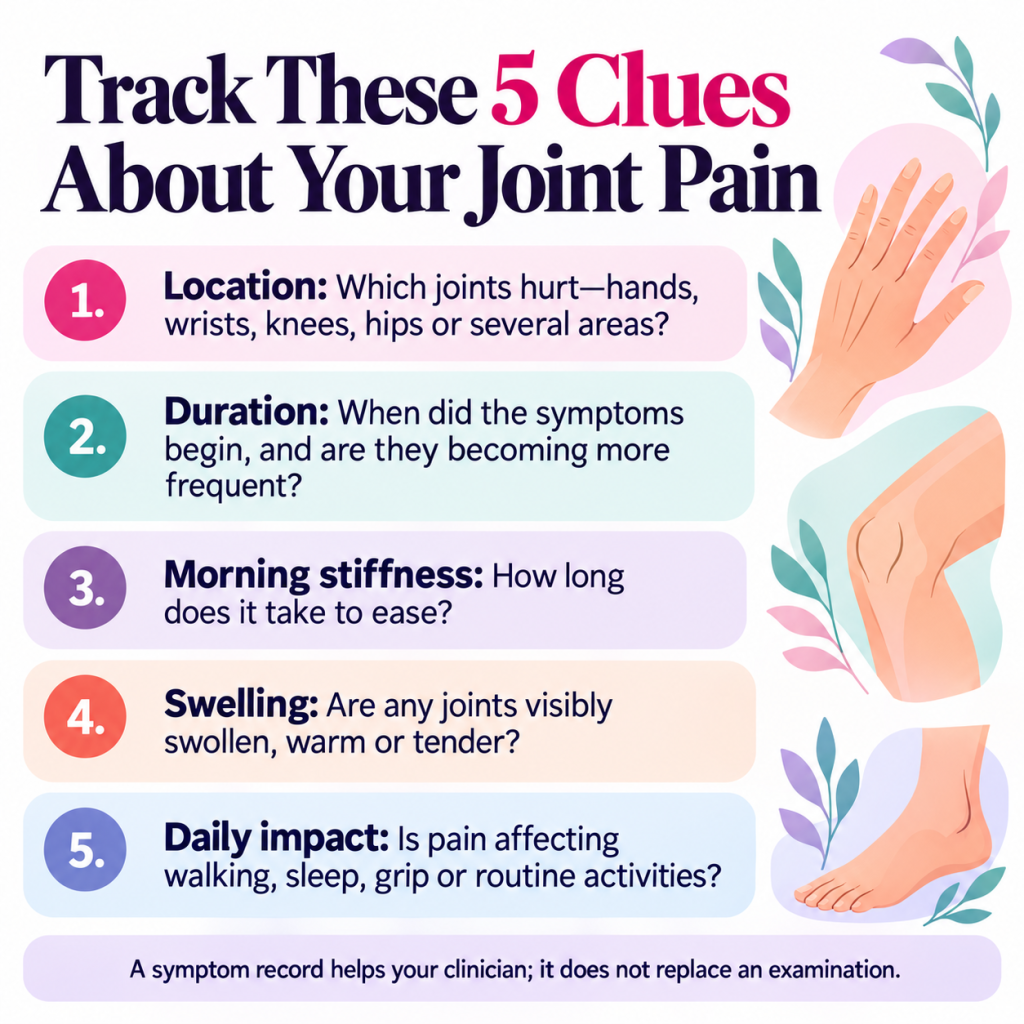
However, duration alone cannot reliably distinguish one cause from another. Tell your doctor how long stiffness lasts, which joints are affected and whether movement improves or worsens the discomfort.
How Is the Cause Diagnosed?
Your clinician will consider your medical history, examine the affected joints and assess the pattern of symptoms.
Depending on the findings, investigations may include:
-
Blood tests: In suspected inflammatory arthritis, tests may include inflammatory markers, rheumatoid factor and anti-CCP antibodies.
-
Imaging: X-rays or other imaging may help assess suspected osteoarthritis, joint damage or another underlying condition.
-
Additional checks: Depending on your symptoms, your doctor may consider other causes, including thyroid problems, vitamin deficiencies or other medical conditions.
No single blood test can diagnose or rule out every form of arthritis. When persistent joint inflammation suggests rheumatoid arthritis, referral to a rheumatologist should not be delayed while waiting for test results.
(NICE)
What Helps With Joint Pain Around Menopause?
Treatment depends on the cause rather than your menopausal status alone.
For general aches and stiffness, regular movement, appropriate strengthening exercises, good sleep and physiotherapy may help. A clinician can advise on suitable pain relief and whether any additional investigations are needed.
Osteoarthritis may require a tailored combination of exercise, physiotherapy, pain management and other treatment. Inflammatory arthritis needs specialist assessment and, when diagnosed, appropriate medication to control inflammation and protect the joints.
Does HRT help joint pain?
Evidence remains mixed. Hormone therapy may be appropriate for other troublesome menopause symptoms, but it should not be started solely to treat arthritis or prevent it. A 2025 systematic review and meta-analysis found no significant overall effect of HRT on generalised musculoskeletal pain, with conflicting evidence for individual arthritic conditions.
(NIH)
Miror’s HRT Centre of Excellence is pioneering personalised HRT care for Indian women, with menopause specialists guiding assessment, treatment options, safety considerations and ongoing monitoring. Begin with a 3-minute HRT assessment to explore your options and discuss whether treatment may be appropriate for your individual needs.
Explore Miror’s HRT Centre of Excellence today.
When Should You See a Rheumatologist?
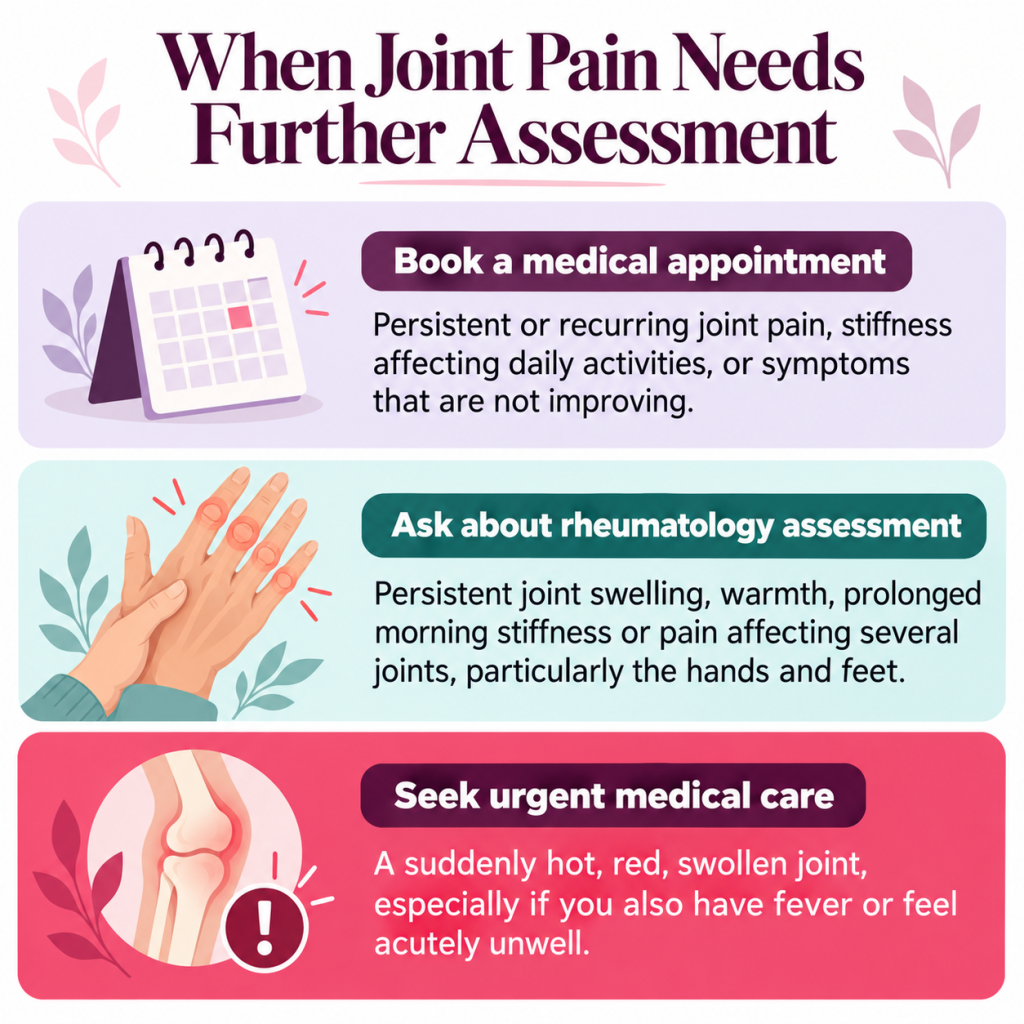
Arrange a medical assessment if joint pain persists, repeatedly returns or begins affecting everyday activities. Seek prompt evaluation for persistent swelling, several painful joints, prolonged morning stiffness or symptoms affecting both hands or feet.
A suddenly hot, red, swollen joint, especially with fever or feeling acutely unwell, needs urgent medical assessment because a joint infection is one possible cause.
Do not assume that persistent joint pain is simply part of menopause. Identifying the cause early can help you access the right treatment.
The Takeaway
Menopause and arthritis can produce overlapping symptoms, but they are not interchangeable explanations for joint pain. Hormonal changes may contribute to aches and stiffness, while osteoarthritis and inflammatory arthritis require their own assessment and management.
Notice the pattern of your symptoms, pay attention to swelling and prolonged stiffness, and seek medical advice when joint pain persists. You do not have to choose between blaming everything on menopause and ignoring what your body is telling you.
How Miror Can Help?
Miror is India’s largest and only 360-degree integrative women’s wellness ecosystem and community, with 95,000+ women having received expert help and insights through Miror.
Connect with Miror doctors, health experts and mental-health experts to discuss your menopause symptoms and explore personalised support.