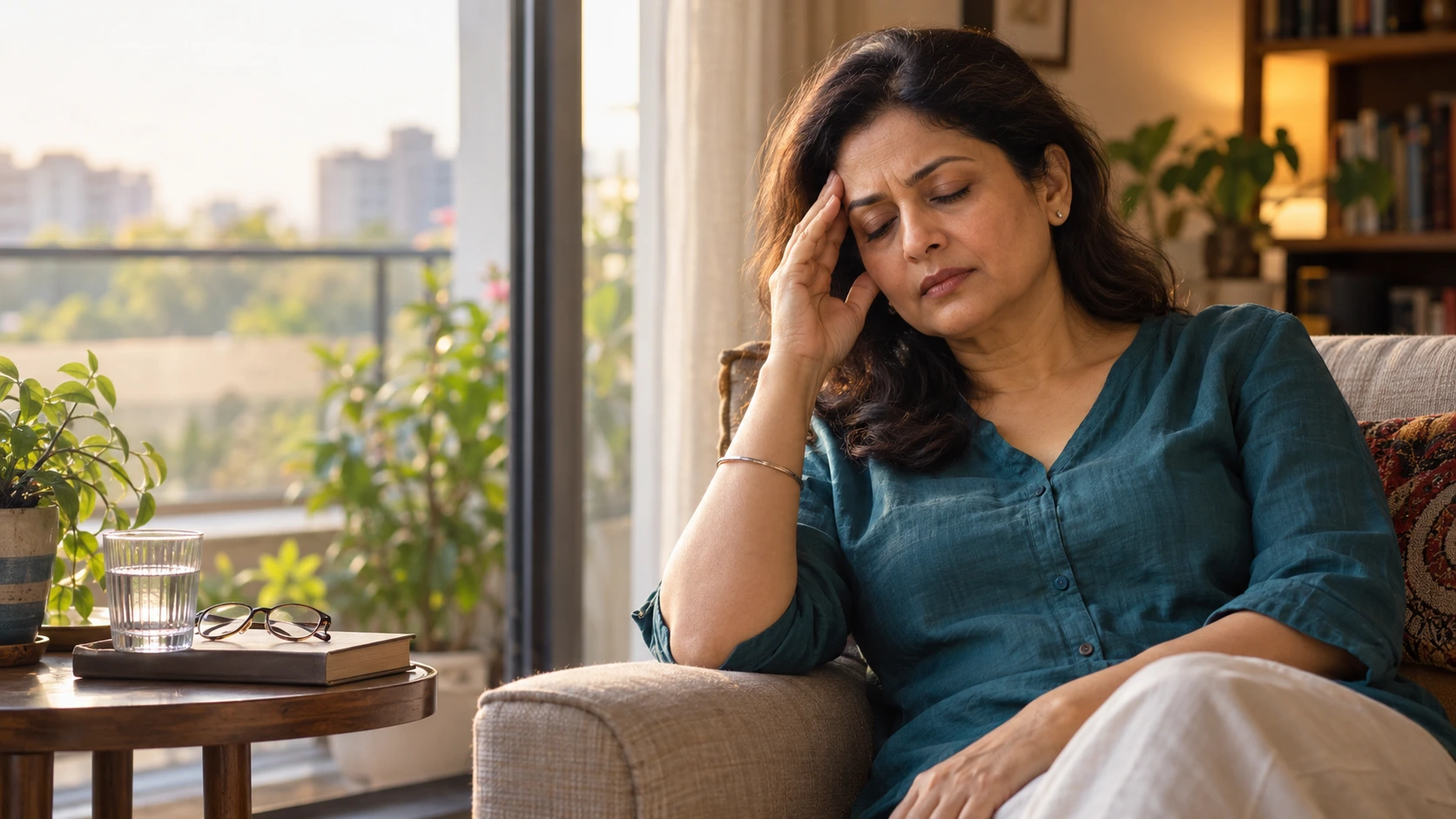


Menopause back pain can feel like one more thing to manage when
sleep is already difficult,
your joints ache,
and
your body keeps changing.
You may notice stiffness when getting out of bed, an aching lower back after sitting for hours, or pain that seems to have appeared without a clear reason.
Understanding the possible causes helps you find appropriate relief without overlooking a problem that needs medical attention.
Can Menopause Contribute to Back Pain?
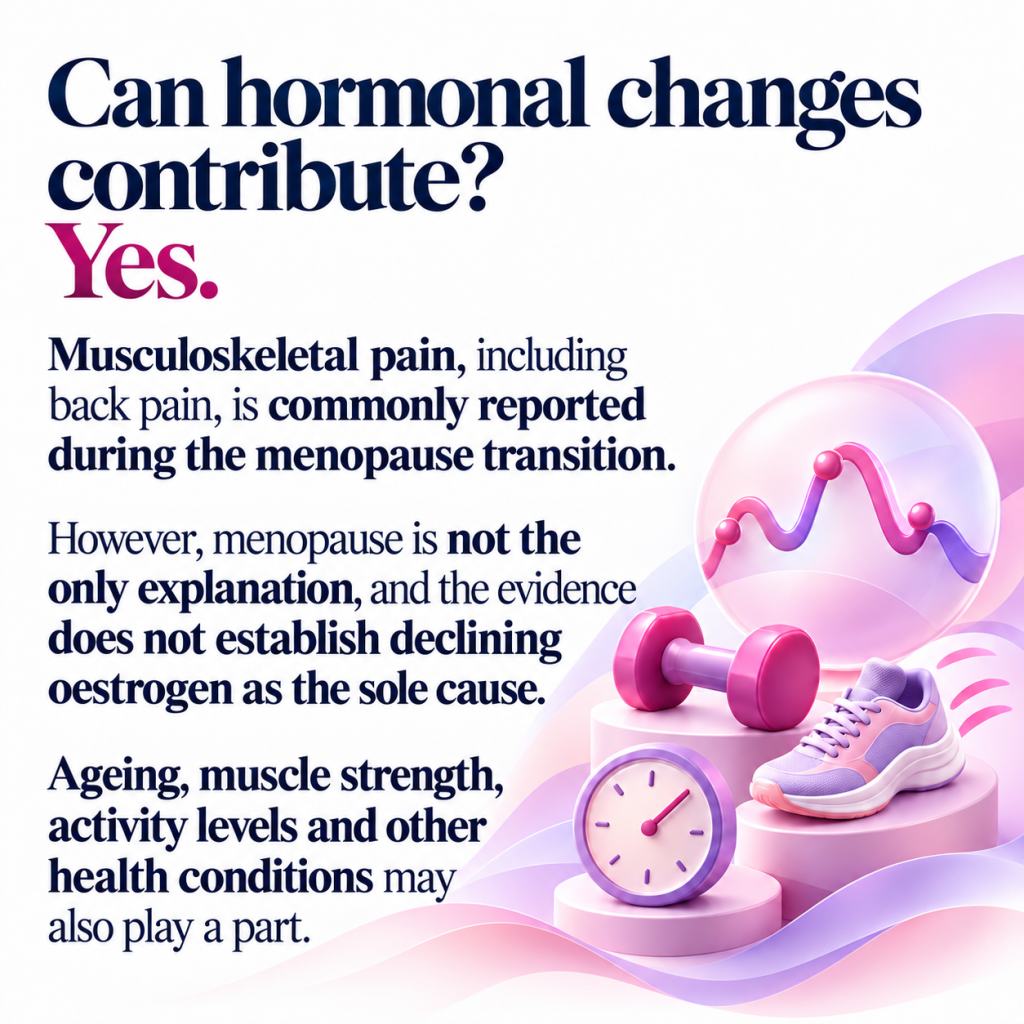
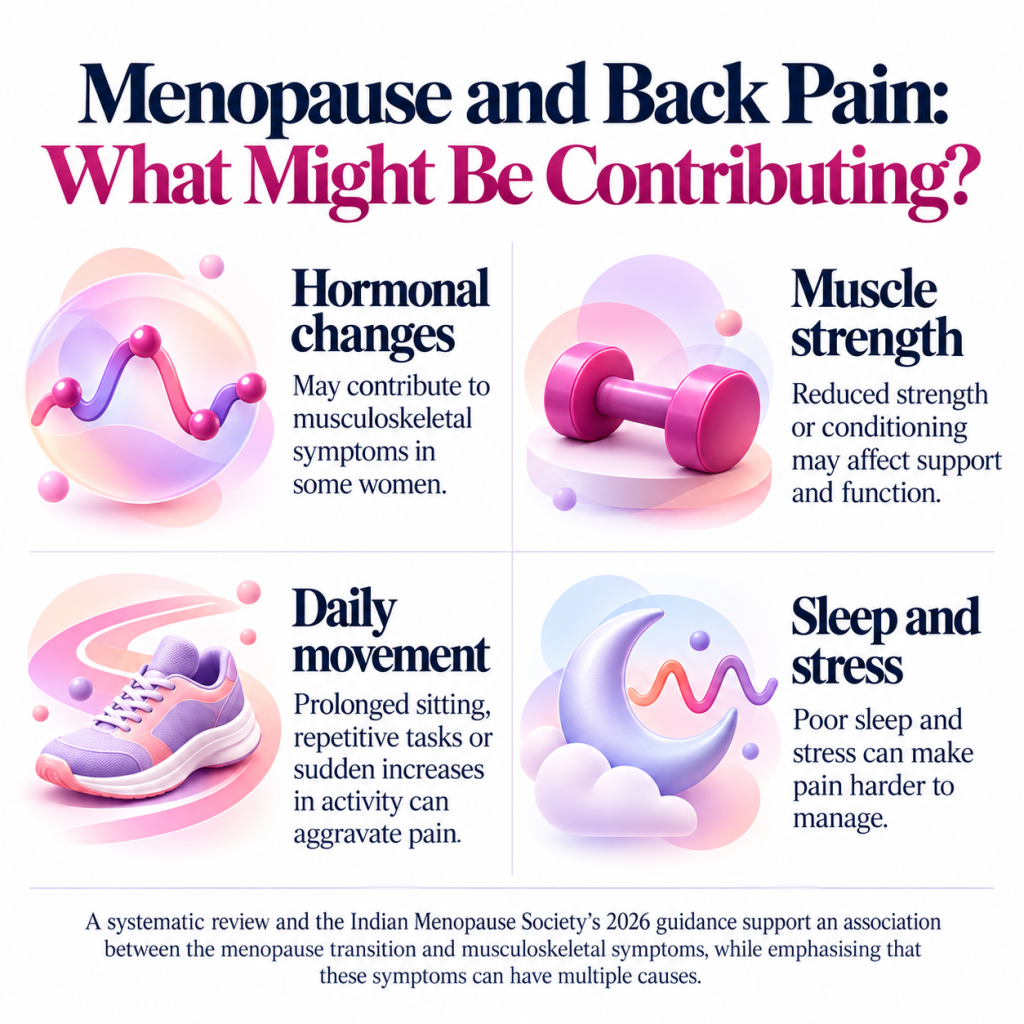
During perimenopause and after menopause, changing hormone levels coincide with changes in sleep, body composition and musculoskeletal health. Some women experience more widespread aches, stiffness or discomfort during this period.
That does not mean every episode of back pain is hormonal. A muscle strain, prolonged sitting, arthritis, a disc problem or another medical condition may be responsible. The timing of your symptoms is useful information, but it cannot establish the cause by itself.
 (NIH)
(NIH)
Lower Back Pain, Upper Back Pain and Bone Health
Lower back pain may be associated with muscle strain, prolonged sitting, changes in activity or age-related spinal conditions. Stiffness after rest or discomfort following a long day may suggest a musculoskeletal problem, but symptoms alone cannot confirm the diagnosis.
Upper or middle back pain also deserves attention, particularly if it is new, persistent or unusual for you.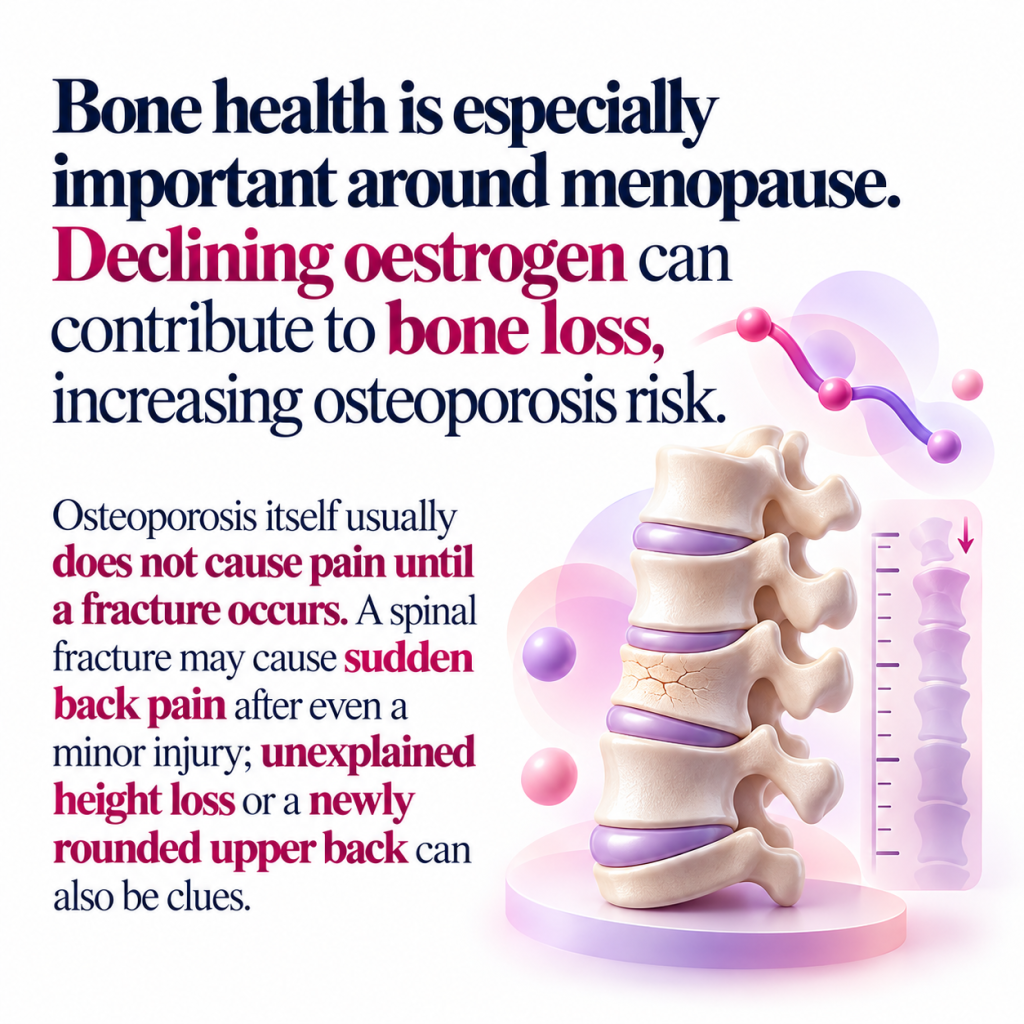
Do not assume that new or severe back pain is simply another menopause symptom, particularly if you have osteoporosis risk factors.
(NIH)
How to Find Menopause Back Pain Relief
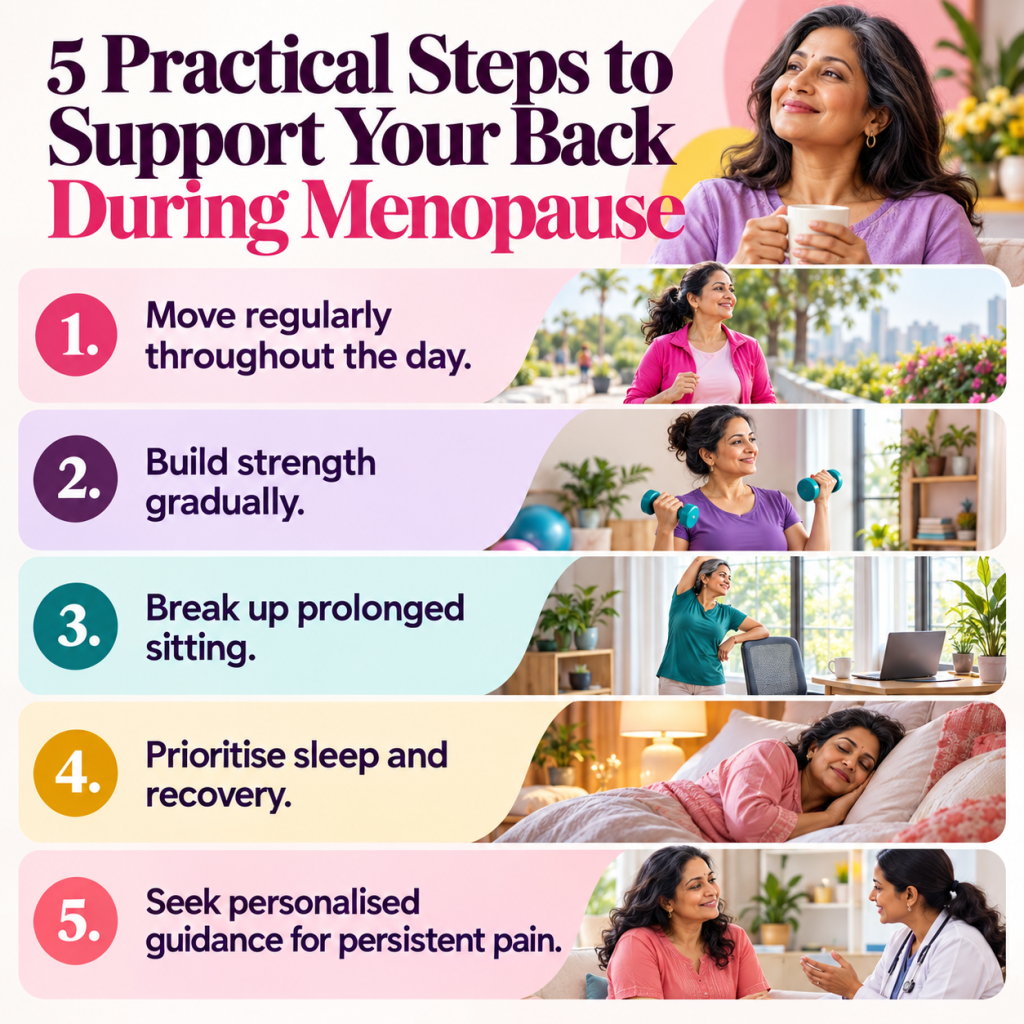
Relief depends on the cause. For many uncomplicated episodes of back pain, staying gently active and gradually rebuilding strength can help.
Keep moving: Walking and changing position regularly can be more helpful than prolonged bed rest.
Build strength gradually: Exercises for the core, back, hips and legs can improve strength and physical function. A physiotherapist can help you choose appropriate exercises.
Break up long sitting periods: Take regular movement breaks and adjust your workstation or seating if it aggravates your discomfort.
Support sleep and recovery: Poor sleep may make pain more difficult to manage. Address night sweats or other menopause symptoms that interrupt rest.
Discuss pain relief: A clinician or pharmacist can advise on suitable medicines, taking your other conditions and medications into account.
Resistance and weight-bearing exercise can also support muscle and bone health, but exercise should be adapted to your ability and any existing spinal or bone conditions. If you have osteoporosis or suspect a fracture, seek professional guidance before attempting strenuous exercise.
(Hinge Health)
When Should You Get Back Pain Checked?
Arrange a medical assessment if back pain persists for several weeks, keeps returning, limits daily activities or worsens despite self-care. You should also seek assessment for unexplained weight loss, persistent night pain, fever or feeling generally unwell, a history of cancer, or new pain after an injury.
Seek emergency medical care immediately if;
back pain is accompanied by new difficulty controlling or passing urine or stool, numbness around the genitals or anus, or new weakness or numbness in both legs.
These can signal serious nerve compression. Sudden severe pain or rapidly worsening symptoms also warrant urgent assessment.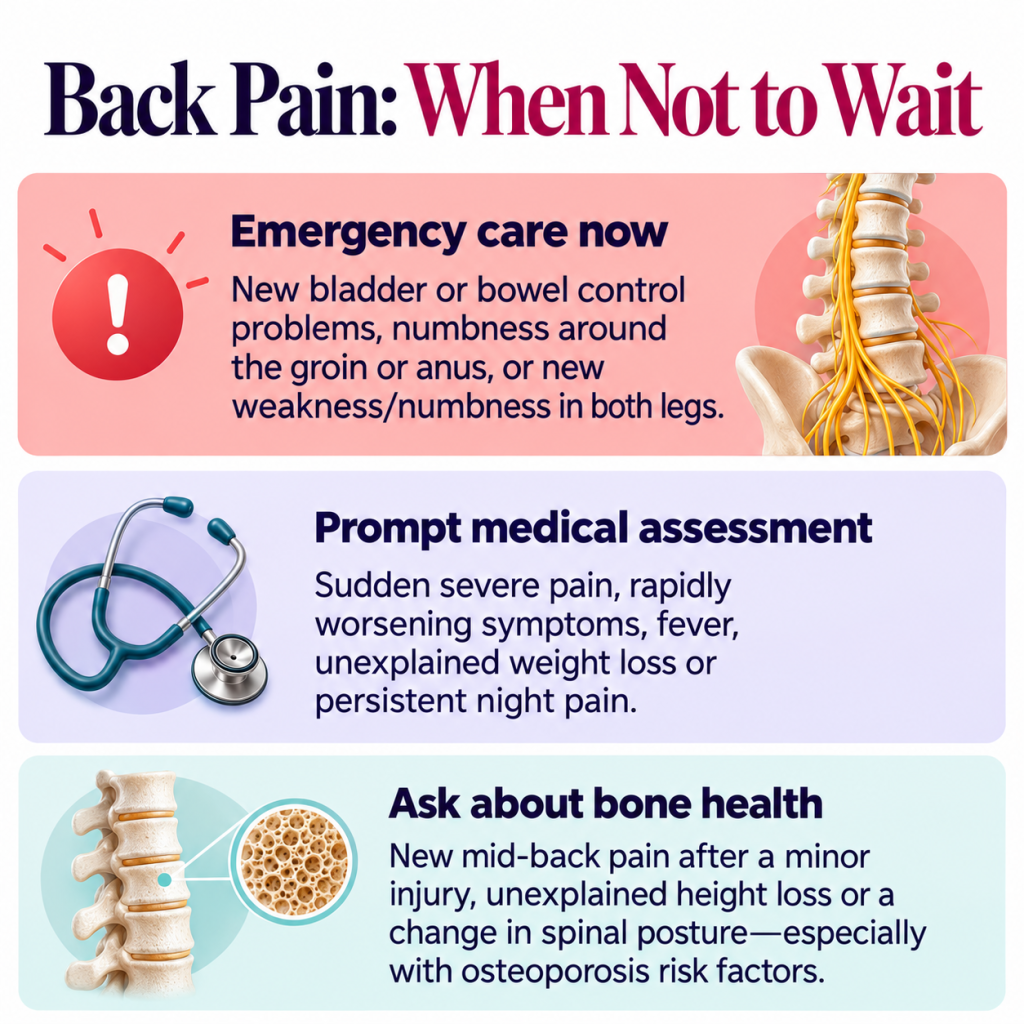
Will You Need an X-Ray, MRI or Other Tests?
Not everyone with back pain needs imaging. A clinician will consider your symptoms, medical history and physical examination before deciding whether tests are appropriate. Imaging may be needed if a fracture or another serious cause is suspected, or if the results are likely to change treatment. Bone-density testing may also be considered when your osteoporosis risk warrants it.
(DC)
The Takeaway
Menopause back pain is real, but it is not a diagnosis in itself. Hormonal changes may contribute to musculoskeletal symptoms, while muscle strength, activity, spinal conditions and bone health can all influence what you experience.
The goal is not to attribute every ache to hormones—or to dismiss your symptoms as part of ageing. It is to identify the cause, find appropriate relief and recognise when a closer medical assessment is needed.
How Miror Can Help? You Don’t Have to Navigate Menopause Alone!
Miror is India’s largest and only 360-degree integrative women’s wellness ecosystem and community, supporting 95,000+ women with expert guidance and insights at the tip of a button.
Connect with Miror doctors, health experts and mental-health experts to discuss your symptoms and explore personalised support.