


Your weight hasn’t changed much.
Your trousers have.
The waist that used to sit comfortably suddenly feels tighter, your stomach feels softer, and you may notice more fullness around your middle even though the scale hasn’t dramatically moved.
And then comes the inevitable thought: “What am I doing wrong?”
Quite possibly, nothing.
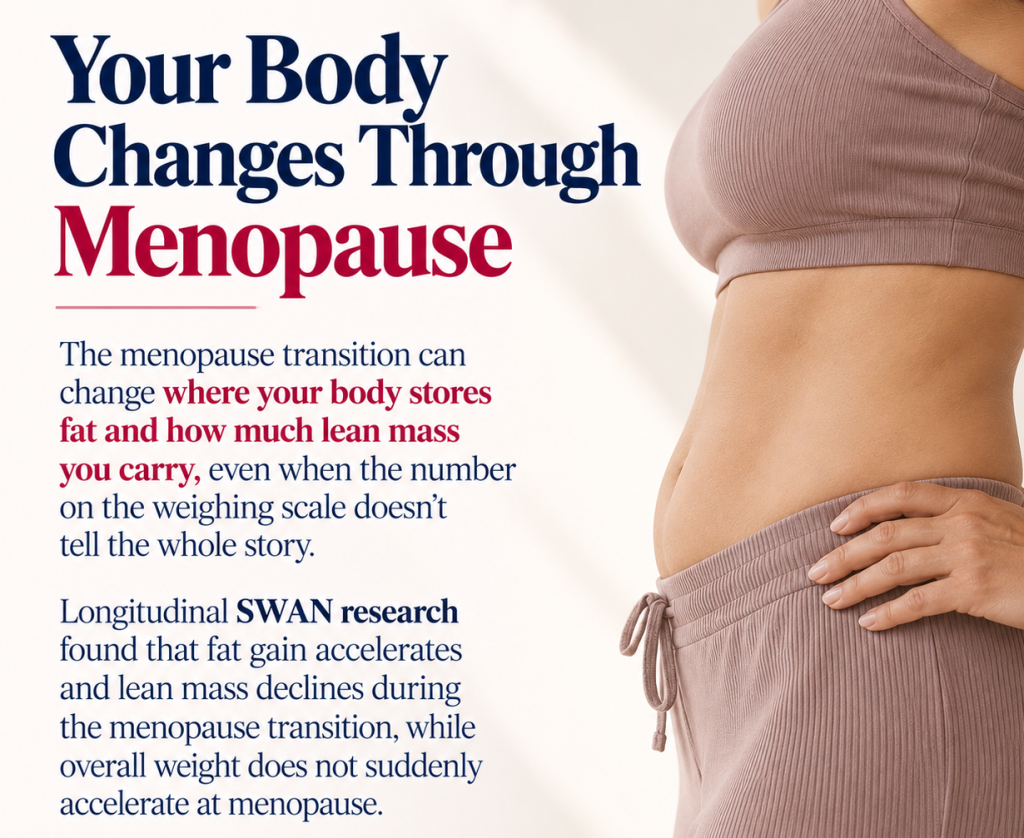
1. Belly Gain and Weight Gain Aren’t the Same Thing
This is the distinction worth remembering.
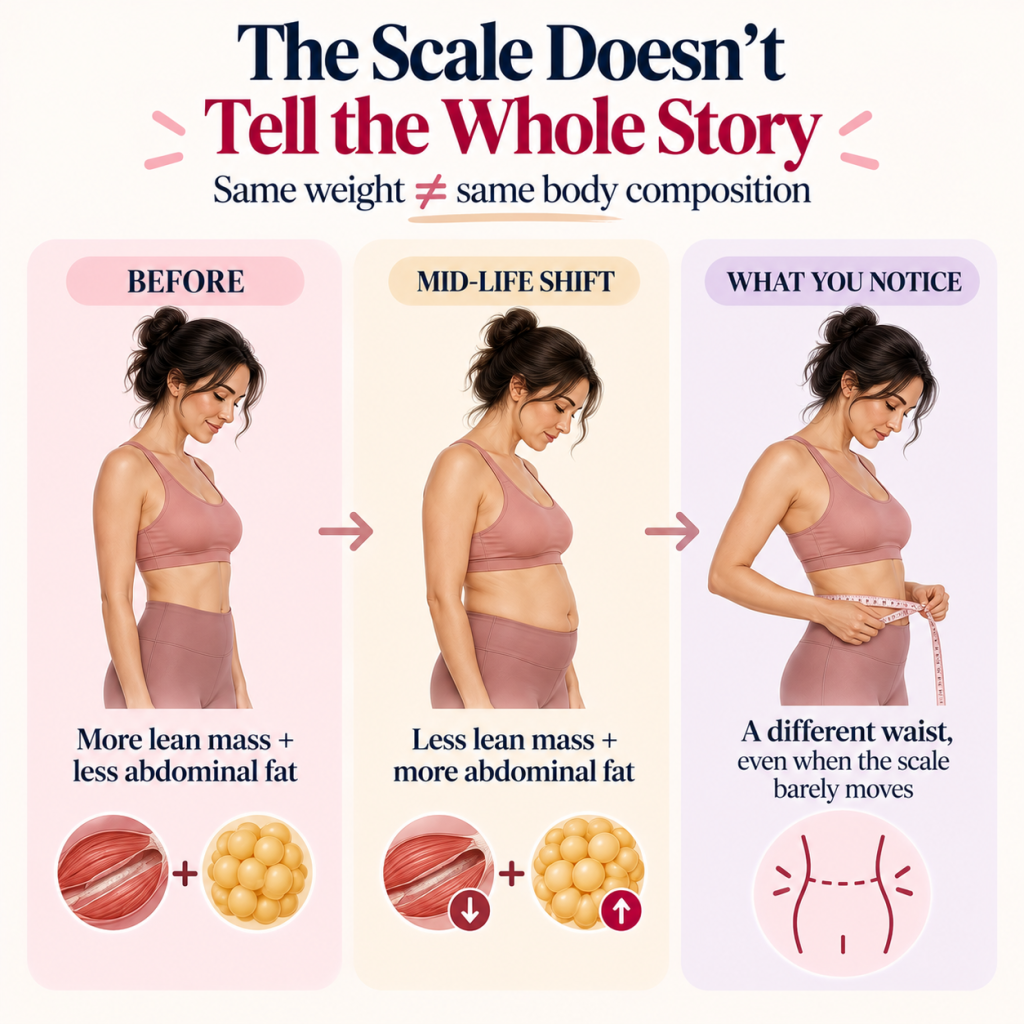
WHAT THE SCALE SEES:
Body weight
↓
Can stay relatively stable
WHAT YOUR BODY MAY BE DOING:
Fat mass ↑
Lean mass ↓
Abdominal/visceral fat ↑
That means your body can become more centrally distributed without a dramatic change in total weight.
2. Why Does Fat Move Towards the Middle?
Estrogen is one part of the mechanism.
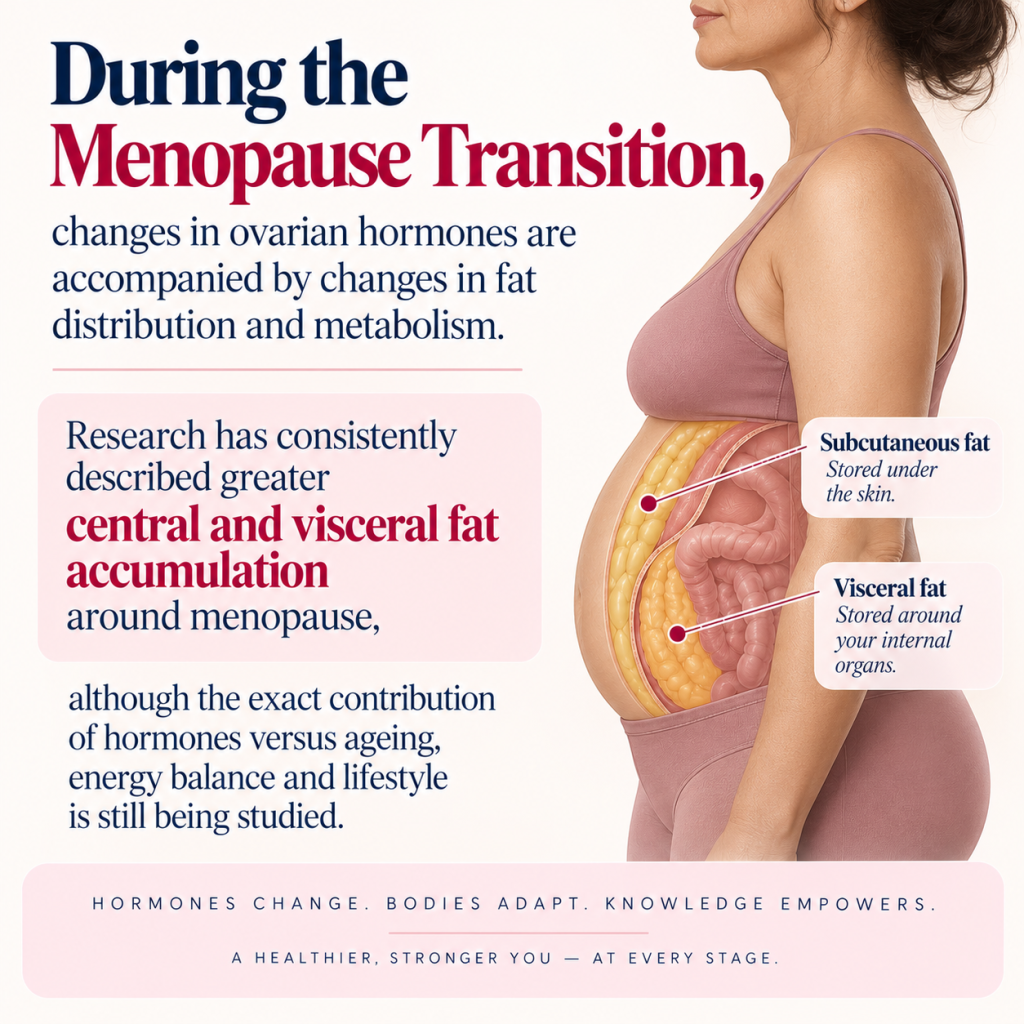
At the same time, lean mass declines.
That matters because muscle plays an important role in glucose handling and metabolic health.
So the midlife change isn’t simply: “I’m eating more.”
It can be: “My body composition is changing.”
(Dr Louise Newson)
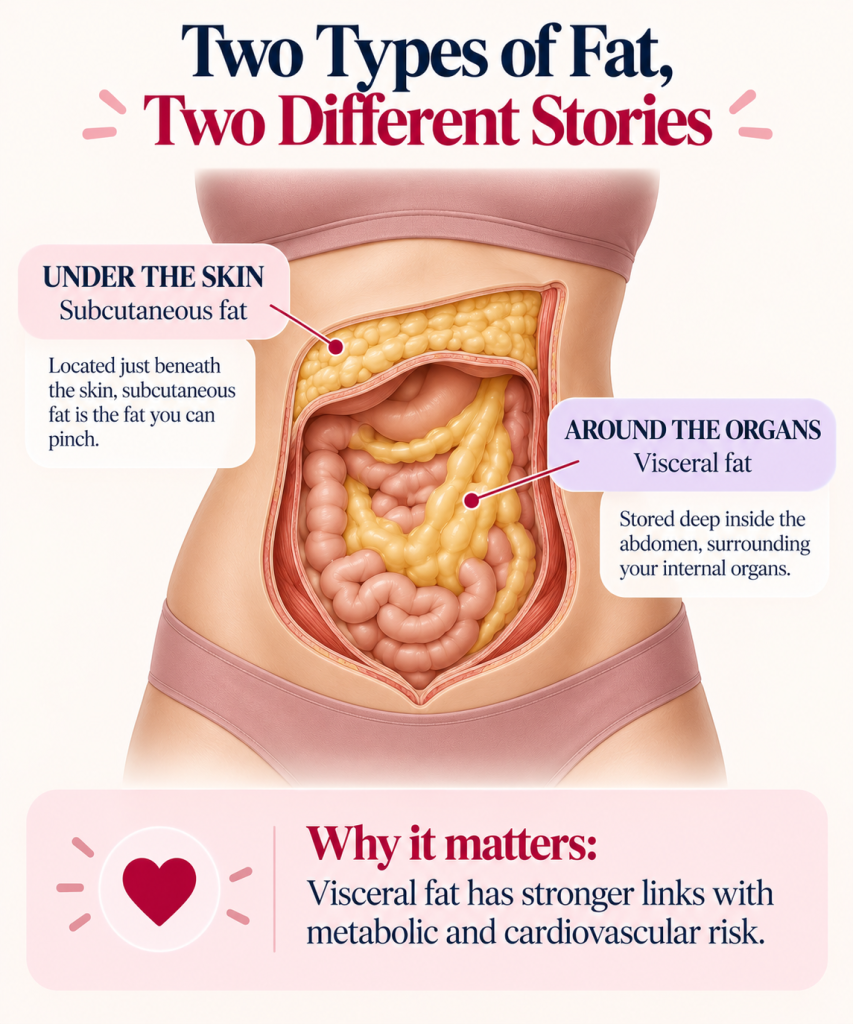
3. Not All Belly Fat Is the Same
A soft layer under the skin is subcutaneous fat.
Fat stored deeper inside the abdomen around organs is visceral fat.
Visceral adipose tissue is metabolically active and is associated with cardiometabolic risk. In the SWAN Heart study, greater visceral fat accumulation across the menopause transition was associated with thicker carotid artery measurements, a marker of subclinical atherosclerosis.
(PubMed)
4. Why BMI Can Miss the Story; Especially in South Asian Women
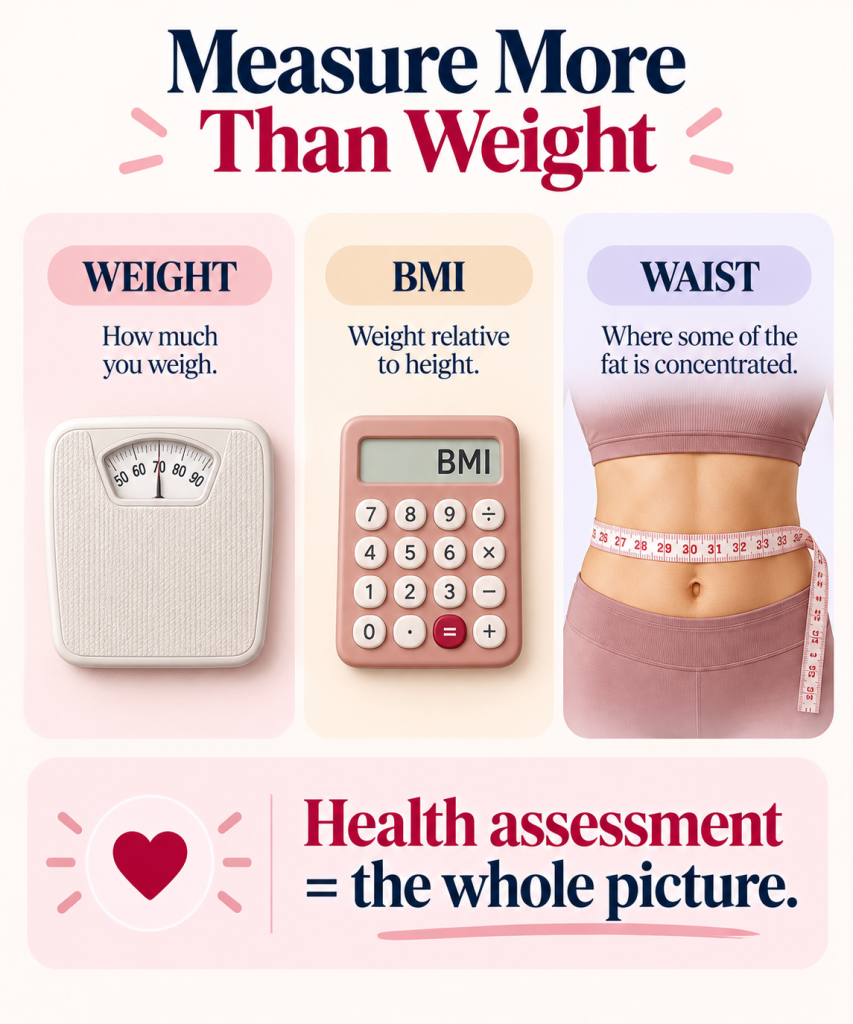
BMI is useful, but it doesn’t tell you where fat is stored.
For South Asian populations, central obesity can occur at lower BMI levels. The International Diabetes Federation uses an ethnic-specific waist threshold of 80 cm for South Asian women in its metabolic-syndrome definition.
That doesn’t mean an 80 cm waist automatically means disease.
It means waist circumference is useful information that shouldn’t be ignored simply because your BMI looks normal.
(PubMed)
5. Before Blaming Menopause, Check the Basics
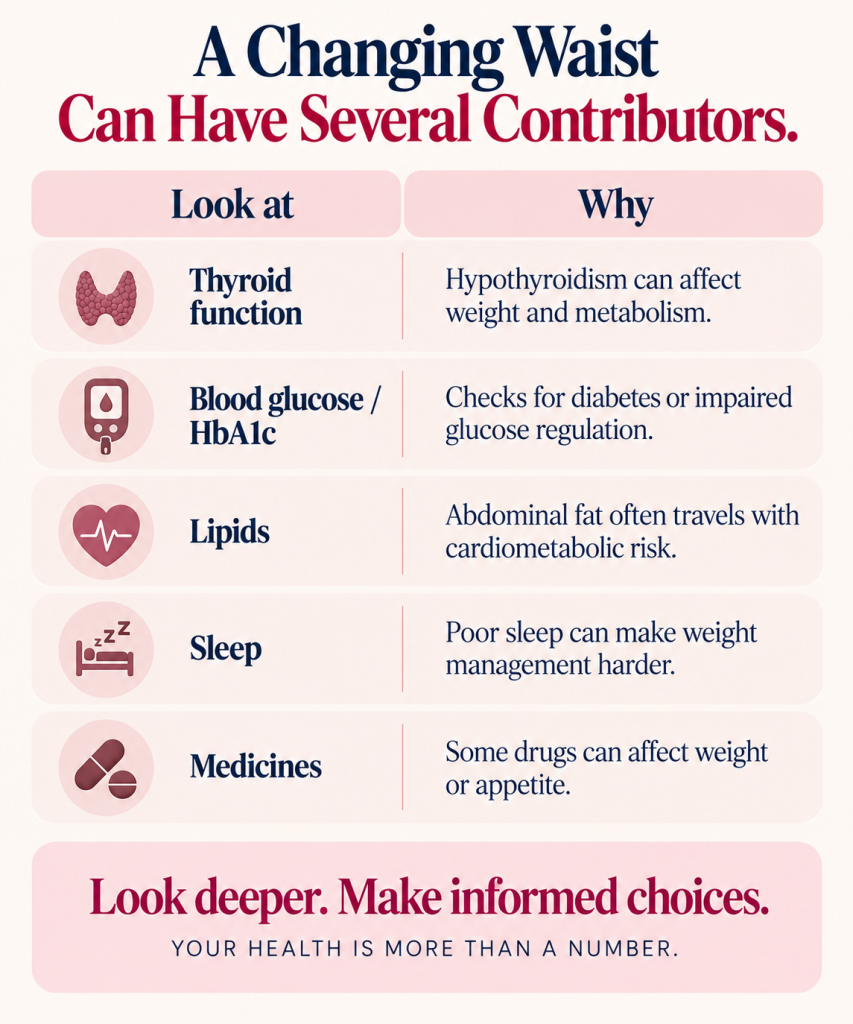
(Mayo Clinic)
6. What Actually Helps?
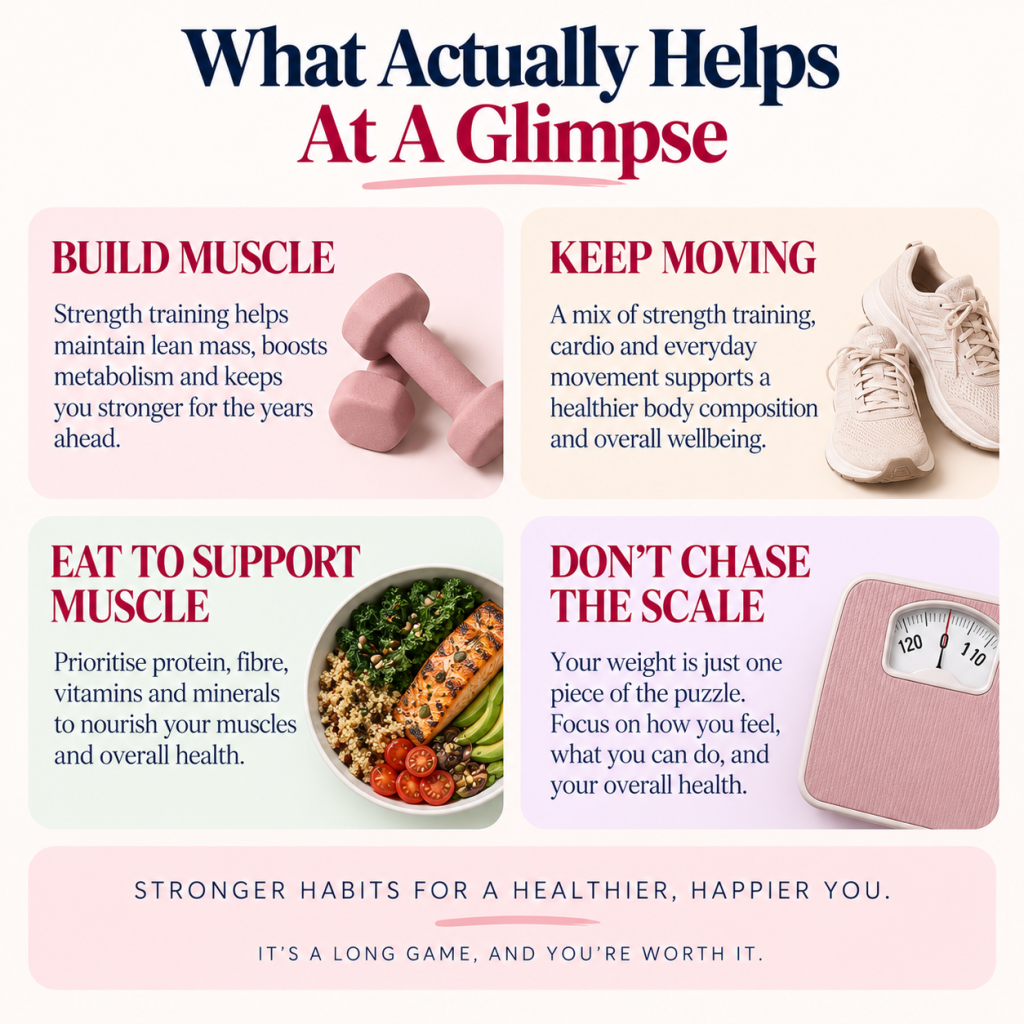
There is no magic “menopause belly fat” exercise. There is, however, a very good body-composition strategy.
BUILD MUSCLE
Resistance training helps maintain muscle and supports bone and metabolic health. ACOG recommends muscle-strengthening activity as part of regular exercise during midlife.
KEEP MOVING
Walking, cycling, swimming and other aerobic activity support cardiovascular and metabolic health.
EAT TO SUPPORT MUSCLE
Prioritise adequate protein, vegetables, pulses, whole grains, nuts and other minimally processed foods rather than responding to belly changes with severe restriction.
DON’T CHASE THE SCALE
Body composition can improve before body weight changes.
(Everyday Health)
7. Where Does HRT Fit?
This is where the internet gets confused.
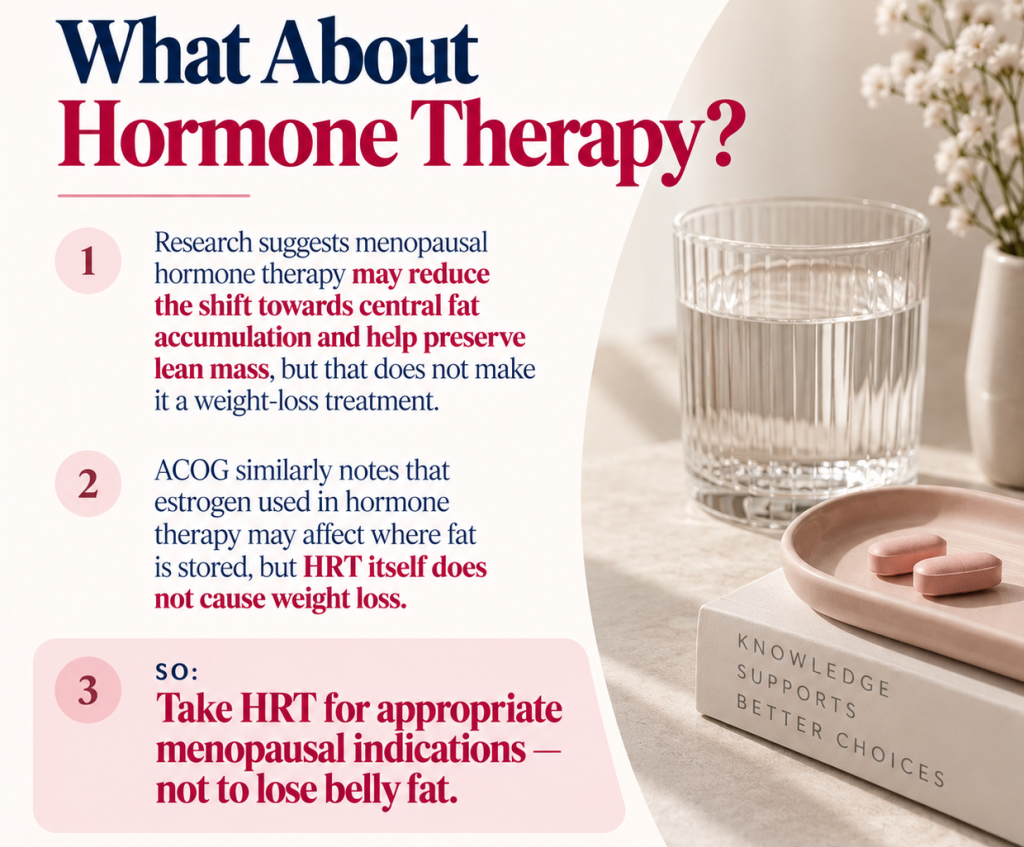
If you’re considering HRT for hot flushes, night sweats or other symptoms, your clinician can look at your overall health and risk profile rather than treating your waist in isolation.
(ACOG)
The Midlife Body Reframe
A changing waist isn’t automatically a sign that you’ve “let yourself go.”
Menopause can bring measurable changes in fat mass, lean mass and fat distribution.
The useful response isn’t punishment.
It’s to build muscle, stay active, eat adequately, protect sleep and check the metabolic markers that actually matter.
Your body has changed.
That doesn’t mean you’ve failed.
Where Miror’s HRT Centre of Excellence Fits In
Changes in body composition can overlap with menopause symptoms, thyroid function, glucose regulation, sleep and cardiovascular risk.
At Miror’s HRT Centre of Excellence, clinicians can look at those factors together and help determine where menopause management ends and where additional metabolic assessment or specialist care is needed.
The goal isn’t simply a smaller waist. It’s a healthier midlife body.
Your waist is one piece of the health puzzle.
Understand the bigger picture of your menopause and midlife health.
Contact Miror’s expert panel of doctors and health professionals today.
Medical Disclaimer: This article is for general educational purposes and does not replace personalised medical advice, diagnosis or treatment. Changes in weight, waist circumference or body composition should be interpreted alongside your overall health and risk factors by a qualified clinician.
FAQs
The menopause transition is associated with greater fat accumulation and a shift towards more abdominal fat, alongside loss of lean mass. Overall weight gain, however, does not suddenly accelerate at menopause.
Because body composition can change. Fat mass can increase while lean mass decreases, changing the shape of the body without a large change on the scale.
Visceral fat is associated with metabolic and cardiovascular risk. Studies following women through the menopause transition have linked greater visceral fat accumulation with markers of subclinical atherosclerosis.
The IDF uses 80 cm for women of South Asian ethnicity as an ethnic-specific waist threshold for central obesity in its metabolic-syndrome definition. It should be interpreted alongside other risk factors rather than used as a diagnosis by itself.
A combination of aerobic activity and resistance training supports cardiovascular health, muscle and bone health.