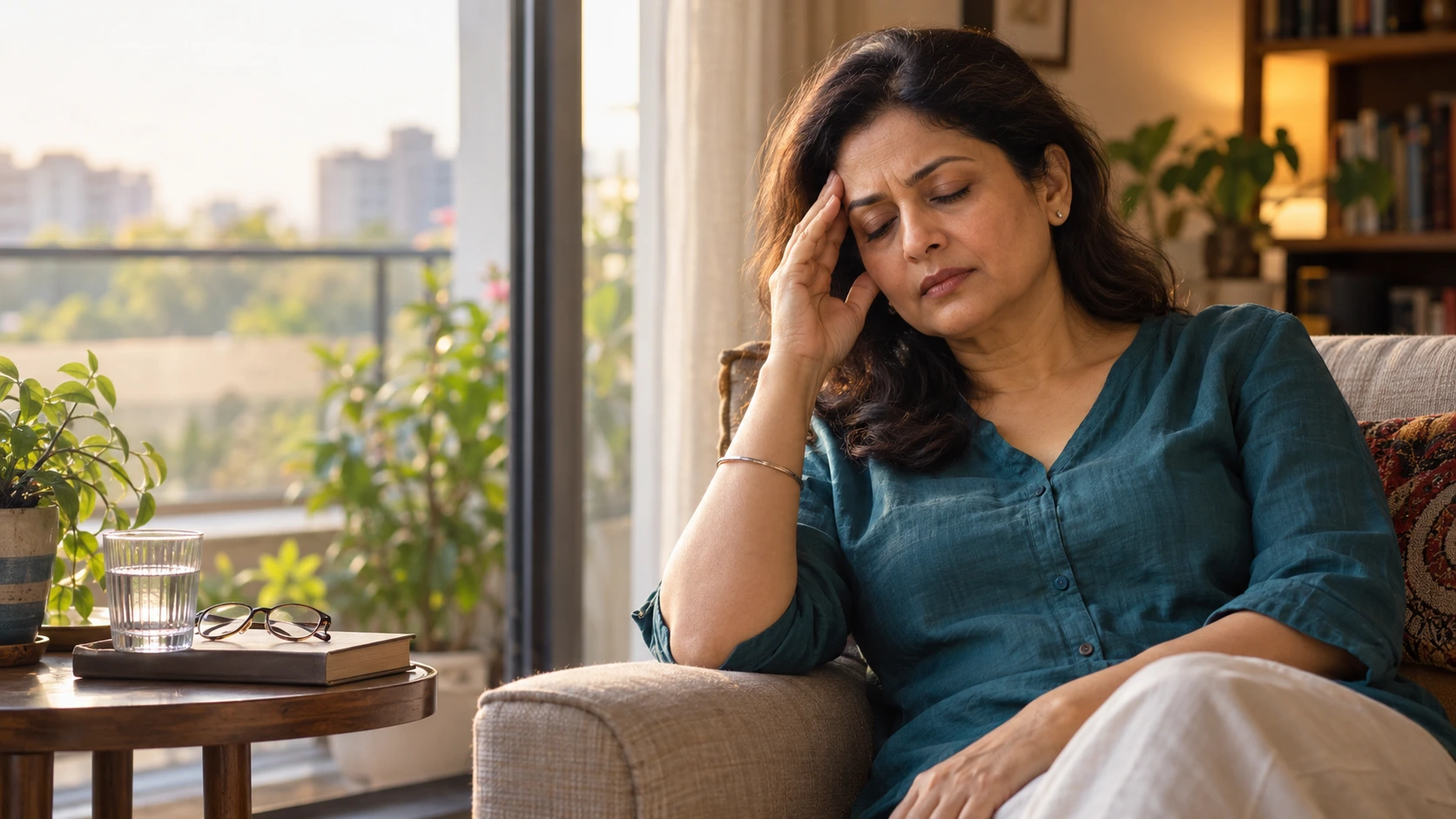

Menopause headaches can be frustrating..
Specially when headaches you once managed easily start becoming more frequent, more intense or harder to predict.
Perhaps the pain arrives alongside a hot flush. Perhaps you wake with a headache after a night of broken sleep. Or perhaps migraines that used to occur around your period now seem to appear whenever they please.
If this sounds familiar, you’re not imagining the change.
 (
(1. Is It a Headache or a Migraine?
People often use the words interchangeably, but migraine is a neurological condition, not simply a particularly bad headache.
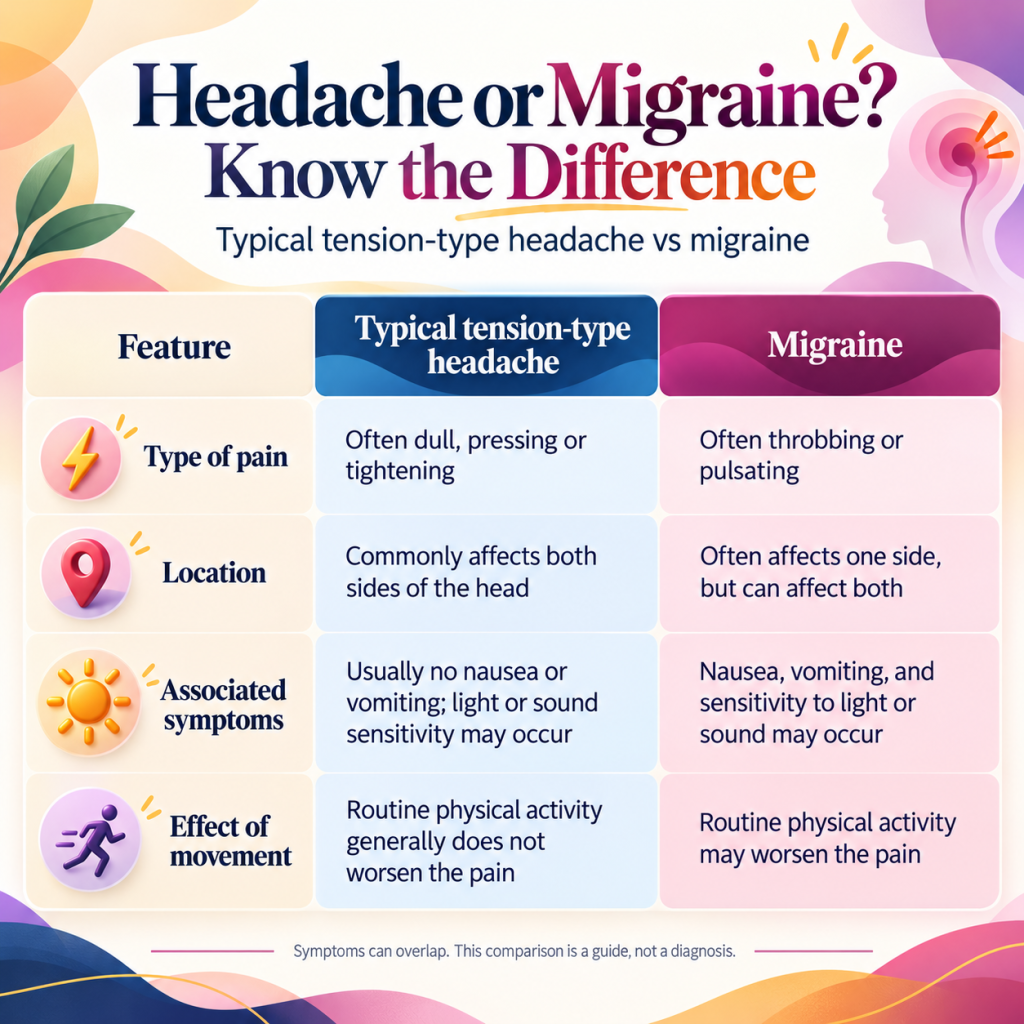
A typical tension-type headache often feels like pressure or tightness across both sides of the head. A migraine is more likely to cause moderate-to-severe pain, sometimes throbbing or one-sided, with nausea or sensitivity to light and sound. Movement may make it worse, and an attack can last for hours or days.
(NIH)
Feature | More typical of a tension-type headache | More typical of migraine |
|---|---|---|
Pain | Pressing or tightening | Often throbbing or pulsating |
Location | Often both sides | Often one side, but can affect both |
Other symptoms | Usually less prominent | Nausea, light or sound sensitivity |
Effect of activity | Usually less affected | Routine activity may worsen pain |
These are general patterns, not a way to diagnose yourself.
Headache disorders overlap, so a clinician should assess symptoms that are new, changing or disabling.
2. Why Headaches and Migraines Can Change During Perimenopause
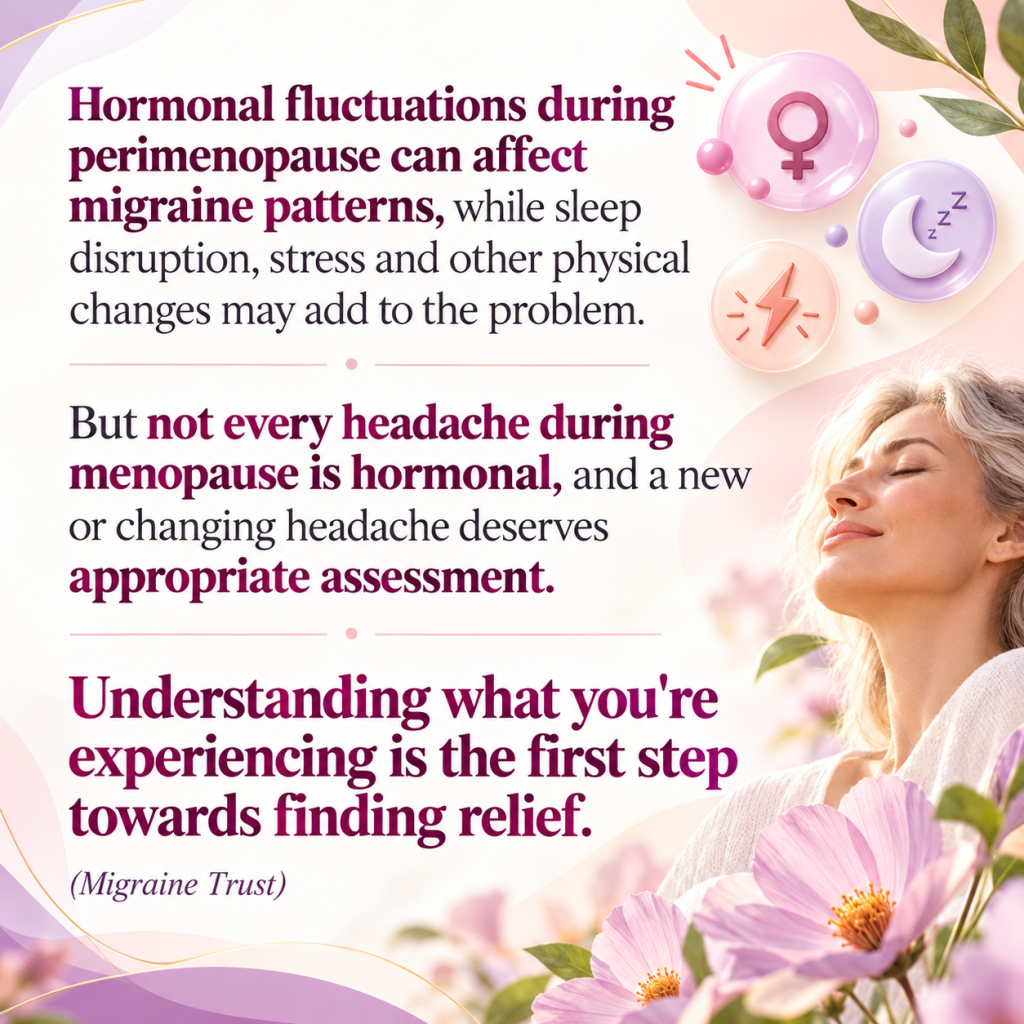
One of the main reasons is fluctuating oestrogen.
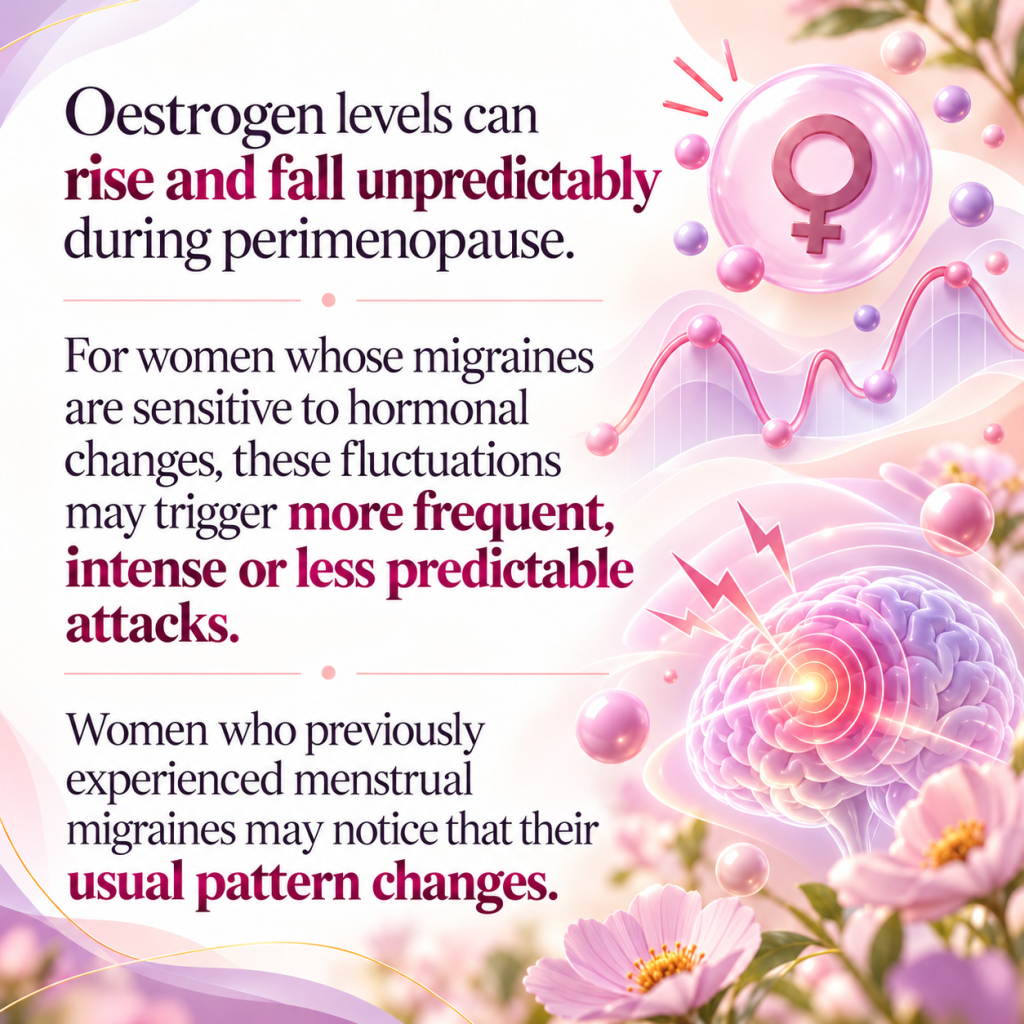
This doesn’t mean every menopause headache is caused by hormones.
It means hormonal changes are an important part of the picture, particularly if you have a history of migraine.
(AMD)
3. Migraine With Aura Is Worth Understanding
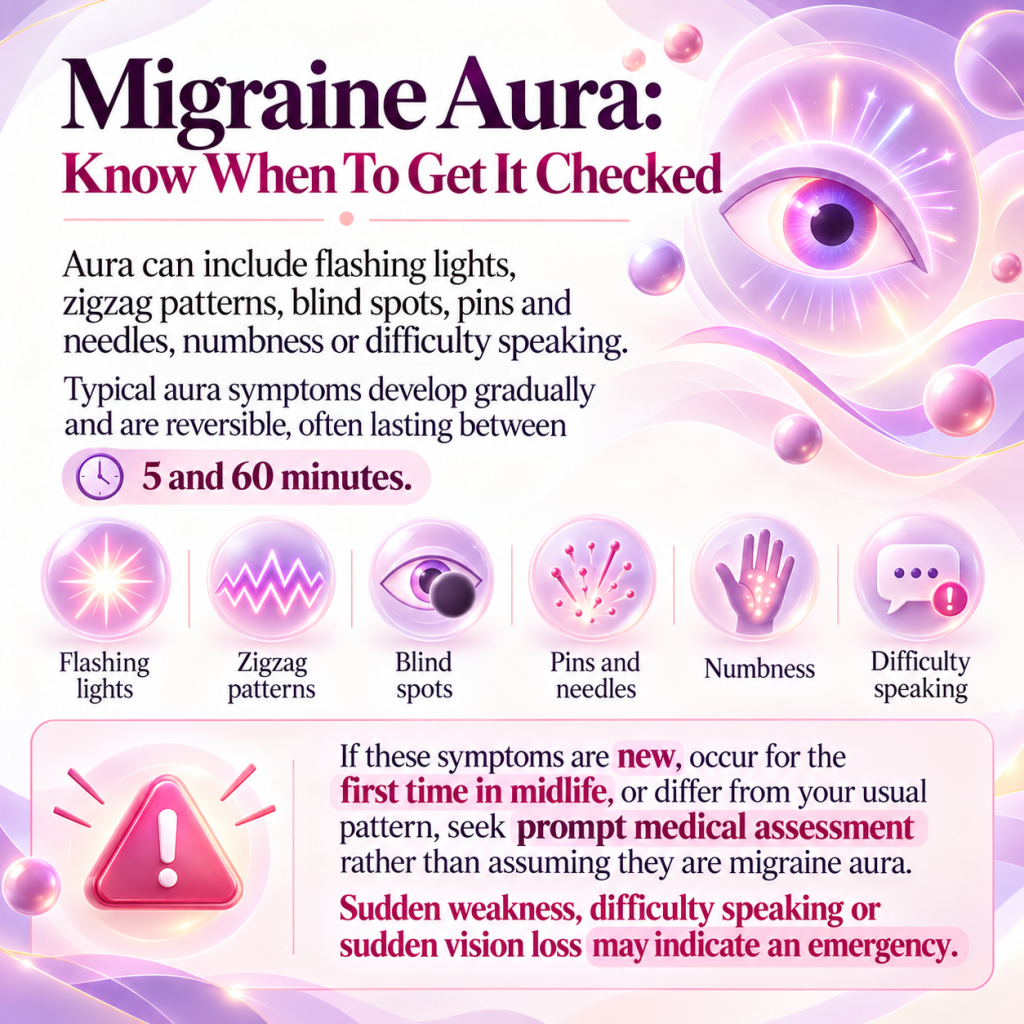
Some people experience migraine with aura: temporary neurological symptoms that can occur before or alongside a headache, and occasionally without a headache at all.
 (
(4. It’s Not Always the Hormones!
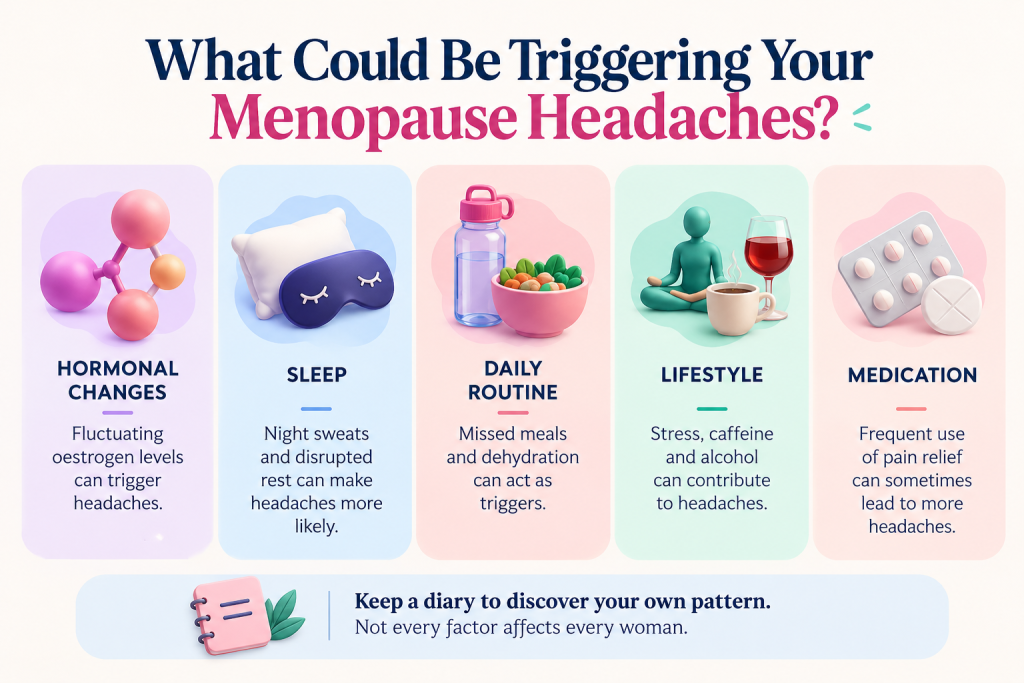
Menopause-related symptoms can make migraine harder to manage without directly causing every attack.
Common factors worth reviewing include:
Broken sleep: night sweats and early waking can leave you exhausted.
Stress: prolonged tension can contribute to attacks.
Dehydration: insufficient fluid intake may be a trigger for some people.
Irregular meals: skipping meals can affect headache patterns.
Caffeine and alcohol: changes in intake may influence symptoms.
Medication use: frequent use of acute headache medicines can sometimes contribute to medication-overuse headache.
Your triggers may be different from someone else’s. The aim isn’t to avoid everything — it’s to understand which patterns actually matter for you.
(NIH)
5. Do Migraines Stop After Menopause?
Sometimes, but not always and improvement may take time.
For some women, migraines become less frequent or less severe after natural menopause as hormonal fluctuations settle. Others continue to experience migraines, and some find that symptoms remain difficult to manage. Improvement is not immediate or guaranteed.
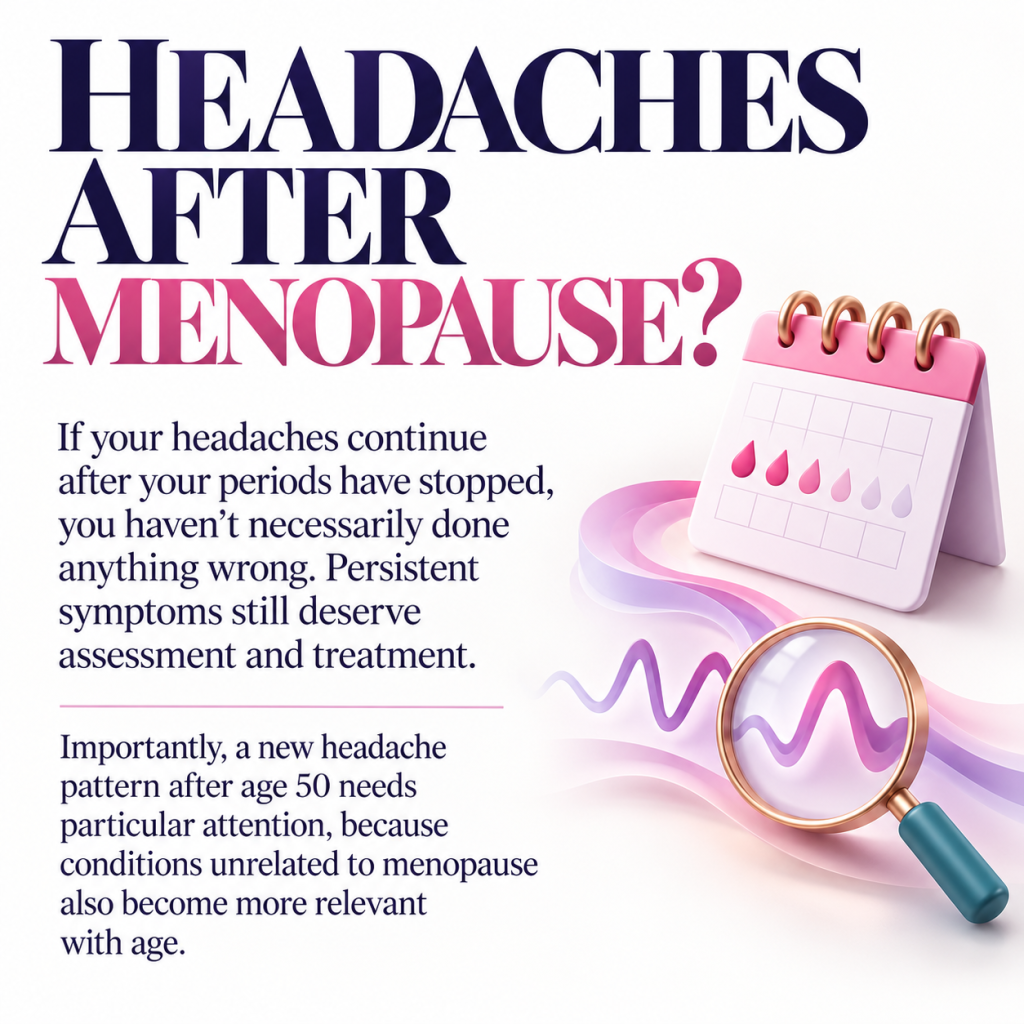
6. How to Treat Menopause Headaches and Migraines
Treatment depends on the type of headache, how often it occurs, its impact on your life and your medical history.
A. For migraine attacks, a clinician may recommend appropriate pain relief, migraine-specific medicines such as triptans, or medication for nausea.
B. For frequent or disabling migraines, preventive treatment may reduce the number of attacks and reliance on rescue medication.
C. What About Menopause Hormone Therapy?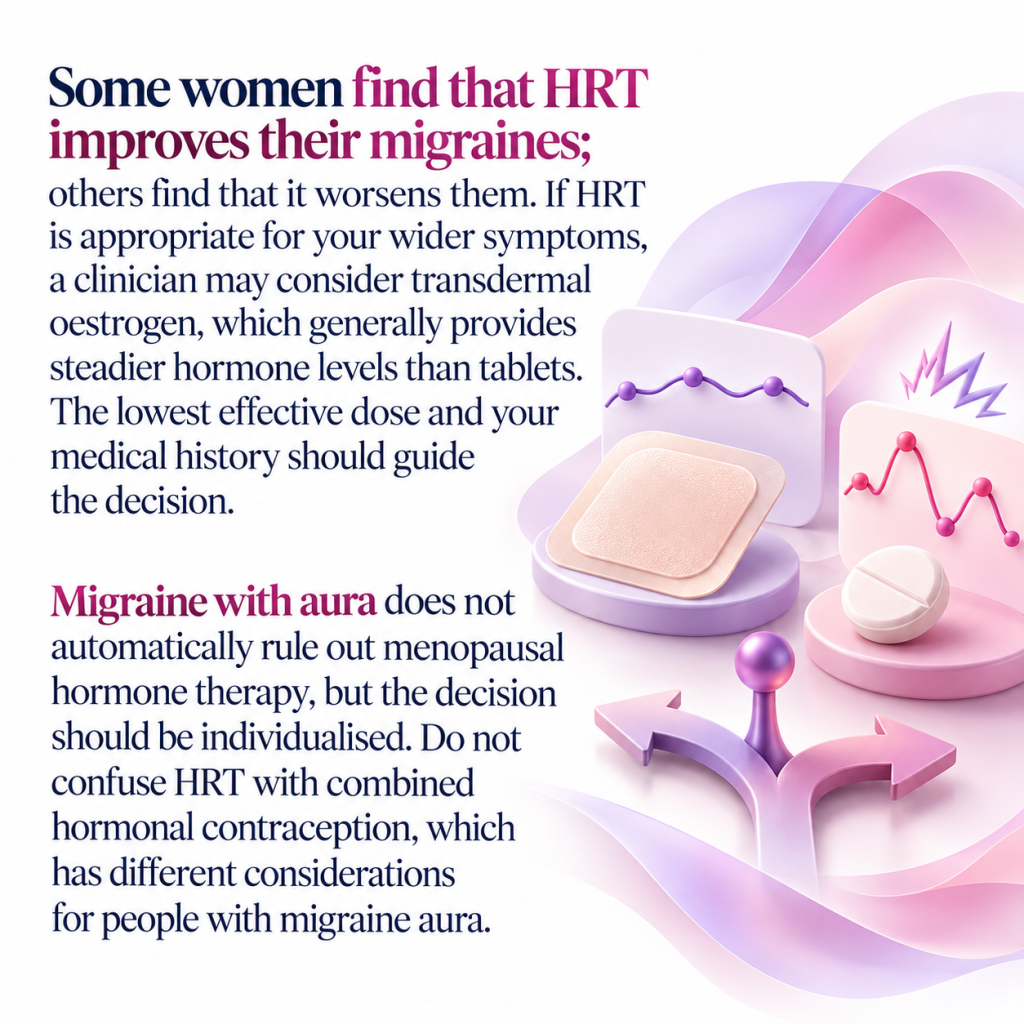 For personalised guidance, Miror’s HRT Centre of Excellence is pioneering a dedicated, specialist-led approach to hormone care in India. Miror’s HRT COE is India’s first dedicated HRT Centre of Excellence, it brings together individual assessment, specialist consultation, personalised treatment planning and ongoing monitoring. If you’re considering HRT for menopausal symptoms, explore the Miror HRT Centre of Excellence to understand your options and discuss whether treatment may be appropriate for you.
Remember, HRT is not a guaranteed treatment for migraines, and suitability depends on your individual circumstances. Never start, stop or change HRT or migraine medication without discussing your situation with a qualified clinician.
(NIH)
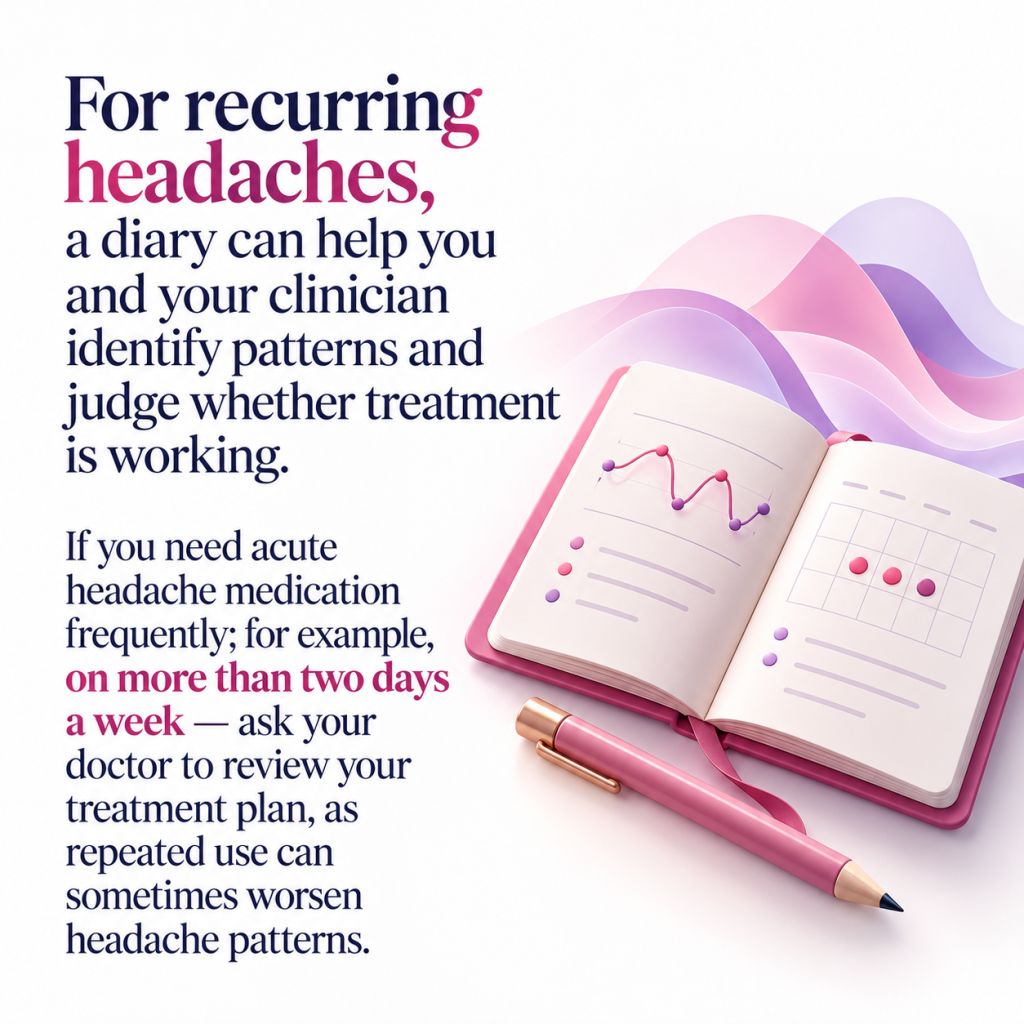
Keep a Headache Diary
For the next few weeks, record when the headache starts, how long it lasts, its severity, any nausea or light sensitivity, your sleep, menstrual bleeding if applicable, hot flushes, possible triggers and medicines taken.
This gives your clinician something more useful than a memory of the worst attack.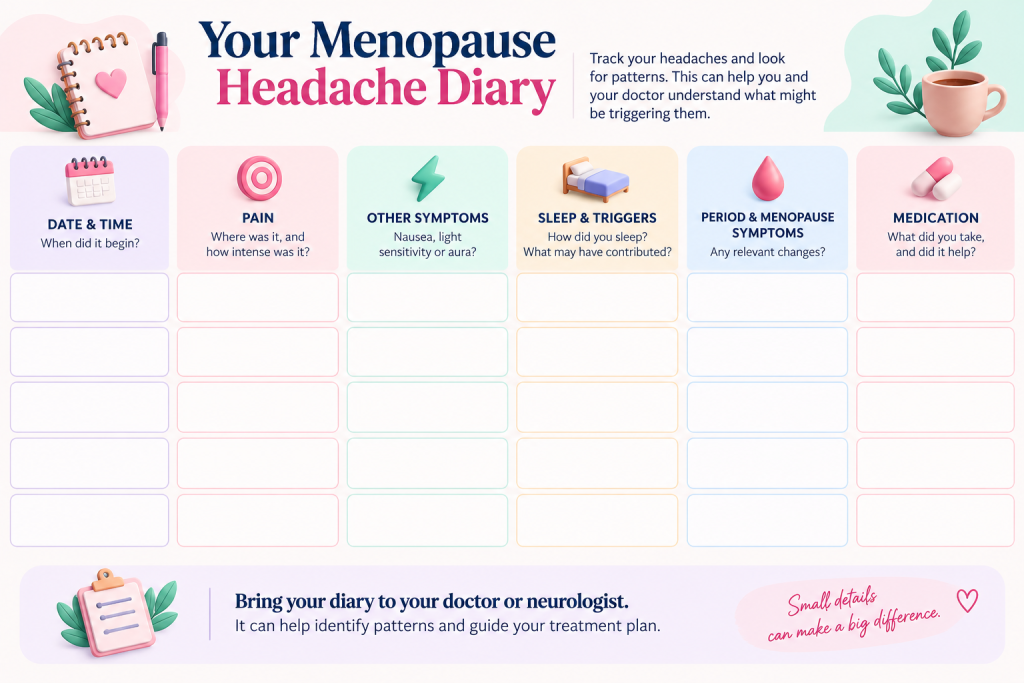
When Should You Seek Urgent Medical Care?
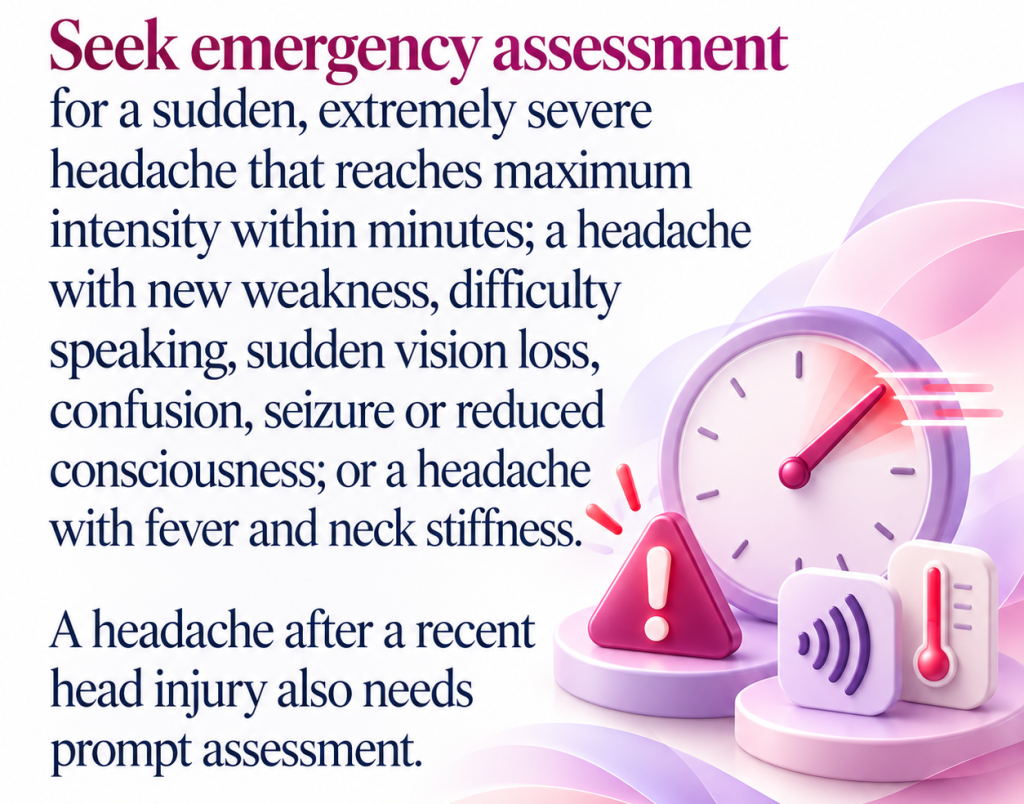
Get prompt medical advice if headaches are new after age 50, progressively worsening, triggered by exertion or coughing, or accompanied by a new neurological symptom.
Do not assume a worrying new symptom is “just menopause” or “just migraine.”
What I’d Want You to Remember
Menopause headaches and migraines can change as your hormones fluctuate, your sleep shifts and your usual routines become harder to maintain. But you do not have to simply endure them.
Track the pattern. Get new or changing symptoms assessed. Ask about treatment that fits your needs.
Migraine is a recognised neurological condition; not a personal failing and effective treatment options are available.
How Miror Can Help
You Don’t Have to Navigate Menopause Alone! Headaches, migraines, sleep disruption and other menopausal symptoms can overlap, making it difficult to know where to start.
Miror is India’s largest and only 360-degree integrative women’s wellness ecosystem and community, bringing expert guidance, trusted health information and support together across the different stages of a woman’s life.
With 95,000+ women, Miror has helped women access expert insights and support at the tip of a button.
Whether you’re trying to understand changing headaches, discuss menopause symptoms or find the right specialist, you can connect with Miror doctors, health experts and mental-health experts through the app.
Consult Miror doctors. Talk to Miror experts and mental-health professionals today.