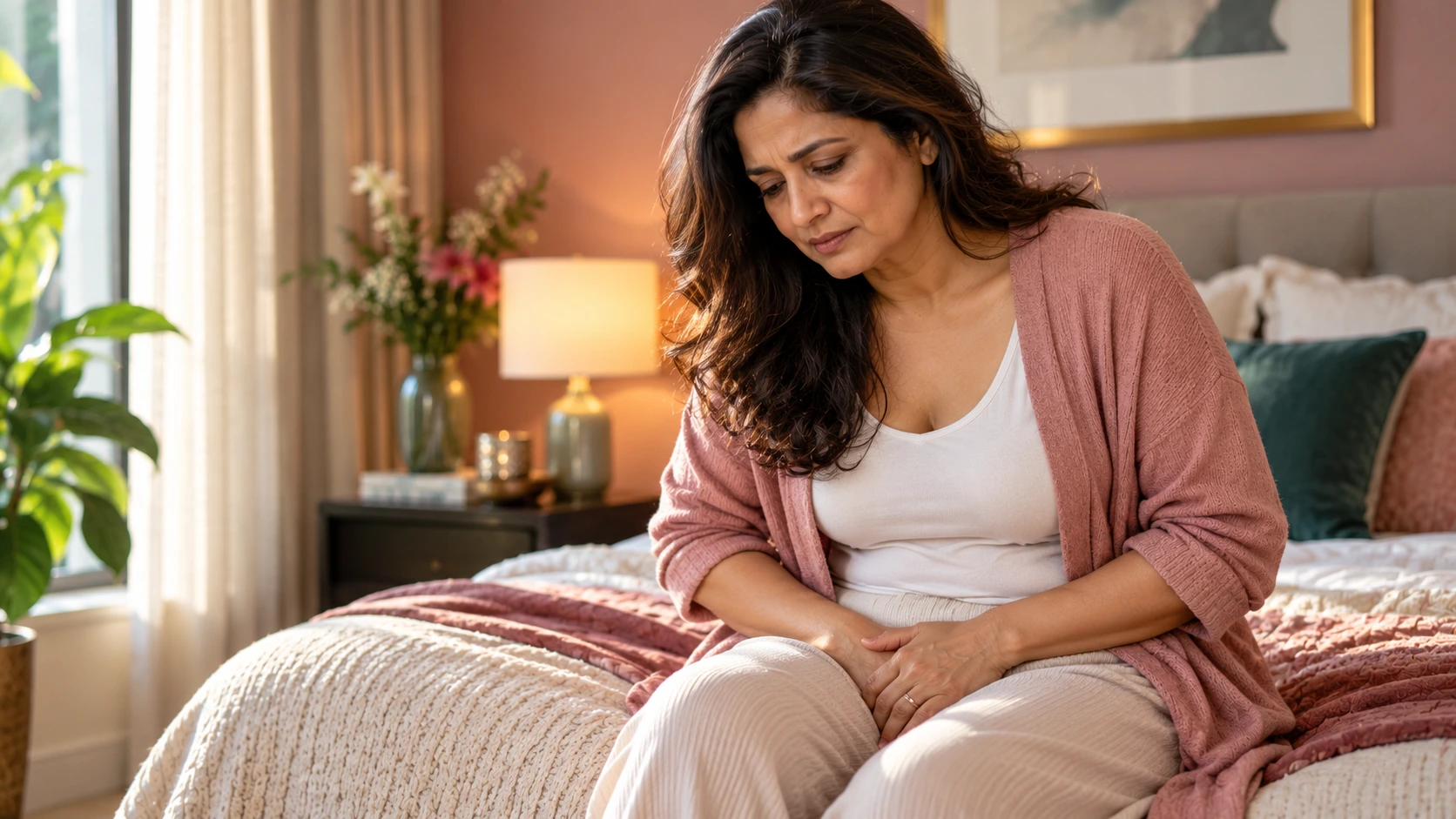

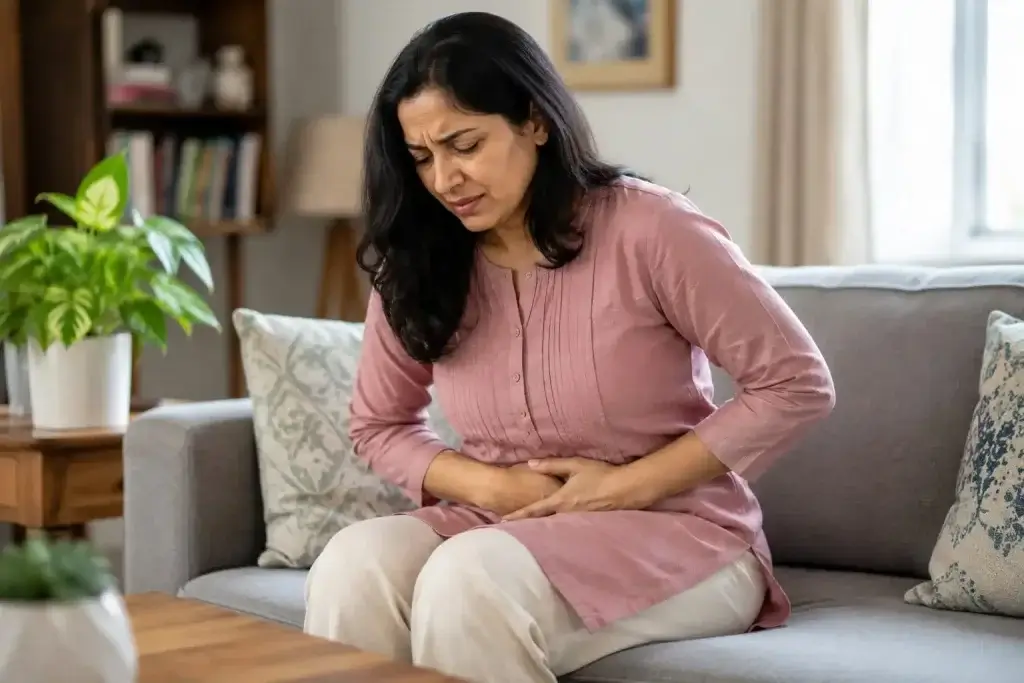
Pelvic pain during perimenopause or after menopause can be difficult to describe. It may feel like a dull ache, cramping, pressure, burning or a sharp pain in the lower abdomen or pelvis. For some women, it comes and goes. For others, it may persist or gradually become more noticeable.
Hormonal changes can play a role. As estrogen levels decline, changes in the vaginal and urinary tissues can cause discomfort, dryness and pain. But menopause pelvic pain is not always caused by menopause. Gynaecological, urinary, digestive, pelvic floor and musculoskeletal conditions can also cause similar symptoms.
That is why paying attention to the pattern of your pain matters.
Common Patterns of Menopause Pelvic Pain
Pain During or After Sex
Pain during sex can become more common around and after menopause. Lower estrogen levels can make vaginal tissues thinner, drier and less elastic, making penetration uncomfortable or painful.
Some women may also experience burning, irritation or urinary symptoms. These can be part of genitourinary syndrome of menopause (GSM).
Lower Abdominal or Pelvic Pain
A dull ache, cramping or heaviness in the lower abdomen or pelvis can have several possible causes. The pain may be related to the reproductive organs, urinary tract, bowel, pelvic floor or surrounding muscles.
Pain that keeps returning or does not improve should be evaluated rather than automatically being considered a menopause symptom.
Urinary Discomfort
Burning while urinating, increased frequency or a sudden urge to urinate can occur alongside pelvic discomfort.
Menopause related changes can contribute to urinary symptoms, but urinary tract infections and other urinary conditions can cause similar symptoms. Persistent or new urinary symptoms therefore deserve medical attention.
Pelvic Pressure or Fullness
Some women experience pressure, heaviness or a feeling of fullness rather than what they would describe as pain.
If this sensation is new or persistent, particularly when accompanied by bloating, changes in appetite or urinary symptoms, it is worth discussing with a healthcare professional.
What Causes Pelvic Pain During Menopause?
There is no single cause of menopause pelvic pain. Understanding the possible sources can help explain why an accurate evaluation matters.
Genitourinary Changes
Declining estrogen can affect the vulva, vagina, bladder and urethra. This may lead to vaginal dryness, irritation, painful sex and urinary discomfort.
These symptoms are commonly referred to as genitourinary syndrome of menopause. They can continue or become more noticeable after menopause and can be treated.
Pelvic Floor Changes
The pelvic floor muscles support the bladder, bowel and reproductive organs. Changes in muscle tension or pelvic floor dysfunction can contribute to pelvic pain, pressure or discomfort.
When pelvic floor muscles are contributing to pain, pelvic floor physiotherapy may be considered as part of treatment.
Gynaecological Causes
Pain can also arise from conditions involving the uterus, ovaries or other reproductive organs. Fibroids, ovarian cysts, endometriosis and other gynaecological conditions may cause pelvic discomfort.
A new pelvic symptom after menopause should therefore not automatically be attributed to hormonal changes.
Urinary, Digestive and Musculoskeletal Causes
The urinary tract and bowel can also cause pain that is felt in the pelvis. Urinary infections, bladder conditions, constipation and other digestive problems may produce similar symptoms.
Pain can also originate from the lower back, pelvic muscles or surrounding structures.
When Is Menopause Pelvic Pain a Red Flag?
Not every episode of pelvic pain indicates a serious problem. However, new, persistent, worsening or unexplained pain should be evaluated, particularly after menopause.
Postmenopausal Bleeding
If you have gone 12 months without a period, any new vaginal bleeding or spotting should be checked, even if it happens only once or appears very light.
Postmenopausal bleeding can have several causes, many of which are not serious, but it should always be evaluated.
Severe or Rapidly Worsening Pain
Sudden, severe or rapidly worsening pelvic pain needs medical attention. This is especially important if it occurs with fever, vomiting, fainting, heavy bleeding or significant weakness.
Persistent Bloating or Abdominal Symptoms
Occasional bloating is common. Persistent or recurring bloating, abdominal swelling, pelvic pain, feeling full unusually quickly or changes in urinary habits should be discussed with a doctor, particularly when several symptoms occur together.
These symptoms can have many causes, but persistent symptoms should not be ignored.
Unexplained Weight Loss or Bowel Changes
Unintentional weight loss or persistent changes in bowel habits alongside pelvic pain should also be evaluated.
These symptoms do not automatically mean something serious is wrong, but they can help your doctor decide whether further investigation is needed.
Understanding the Diagnosis
Your doctor may ask where the pain occurs, when it started, how often it happens and whether anything makes it better or worse.
You may also be asked about vaginal bleeding, urinary symptoms, bowel movements, sexual activity and your menopause history.
Depending on your symptoms, your doctor may recommend an examination, urine or blood tests, an ultrasound or other investigations.
Keeping a simple note of when your pain occurs and what seems to trigger it can also help your doctor identify patterns.
Treatment Options for Menopause Pelvic Pain
Yes. Treatment depends on what is causing the pain.
When symptoms are related to genitourinary changes, options may include vaginal moisturizers, lubricants or vaginal estrogen when appropriate. Pelvic floor physiotherapy may help when muscle tension or pelvic floor dysfunction contributes to pain.
If the pain is caused by a urinary, digestive or gynaecological condition, treatment will focus on the underlying problem.
The goal is not simply to manage the pain. It is to understand why it is happening in the first place.
What to Remember About Menopause Pelvic Pain
Pelvic pain can occur during perimenopause and after menopause, but it should not automatically be dismissed as “just hormones.”
Hormonal changes can contribute to vaginal, urinary and pelvic discomfort, but there are several other possible causes.
If your pain is new, persistent, worsening or accompanied by postmenopausal bleeding, persistent bloating, unexplained weight loss or other concerning symptoms, speak with a healthcare professional.
Understanding the pattern of your pain can be the first step towards finding the right cause and the right treatment.
Get Personalized Menopause Support With MIROR
You do not have to navigate menopause symptoms alone.
Download the MIROR app to access women’s health resources and connect with specialists for personalized guidance and consultations.
FAQs
Yes. Constipation or bowel distension can create pressure in the lower abdomen and pelvis, sometimes making it difficult to tell where the discomfort is coming from.
Yes. Persistent pain can interfere with sleep, physical activity, sexual wellbeing and everyday activities. If pelvic discomfort regularly affects your sleep or quality of life, speak with a healthcare professional.
Yes. Menopause symptoms vary considerably between women. Pelvic and genitourinary symptoms can occur even when hot flashes and other common menopause symptoms are mild or absent.
Yes. Pelvic pain can sometimes be felt predominantly on one side. The location alone cannot identify the cause, as one-sided pain may be related to gynaecological, urinary, digestive or musculoskeletal conditions. New or persistent one-sided pain should be evaluated rather than assumed to be menopause-related.
Yes. Declining estrogen can affect the vaginal, vulval and urinary tissues, leading to dryness, irritation and discomfort that may be felt as pelvic pain. However, low estrogen is not the only possible cause, so persistent or new pain should still be evaluated.