

Can menopause cause pelvic pain?
It can coincide with changes that contribute to pelvic discomfort, but menopause is not the explanation for every ache, cramp or feeling of pressure in the lower abdomen.
The important thing is to understand where the pain comes from, what other symptoms accompany it and when it needs medical assessment.
(NIH)
1. How Can Menopause Contribute to Pelvic Pain?
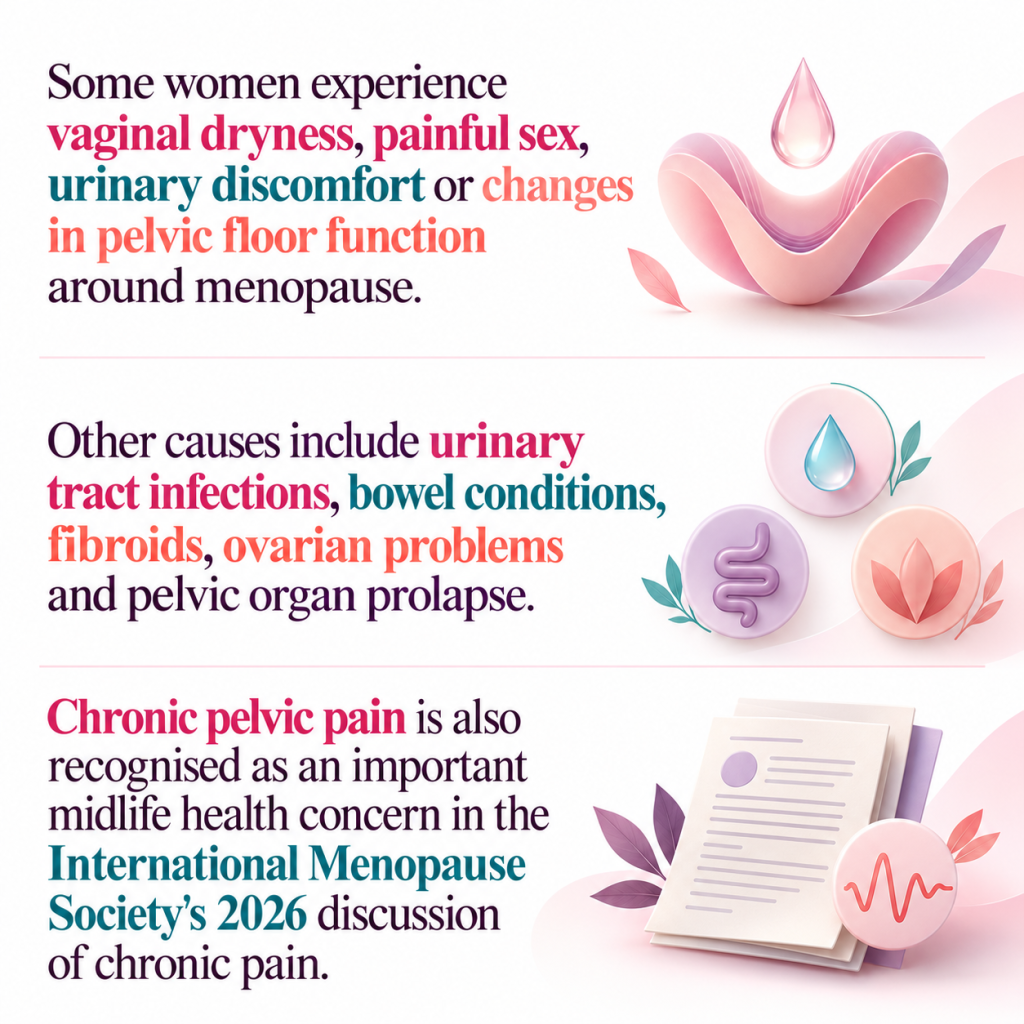
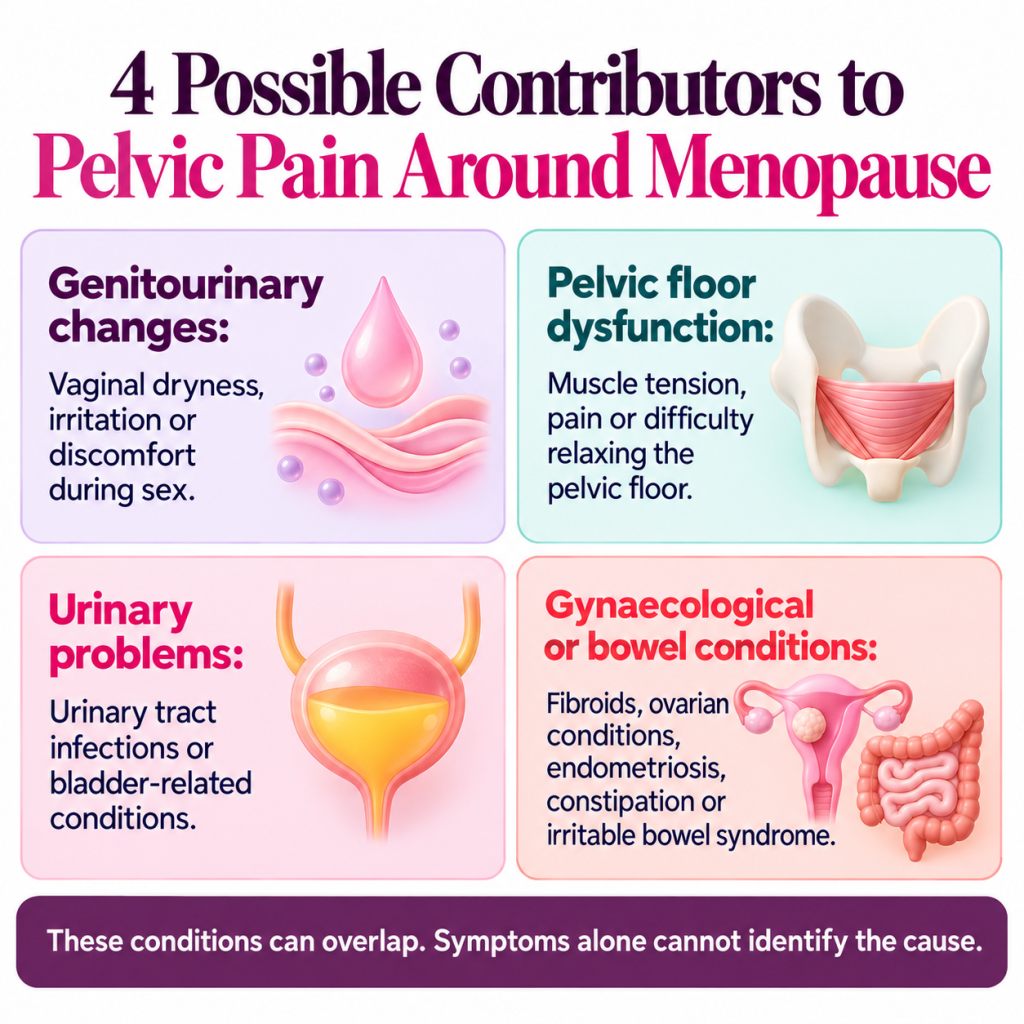
As oestrogen levels decline, changes can occur in the vaginal and urinary tissues. Some women develop genitourinary syndrome of menopause (GSM), which can cause vaginal dryness, irritation, burning, discomfort during sex and pain or discomfort while urinating. Symptoms vary from person to person.
Pelvic pain may also involve the pelvic floor muscles, which support the bladder, bowel and reproductive organs. These muscles can become overactive, tense or poorly coordinated, contributing to pain, painful intercourse or difficulty emptying the bladder or bowel.
However, pelvic pain is not a universal menopause symptom. New, persistent or worsening discomfort deserves assessment rather than an assumption that hormones are responsible.
(JHM)
2. Other Causes of Pelvic Pain During or After Menopause
A. Fibroids and ovarian conditions
Fibroids are non-cancerous growths in the uterus. They often shrink after menopause, but symptoms can persist in some women. Ovarian cysts and other ovarian conditions may also cause pelvic discomfort, bloating or pressure. Persistent symptoms warrant investigation rather than reassurance based on age or menopausal status alone.
B. Urinary tract and bowel problems
A urinary tract infection (UTI) may cause lower abdominal pain, burning when urinating, urgency or frequent urination. Constipation and irritable bowel syndrome can also cause pain in the pelvic area. Blood in the urine, recurrent urinary symptoms or symptoms that do not settle should be assessed.
C. Endometriosis and pelvic organ prolapse
Endometriosis symptoms often improve after menopause, but they can persist. A history of endometriosis is worth mentioning if pelvic pain continues or returns.
Pelvic organ prolapse occurs when pelvic organs, such as the bladder, bowel or uterus, descend towards the vagina. It can cause heaviness, pressure, a vaginal bulge, discomfort during sex or bladder and bowel difficulties.
The treatment depends on the cause. Pelvic floor physiotherapy may help some muscle-related problems, while other conditions may require medication or specialist treatment.
3. What About Pelvic Pain After Menopause?
Pelvic pain that begins or continues after menopause deserves particular attention, especially if it is persistent, keeps returning or is different from anything you have experienced before.
Persistent or frequent pelvic pain alongside ongoing bloating, feeling full quickly, reduced appetite or needing to urinate more often should be checked. These symptoms can have many causes and do not automatically indicate cancer, but ovarian conditions—including ovarian cancer—need to be considered where appropriate.
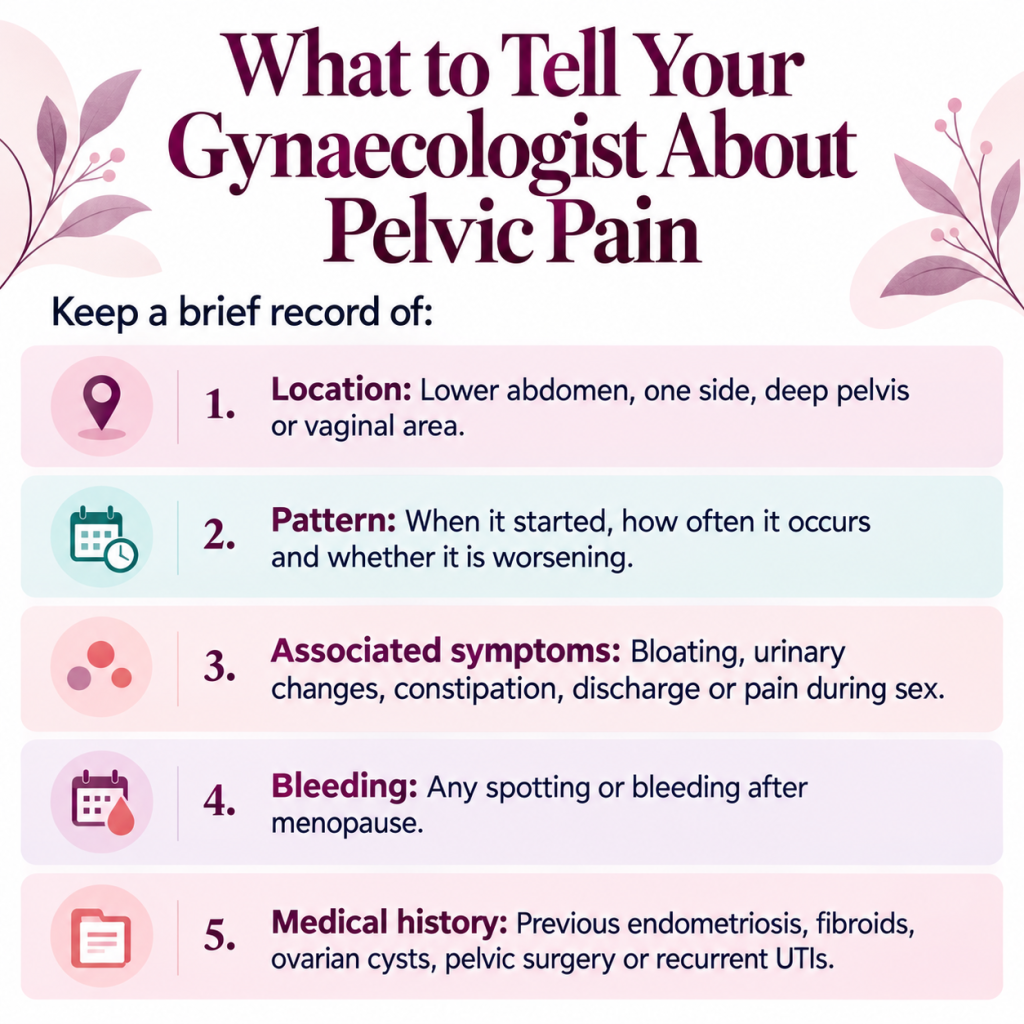
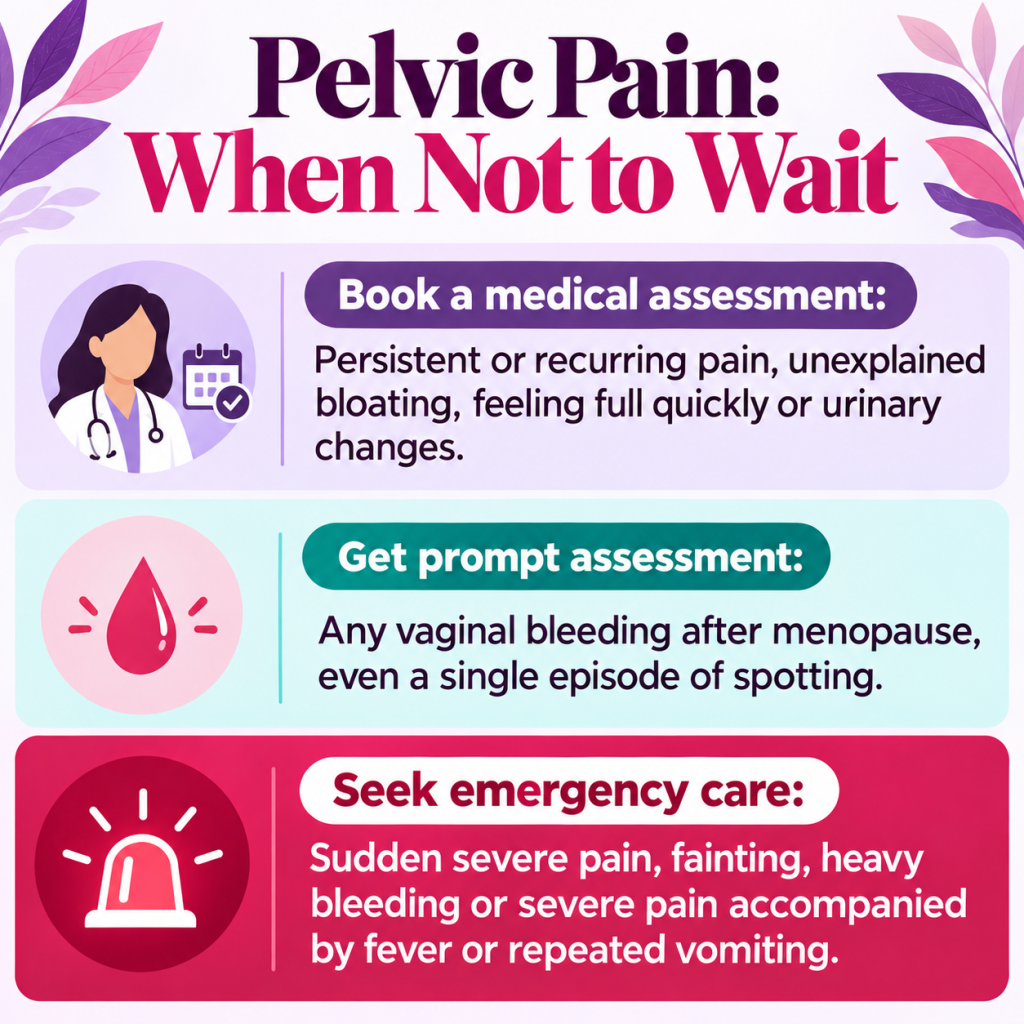
Any vaginal bleeding after menopause must be medically assessed, even if it happens only once or appears as light spotting. It may have a benign cause, but examination and sometimes further testing are needed to rule out more serious conditions.
4. What Tests Might a Doctor Recommend?
Assessment begins with a discussion of your symptoms and medical history. Depending on what you describe, your gynaecologist may recommend a physical or pelvic examination, a urine test, blood tests or other targeted investigations.
A pelvic ultrasound may be appropriate when the history or examination suggests a uterine or ovarian cause. A transvaginal ultrasound can provide a closer view of the pelvic organs. Not everyone with pelvic pain needs imaging; the decision depends on symptoms and clinical findings.
If you have postmenopausal bleeding, your clinician may recommend a transvaginal ultrasound and, depending on the findings and your risk factors, further assessment of the uterine lining.
Testing should be guided by the suspected cause rather than relying on one scan or test to explain every symptom.
5. When Should You Seek Medical Attention?
Arrange a gynaecology appointment if pelvic pain persists, repeatedly returns, interferes with daily life or occurs with ongoing bloating, early fullness or urinary changes. Seek prompt assessment for any postmenopausal bleeding.
Seek emergency care for sudden, severe or rapidly worsening pelvic pain, particularly if you also experience fainting, marked dizziness, heavy vaginal bleeding, difficulty breathing, persistent vomiting or fever with severe illness.
You do not need to wait until pain becomes unbearable to ask for help.
The Takeaway
Pelvic pain during or after menopause can have several causes, including genitourinary changes, pelvic floor dysfunction, urinary or bowel conditions and gynaecological problems. Menopause may be part of the picture, but it should not become an automatic explanation for unexplained pain.
Pay attention to changes, seek assessment when symptoms persist and remember that you deserve to have your pain investigated and taken seriously.
How Miror Can Help
You Don’t Have to Navigate Menopause Alone
Miror is India’s largest and only 360-degree integrative women’s wellness ecosystem and community. More than 95,000 women have received expert help and insights through Miror.
Connect with Miror doctors, health experts and mental-health experts to discuss your symptoms and access personalised support.