


If HRT helps, does how you take it matter too?
If you’re choosing between an HRT tablet and estrogen gel, the difference is not only convenience.
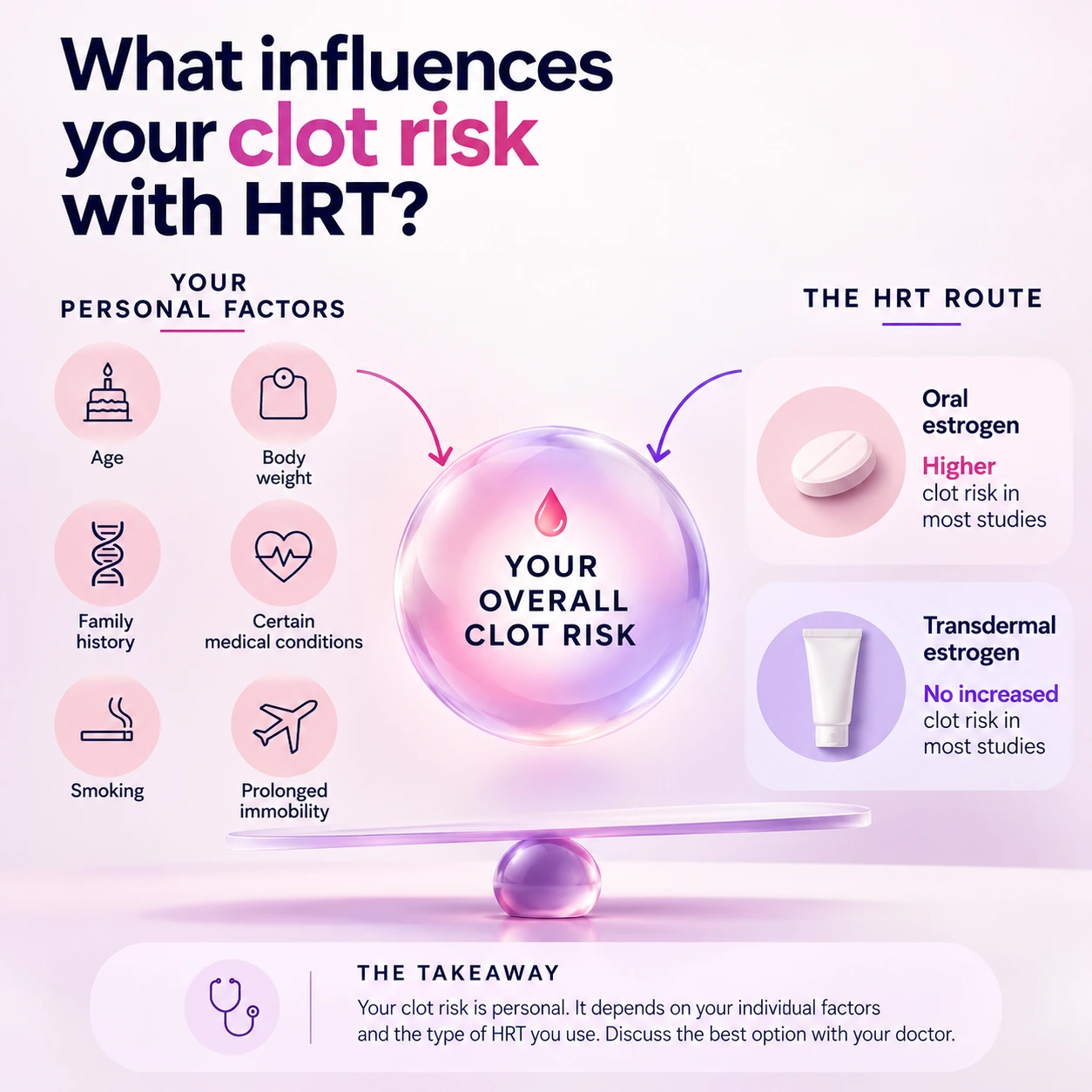
Oral estrogen passes through the liver before reaching the wider circulation, while transdermal estrogen, including gels, patches and sprays, is absorbed through the skin and avoids that first pass.
Because the liver produces proteins involved in blood clotting, the route estrogen takes can influence its effect on clot risk.
The Clot-Risk Difference Is Where the Routes Begin to Separate
The blood clots doctors are concerned about with HRT are called venous thromboembolism, or VTE. This includes deep vein thrombosis (DVT), usually in the leg, and pulmonary embolism, when a clot travels to the lungs.
With oral estrogen, the risk of VTE is higher than without HRT. With transdermal estrogen, current evidence has not shown the same increase in risk.
This is why menopause guidelines often favour estrogen through the skin when a woman already has factors that raise her clot risk.
That does not make transdermal estrogen “risk-free.” It means the route itself appears to add less clotting risk, while your own medical history still remains important.
Lower Clot Risk Does Not Make Estrogen Gel Better for Everyone
It is easy to hear “lower clot risk” and assume that estrogen gel is simply the better form of HRT. That is not quite the case.
Oral and transdermal estrogen are both established forms of systemic HRT. The clearest difference between them in the available research is VTE risk, rather than one route being universally better than the other.
For someone with a low baseline clot risk, an oral tablet may still be an appropriate choice. For someone with additional risk factors, transdermal estrogen may become more relevant.
Your preference matters too. Some women find a tablet easier to remember; others prefer a gel or patch. The dose you need, your medical history, other medicines and how you respond to treatment can all shape that decision.
The aim is not to find the “best” form of estrogen. It is to find the most appropriate route for you. (National Library of Medicine)
The Route Is Only One Part of the Decision
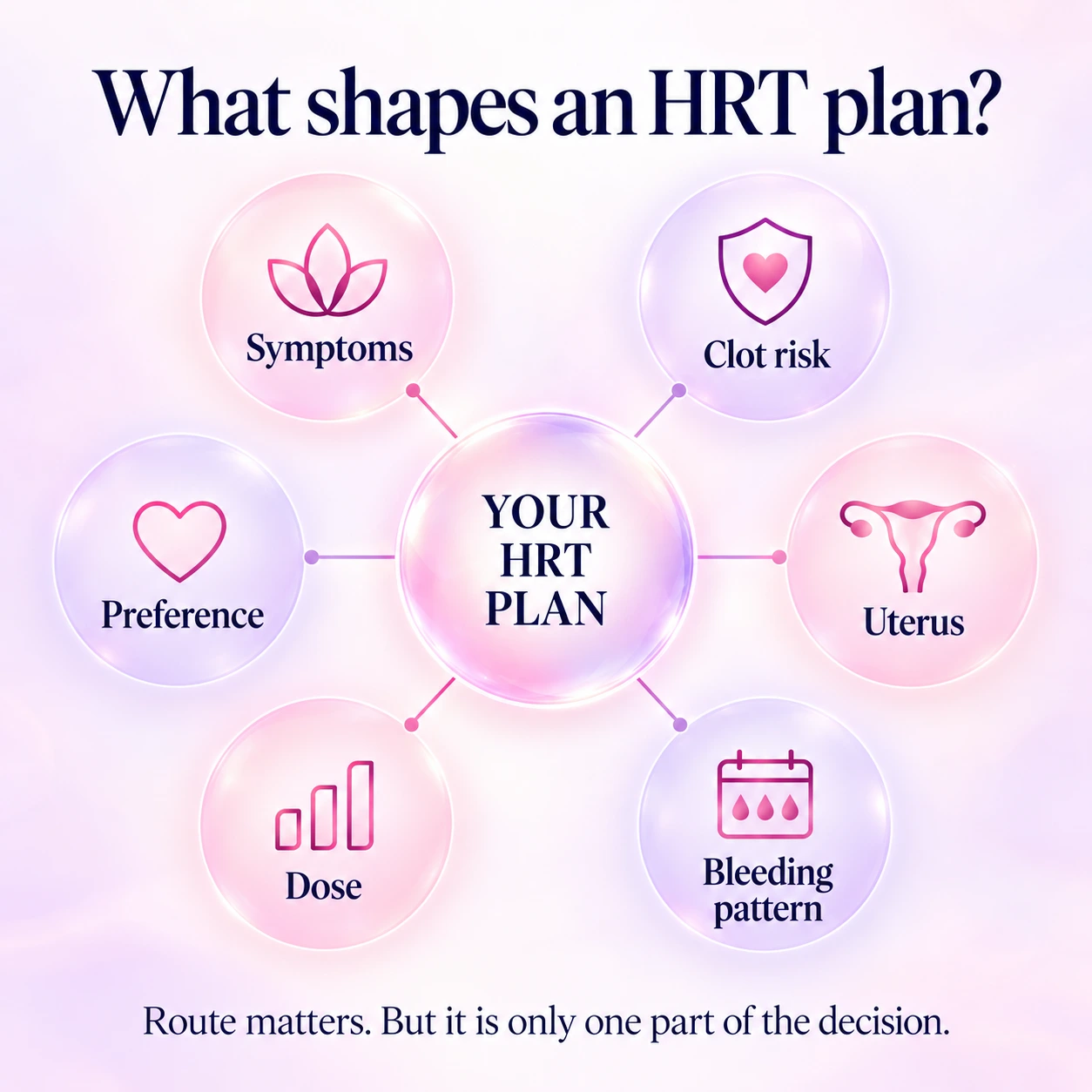
Even when transdermal estrogen makes more sense from a clot-risk perspective, that still does not decide the whole HRT plan.
HRT is not chosen only by route. The dose matters. Whether you still have a uterus matters. Your bleeding pattern, symptoms, migraine history, metabolic health and treatment preferences matter too.
So the real decision is rarely just tablet or gel. It is which overall HRT plan fits your symptoms, your medical history and your level of risk.
Estrogen Gel Is Systemic, Not Local
One distinction can easily get lost here: estrogen gel is a systemic HRT.
That means it is absorbed through the skin and works throughout the body. It is different from low-dose vaginal estrogen, which is mainly used for local symptoms such as dryness, discomfort or urinary irritation.
This matters because women sometimes assume that all non-tablet estrogen works in the same way. It does not. Estrogen gel is still a form of systemic HRT, so it belongs in the same broader treatment discussion as oral estrogen.
If You Still Have a Uterus, Estrogen Is Only Half the Plan
Because estrogen gel works throughout the body, the usual rules of systemic HRT still apply.
If you still have your uterus, estrogen is generally prescribed with a progestogen. Its role is to protect the lining of the uterus from the effects of estrogen. If you have had a total hysterectomy, estrogen-only HRT is usually used instead.
This is why choosing between a tablet, gel or patch is only one part of the prescription. The combination, dose and regimen also need to fit you.
Getting the Dose Right May Take Some Adjustment
Choosing the route is only the beginning. The dose and regimen may need adjusting depending on how well your symptoms improve and how you tolerate treatment.
Current NICE guidance recommends using the lowest effective dose of HRT and reviewing treatment after about 3 months to assess how well it is working and whether side effects are manageable. After that, treatment is usually reviewed at least once a year. (NICE)
If symptoms are still troublesome, side effects develop or your bleeding pattern changes, your clinician may review the dose, formulation or combination rather than assuming the first prescription has to remain unchanged.
The aim is not to find the highest or lowest dose. It is to find the dose that gives you enough symptom control with an acceptable balance of benefits and risks.
Bleeding Can Change as the Regimen Changes
As your dose or HRT regimen is adjusted, your bleeding pattern may change too.
Some vaginal bleeding can happen after starting systemic HRT or after changing the dose or preparation. NICE notes that this can be common during the first 6 months of starting HRT or within 3 months of a change in dose or preparation.
What matters is the pattern. Bleeding that is heavy, prolonged, or continues beyond those timeframes should be assessed rather than simply watched.
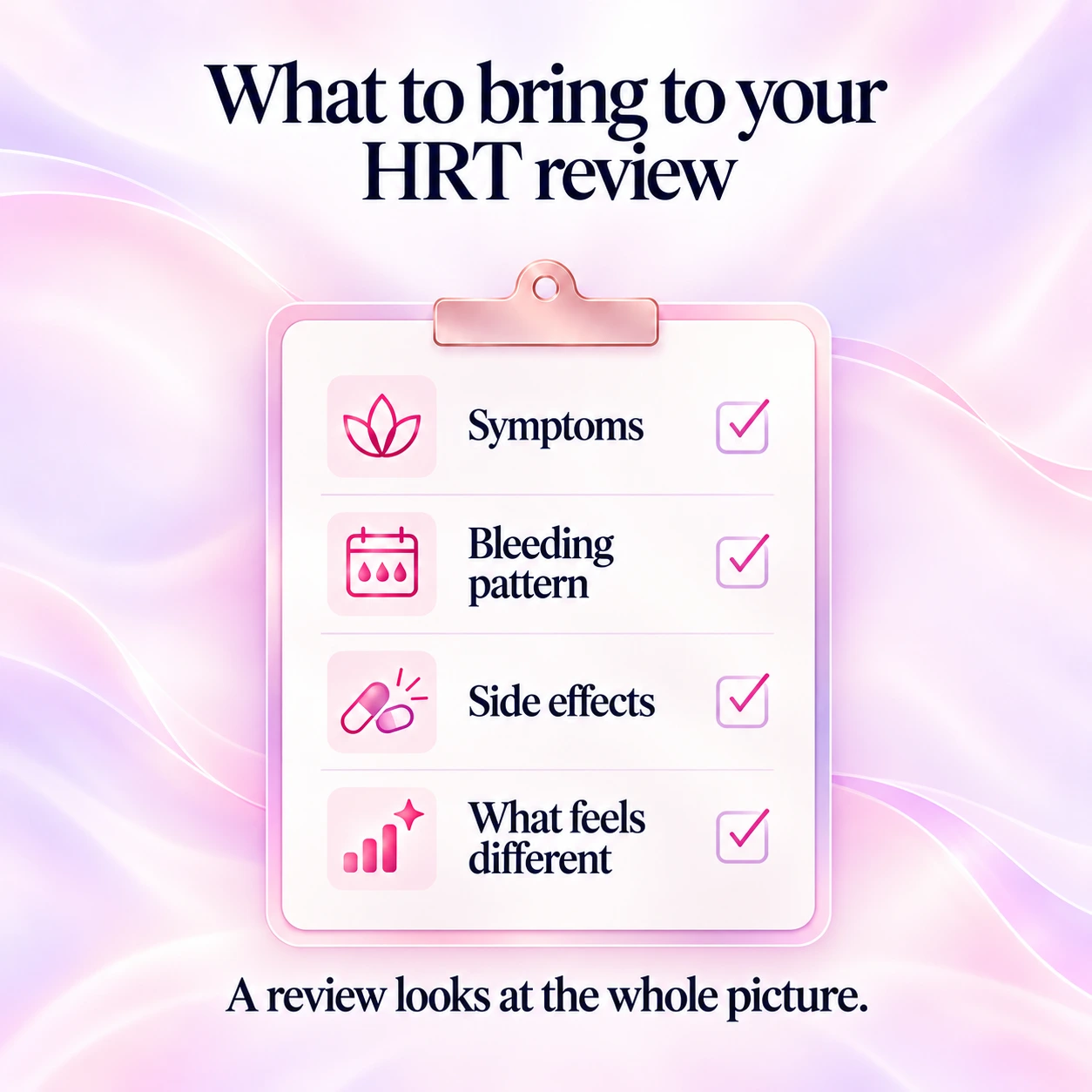
So when your HRT is reviewed, the conversation is not only about whether your symptoms are better. Bleeding, side effects and any other changes you have noticed also help show whether the current plan still suits you.
Your HRT Route Can Be Revisited Too
An HRT review is not only about changing the dose. Sometimes, the route of estrogen may be worth revisiting too.
If your health changes or new factors affecting your clot risk emerge, your clinician may reconsider whether oral or transdermal estrogen still makes the most sense for you. If your current treatment is working well and your risk profile has not changed, there may be no reason to change it.
The British Menopause Society recommends individualizing the dose, regimen and duration of HRT, with regular review of its benefits and risks.
So the HRT you start with does not necessarily have to be the HRT you stay with forever. Your treatment can evolve as your health and needs change.
What Should Actually Guide the Choice?
The choice between an HRT tablet, estrogen gel, patch or spray should not come down to convenience alone.
Your clot risk, symptoms, medical history, whether you have a uterus, the dose you need and how you respond to treatment all shape that decision.
For some women, transdermal estrogen will make more sense because of their risk profile. For others, oral estrogen may still be a reasonable option.
The important thing is that the route is chosen for a reason that makes sense for you, and reviewed if your health or treatment needs change.
At MIROR’s HRT Centre of Excellence, treatment decisions are made by looking at the whole clinical picture rather than choosing a formulation in isolation. The aim is to help you understand your options and discuss a plan that fits your symptoms, medical history and individual risk profile.
Because HRT is not about finding one universally “best” form of estrogen. It is about finding the right balance of symptom relief, practicality and risk for you.