
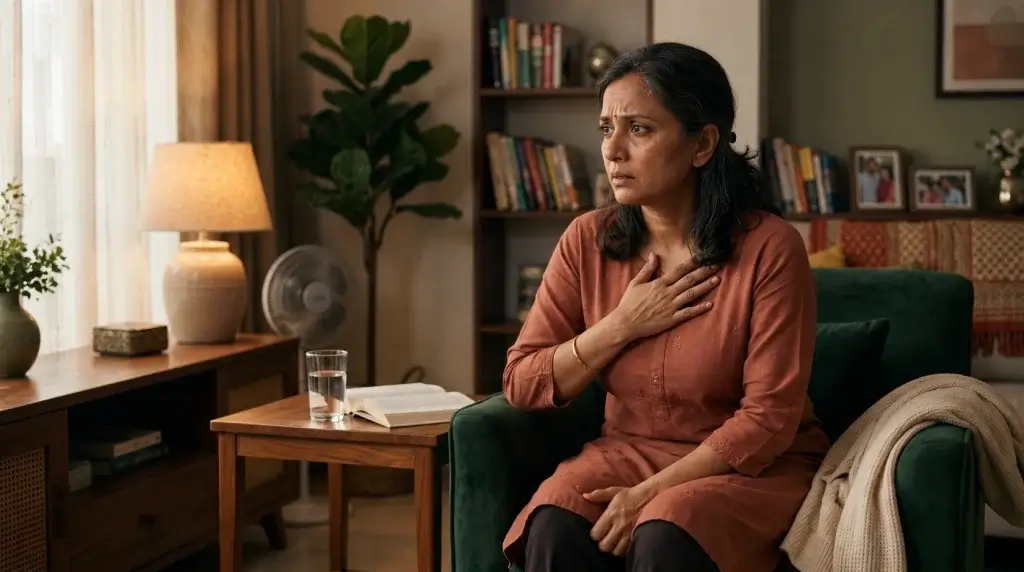
“It’s a perfectly ordinary Tuesday afternoon.”
You’re at home, sitting in your favourite chair with a cup of tea,
when suddenly your heart starts pounding.
Your chest feels tight.
Your hands feel unsteady.
A wave of fear washes over you, and for a moment, you’re not sure what’s happening.
And then comes the thought that unsettles you most: “I’ve never been an anxious person. Why is this happening to me now?”
Sometimes it happens at night.
You wake suddenly.
Your heart is pounding.
You’re sweating.
Your chest feels tight.
Your mind is racing.
And then comes the question many women ask me: “Why am I suddenly anxious? I’ve never been like this before.”

The perimenopause transition can increase vulnerability to anxiety, while sleep disruption, physical symptoms, existing stress and other medical conditions can all add to the picture.
What Does a Panic Attack Feel Like?
A panic attack is a sudden surge of intense fear or discomfort that can come with a pounding heart, sweating, trembling, breathlessness, dizziness, tingling, chest discomfort, nausea or a feeling of losing control. The symptoms can be intensely physical.
The frightening part is often the interpretation: “Why is my heart doing this?”
That fear can intensify the body’s alarm response, creating a vicious cycle.
Important: Panic attacks can feel frightening, but similar symptoms can also occur with heart rhythm problems, thyroid disease and other medical conditions. A first or unexplained episode deserves proper assessment.
(Mayo Clinic)
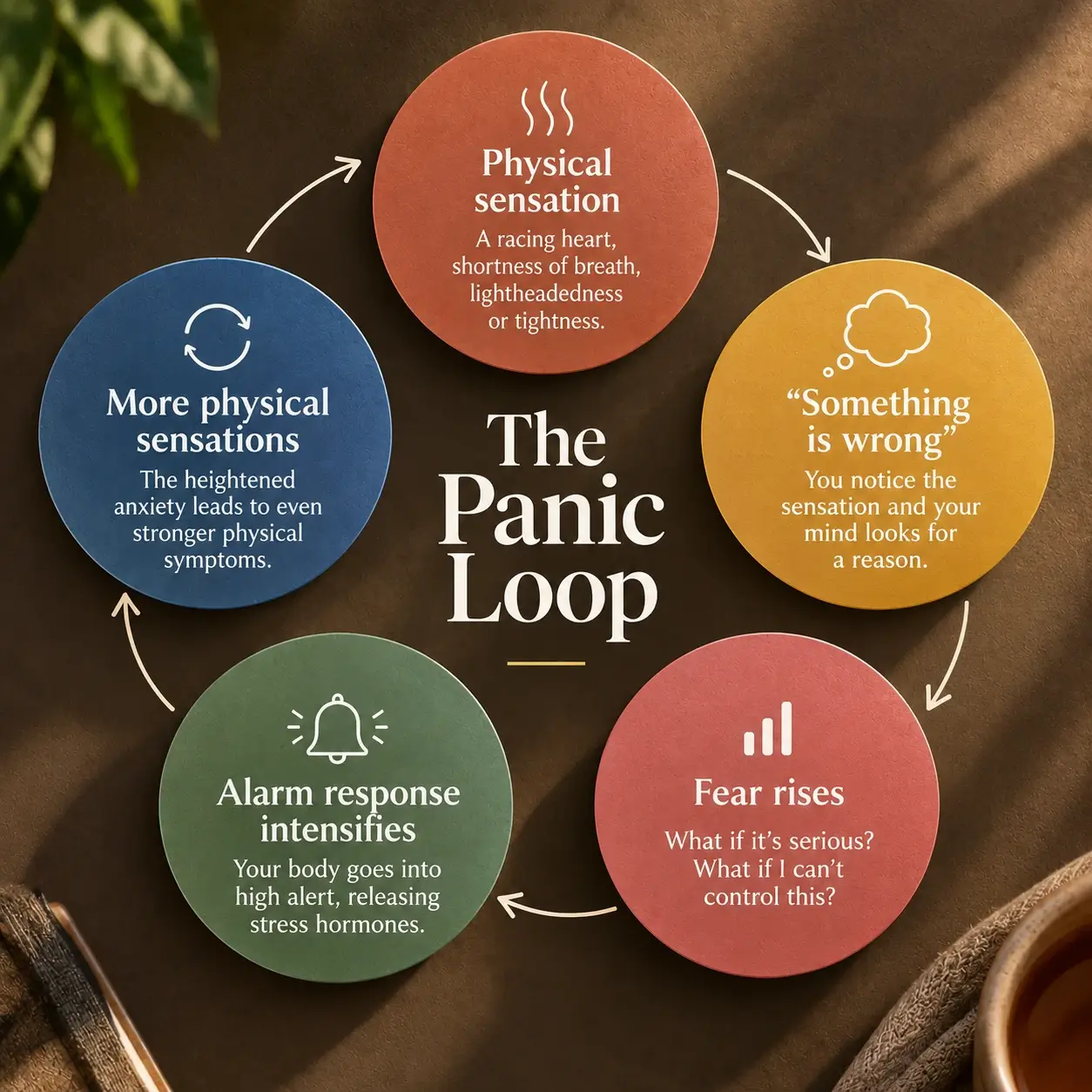
The panic loop can begin with a physical sensation, followed by the thought that something is wrong, rising fear and an intensified alarm response.
Why Can Anxiety Appear During Perimenopause?
The simplest explanation is not simply “your estrogen is low.”
Perimenopause is a period of hormonal fluctuation, and anxiety symptoms can become more prominent during the transition.
John Hopkins Medicine notes that mood and anxiety symptoms often rise through perimenopause and are influenced by fluctuating estrogen, sleep disturbance, vasomotor symptoms and psychosocial stress.
That matters because midlife is rarely just one thing.
You may be sleeping badly because of night sweats.
You may feel physically different because of palpitations or hot flushes.
You may be carrying work, family and relationship pressures.
And poor sleep can make it harder to regulate stress.
Thus, anxiety in perimenopause is often a convergence of several things, not one hormone acting alone.
(NIH)
Panic Attack or Hot Flush?
This is one of the most useful distinctions to understand.
They can overlap. Both may involve sweating, racing heart, heat, breathlessness and a sudden sense of unease.
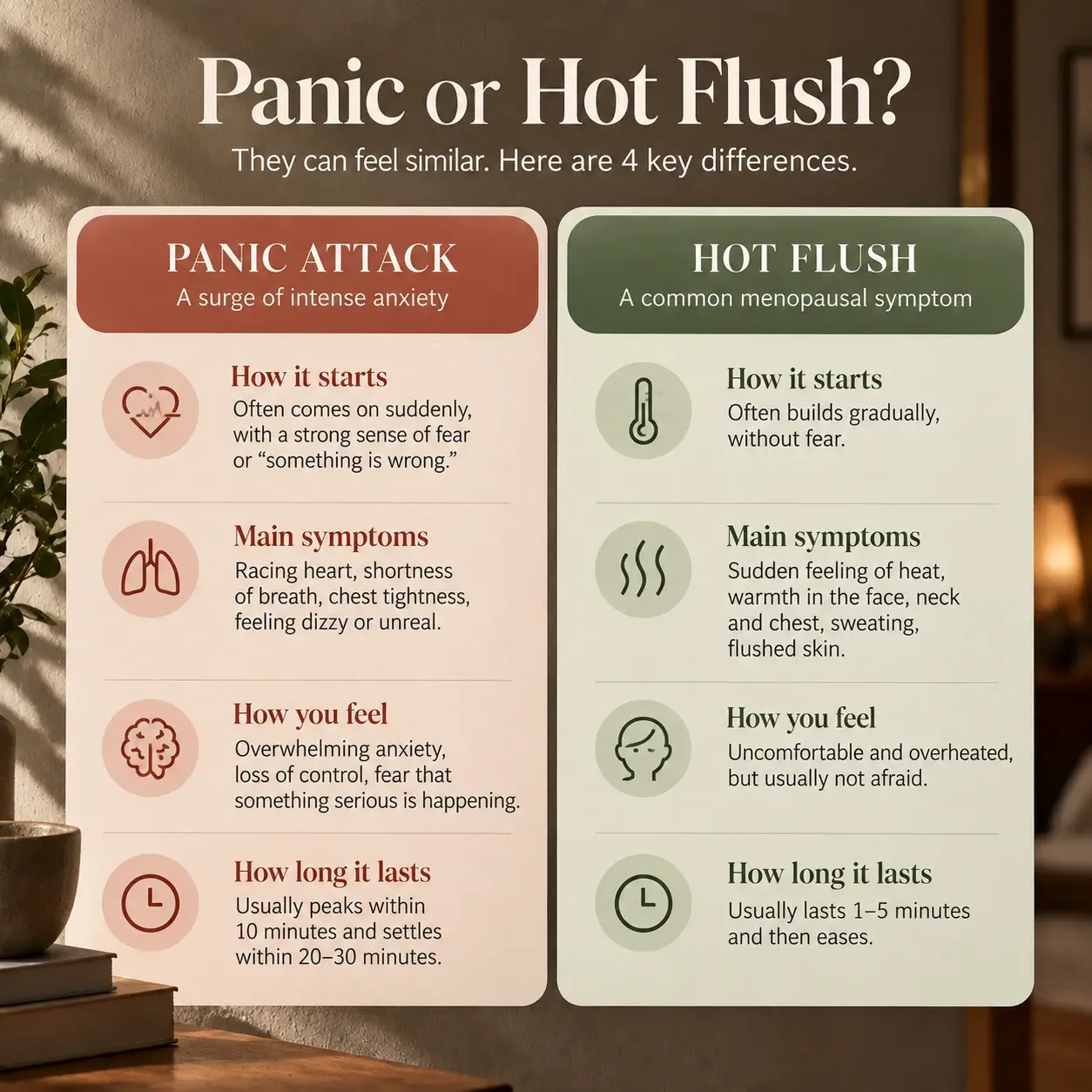
(Psychopharmacology Institute)
Before Calling It “Just Anxiety,” Check the Physical Side
New panic-like symptoms in your forties should not automatically be treated as psychological.
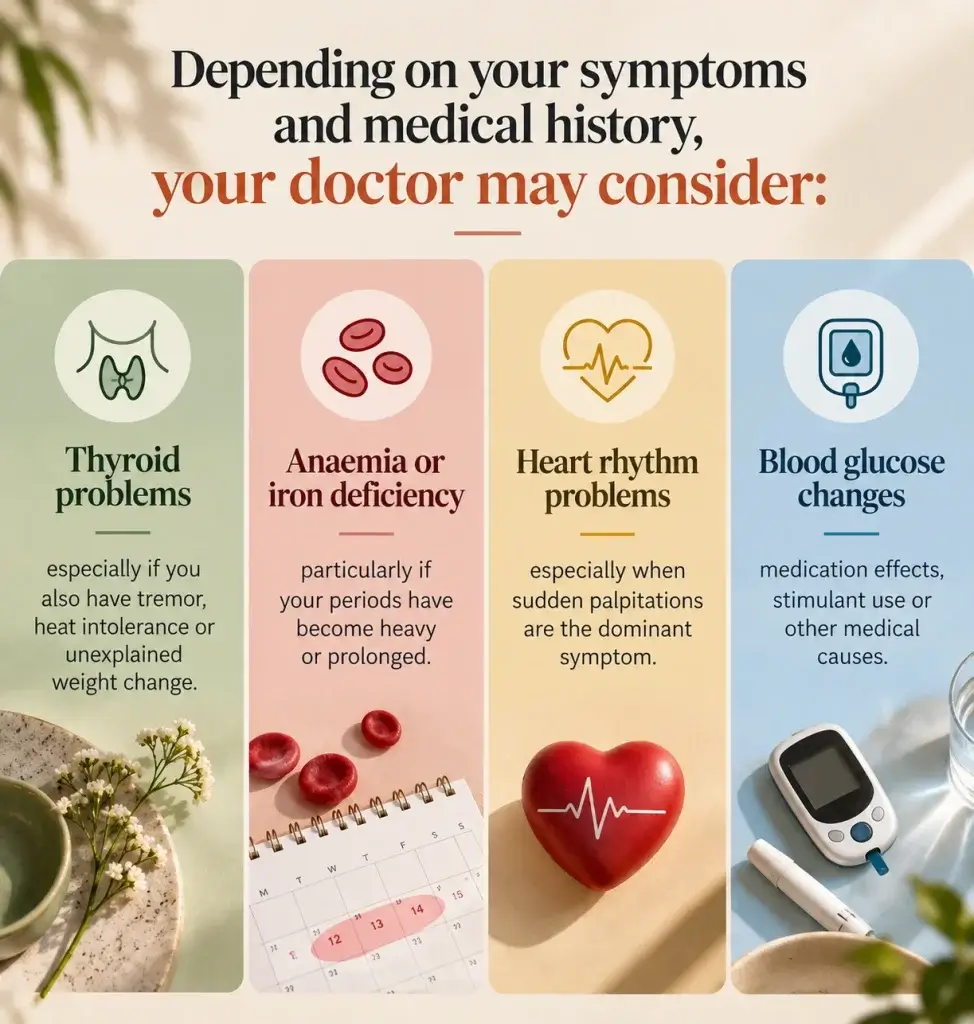
The tests you need depend on your symptoms. Your doctor may consider a blood count, ferritin, thyroid testing, glucose testing or an ECG rather than ordering every possible test.
And yes, caffeine and alcohol can worsen anxiety or sleep in some people, so mention them honestly rather than assuming they are irrelevant.
(Valencia-Med)
Please Don’t Write Off Chest Symptoms as Panic
This deserves its own box because reassurance can sometimes be dangerous.
⚠️ GET URGENT MEDICAL HELP:
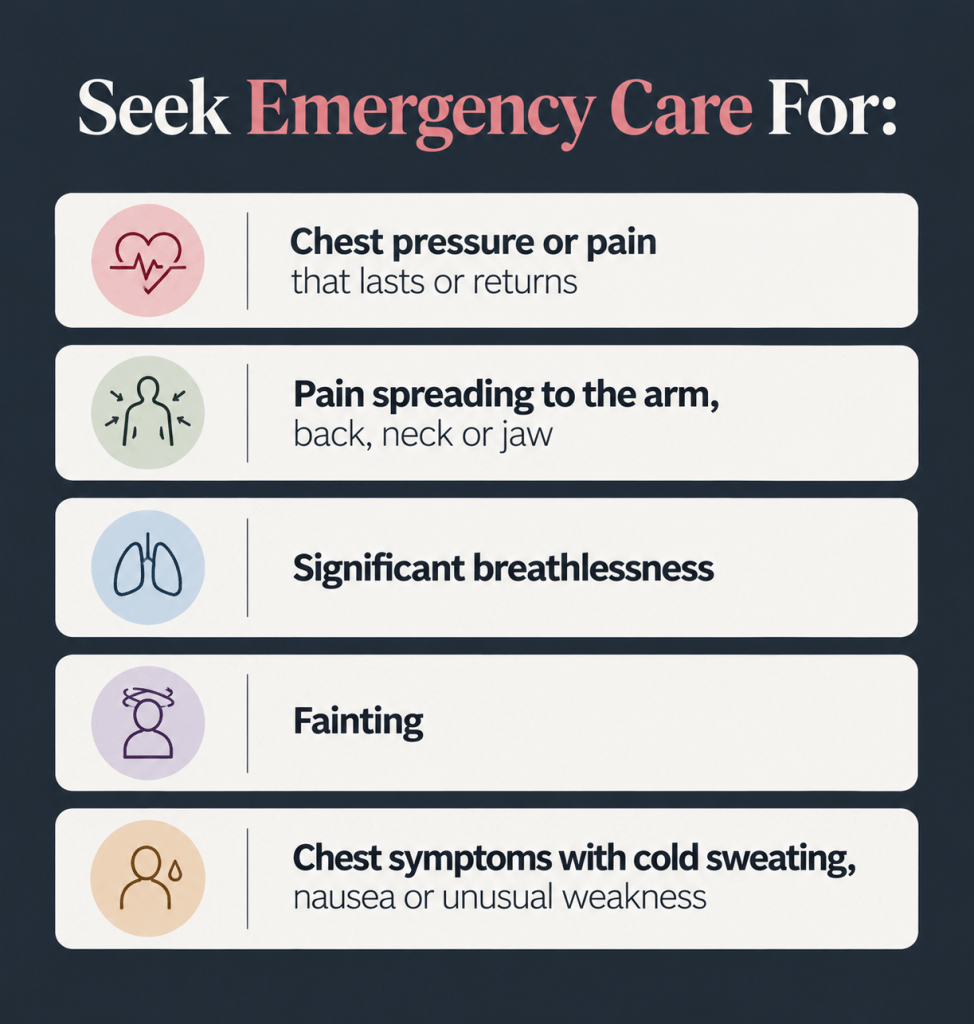
A panic diagnosis should never be used to dismiss new or unexplained cardiac symptoms. Women can experience heart problems with symptoms that are less typical than the classic “crushing chest pain,” including breathlessness, nausea, unusual fatigue and back, shoulder or jaw discomfort.
What Actually Helps?
Once a clinician has established that the episodes are panic or anxiety, you have effective treatment options.
Psychological therapy
CBT is an evidence-based treatment for panic disorder and anxiety. It helps break the cycle between physical sensations, frightening interpretations and avoidance. NICE recommends CBT as a core treatment option for panic disorder.
Medication
For some people, antidepressant medicines such as SSRIs or SNRIs are appropriate, particularly when symptoms are persistent, moderate-to-severe or significantly impairing. These should be prescribed and monitored by a qualified clinician.
What about HRT?
HRT is not an established treatment for panic disorder.
However, when anxiety appears alongside significant hot flushes, night sweats or other menopausal symptoms, treating the wider menopause picture may form part of an individualised plan. Current menopause guidance supports discussing the benefits and risks of HRT according to a woman’s symptoms and circumstances.
What Can You Do During an Episode?
First, remind yourself: “I am experiencing a surge of symptoms. I need to slow down, not fight them.”
🔄 THEN TRY THIS 3-MINUTE RESET:
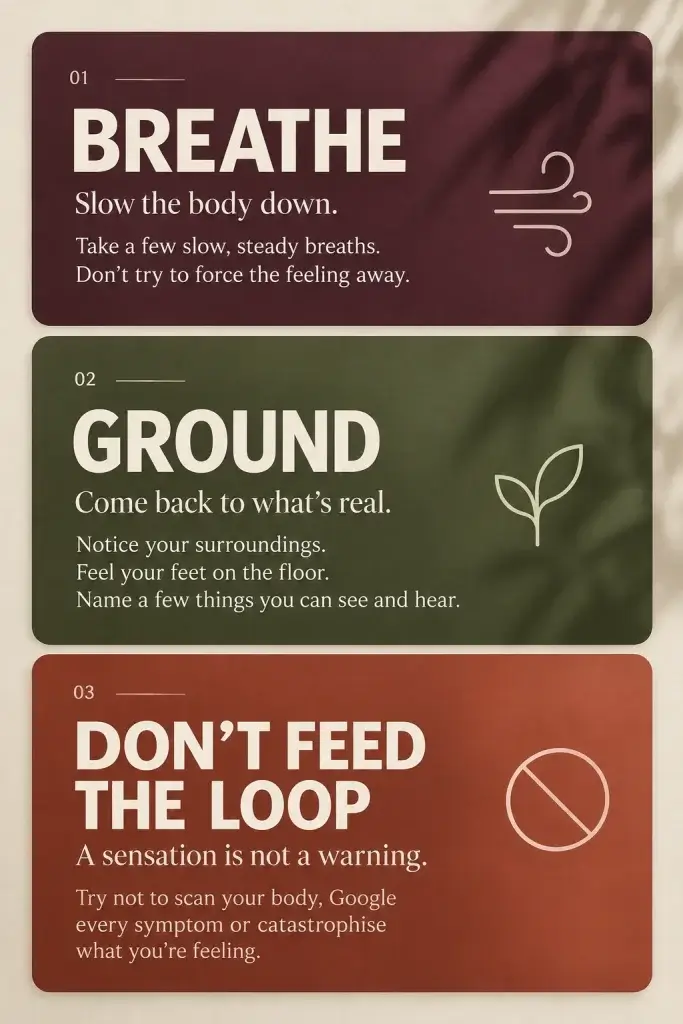
Don’t repeatedly check your pulse or search every symptom online in the middle of an episode. That can feed the fear loop.
When Should You Get Help?
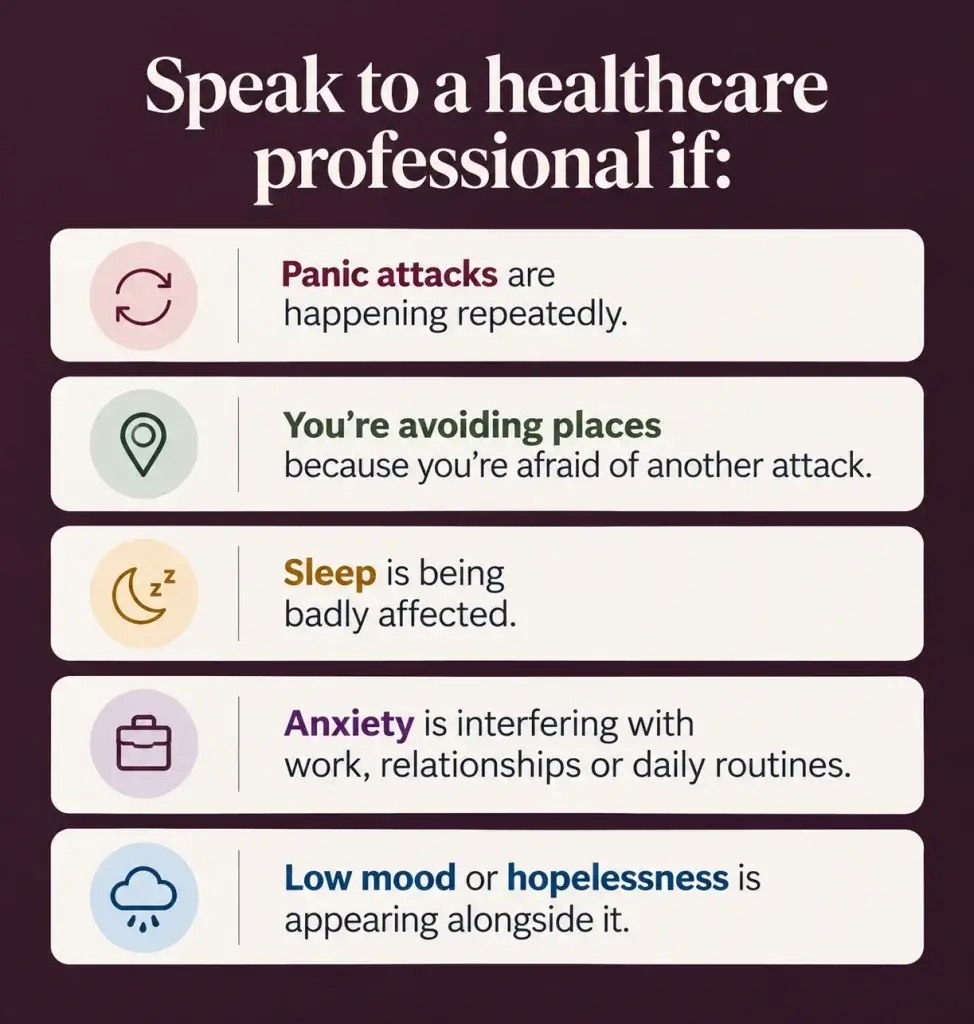
Don’t wait until anxiety has taken over your life. And if you’re having thoughts of harming yourself or feel unable to keep yourself safe, seek urgent mental-health support. You can also connect with Miror Doctors & Health Experts for personalised support.
Where Miror’s HRT Centre of Excellence Can Truly Help You
New anxiety in your forties deserves more than being told “it’s just hormones.”
At Miror’s HRT Centre of Excellence, women can discuss their menopause symptoms alongside sleep, physical symptoms, medical history and mental wellbeing, with appropriate referral when psychological or other specialist care is needed.
The goal is not to label every racing heart as panic. It’s to understand what is happening and find the right support.
New panic symptoms deserve the right assessment.
Explore Miror’s HRT Centre of Excellence today.
Why Choose Miror Bliss?
For women in perimenopause who are also dealing with symptoms such as sleep disruption, hot flashes and mood changes, Miror Bliss is designed as a daily perimenopause support formulation for women 40+.
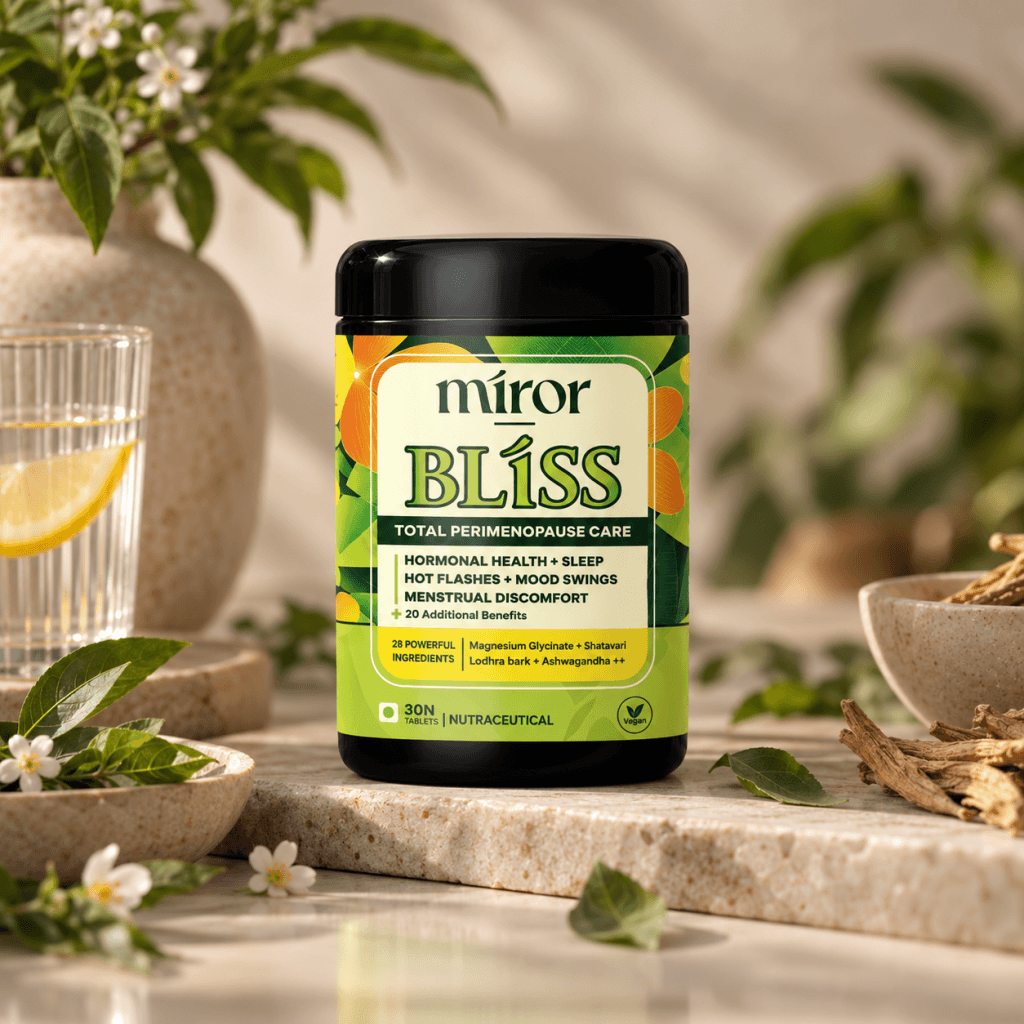
Miror Bliss is not a treatment for panic disorder or a substitute for psychological or medical care. Think of it as one possible part of a broader perimenopause routine alongside appropriate clinical care, sleep, movement and support.
A Final Word
Being suddenly anxious in your forties does not mean you’ve become an anxious person.
Perimenopause can be part of the story. So can sleep, stress, physical symptoms and other medical conditions.
You don’t have to figure out which one it is by yourself.