
You’ve had the hearing test.
Your ears were examined. Perhaps you’ve even had a scan.
And you’ve been told: “Everything looks normal.”
That can be oddly unsatisfying when the ringing is still there; especially at night, when the bedroom goes quiet and suddenly the sound seems louder than everything else.
But a normal ENT assessment does not mean “nothing is wrong” or “nothing can be done.”
Tinnitus is a perception of sound without an external source. It can be linked to hearing loss, noise exposure, medications, ear conditions and changes in how the brain processes sound. Sometimes no single cause is identified. (nhs.uk)
1. Tinnitus Can Feel Louder During Perimenopause
The relationship between tinnitus in menopause and hormones is plausible, but not fully established.
The inner ear and auditory pathways are influenced by sex hormones, and researchers have investigated whether changing estrogen levels affect hearing and tinnitus.
But the evidence is inconsistent, so it would be too simplistic to say: “Low estrogen causes tinnitus.”

What often changes around the same time is everything surrounding the tinnitus.
Sleep becomes more fragmented. Anxiety may increase. Hot flushes can wake you at night. Stress can make internal sensations harder to ignore.
And all of those can make tinnitus feel more intrusive, even when the sound itself has not dramatically changed.
2. The Sound Isn’t Always the Biggest Problem
Two people can have similar tinnitus but completely different experiences.
Why?
Because tinnitus loudness and tinnitus distress aren’t the same thing.
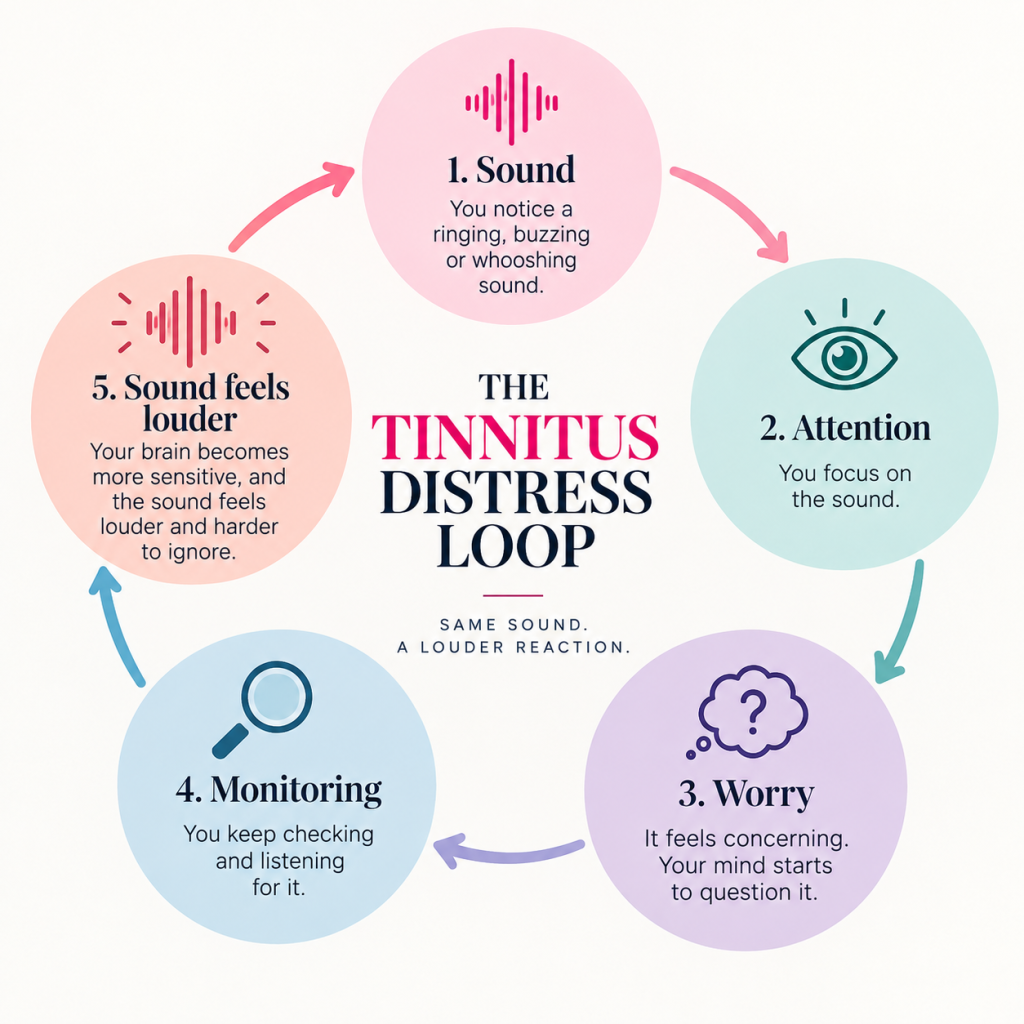
When you’re exhausted or anxious, your brain is more likely to monitor the sound closely. The more you check whether it’s still there, the harder it becomes to ignore.
This creates a loop: Tinnitus → attention → worry → more monitoring → tinnitus feels more intrusive
That doesn’t mean tinnitus is “all in your head.”
It means the brain’s response to the sound is part of the experience; and that response can be treated.
3. “My ENT Found Nothing” Can Actually Be Good News
If examination and appropriate hearing tests don’t reveal a structural cause, that does not make the tinnitus imaginary.
For many people, tinnitus has no single identifiable cause.
Your next step may be management rather than another endless search for a hidden disease.
Depending on your hearing results and how much the tinnitus is affecting you, management can include tinnitus counselling, psychological therapy and hearing aids when hearing loss is present. NIH recommends psychological support for tinnitus-related distress and amplification devices when there is relevant hearing loss. (NIH)
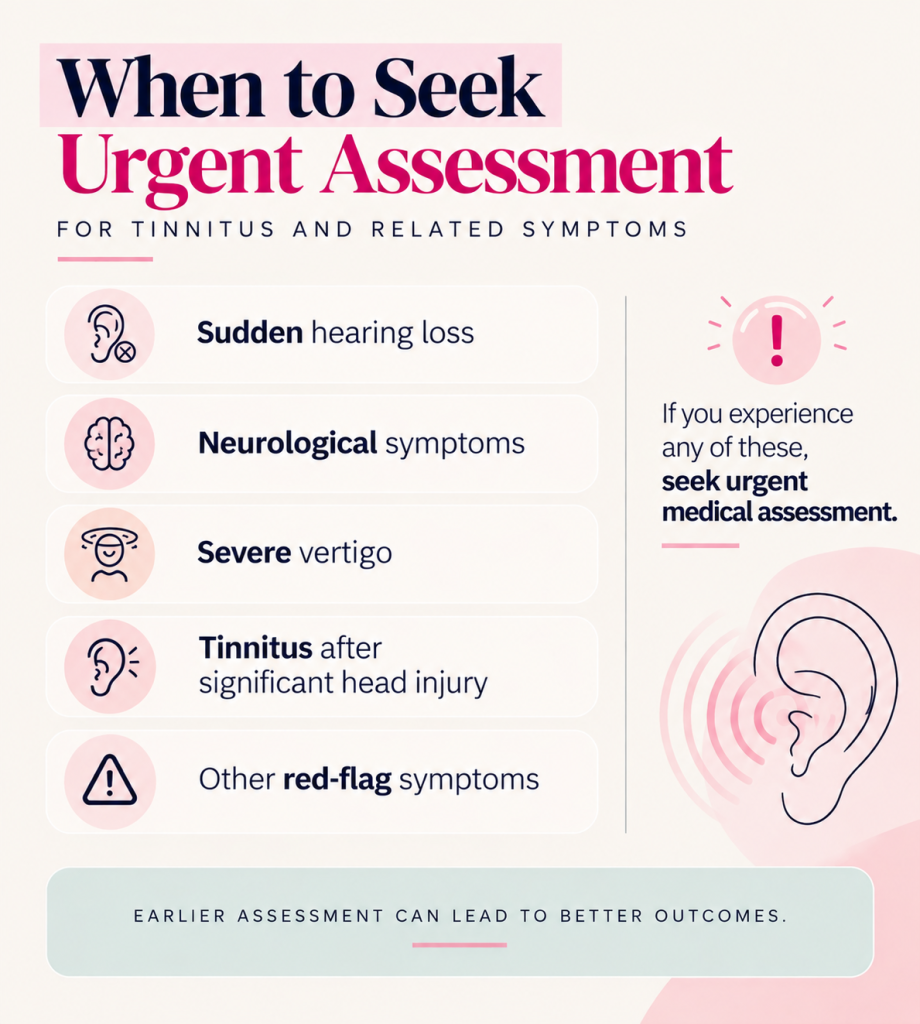
4. Some Types of Tinnitus Need a Faster Work-Up
This is the section to screenshot!
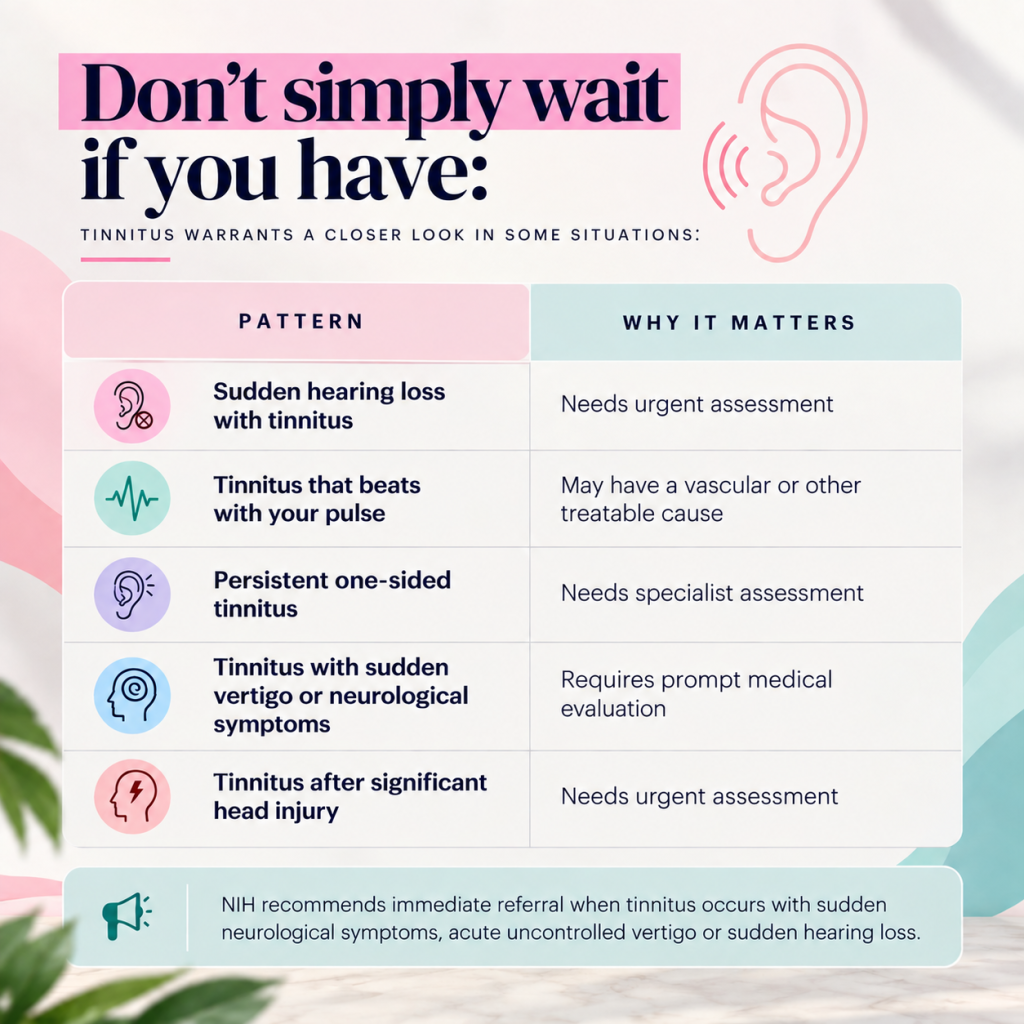 (NIH)
(NIH)
5. What About HRT?
This is where the internet gets very confident and the evidence doesn’t.
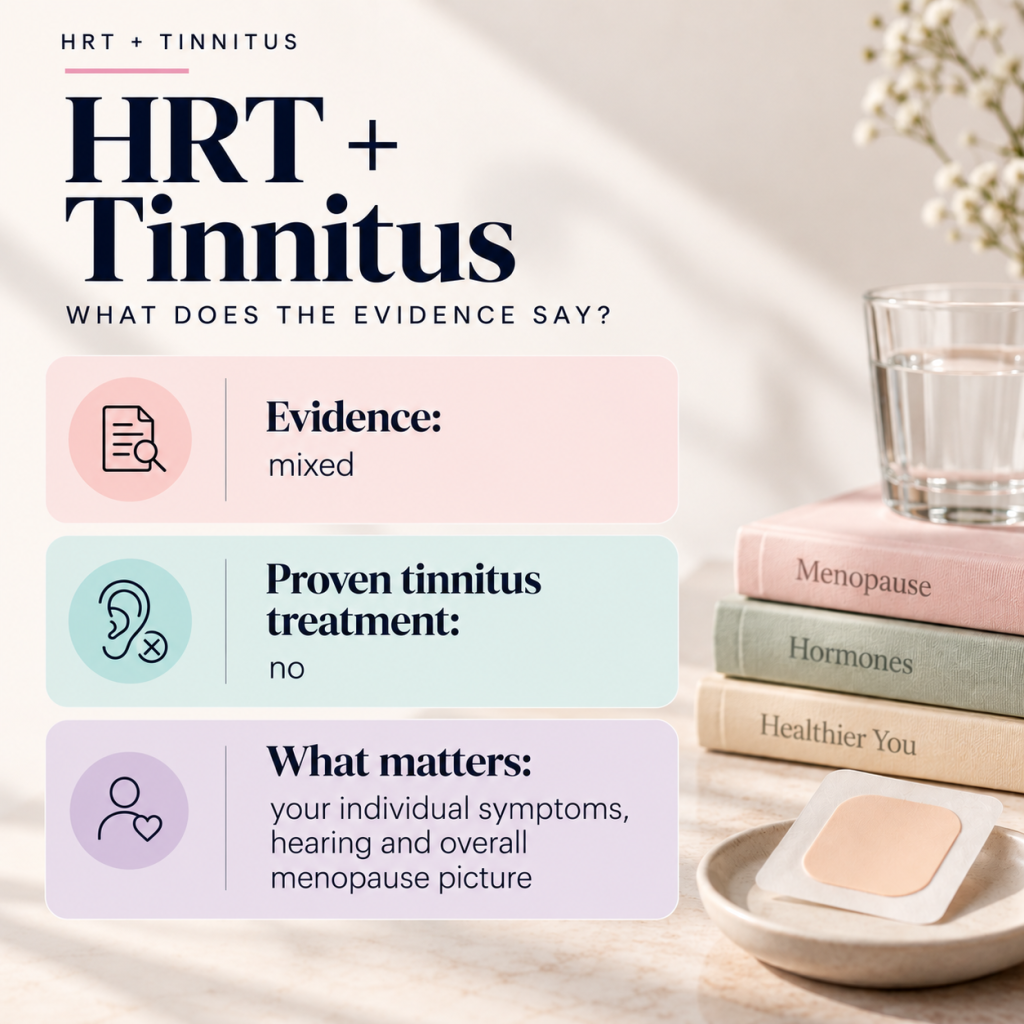
There is a biologically plausible reason researchers have investigated hormones and hearing. But HRT is not an established treatment for tinnitus.
The tinnitus-specific evidence is mixed. A large Taiwanese observational study of 55,680 women found a lower incidence of newly diagnosed tinnitus among HRT users, but that type of study can show an association, not prove that HRT prevented tinnitus.
(PubMed)
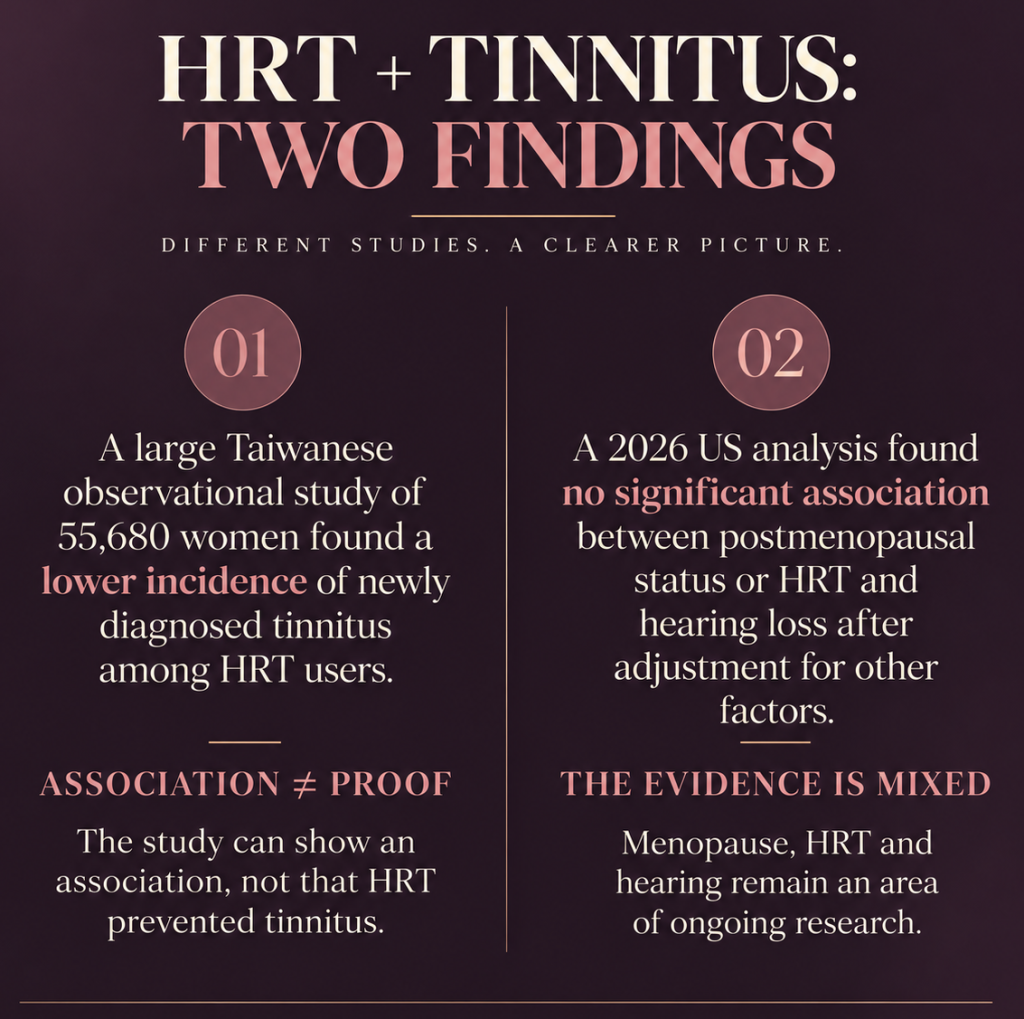
More recent research into menopause, HRT and hearing has also been inconsistent. A 2026 US analysis found no significant association between postmenopausal status or HRT and hearing loss after adjustment for other factors.
(PubMed)
So the sensible approach is:
Don’t start HRT for tinnitus.
And:
Don’t stop prescribed HRT because of tinnitus without discussing it with your clinician.
If tinnitus began or noticeably changed after starting or changing HRT, tell your doctor and ENT specialist. The timing is clinically useful even though it doesn’t prove cause and effect.
6. What Actually Helps?
There isn’t one magic tinnitus cure for everyone. The aim is to reduce its impact and make it less dominant in your day.
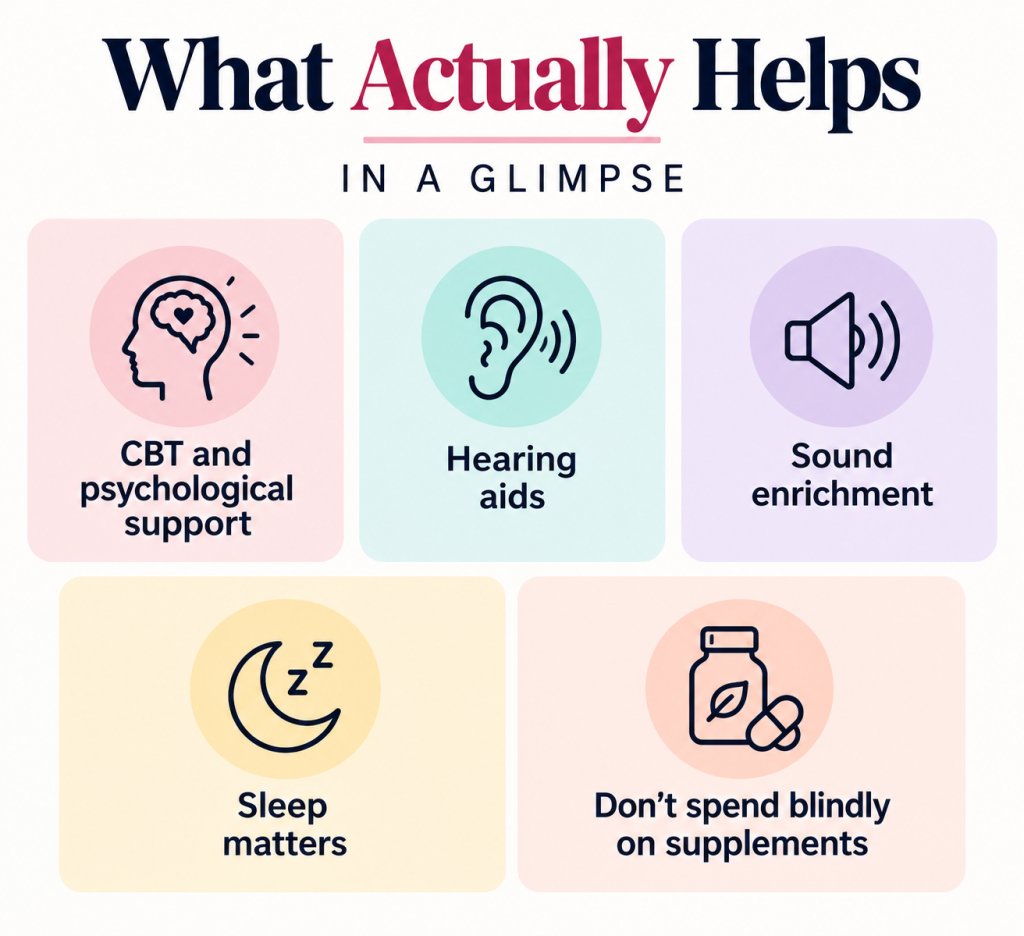
A. CBT and psychological support
CBT can reduce the negative impact and distress associated with tinnitus, even though it doesn’t physically remove the sound.
(Cochrane Library)
B. Hearing aids
When tinnitus occurs alongside hearing loss, hearing aids can reduce the contrast between outside sounds and the tinnitus and are recommended when hearing loss affects communication.
C. Sound enrichment
Complete silence can make tinnitus feel more prominent. Soft background sound — a fan, quiet music, radio or a sound app; may make it easier to stop focusing on the tinnitus. (nhs.uk)
D. Sleep matters
Night sweats, insomnia and anxiety can all make tinnitus more intrusive. Treating those problems may not remove the sound, but it can make a meaningful difference to how much space it takes up in your life.
E. Don’t spend blindly on supplements
Ginkgo and commercial “tinnitus formulas” are heavily marketed, but they do not have strong evidence behind them. NIH specifically advises against betahistine for tinnitus. (NIH)
When Should You Get Help?
See a doctor or ENT specialist if tinnitus is persistent, worsening or interfering with sleep, concentration or daily life.
And if tinnitus is making you feel hopeless or unsafe, treat that as a medical concern too. It is recommended to undertake immediate crisis assessment where tinnitus is associated with high suicide risk.
(CHC)
Where Miror’s HRT Centre of Excellence Can Help You
Tinnitus during midlife can sit at the intersection of hearing, sleep, stress, medication and hormonal changes.
At Miror’s HRT Centre of Excellence, your wider menopause picture can be reviewed alongside your symptoms and medical history, with ENT or audiology referral where the tinnitus itself needs specialist assessment.
The goal isn’t to blame menopause for the ringing. It’s to understand the whole picture and make sure nothing important gets missed.
Remember
Your tinnitus deserves more than “nothing’s wrong.”
Understand your symptoms and your wider menopause picture with the right clinical support.
Consult Miror’s expert panel of doctors and health professionals today