


Vasomotor symptoms in menopause don’t always feel like heat.
You may suddenly feel flushed and sweaty, only to find yourself shivering a few minutes later. Sometimes the cold sensation comes after a hot flash; sometimes it seems to appear on its own.
It can feel strange enough to make you wonder whether something else is wrong.
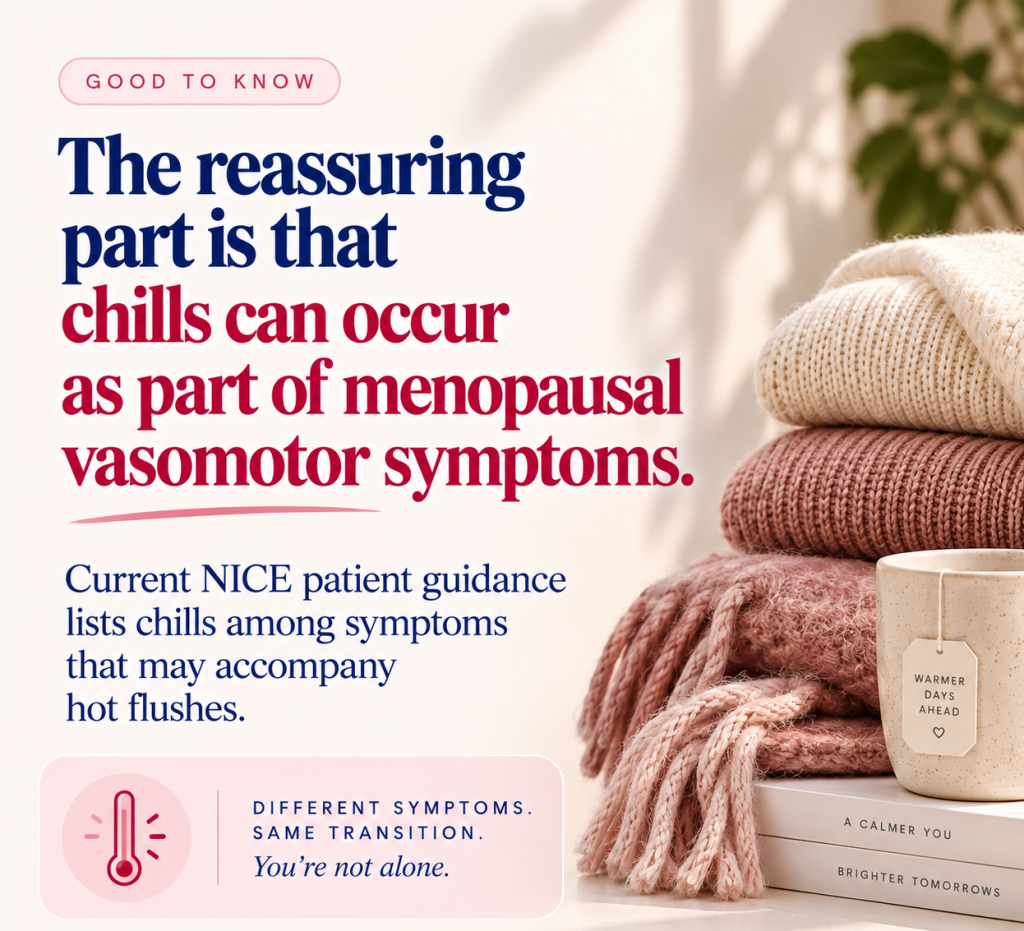 (Nice)
But that doesn’t mean every episode of shivering is menopause.
Here’s what is worth knowing.
Chills Before Hot Flashes? The Menopause Pattern Nobody Talks About
1. Vasomotor Symptoms Aren’t Just “Hot Flashes”
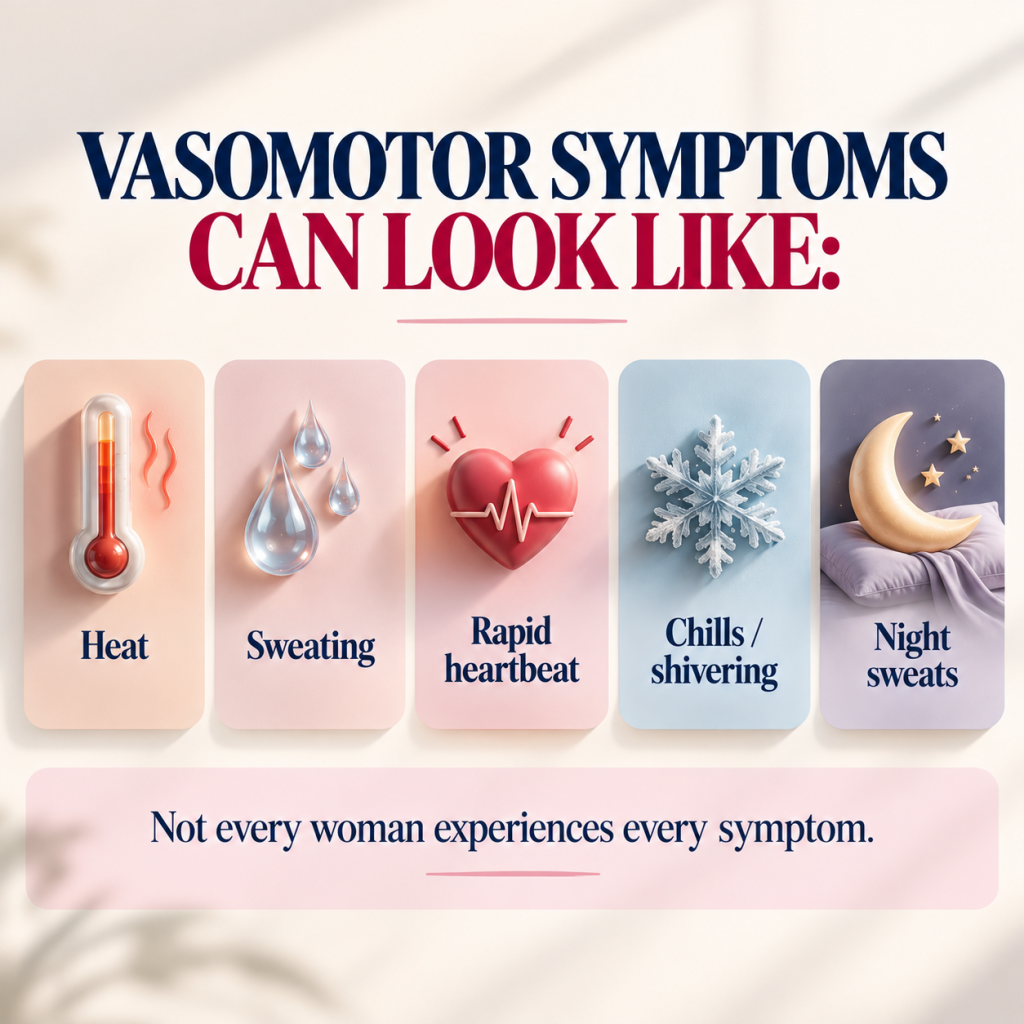
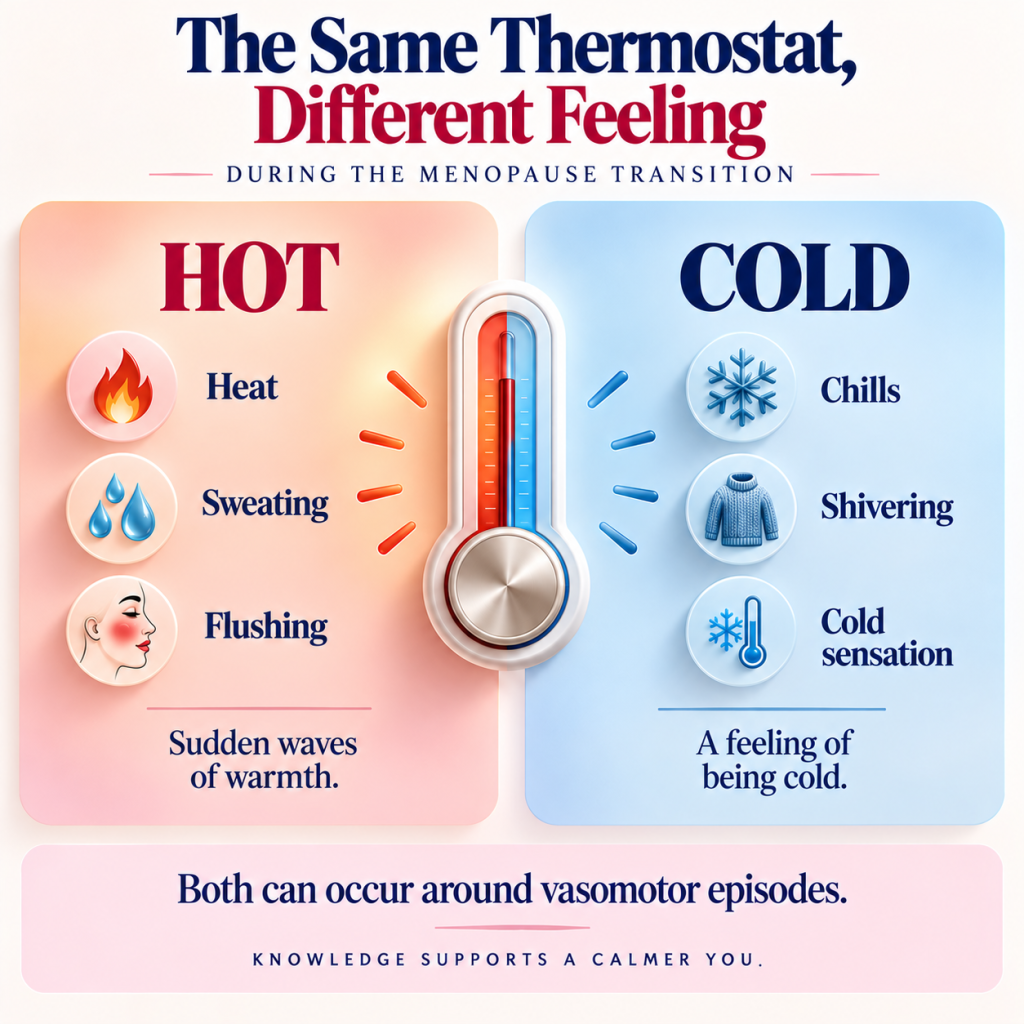
Vasomotor symptoms (VMS) is the broader medical term for menopausal temperature-regulation symptoms, particularly hot flushes and night sweats.
Some women also experience chills, shivering or a cold sensation around the episode.
2. Your Temperature “Comfort Zone” Gets Narrower
The most established explanation involves the brain’s temperature-control system.
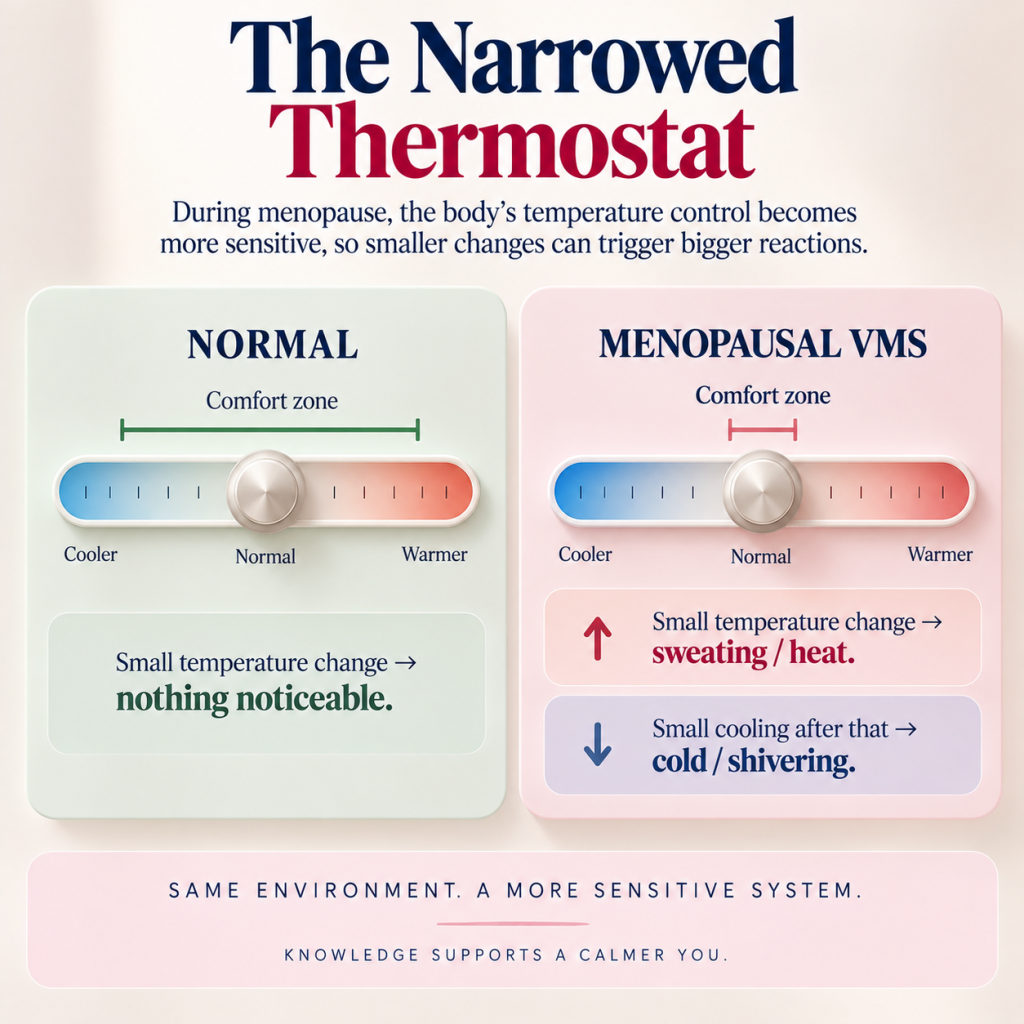
Your body normally tolerates small changes in core temperature without triggering sweating or shivering. This is called the thermoneutral zone.
In women who experience hot flashes, this zone can become unusually narrow. Research measuring sweating and shivering thresholds found a substantially smaller interthreshold range in symptomatic postmenopausal women than in women without hot flashes. (PubMed)
That means a relatively small temperature change can trigger a much bigger response.
3. Why Can You Feel Cold After Being Hot?
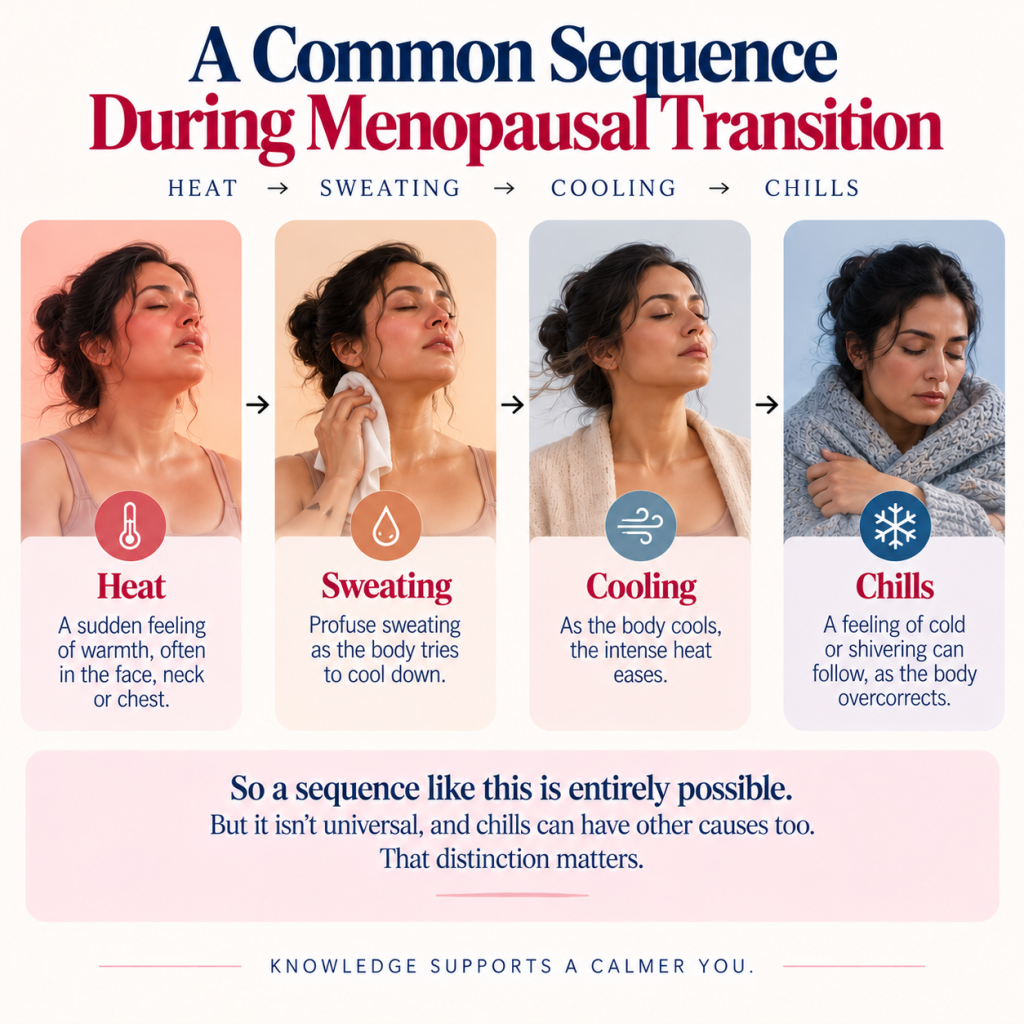
A hot flash involves heat-loss responses such as sweating and widening of blood vessels near the skin. Core temperature can fall during the episode. The narrowed thermo-neutral zone helps explain why the body may then trigger shivering or a strong sensation of cold. (PubMed)
4. A “Cold Flash” Isn’t Necessarily Something Else
Some women report a sudden cold sensation or shivering without remembering a dramatic hot flash first.
There isn’t enough dedicated research to tell us exactly how common isolated menopausal chills are. That’s an important limitation.
What we do know is that chills are recognised among symptoms that can accompany menopausal vasomotor episodes. (Nice)
5. Don’t Blame Every Night Sweat on Menopause
This is where I would slow down.
Menopause is a common cause of night sweats, but persistent or drenching night sweats with other symptoms need assessment.
Look out for:
| Symptom | Why it deserves attention |
|---|---|
| Fever | Could indicate infection |
| Unexplained weight loss | Needs medical assessment |
| Persistent cough | Important in regions with significant TB burden |
| Enlarged lymph nodes | Requires evaluation |
| Marked fatigue or feeling unwell | May indicate another condition |
| Repeated shaking episodes outside a VMS pattern | Worth investigating |
Tuberculosis can cause fever, fatigue, weight loss and night sweats, so persistent night sweats accompanied by these symptoms should not automatically be attributed to menopause.
(World Health Organization)
Thyroid disease, anaemia, infection, low blood glucose and some medicines can also produce sweating, chills or tremor.
6. Vasomotor Symptoms Can Last Much Longer Than You Expect
“It’s only menopause — wait it out” isn’t particularly useful advice when symptoms are affecting your sleep for years.
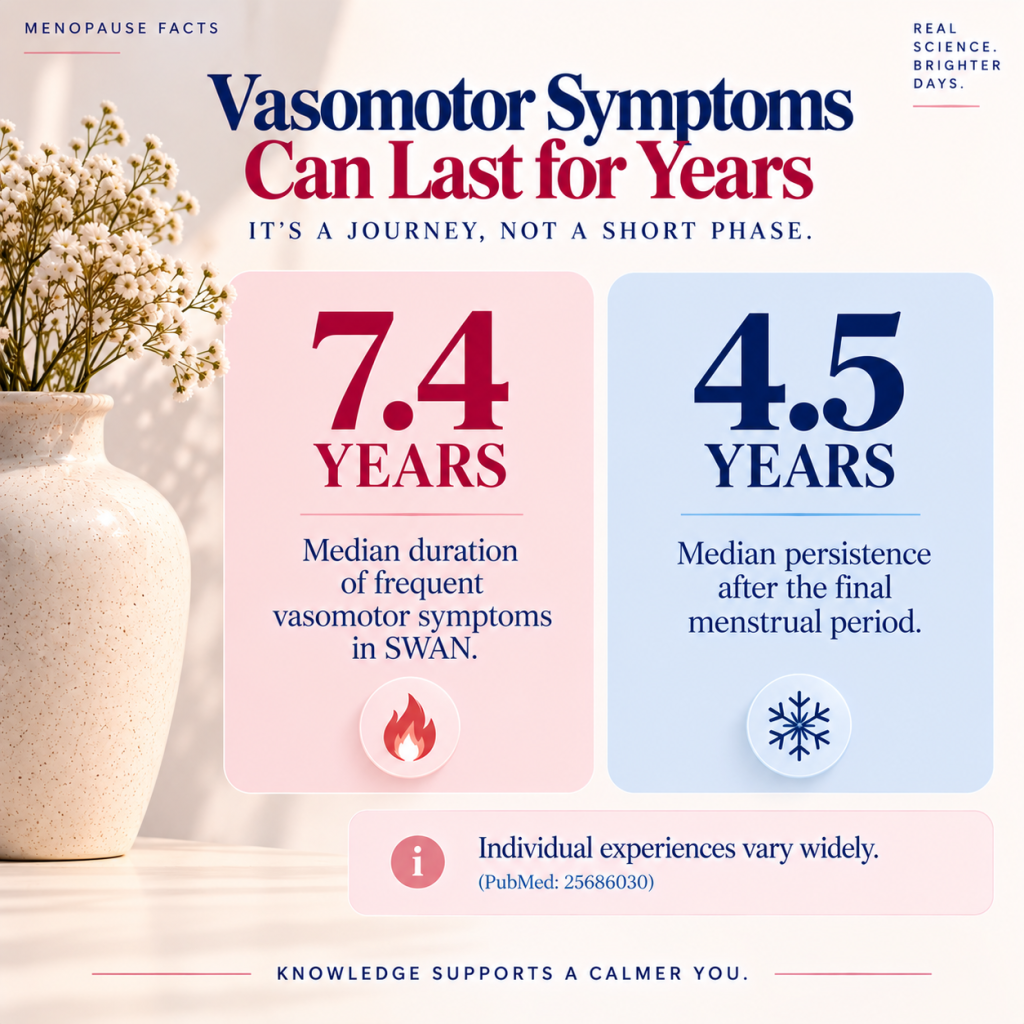
In the SWAN study, frequent vasomotor symptoms lasted a median 7.4 years, with a median 4.5 years of persistence after the final menstrual period. Duration varied considerably between women.
(PubMed)
So treatment decisions do not have to be based on the assumption that your symptoms will disappear in a few months.
What Actually Helps?
For troublesome menopausal vasomotor symptoms, HRT remains the most effective treatment option for many women when it is appropriate for them. NICE recommends offering HRT for menopausal vasomotor symptoms. (Nice)
Menopause-specific CBT can also be considered, either alongside HRT or when HRT is unsuitable or not preferred.
For women who cannot use HRT, fezolinetant is now a recognised non-hormonal treatment option for moderate-to-severe VMS in UK guidance. It works through the neurokinin-3 receptor pathway and requires liver-function monitoring. Availability and prescribing rules vary by country.
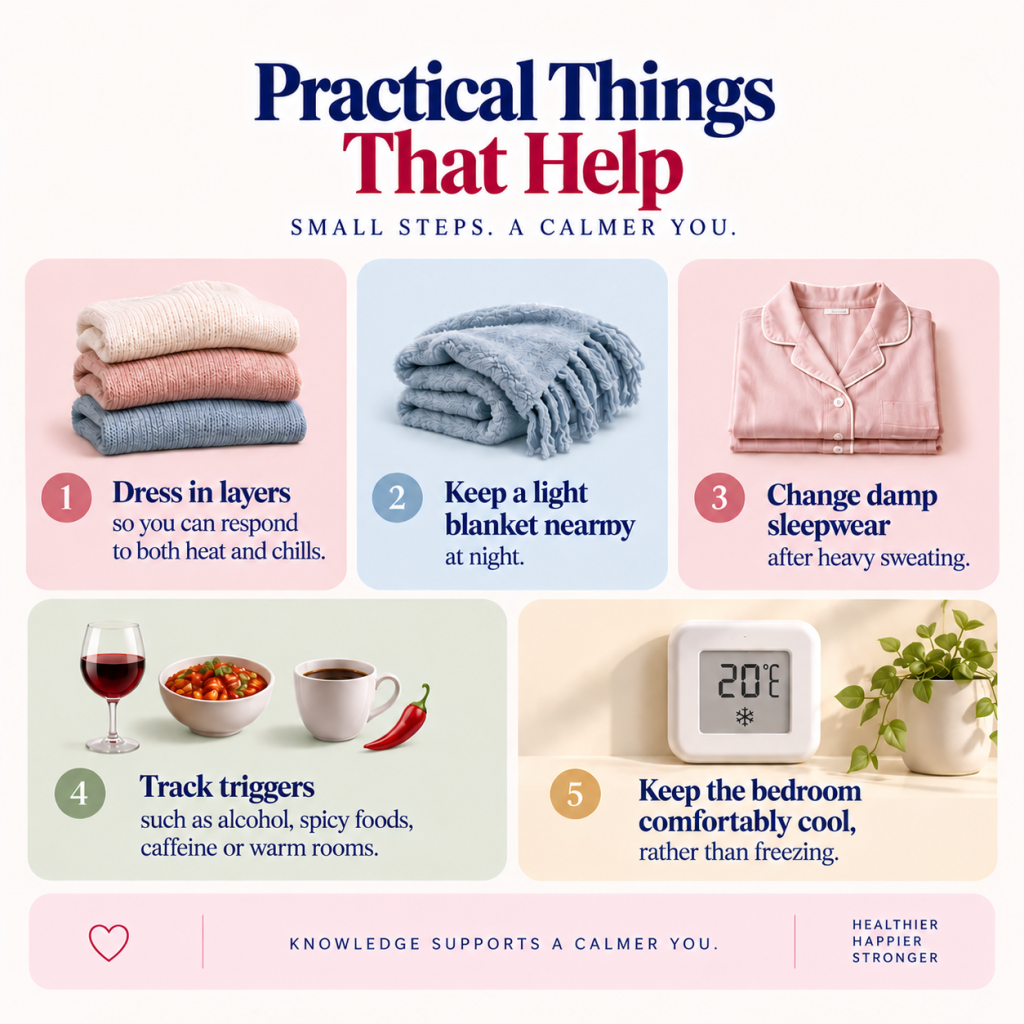
And remember: The goal is not to make every temperature change disappear. It’s to reduce the episodes that are disrupting sleep and daily life.
When Should You Get Checked?
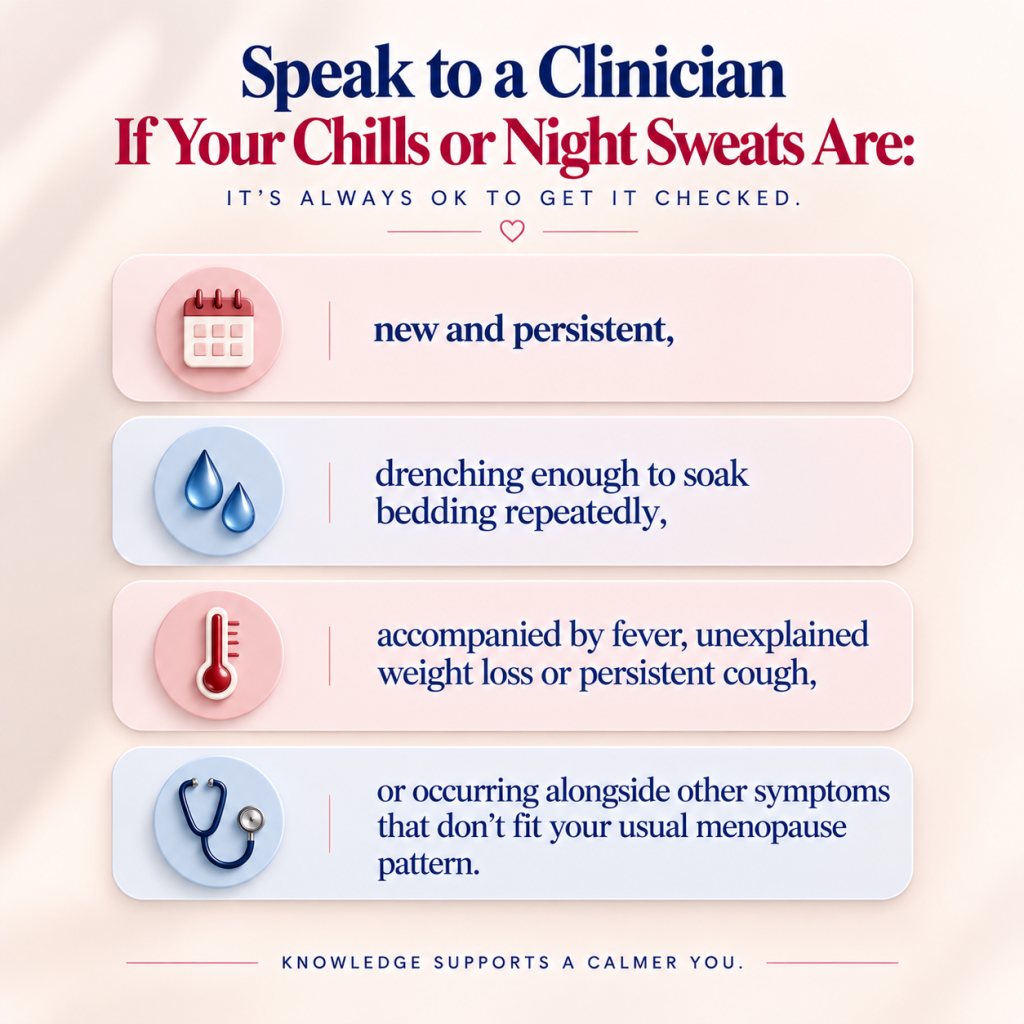
And if you’re having severe or unexplained symptoms, don’t assume the answer is hormonal simply because you’re in perimenopause.
Where Miror’s HRT Centre of Excellence Can Truly Help You
Vasomotor symptoms can look different from woman to woman and chills can be part of the picture.
At Miror’s HRT Centre of Excellence, your symptom pattern can be assessed alongside your medical history, with treatment options discussed according to your individual risks, preferences and whether HRT is appropriate.
You don’t have to choose between “it’s just menopause” and suffering through it.
Hot. Cold. Sweaty. Shivering.
Your menopause symptoms don’t have to fit a textbook to deserve attention.
Talk to Miror’s expert panel of doctors and health professionals today.
Medical Disclaimer: This article is for general educational purposes and does not replace personalised medical advice, diagnosis or treatment. Changes in weight, waist circumference or body composition should be interpreted alongside your overall health and risk factors by a qualified clinician.