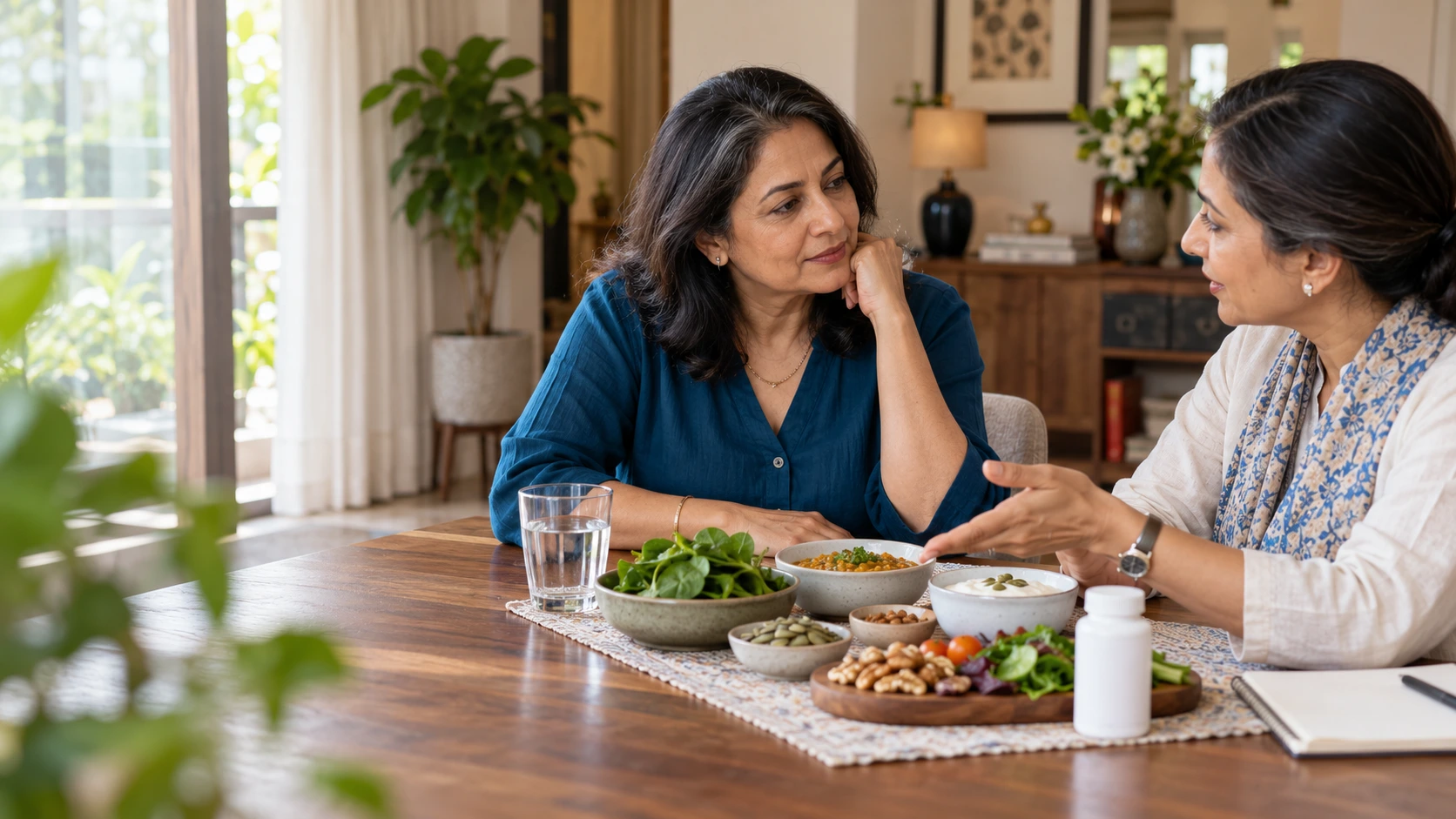

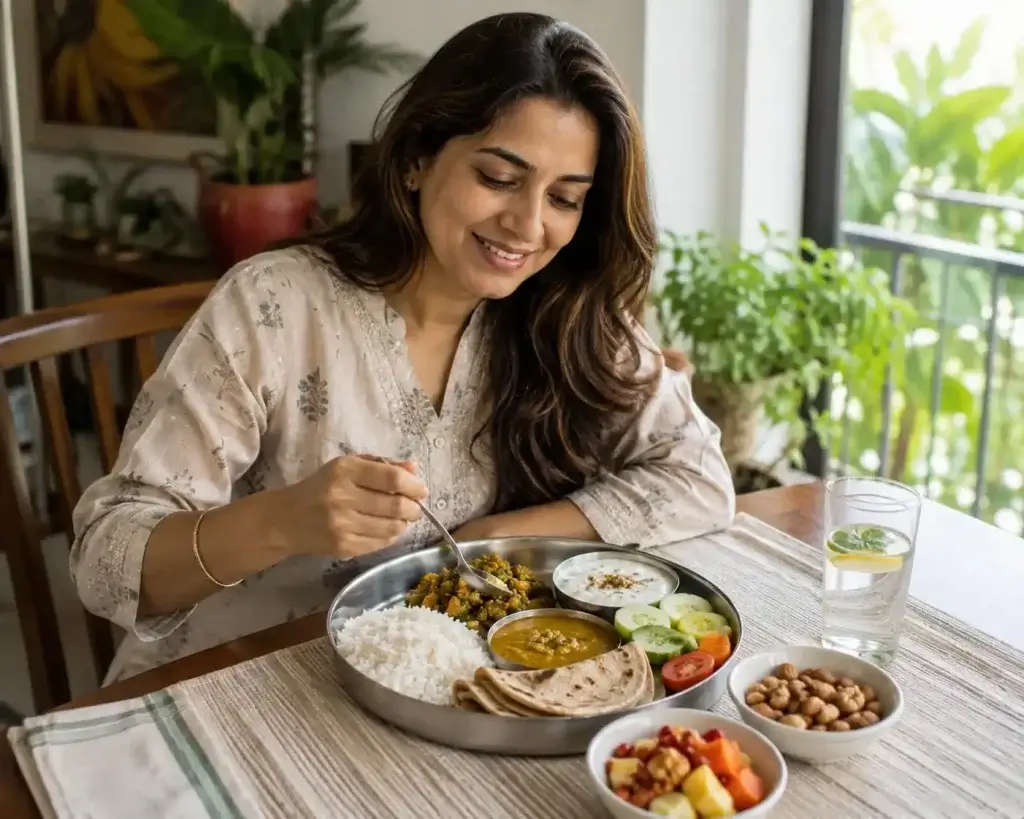
Menopause is not a stage that requires a completely new diet. But changing hormones, age-related muscle loss and shifts in bone and cardiometabolic health can make nutritional priorities more important. The best foods for menopause are therefore not one special ingredient or “menopause superfood.” They are everyday foods that help you meet your nutritional needs consistently.
For Indian women, that can mean building meals around familiar foods such as dal, rajma, chana, curd, paneer, eggs, fish, vegetables, whole grains, nuts, seeds and seasonal fruit. The goal is not perfection or calorie counting. It is creating a dietary pattern that supports muscle, bones, cardiovascular health and metabolic health through midlife.
What Makes a Food Helpful During Menopause?
A useful menopause diet provides enough protein, fibre, calcium, healthy fats and micronutrients without unnecessarily restricting major food groups.
Protein becomes particularly relevant because muscle mass and function can decline with age, while the menopausal transition can bring further changes in body composition. Adequate protein, alongside regular physical activity, can support muscle health and healthy ageing.
Bone health is another important consideration during menopause. Calcium and vitamin D support healthy bones, so including calcium-rich foods regularly can help meet your nutritional needs during this stage of life.
Fiber-rich foods and unsaturated fats can also support cardiovascular health. This matters because cardiovascular risk factors can change during and after the menopausal transition. Research suggests that overall dietary patterns can influence cardiometabolic health, reinforcing the value of looking at the quality of the diet as a whole rather than focusing on individual foods.
Best Foods for Menopause: What to Include on Your Plate
The focus should be on food groups rather than a checklist of “foods you must eat.”
Protein-Rich Foods
Think beyond protein powders and elaborate recipes. Indian meals already offer many useful sources.
Dal, chana, rajma, other beans, curd, paneer, eggs and fish can all contribute protein. For a vegetarian meal, combining a pulse with grains, dairy or another protein source can make the meal more nutritionally substantial.
The practical question is simple: Where is the protein in this meal?
Adding dal to rice, curd alongside a vegetable-based meal, paneer to a roti-and-sabzi lunch, or eggs with breakfast can make everyday meals more balanced without turning them into a “menopause diet.”
Fiber-Rich Foods
Fiber comes from foods such as vegetables, fruits, whole grains, pulses, beans, nuts and seeds.
Rather than relying on one high-fiber food, build variety across the day. Choose vegetables with lunch and dinner, include whole grains or pulses regularly, and use whole fruit rather than relying mainly on juices.
Higher fibre intake is associated with several cardiometabolic benefits, including improvements in some cardiovascular risk factors.
Calcium and Vitamin D Sources
Bone health becomes an increasingly important consideration during midlife. Curd, milk and paneer can provide calcium, while some fortified foods can contribute vitamin D. Fish and eggs can also contribute to overall nutrient intake.
However, food alone does not guarantee adequate vitamin D. Requirements vary according to diet, sun exposure, age, health status and laboratory findings, so supplementation should be individualized rather than automatically added to everyone’s menopause routine.
Healthy Fats
Nuts, seeds, groundnuts, nut butters and plant oils can provide unsaturated fats. Fish can also provide omega-3 fatty acids.
The point is not to remove fat from meals. Instead, use sources of unsaturated fat regularly while keeping highly processed, deep-fried foods as occasional choices.
Fruits and Vegetables
Colour and variety matter more than finding one “best” fruit or vegetable.
Seasonal Indian produce such as guava, oranges, papaya, berries when available, leafy greens, gourds, carrots, tomatoes, beans and other vegetables can add fiber, potassium, folate, vitamin C and a range of other micronutrients.
There is no need to exclude fruit because it contains naturally occurring sugar. Whole fruit can comfortably be part of a balanced eating pattern.
How to Build a Balanced Indian Plate for Menopause
You do not need a separate “menopause diet” to eat well through midlife. A more useful approach is to look at how your everyday meals are put together.
A simple plate can include a source of protein, plenty of vegetables or other fiber-rich foods, a carbohydrate such as rice, roti or another whole grain, and a source of healthy fat where appropriate. The proportions do not need to be measured or calculated. The aim is simply to build meals that are varied, satisfying and nutritionally balanced.
Breakfast
Breakfast is an opportunity to start the day with a meal that provides sustained nourishment rather than focusing only on cutting calories.
Traditional options can work well with a few simple additions. Vegetable poha can be paired with curd, idli with sambar, eggs with toast and vegetables, or a vegetable-stuffed roti with curd.
The goal is not to replace familiar Indian breakfasts with “diet foods,” but to make the meals you already eat more nutritionally complete.
Lunch and Dinner
Indian meals naturally lend themselves to this approach. Dal and rice can be accompanied by a vegetable and curd. Rajma and rice can be paired with a vegetable or salad, while roti with paneer and sabzi creates another balanced combination. Fish with rice and vegetables can work equally well for women who eat fish.
There is no nutritional reason to automatically remove rice, roti or other carbohydrate-rich foods during menopause. What matters is how they fit into the meal as a whole.
Snacks and Small Meals
A snack can be useful when there is genuine hunger between meals, particularly on days when meals are spaced further apart.
Simple combinations such as fruit with nuts, curd with seeds, roasted chana or an egg can provide more nutritional value than snacks built primarily around refined carbohydrates or added sugar.
The right choice will depend on your hunger, routine, preferences and overall dietary needs.
Foods to Limit Without Creating Strict Rules
Eating well during menopause is not about creating a list of forbidden foods.
Foods that are highly processed, frequently deep-fried or high in added sugar can be limited when they regularly displace more nutrient-dense foods. Alcohol may also affect sleep and vasomotor symptoms in some women, so individual tolerance and overall intake are worth considering. For more on managing these symptoms through diet, explore our guide to vasomotor symptoms in perimenopause and the foods that may help.
This does not mean these foods need to disappear from your diet. A sustainable approach allows for flexibility while keeping nutrient-dense, minimally processed foods at the center of most meals.
Why Your Overall Eating Pattern Matters More Than Individual Foods
When it comes to menopause nutrition, there is a tendency to search for the one food that will make the biggest difference. But nutrition does not work that way.
The health benefits of a diet come from the combination and consistency of foods eaten over time. A meal pattern that regularly includes protein-rich foods, vegetables, fruits, whole grains, pulses, healthy fats and calcium-rich foods is more meaningful than adding one ingredient simply because it has been labelled a “menopause food.”
This is where familiar Indian meals can be an advantage. Dal, vegetables, roti, rice, curd, nuts, seeds and seasonal fruits can all contribute to a varied dietary pattern without requiring a completely different way of eating.
The same principle applies to menopause symptoms. Nutrition can support overall health and help meet changing nutritional needs during midlife, but no individual food should be presented as a treatment or cure for symptoms such as hot flashes or sleep disturbances.
Ultimately, the best foods for menopause are not a fixed list. They are the foods that, together, help you build a nourishing and sustainable eating pattern that supports your health through midlife.
What Actually Helps During Menopause
When I work with women through perimenopause and menopause, I focus on making nutrition practical rather than adding another set of restrictive food rules.
That starts with looking at what a woman already eats and identifying where her meals can become more balanced and nourishing. A home-cooked Indian meal does not need to be replaced with complicated recipes or a rigid meal plan.
I also believe that sustainable nutrition is built around consistency, not perfection. One meal, dessert or day of less-than-ideal eating does not define your health. What matters is the pattern you build over time.
So rather than asking, “What is the best food for menopause?”, I encourage women to ask, “How can I build meals that meet my nutritional needs and fit into my everyday life?”
That is ultimately what good menopause nutrition should do: support your health without making eating more complicated than it needs to be.
There is no single best food for menopause. The most useful approach is a varied, nutrient-dense eating pattern built around adequate protein, fiber, healthy fats and essential nutrients, using foods you can realistically enjoy and sustain.
Want more guidance on nutrition and health through perimenopause and menopause? Download the MIROR app for expert-led resources, practical guidance and support designed for women through menopause.
FAQs
Yes. A varied Indian diet can provide many important nutrients through pulses, dairy or alternatives, eggs, fish, vegetables, fruits, whole grains, nuts and seeds. Specific gaps depend on the individual diet and nutritional status.
Protein needs are individual, but adequate protein becomes increasingly important for maintaining muscle as women age. Distribution across meals can also be considered rather than concentrating most protein in one meal.
No. Dairy is one convenient source of calcium and protein, but it is not the only option. Women who do not consume dairy can discuss suitable alternatives and their overall calcium intake with a qualified healthcare professional.
No. Foods such as rice, roti, oats and other grains can be part of a balanced diet. The nutritional quality of the overall meal, the type of carbohydrate and the individual's health needs matter more than eliminating carbohydrates altogether.
Yes. A well-planned vegetarian diet can provide the nutrients needed during menopause. Foods such as dals, beans, chana, rajma, curd, paneer, nuts, seeds and whole grains can all contribute to a varied and nourishing diet. Women following a vegan diet have different nutritional considerations and may need to pay particular attention to nutrients such as vitamin B12, calcium and vitamin D.