


Why Does My Estrogen Patch Keep Coming Off?
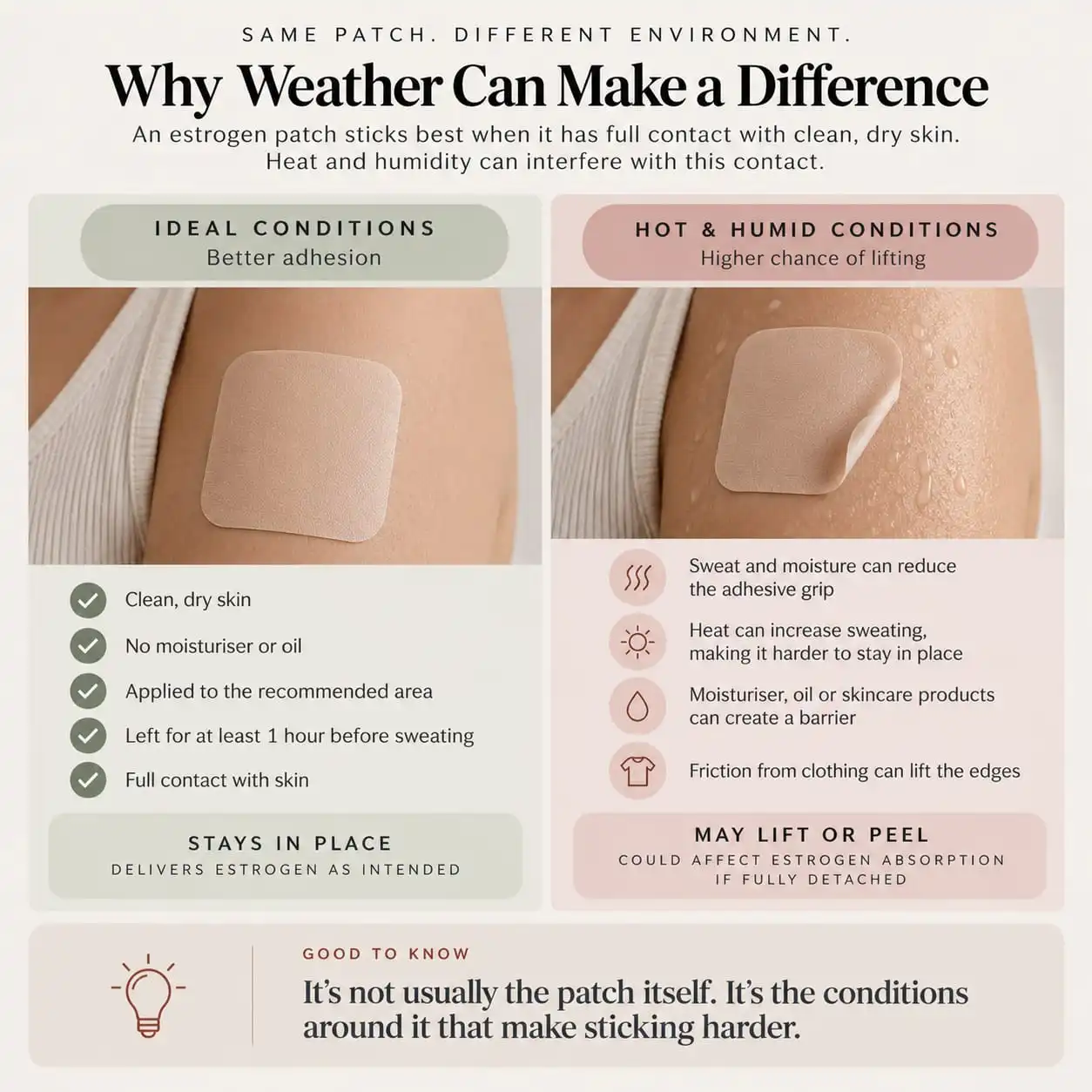
An estrogen patch needs good, continuous contact with your skin to stay in place and deliver the medicine as intended. When the skin becomes sweaty, damp or oily, that contact can be harder to maintain.
Hot weather can make adhesion problems more common with transdermal patches. In a hot and humid environment, sweating can add another layer of moisture between your skin and the adhesive. Moisturiser, body oil, a recently applied cream or friction from clothing can make the problem worse too.
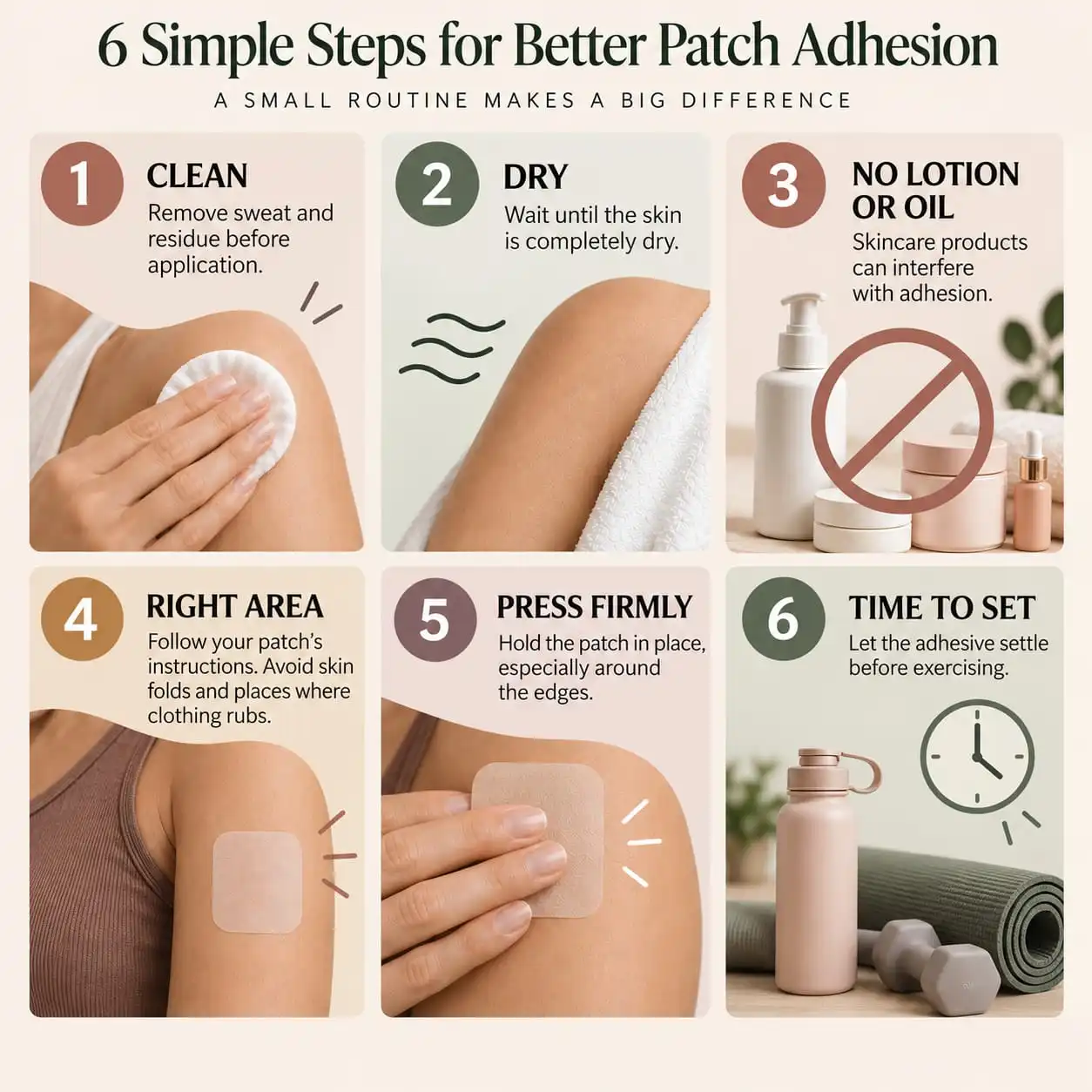
Your application technique matters as well. An estrogen patch should generally go on clean, dry skin that is free from moisturiser or oil. It should not be placed over skin folds, irritated skin or areas where tight clothing constantly rubs against it. For estrogen patches, follow the application sites specified in your own product leaflet, as instructions can vary between products.
And if you’re applying a patch just before a workout or another activity that makes you sweat, it may have less time to form a secure bond with your skin. NHS guidance recommends waiting at least an hour after applying an oestrogen patch before activities that will make you sweat.
So if your patch keeps peeling in summer, it may not be a problem with the patch itself. Your skin, sweat, skincare routine and application timing may all be part of the picture.
Does Heat and Humidity Affect Your Estrogen Patch?
Heat and humidity can make an estrogen patch harder to keep attached to your skin. Hot weather can increase sweating, while moisture, skincare products and friction can interfere with the patch’s adhesion. Adhesion problems with transdermal patches can be more common in hot weather.
But a patch lifting is not the same as the estrogen suddenly stopping working. If the patch loses full contact with your skin or comes off completely, it may not deliver the medicine as intended. What you should do next depends on how much of the patch has come loose and the instructions for your specific product.
There’s also a difference between being out in hot weather and exposing a patch to prolonged, direct heat, such as a sauna, hot tub or heating pad. Some transdermal medicines can be affected by external heat, so follow the instructions that come with your particular estrogen patch.
That’s why keeping the patch securely attached matters. (NHS)
Where Should You Put an Estrogen Patch?
Where you place your patch can affect how well it stays attached. For many estrogen patches, recommended sites are below the waist, such as the thigh or buttock, but you should always follow the instructions for your specific product.
Avoid placing the patch near the breasts, on irritated or damaged skin, in skin folds, or underneath tight clothing or waistbands. These areas can make it easier for the patch to lift or become irritated.
Rotate the application site when you change your patch. This can help reduce repeated irritation in the same area.
If your patch keeps coming loose despite applying it correctly, don’t change the application site beyond what your product allows. Check the leaflet that comes with your patch or ask your pharmacist or doctor which areas are suitable.
Where Should You Put an Estrogen Patch?
Where you place your patch can affect how well it stays attached. For women using an estrogen patch in India, choosing an area that stays relatively dry and experiences less friction can be especially helpful in hot weather.
For many estrogen patches, recommended sites are below the waist, such as the thigh or buttock, but you should always follow the instructions for your specific product. (NHS: How and when to use oestrogen patches)
Avoid placing the patch near the breasts, on irritated or damaged skin, in skin folds, or underneath tight clothing or waistbands. These areas can make it easier for the patch to lift or irritate the skin.
Rotate the application site when you change your patch to avoid repeatedly applying it to the same area.
If your patch keeps coming loose despite following the application instructions, check your product leaflet or ask your pharmacist or doctor which application sites are suitable for your particular patch.
If you’re using an estrogen patch in India during hot or humid weather, choosing the right application site can make a noticeable difference to how securely it stays in place.(NHS)
What Should You Do If Your Estrogen Patch Falls Off?
If your estrogen patch has partially lifted, don’t automatically remove it. Check the instructions for your specific product to see whether it can be pressed back into place. For women using an estrogen patch in India, knowing what to do when a patch comes loose can help avoid unnecessary changes to their HRT routine.
If the patch has come off completely, follow the instructions in your patch leaflet. For some estrogen patches, NHS guidance recommends applying a new patch to a different area of clean, dry skin and then returning to your usual change day. (NHS: How and when to use estrogen patches)
Don’t apply an extra patch or change your dose to make up for one that has come off. If you’re unsure what to do, your pharmacist or doctor can advise you based on the specific estrogen patch you’re using.
If your patch is repeatedly falling off, mention it to your doctor or pharmacist. They can check your application technique and whether the patch or another form of HRT may be more appropriate for you. (SPS NHS)
When Should You Speak to Your Doctor or Pharmacist?
If your estrogen patch keeps falling off despite applying it correctly, it’s worth speaking to your doctor or pharmacist. They can check whether the problem is related to how you’re applying the patch, the specific product you’re using, or your skin’s reaction to the adhesive.
You should also seek advice if you develop persistent redness, itching, swelling or irritation where the patch is applied, or if you’re unsure what to do after a patch comes off.
And don’t change your estrogen dose or start using extra patches to compensate for adhesion problems. Your doctor or pharmacist can advise you on the safest next step based on the specific HRT you’re using.
For women using an estrogen patch in India, recurring problems during hot and humid weather don’t have to mean giving up on patches. Sometimes, a review of application technique or the product itself is all that’s needed.
Where MIROR Can Help
An estrogen patch is only one part of HRT. If you’re considering HRT, already using an estrogen patch, or struggling with changes during perimenopause or menopause, the right treatment and guidance can look different for every woman.
At MIROR, you can connect with menopause specialists who can help you understand your symptoms, discuss your HRT options and decide what support may be appropriate for you.