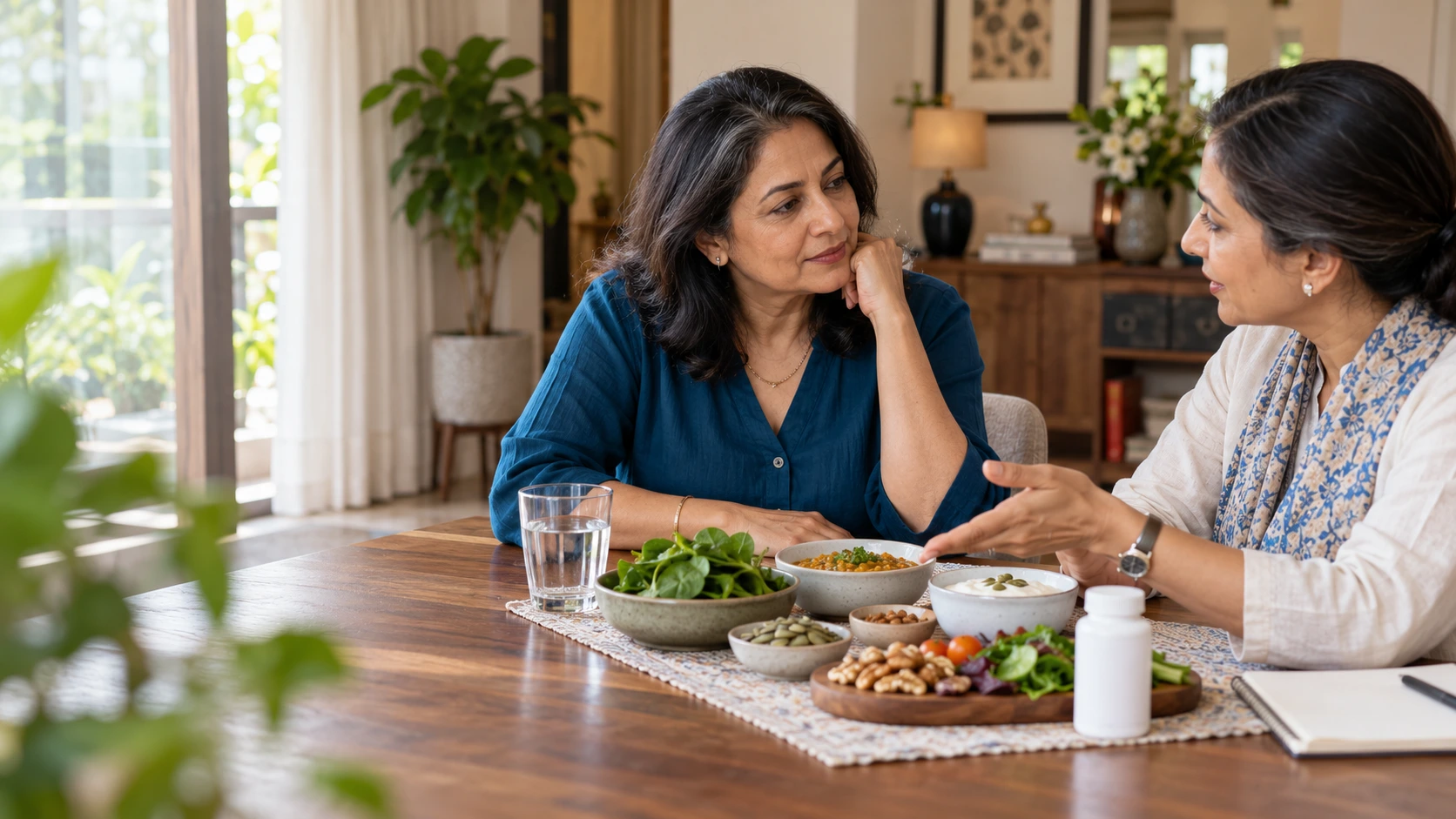


Are you actually eating enough protein after 40?
You may be eating dal, curd, eggs, paneer or chicken every day and still wonder: Is that actually enough protein for me? And if you have searched for “high protein diet women”, you have probably seen everything from 50 grams a day to well over 100 grams being recommended. So, how much do you really need? The answer depends on more than age. Your body weight, activity level, training routine, overall diet and health can all influence what may be appropriate for you. As you move through your 40s, perimenopause and menopause, maintaining muscle, strength and good nutrition becomes increasingly important. But that does not mean you need an extremely high-protein diet or a protein shake every day. Below, I’ll explain how much protein women over 40 may need, when a higher intake can make sense, and how to get enough through everyday Indian foods without making your meals complicated.So, how much protein do women over 40 actually need?
There is no single protein target that suits every woman over 40.
Start with your body weight
For most healthy adults, the general recommendation starts at around 0.8 g of protein per kilogram of body weight per day.
So, if you weigh 65 kg, that works out to about 52 g of protein a day.
As we get older, some expert groups suggest that an intake closer to 1.0–1.2 g/kg/day may be useful for supporting muscle maintenance and healthy ageing.
That means the same 65 kg woman might need around 65–78 g per day.
When it comes to protein for women over 40, it is more useful to think in terms of a sensible range than to chase one “perfect” number.
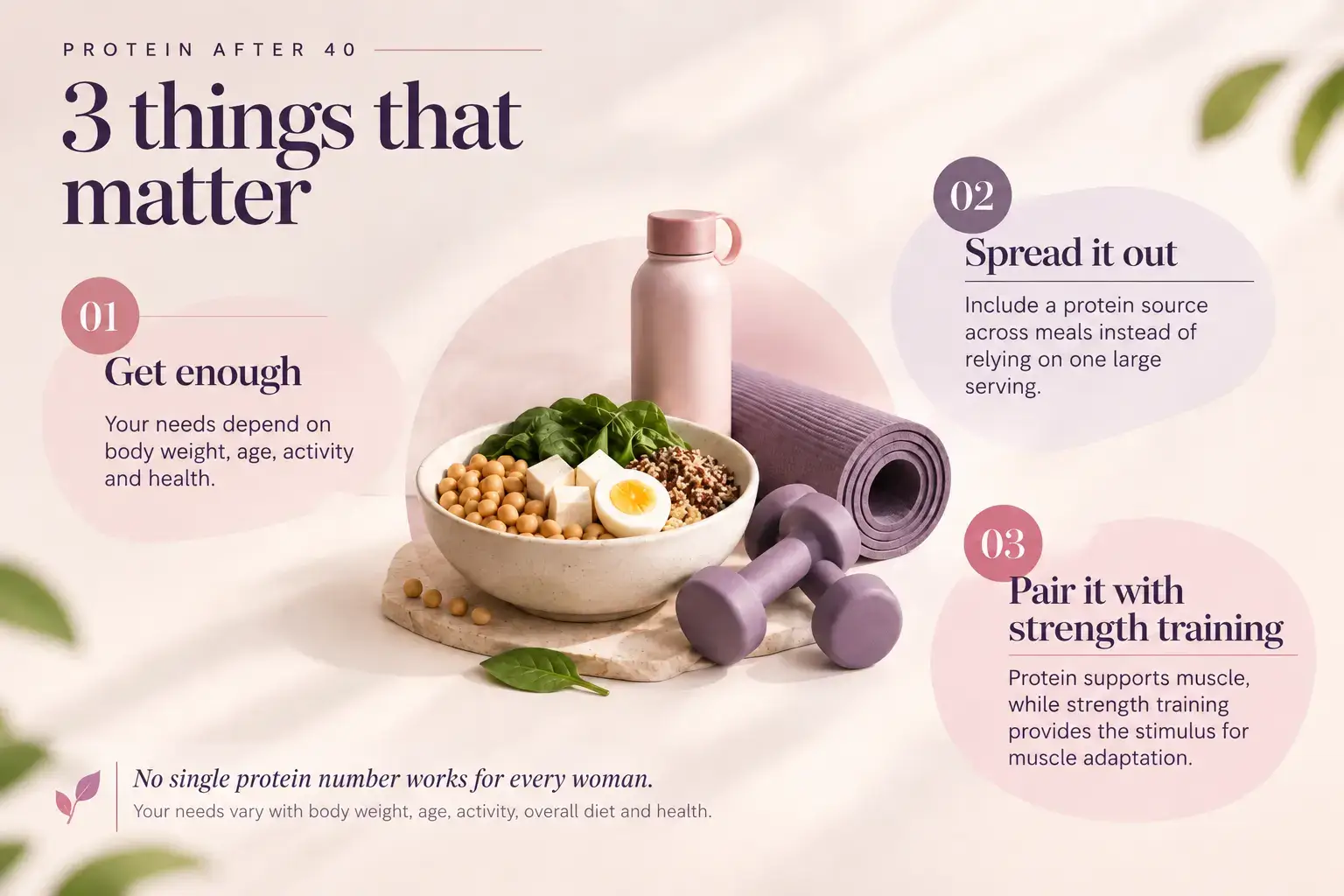
But the number is only part of the picture. How you spread protein through the day, and what you pair it with, matter too.
How much protein? → How to spread it → What to pair it with
When a higher protein intake may make sense
Women who train regularly, especially with strength training, or have higher physical demands may need more protein than the general ranges discussed above.
Sports nutrition recommendations are often higher because they are designed for people with greater training demands. They should not be treated as the default for every woman over 40.
If you have been looking online for high protein diet women advice, it is worth remembering that a higher intake is not automatically better. The right amount should still match your individual needs.
The aim is not to eat as much protein as possible, but to eat enough to support your needs without making your diet unnecessarily restrictive or extreme.
Best protein foods for women over 40
Getting enough protein does not require complicated meals or special “high-protein” foods. Many everyday Indian foods can make a meaningful contribution to your daily intake.
If you have searched high protein diet women, a practical place to start is by making protein-rich foods a regular part of your meals rather than trying to dramatically increase your intake overnight.
Rather than relying on one large serving at dinner, try to include a clear protein source across the day:
- Breakfast: Eggs, paneer or tofu bhurji, besan chilla with curd, or Greek yogurt
- Lunch: Dal, rajma, chole, paneer, tofu, fish or chicken
- Snack: Milk, curd, roasted chana, boiled eggs, or a protein shake when convenient
- Dinner: Dal, soy, paneer, tofu, fish or chicken alongside vegetables and your usual carbohydrate source
Both vegetarian and non-vegetarian diets can provide enough protein for women over 40. What matters is finding options that fit your appetite, preferences and everyday routine.
Not sure how much protein these foods actually provide? Here is a quick guide to the approximate protein in common everyday options.
| Food | Approx. protein | Easy way to include it |
|---|---|---|
| 2 eggs | 12–13 g | Breakfast, snack or with a meal |
| Milk, 250 ml | ~8 g | Breakfast, smoothie or evening drink |
| Curd, 200 g | ~7–10 g | With lunch, as raita or a snack |
| Greek yogurt, 200 g | ~15–20 g | Breakfast or snack |
| Paneer, 100 g | ~18–20 g | Bhurji, curry, salad or wrap |
| Tofu, 100 g | ~10–15 g | Stir-fry, bhurji, curry or salad |
| Cooked dal, 1 cup | ~12–15 g | Lunch or dinner |
| Rajma or chole, 1 cup | ~13–15 g | Curry, bowl or salad |
| Soy chunks, 25 g dry | ~13 g | Curry, pulao or stir-fry |
| Fish, 100 g cooked | ~20–25 g | Lunch or dinner |
| Chicken, 100 g cooked | ~25–30 g | Lunch, dinner or wrap |
Note: Protein values are approximate and can vary depending on portion size, preparation method, brand and type of food.
What about protein powder?
Protein powder can be useful, but it is not something every woman over 40 needs.
If you have searched online for high protein diet women advice and wondered whether protein powder is necessary, the answer is usually no. It is simply a convenient way to help increase your protein intake when meeting your needs through food is difficult.It may be useful if you have a busy schedule, are travelling, have a smaller appetite, struggle to get enough protein through meals, or want a convenient option after exercise.
Protein powder should ideally support your diet, not replace it. Whole foods such as dal, curd, paneer, tofu, eggs, fish and chicken also provide other nutrients that a shake alone may not.
If you are considering a supplement and want to understand what to look for, read our guide to choosing the right protein powder after 40.
For most women, the better question is not “Do I need protein powder?” but “Am I getting enough protein from my overall day?”
Protein, strength training and menopause muscle loss
Protein and strength training work best together when the goal is to maintain muscle and strength in midlife.
Protein provides the amino acids your muscles need for maintenance and repair, while strength training gives your muscles the stimulus to use them.
This is why conversations about menopause muscle loss should not focus on protein alone. Getting adequate protein alongside regular strength training is more useful than simply pushing your protein intake higher.
Strength training does not have to mean lifting very heavy weights. Bodyweight exercises, resistance bands, machines or weights can all be adapted to your current ability.
Make protein work for you
Getting enough protein after 40 does not mean following an extreme diet or hitting a perfect number every day.
Advice around high protein diet women may suggest very high targets, but the right intake should still reflect body weight, activity level and individual needs.
A more practical approach is to get adequate protein across your meals and combine it with regular strength training, while keeping your overall health and lifestyle in mind.
If you would like personalized guidance on your nutrition, protein intake or other perimenopause concerns, you can book a consultation with me. Download the MIROR app from the Google Play Store or Apple App Store to schedule an appointment.