

Joint pain during menopause can make everyday life harder.
Stiff fingers, aching knees and uncomfortable hips may leave you wondering whether you need vitamin D, calcium, collagen or an all-in-one menopause supplement.
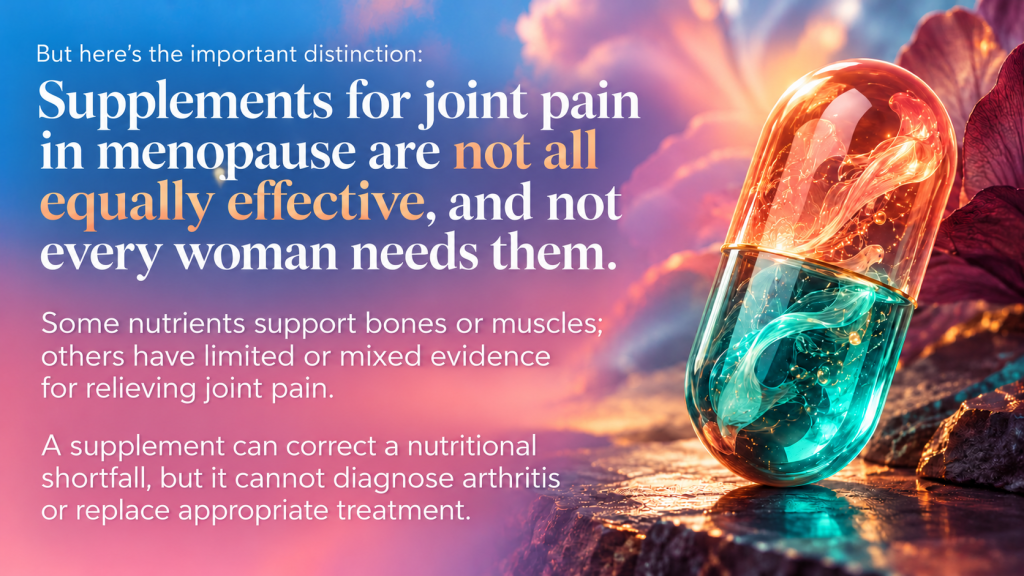
Here’s what to know before spending money on another bottle.
7 Nutrients and Supplements Worth Understanding
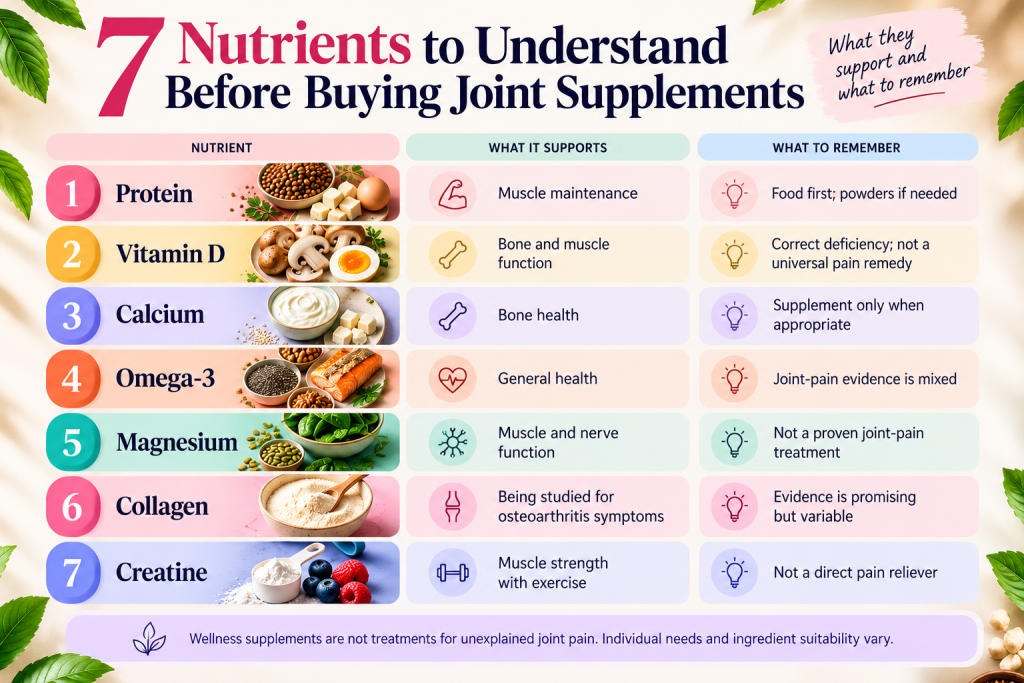
1. Protein: Support your muscles first
Adequate protein helps maintain muscle, which supports movement and joint function. Dal, beans, soy, paneer, eggs, dairy, fish and other protein-rich foods can help meet your needs. A protein powder may be useful if your diet falls short, especially alongside resistance exercise, but it is not a direct treatment for joint pain.
2. Vitamin D: Important for bones and muscles
Vitamin D helps your body absorb calcium and supports normal muscle function. Deficiency can contribute to bone problems and muscle weakness, so assessment and correction may be important when deficiency is suspected or confirmed. However, vitamin D supplements are not a reliable painkiller for osteoarthritis when deficiency is absent. (NIH vitamin D guidance)
3. Calcium: Build a food-first foundation
Calcium supports bone health, which becomes particularly important as women grow older. Milk, yoghurt, paneer, calcium-set tofu, ragi and suitable fortified foods can contribute to intake. Supplements may be appropriate when dietary intake is insufficient, but taking extra calcium does not automatically relieve joint pain.
(NIH calcium guidance)
4. Omega-3s: Useful nutrients, uncertain joint-pain benefits
Omega-3 fats are found in oily fish, while flaxseeds, chia seeds and walnuts provide plant-based alpha-linolenic acid (ALA). Omega-3 supplements may be appropriate for specific health needs, but evidence does not support routinely taking fish oil to relieve osteoarthritis pain. Check with your clinician if you take anticoagulants or other regular medication.
5. Magnesium: Essential nutrient, not a guaranteed remedy
Magnesium supports normal muscle and nerve function. However, evidence that magnesium supplements reliably relieve menopause-related joint pain is limited. Too much supplemental magnesium can cause diarrhoea and other side effects, and it can interfere with the absorption of certain medicines.
(NIH magnesium guidance)
6. Collagen: Promising, but not conclusive
Some studies suggest collagen supplements may modestly improve pain or function in people with knee osteoarthritis. However, trials vary considerably, and the results do not establish collagen as a proven treatment for menopause-related joint pain. It is an option to discuss—not a must-have.
(PubMed)
7. Creatine: More about strength than pain relief
Creatine has been studied for maintaining muscle strength, particularly when combined with resistance training. A 2026 systematic review in postmenopausal women found modest benefits for lean mass and leg-press strength, but no overall improvement in bone mineral density. Creatine is not a direct treatment for joint pain; discuss suitability with a clinician, particularly if you have kidney disease.
(PubMed)
Food First, Supplements When Needed
A balanced eating pattern, adequate protein, appropriate strengthening exercise and good sleep provide a stronger foundation than relying on supplements alone. Supplements are most useful when they address a genuine dietary gap, an identified deficiency or a specific clinical need.
Persistent joint pain, swelling or prolonged morning stiffness still needs assessment. It should not automatically be attributed to menopause or treated with supplements alone.
Where Do Miror Bliss and Miror Thrive Fit In?
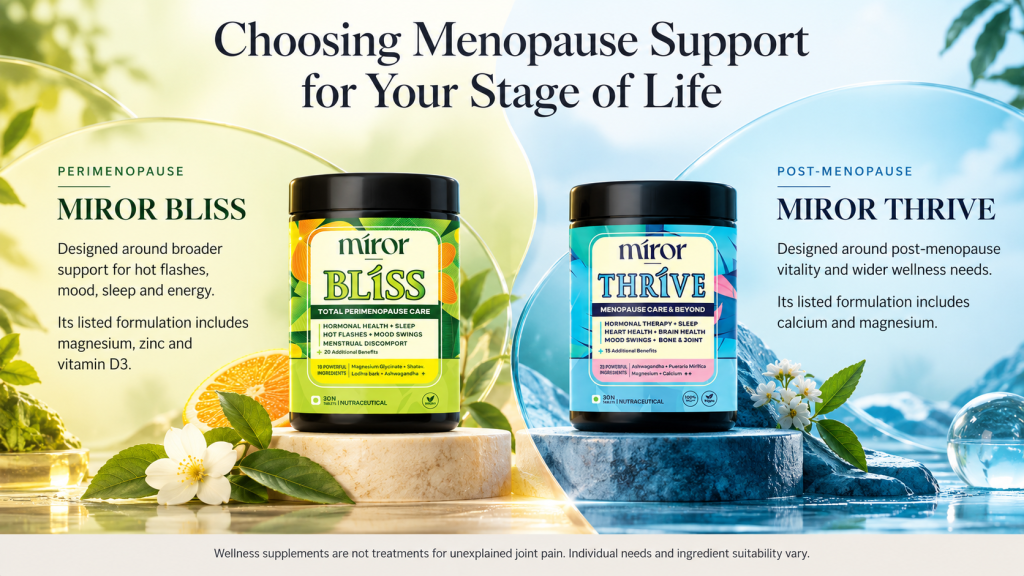
Miror offers two supplements designed around different stages of the menopause journey.
Miror Bliss is positioned for women navigating perimenopause, with a focus on hot flashes, mood, sleep and energy. Its product page lists magnesium, zinc and vitamin D3 alongside botanical ingredients. It may be relevant to women seeking broader perimenopause support, but it should not be presented as a treatment for unexplained joint pain or as a substitute for correcting a confirmed deficiency.
Explore Miror Bliss.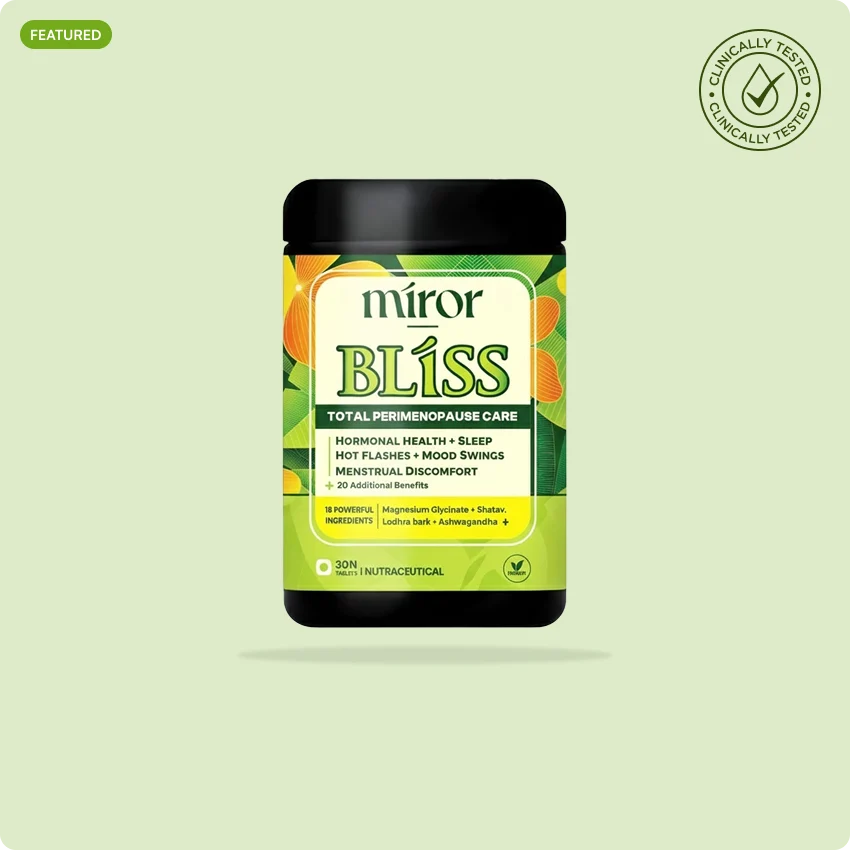
Miror Thrive is positioned for women after menopause, with a broader focus on vitality and bone health. Its product page lists calcium and magnesium among its functional ingredients, alongside other actives. It may be worth exploring as part of a wider wellness routine, but it is not a replacement for arthritis treatment, adequate dietary intake or personalised medical advice.
Explore Miror Thrive.
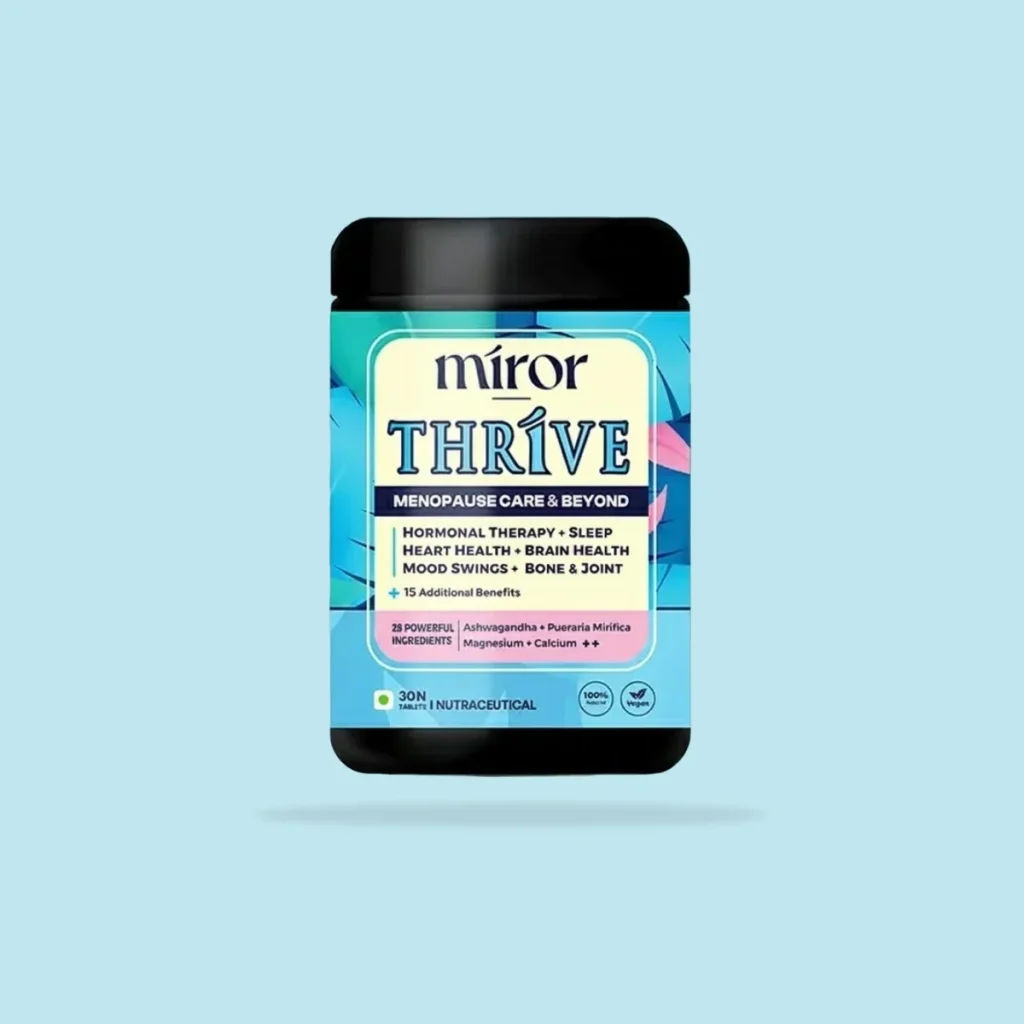
NOTE: Neither product should be assumed to supply everything you need. Check the current ingredient label and discuss suitability with a qualified professional, particularly if you take other supplements or medication.
What About HRT or Menopause Hormone Therapy?
Menopausal hormone therapy (MHT/HRT) can be appropriate for certain menopause symptoms, but it should not be started solely to treat joint pain. Evidence for a consistent benefit against menopause-related musculoskeletal pain remains uncertain. Suitability depends on your symptoms, medical history and individual benefits and risks.
Miror’s HRT Centre of Excellence is pioneering a personalised, specialist-led approach to HRT for Indian women. Begin with a 3-minute HRT assessment, followed by specialist consultation and ongoing review if treatment is appropriate. HRT is not one-size-fits-all, and supplements should be considered alongside—not instead of—evidence-based hormone care.
Explore Miror’s HRT Centre of Excellence.
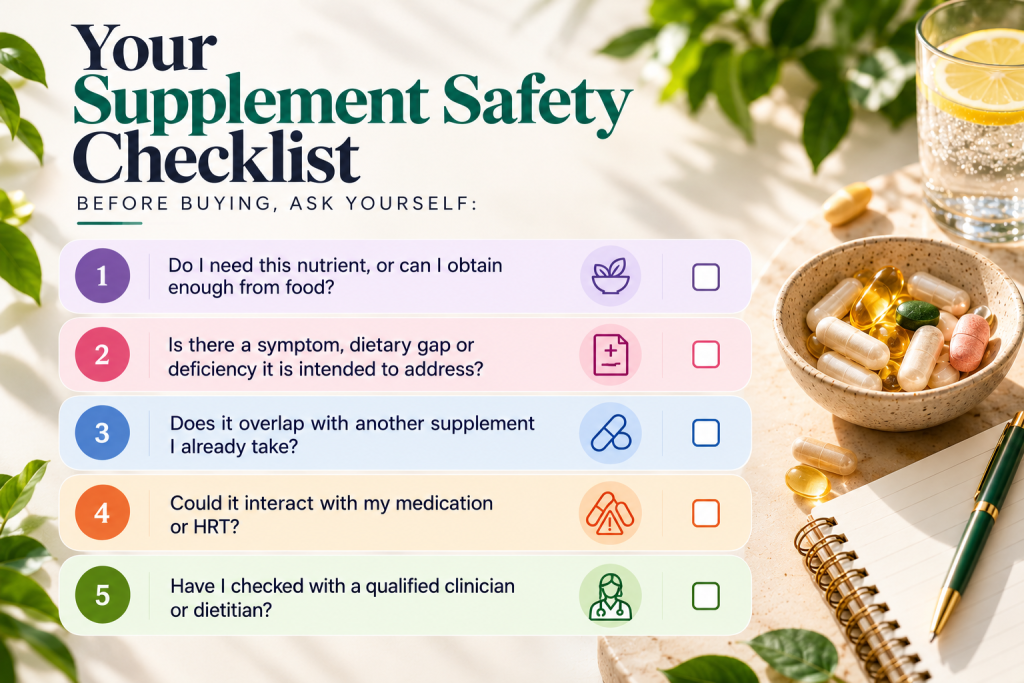
There is no universal rule that HRT cannot be used alongside supplements, but multi-ingredient products and herbal ingredients may not be suitable for everyone. Share your full supplement list with your doctor or pharmacist so potential interactions and duplicated nutrients can be reviewed.
Before You Start Any Supplement…
Check the ingredient list, dose, quality and reason for taking it. More is not necessarily better: excessive vitamin D or calcium can be harmful, and magnesium and omega-3 supplements can interact with certain medicines. Avoid combining several products with overlapping ingredients without checking their total amounts.
Seek medical advice for persistent or worsening pain, visibly swollen or warm joints, prolonged morning stiffness, unexplained bone pain or genuine muscle weakness. A supplement should never delay investigation of a possible underlying condition.
The Takeaway
The best supplements for joint pain in menopause depend on what your body actually needs. Protein, vitamin D and calcium have important roles in muscle and bone health; omega-3s, magnesium, collagen and creatine each have different benefits and limitations.
None is a universal solution for joint pain.
Start with food, movement and an understanding of the cause of your symptoms. Add supplements when they serve a clear purpose, and seek assessment when pain persists.
How Miror Can Truly Help?
Miror is India’s largest and only 360-degree integrative women’s wellness ecosystem and community, with 95,000+ women having received expert help and insights.
Explore Miror Bliss for perimenopause support, Miror Thrive for post-menopause wellness, or connect with Miror doctors, nutrition experts and menopause specialists for personalised guidance.