


Hives during menopause can be confusing, especially appearing first in your forties.
You suddenly develop itchy red welts on your skin.
They disappear. Then they return somewhere completely different.
And soon you are wondering:
Was it something I ate? Is this menopause? Am I suddenly allergic to everything?
New skin reactions can be unsettling, particularly when they appear during perimenopause or after 40. But before you start removing foods from your diet one by one, there is something important to know:
Hives, food allergy and food intolerance are not the same thing.
And while changing hormones may interact with immune and skin responses, menopause is not automatically the explanation for new hives.
(Mirorpedia)
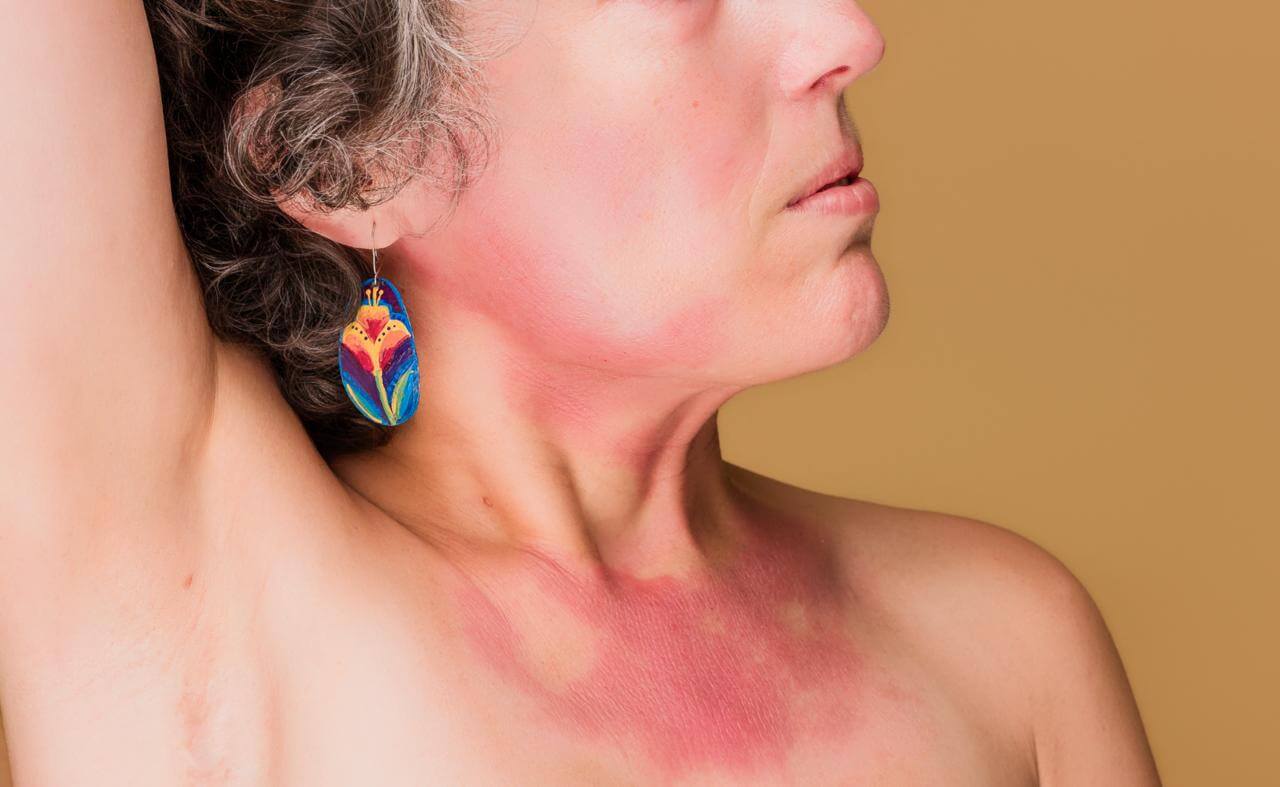 New hives or red, itchy skin reactions after 40 can have several possible causes, including allergies, medications and hormonal changes.
Hives During Menopause: 4 Essential Facts About New Skin Reactions
1. What Are Hives and Why Do They Appear?
Hives, or urticaria, are raised, itchy welts caused by the release of inflammatory substances including histamine from mast cells in the skin. Individual welts usually disappear within 24 hours, although new ones can continue appearing elsewhere. When hives recur for more than six weeks, they are considered chronic urticaria.
One of the most common forms is chronic spontaneous urticaria (CSU). The word spontaneous matters: there may be no obvious external trigger.
That means a woman can eat a completely ordinary meal, develop hives later and understandably assume the food caused them — even when there is no true food allergy.
2. Can Menopause Have Anything to Do With Hives?
Possibly, but this is where I want to be careful.
Mast cells respond to sex hormones, and research has identified ways in which estrogen and other hormones may influence mast-cell activity and inflammatory responses. This provides a plausible biological explanation for why some women notice changes in skin symptoms around hormonal transitions.
(PubMed)
But hives menopause is not an established cause-and-effect relationship.
A study of 111 women with chronic urticaria found that most reported no change in their condition during menopause, although hormonal changes around menstruation affected symptoms in some women.
(PubMed)
So if hives begin in your forties, it is reasonable to consider the timing of hormonal changes but it is equally important to look for other explanations.
Don’t let “it’s menopause” become the end of the investigation.
3. Is It Really a Food Allergy?
This is where things often become unnecessarily complicated.
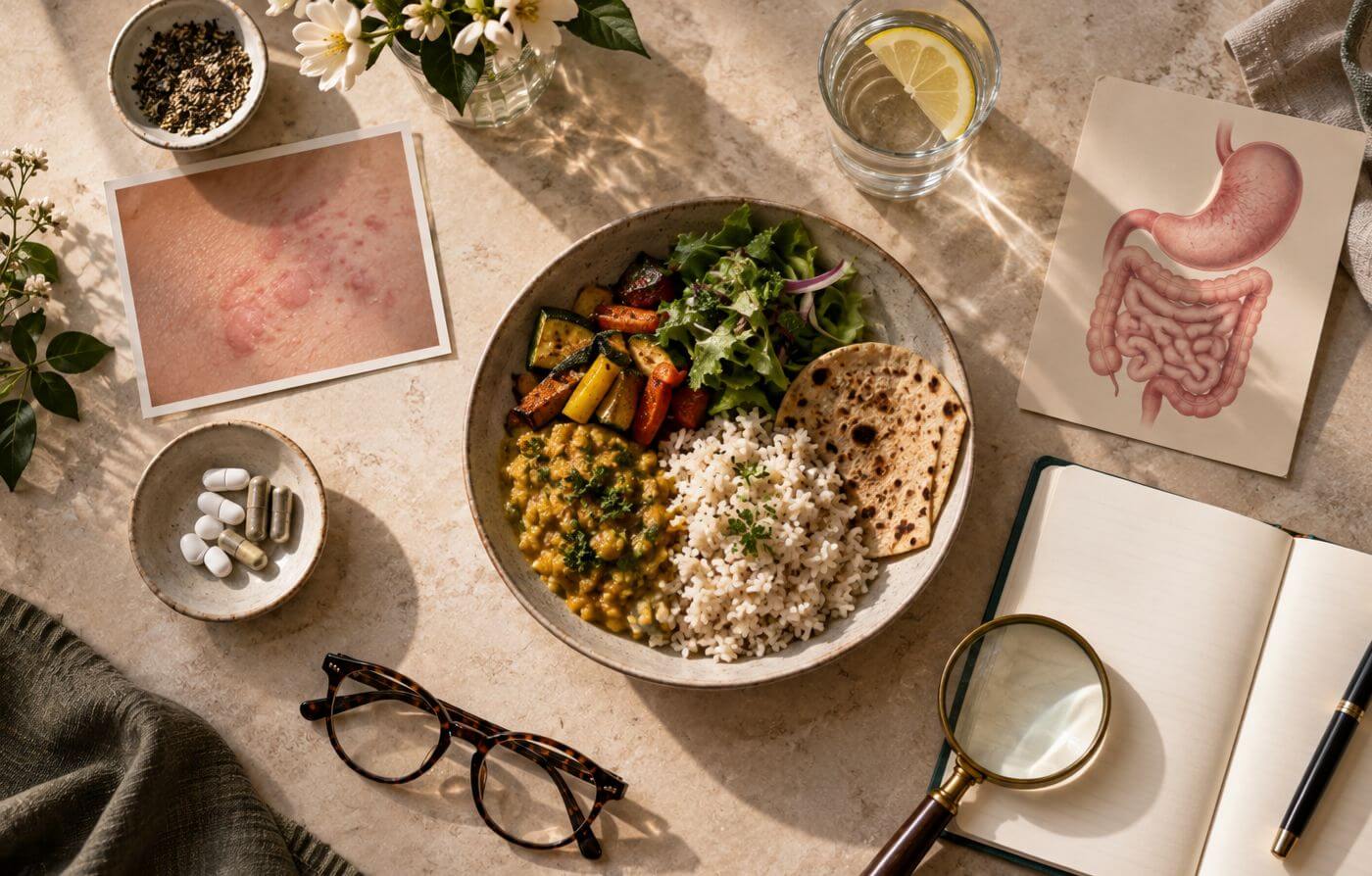 Hives after eating do not always mean a food allergy. Food allergy, food intolerance and chronic spontaneous urticaria can have very different causes.
A. Food allergy
A true food allergy involves an immune response and can cause symptoms such as hives, swelling, vomiting, wheezing or breathing difficulty. Reactions often occur relatively soon after eating the culprit food.
B. Food intolerance
Food intolerance is different. It may involve digestive symptoms such as bloating, abdominal discomfort or diarrhoea and is not the same as an allergic reaction.
C. Chronic spontaneous urticaria
With chronic spontaneous urticaria, there may be no specific food trigger at all. Current urticaria guidance focuses on identifying the clinical pattern rather than automatically testing for large numbers of foods.
(EAACI)
That is why I would be cautious about removing ten foods because a hive appeared after dinner.
An association is not automatically a cause.
4. Don’t Miss Other Causes
New menopause skin reactions deserve a proper medical history, particularly if they keep returning.
Chronic urticaria can coexist with other autoimmune conditions, including thyroid disease, and women may also be taking medicines or supplements that aggravate symptoms. Women with chronic spontaneous urticaria can have a higher burden of associated conditions, including thyroid and autoimmune disease.
(Dr Louise Newson)
Tell your doctor about:
New medicines or supplements
Painkillers such as NSAIDs that seem to worsen symptoms
Thyroid problems or other autoimmune conditions
Recent infections or significant illness
Whether individual hives disappear within 24 hours
Whether swelling of the lips, eyelids or tongue accompanies the hives
Depending on your history, your clinician may decide that blood tests or specialist assessment are appropriate. Not every woman with hives needs an extensive allergy panel.
And please mention Ayurvedic or herbal products too. “Natural” does not automatically mean non-reactive.
What Actually Helps?
For chronic urticaria, second-generation, non-sedating antihistamines are the usual first-line treatment. If standard treatment does not control symptoms, a clinician may adjust treatment or consider specialist options.
You can also keep a simple diary for a couple of weeks:
Date
↓
Hives
↓
Medicines/Supplements
↓
Unusual foods
↓
Period/Hormonal symptoms
↓
Other symptoms
Something like this:
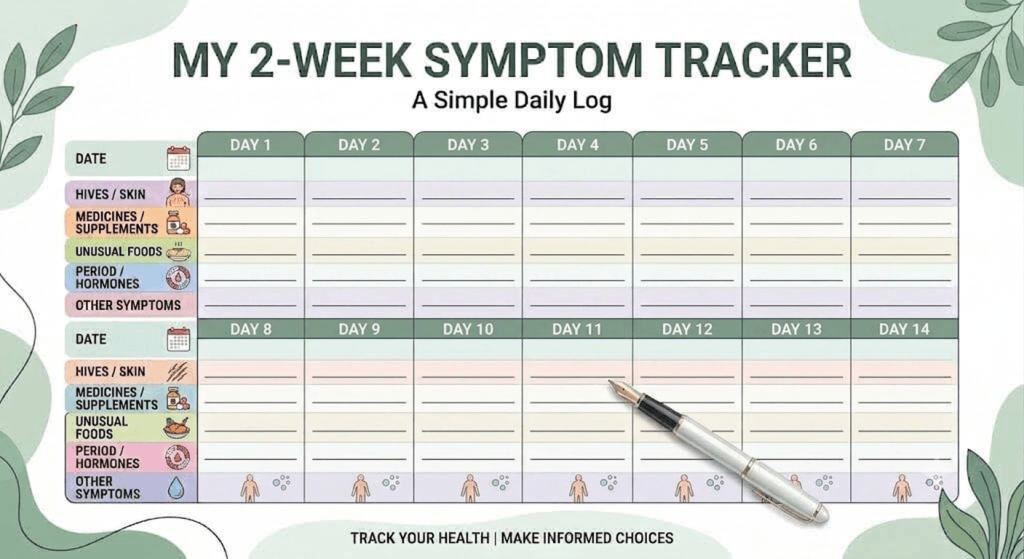 A simple 2-week symptom tracker to record hives, medicines and supplements, unusual foods, period or hormonal symptoms, and other changes.
This can be much more useful than eliminating foods randomly.
And what about HRT?
There is no good evidence that HRT should be used to treat hives. Hormone therapy may affect symptoms differently from one woman to another, and rare hormone-related skin reactions can occur. HRT should therefore be prescribed for an appropriate menopausal indication, not as a treatment for urticaria.
The goal is not to find one explanation for everything.
It is to work out what is actually happening in your skin, immune system and hormonal health, and treat the right problem.
(NIH)
When Should You Seek Medical Help?
Please arrange a medical assessment if your hives:
Keep returning for more than six weeks
Are interfering with sleep or everyday life
Come with significant swelling
Are painful rather than simply itchy
Leave bruising or marks after they disappear
Are accompanied by fever, joint pain or unexplained weight loss
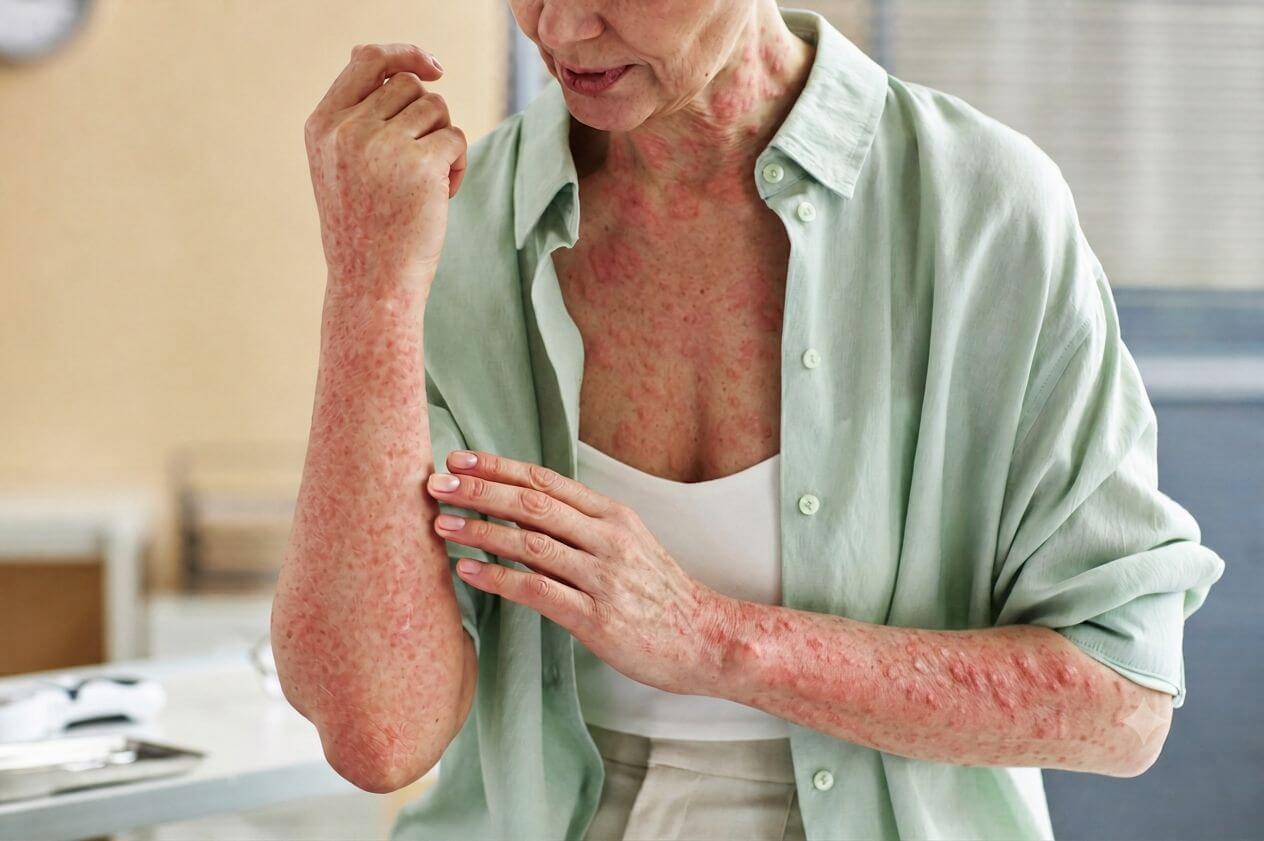 Persistent, widespread or severe hives and skin reactions should be assessed by a healthcare professional, especially when symptoms are accompanied by other warning signs.
Seek emergency care immediately if hives occur with swelling of the tongue or throat, difficulty breathing or swallowing, faintness, or a rapidly worsening reaction. These can be signs of a serious allergic reaction.
Where Miror’s HRT Centre of Excellence Fits In
New symptoms in your forties rarely belong neatly to one box.
At Miror’s HRT Centre of Excellence, women can discuss their hormonal symptoms alongside their wider health history, medications and concerns, with appropriate referral when dermatology or allergy assessment is needed.
The aim is simple: don’t assume every new symptom is menopause; understand the whole picture.
Medical Disclaimer
This article is for general educational purposes only and does not replace personalised medical advice, diagnosis or treatment. Persistent or severe hives, suspected food allergy or swelling affecting breathing should be assessed promptly by a qualified healthcare professional.