


What are your menopause treatment options after breast cancer?
HRT after breast cancer is usually approached very differently from HRT in women without a previous breast cancer diagnosis, particularly when the cancer was hormone receptor-positive. Current Indian guidance recommends starting with nonhormonal treatment because systemic HRT may increase concerns about the cancer returning. But that does not mean menopause symptoms have to go untreated.
But there is an important distinction here. Avoiding systemic estrogen, which circulates throughout the body, does not mean every menopause symptom has to be left untreated. Hot flushes, sleep problems, vaginal dryness, urinary symptoms and bone-health concerns can each be approached differently. Even low-dose vaginal estrogen is a separate clinical discussion from systemic HRT.
Why menopause after breast cancer can feel different
Menopause after breast cancer does not always arrive gradually.
Chemotherapy can affect how the ovaries work. Some breast cancer treatments are also designed to reduce estrogen levels or block estrogen from acting on breast cells. These include medicines such as tamoxifen and aromatase inhibitors, and they can cause or worsen symptoms such as hot flushes, vaginal dryness, sleep problems and joint pain.
For some women, particularly those treated before their natural menopause, these changes can feel sudden.
But not every symptom after breast cancer is necessarily caused by menopause. Joint pain, poor sleep, fatigue or discomfort during sex may also be related to cancer treatment or another health condition.
That is why menopause care after breast cancer starts with working out what is causing each symptom and treating it appropriately, rather than looking for one medicine to replace estrogen.
HRT after breast cancer: why systemic treatment is usually avoided
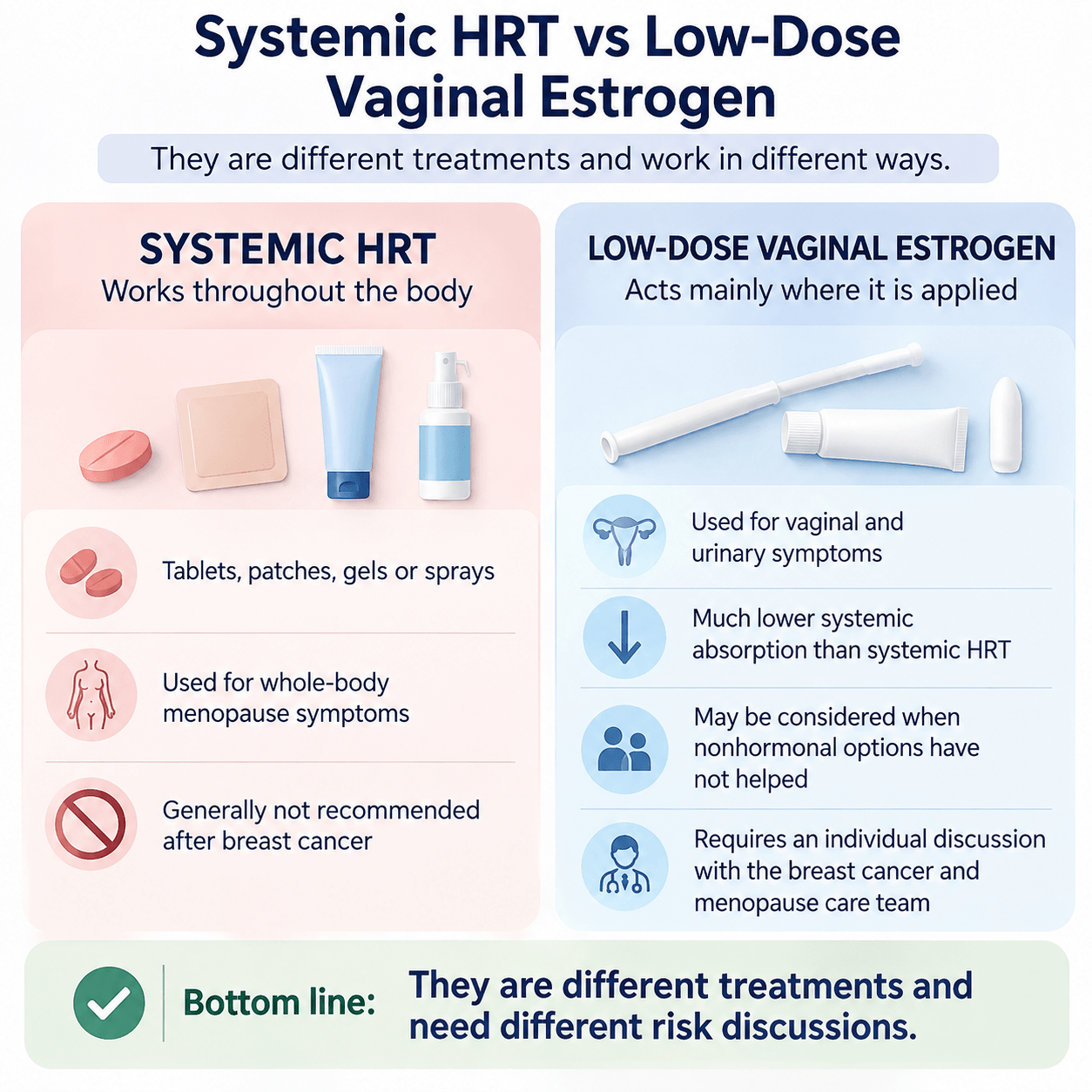
Systemic HRT means estrogen that travels through the bloodstream and affects the whole body, such as estrogen taken as a tablet, patch, gel or spray.
After breast cancer, systemic HRT is generally not recommended, especially when the cancer was sensitive to hormones such as estrogen. Current guidelines advise starting with nonhormonal treatment because there is concern that systemic hormones could increase the risk of the cancer returning.
This concern comes partly from clinical trials in breast cancer survivors. Some studies found more breast cancer recurrences among women who used systemic HRT, particularly in women whose original cancer was hormone-sensitive.
The evidence is not identical across every study, which is why doctors still consider the individual woman rather than applying one rule without context. In rare situations, when symptoms are severe and other treatments have not worked, specialists may discuss systemic HRT after carefully weighing the possible risks and benefits.
For most women, however, the first approach is to look at nonhormonal ways to treat each menopause symptom.
Nonhormonal menopause treatment should match the symptom
There is no single nonhormonal treatment that replaces HRT.
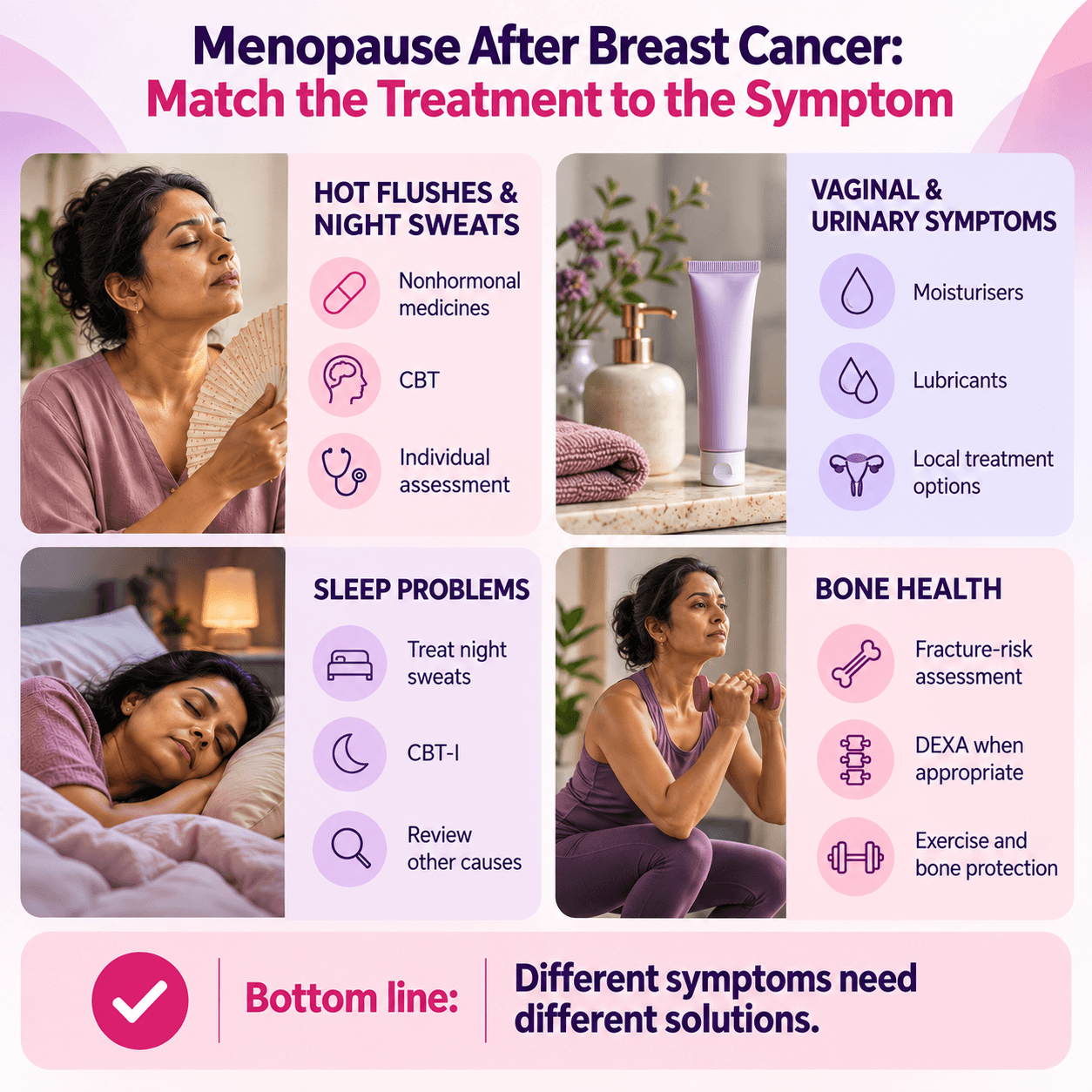
The right option depends on which symptom is affecting you most. Hot flushes, sleep problems, vaginal dryness and joint symptoms may each need a different approach.
For hot flushes and night sweats
Several nonhormonal medicines can help reduce hot flushes and night sweats. These include certain antidepressant medicines, as well as medicines such as gabapentin and oxybutynin, which may be prescribed specifically for these symptoms.
Cognitive behavioural therapy, or CBT, can also help some women manage hot flushes and reduce the impact they have on sleep and everyday life.
A newer nonhormonal medicine called fezolinetant works on the part of the brain involved in temperature control. It is used for moderate-to-severe hot flushes in menopause, but whether it is suitable after breast cancer needs individual medical assessment.
If you take tamoxifen, make sure your doctor knows before prescribing an antidepressant for hot flushes or mood symptoms. Some antidepressants can interfere with how tamoxifen is processed in the body, so the choice of medicine matters.
For vaginal dryness, soreness and urinary symptoms
Vaginal dryness, burning, discomfort during sex and urinary symptoms can become more common when estrogen levels fall, including during or after some breast cancer treatments.
The first step is usually nonhormonal local treatment. This can include vaginal moisturisers used regularly for ongoing dryness and lubricants used during sex to reduce friction and discomfort.
Some women may also benefit from hyaluronic acid-based vaginal products or pelvic-floor therapy, depending on their symptoms.
If these approaches are not enough, there may be other treatment options to discuss with your doctor. One of these is low-dose vaginal estrogen, which needs a separate risk discussion from systemic HRT, especially if you are currently taking an aromatase inhibitor.
Low-dose vaginal estrogen is different from systemic HRT
Low-dose vaginal estrogen is used directly in the vagina to treat symptoms such as dryness, soreness and urinary discomfort. Unlike systemic HRT, it is not intended to treat whole-body symptoms such as hot flushes or night sweats.
Only a small amount of estrogen is absorbed into the bloodstream, which is why current guidelines treat it differently from systemic HRT.
For women with a history of breast cancer, it is usually considered only when nonhormonal treatments have not provided enough relief.
Your current breast cancer treatment also matters. If you take tamoxifen, low-dose vaginal estrogen may sometimes be considered after discussing the possible benefits and risks with your doctor.
If you take an aromatase inhibitor, the decision needs particular care because these medicines work by keeping estrogen levels very low. In this situation, your breast cancer specialist should be involved in the decision.
Research so far has not shown a clear increase in breast cancer recurrence with low-dose vaginal estrogen, but much of the evidence is observational. That means it is reassuring, but it cannot prove that there is no risk for every woman.
The decision therefore needs to be individual rather than automatic.
Sleep, mood and concentration may need their own treatment plan
Menopause symptoms can overlap. For example, repeated night sweats can disturb sleep, and poor sleep can then affect mood, energy and concentration.
Sometimes, treating the hot flushes or night sweats improves sleep as well. But if insomnia continues, it may need its own treatment.
Cognitive behavioural therapy for insomnia, or CBT-I, is a recommended first-line treatment for ongoing sleep problems. Some nonhormonal medicines used for hot flushes may also help with sleep in certain women.
Mood changes should also be assessed rather than automatically blamed on menopause. Breast cancer treatment, disrupted sleep, anxiety and hormonal changes can all contribute.
If an antidepressant is being considered and you take tamoxifen, make sure the prescriber knows. Some antidepressants can interfere with how tamoxifen works, so the medicine needs to be chosen carefully.
Do not overlook bone health
For some women, menopause after breast cancer is not only about symptoms such as hot flushes or poor sleep. Bone health also needs attention.
Lower estrogen levels can lead to bone loss over time. This may be especially relevant if menopause happened earlier because of treatment, or if you are taking an aromatase inhibitor, which can also affect bone strength.
Your doctor may recommend assessing your fracture risk and, in some cases, checking bone density with a DEXA scan.
Bone care can also include regular weight-bearing and resistance exercise, adequate calcium and vitamin D where appropriate, and specific bone-protective treatment if your fracture risk is high.
The important point is that avoiding systemic HRT should not mean ignoring long-term menopause health.
“Natural” does not always mean suitable after breast cancer
When HRT is not routinely recommended, herbal supplements can seem like the obvious alternative. But natural does not automatically mean safe, effective or suitable after breast cancer.
Products such as black cohosh, red clover and soy isoflavone supplements are often marketed for hot flushes and other menopause symptoms, but the evidence for benefit is limited or inconsistent.
Some supplements can also interact with prescription medicines or have hormone-like effects that may not be appropriate for every breast cancer survivor.
This does not mean you need to avoid ordinary foods that contain soy as part of a balanced diet. Supplements are different because they may contain much more concentrated amounts of active compounds.
If you are considering a herbal or dietary supplement for menopause symptoms, it is worth checking it with your oncologist, menopause.
What should your menopause plan after breast cancer actually look like?
The most useful starting point is not simply, “Can I take HRT?”
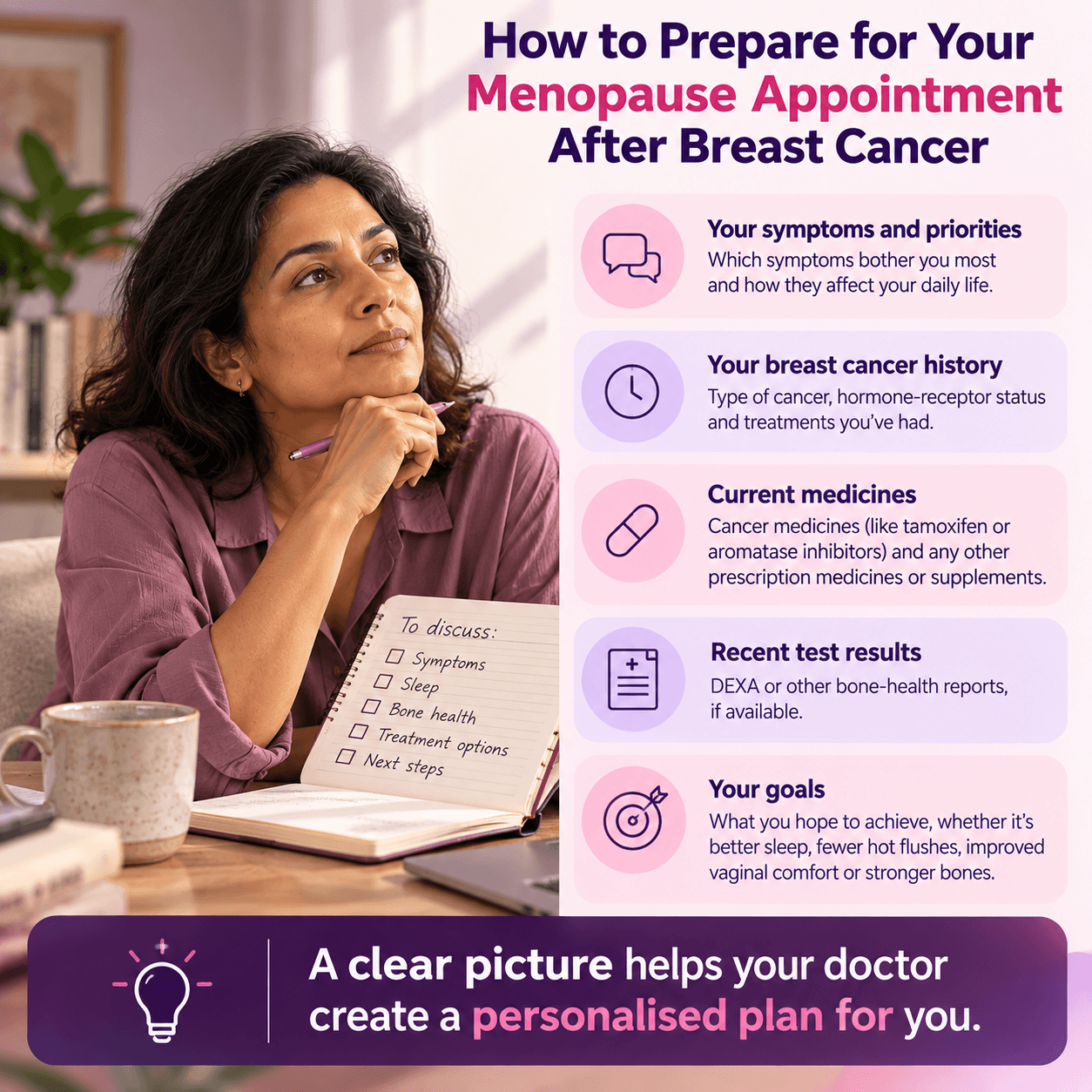
A better question is: Which symptoms are affecting me most, what may be causing them, and what are the safest treatment options for me?
Once your doctor has the full picture, treatment can be matched to your individual situation rather than using one standard approach.
For some women, the plan may be completely nonhormonal. For others, local treatment for vaginal or urinary symptoms may be considered if first-line options have not helped.
The aim is not to find one substitute for estrogen. It is to build a symptom-by-symptom plan that fits your breast cancer history, current treatment and priorities.
The key takeaway
HRT after breast cancer is not routinely recommended, but menopause symptoms can still be treated.
Hot flushes may respond to nonhormonal medicines or CBT. Vaginal and urinary symptoms can begin with nonhormonal local treatments, with low-dose vaginal estrogen considered for some women after specialist discussion. Sleep problems, mood changes and bone health may each need their own assessment and treatment plan.
The most useful approach is usually not to look for one replacement for estrogen. It is to build a personalised, symptom-by-symptom plan that takes your breast cancer history and current treatment into account.
Not sure what menopause treatment is right for you after breast cancer?
Your options may depend on your breast cancer history, current medicines, symptoms and individual risk factors.
At the MIROR HRT Centre of Excellence, you can get specialist guidance on HRT after breast cancer, including whether systemic HRT is appropriate and what alternatives may be considered.