


The foods you eat may not suit you anymore.
Your weight may be harder to manage.
You feel hungrier between meals.
So let’s look at what insulin resistance means, what you can eat, what you may want to limit, and what else matters for your metabolic health.
What is insulin resistance?
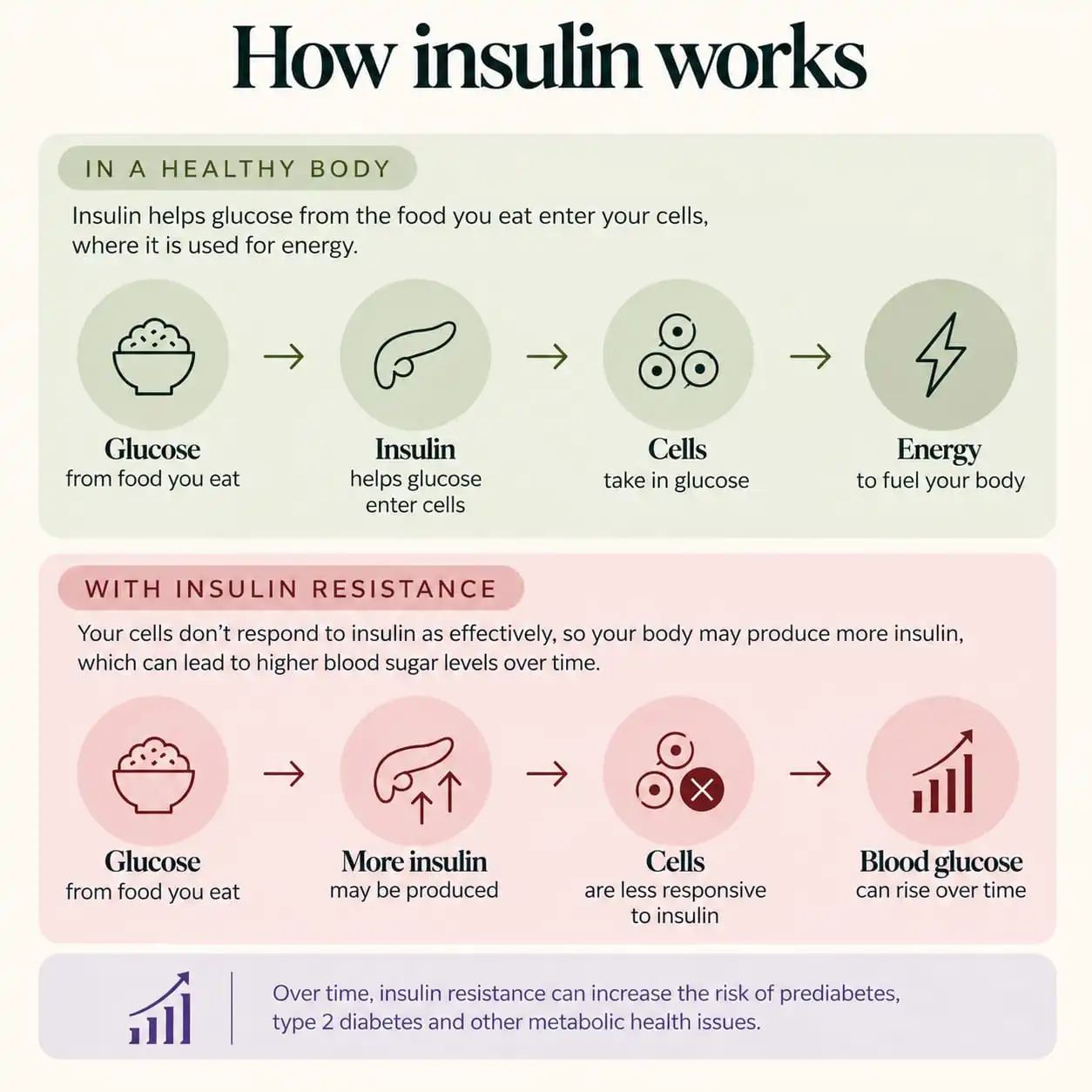
Think of insulin as the key that helps glucose enter your cells so your body can use it for energy.
With insulin resistance, your cells become less responsive to insulin. Your body may then produce more insulin to help keep blood glucose levels in range.
Over time, this can contribute to prediabetes and type 2 diabetes.
And here’s the important part: you may not feel anything at all. Weight gain, tiredness or sugar cravings on their own do not mean you have insulin resistance.
Your blood tests and overall risk factors tell you much more.
Why does insulin resistance matter in midlife?
Midlife can bring several changes at once.
Changing hormones can affect where your body stores fat. Muscle mass can decline with age, while sleep and activity levels may change too.
None of this means menopause causes insulin resistance. But these changes can influence your metabolic health.
Your family history, weight, physical activity, sleep and other health conditions matter too.
What should an insulin resistance diet look like?
Forget the idea that you need to give up carbohydrates or survive on salads.
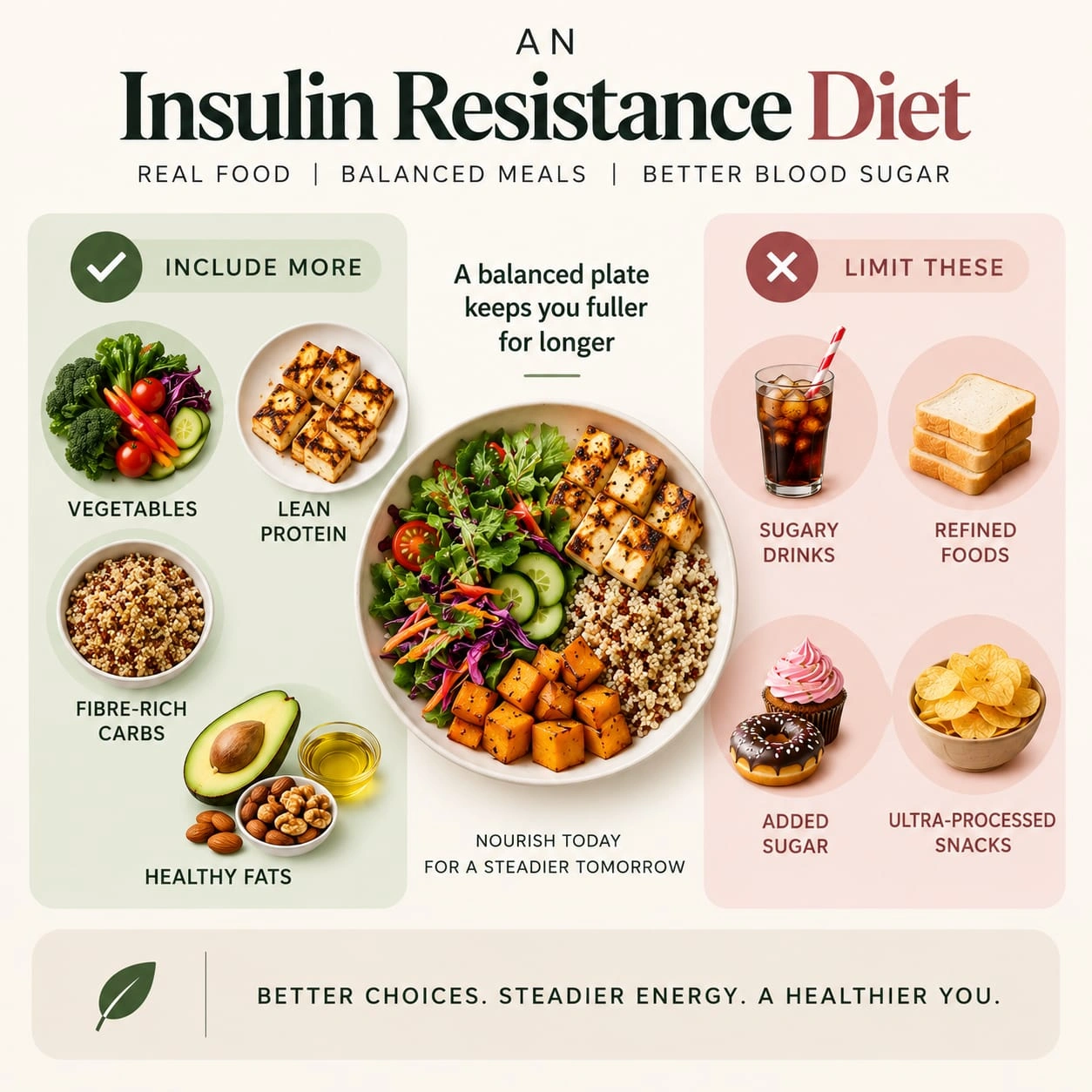
An insulin resistance diet is less about banning foods and more about building balanced meals that keep you satisfied and support healthy blood sugar levels.
Think vegetables, protein, fibre-rich carbohydrates and healthy fats. At the same time, cut back on sugary drinks, highly refined foods and excess added sugar.
You don’t need a perfect diet. You need one you can actually stick to.
You Don’t Have to Give Up Rice and Roti
If you’re Indian, an insulin resistance diet can sound intimidating when it starts feeling like you have to give up the foods you actually eat every day.
You don’t.
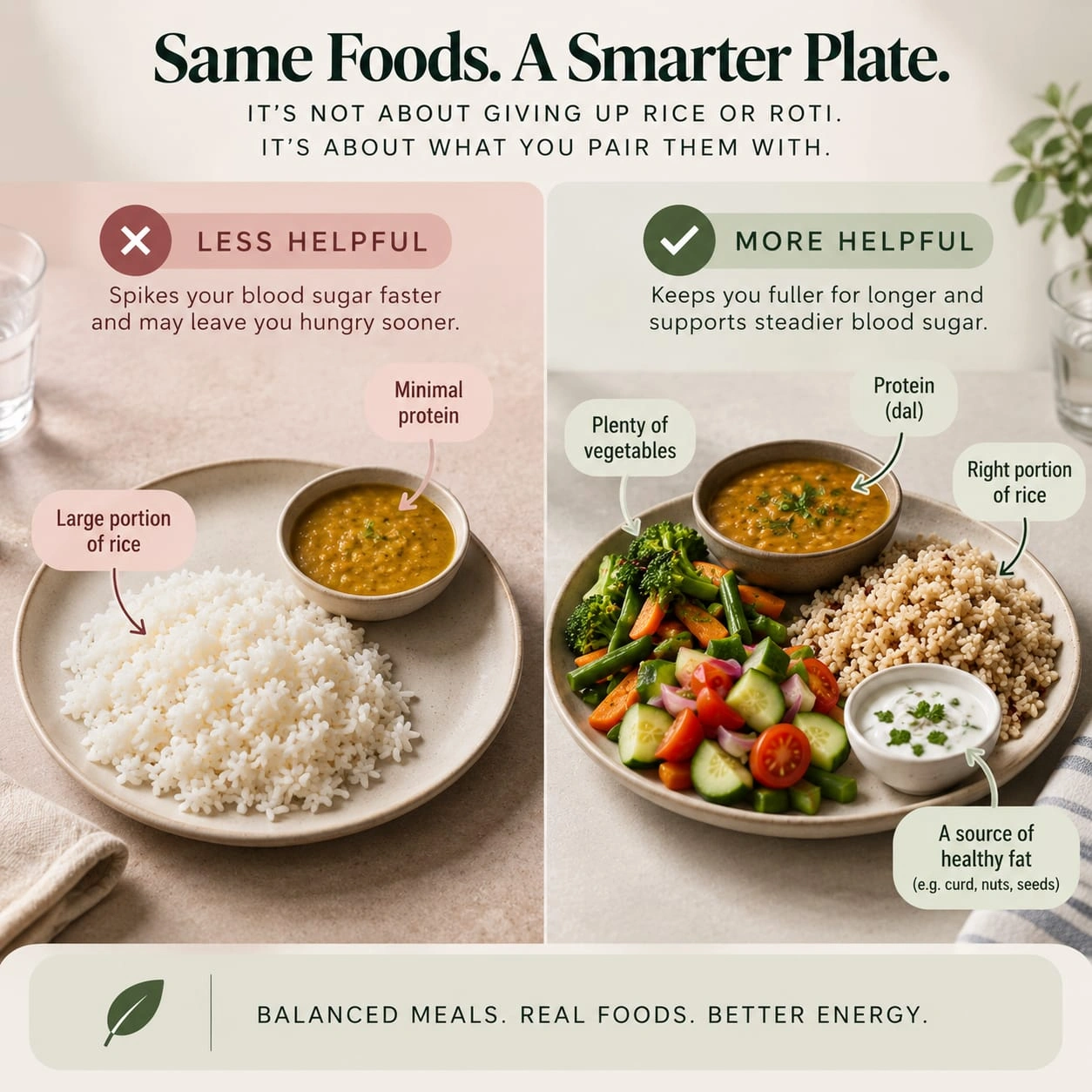
Rice and roti can still have a place in a balanced diet. What matters is how much you eat, what type you choose and what you pair them with.
Instead of eating a large serving of rice on its own, pair a moderate portion with dal or another protein, plenty of vegetables and some healthy fat. The same principle applies to roti.
The goal isn’t to remove carbohydrates from your plate. It’s to build a meal that keeps you satisfied and supports steadier blood sugar. For more ideas on building balanced Indian meals during midlife, explore our guide to the best foods for menopause.
Foods to Include in an Insulin Resistance Diet
| Food group | Easy choices |
|---|---|
| Vegetables | Leafy greens, gourds, beans, cauliflower |
| Protein | Dal, eggs, paneer, tofu, chicken, fish |
| Fibre-rich carbs | Oats, whole grains, beans, lentils |
| Healthy fats | Nuts, seeds, avocado, cooking oils |
| Whole fruit | Guava, apple, orange, berries |
The aim is variety and balance, not eating “perfect” foods at every meal.
Food Is Only One Part of the Equation
An insulin resistance diet can help, but what you eat isn’t the only factor that affects how your body handles blood sugar.
Regular movement helps your muscles use glucose. Strength training is particularly useful because muscle tissue plays an important role in glucose uptake.
Sleep matters too. Poor or insufficient sleep can affect appetite, energy levels and blood sugar regulation.
So rather than focusing on one “perfect” food or cutting out an entire food group, think about the habits you can build around your meals: move regularly, build strength, sleep well and eat in a way you can sustain.
When Should You Get Tested?
If you’re considering an insulin resistance diet, it’s important to know whether insulin resistance is actually a concern for you. Your doctor can assess your risk based on factors such as family history, weight, waist circumference, blood pressure, PCOS, previous gestational diabetes and other health conditions.
Blood tests such as HbA1c and fasting blood glucose can help identify prediabetes or diabetes. Depending on your situation, your doctor may recommend other tests too.
Testing can give you a clearer starting point than guessing from symptoms alone. If you’re concerned about your blood sugar or diabetes risk, speak to your doctor about whether testing is appropriate for you.
Where MIROR Fits In
Food and lifestyle changes can be an important part of looking after your health in midlife. But you don’t have to figure out every change on your own.
At MIROR, menopause experts can help you understand changes in your symptoms, periods and overall wellbeing, and guide you towards the right support.
If you’re unsure whether something you’re experiencing is related to menopause or needs a closer look, personalized guidance can help you decide what to do next.
Looking for personalized guidance through midlife? Download the MIROR app to connect with menopause experts and explore the right care for you.