


If you’re starting HRT, surely you need a whole list of menopause blood tests first?
It sounds logical. HRT changes hormone levels, so you might expect a blood test to tell you exactly what is happening and whether you are ready for treatment.
But menopause does not quite work that way.
Do You Actually Need a Blood Test Before HRT?
For many women aged 45 and over with typical perimenopause or menopause symptoms, a doctor can usually assess menopause based on your symptoms, menstrual history and clinical assessment. Routine hormone testing is not generally needed simply to confirm menopause or decide whether HRT may be appropriate for you.
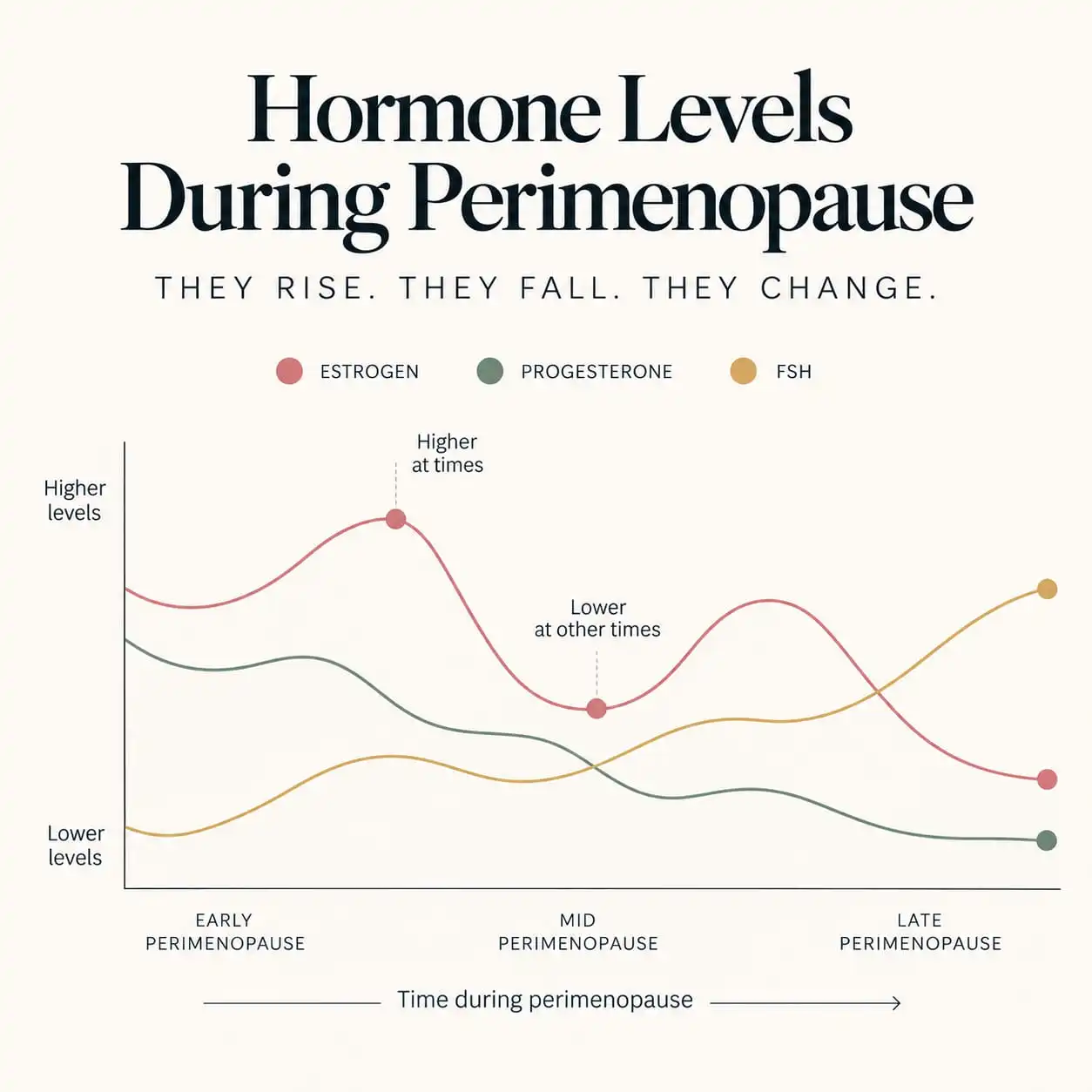
That is because hormone levels can fluctuate considerably during perimenopause. A single blood test gives you one snapshot in time. It may not accurately reflect the broader picture.
When Might You Need Menopause Blood Tests?
So, if blood tests are not always needed, does that mean they are never useful?
Not at all.
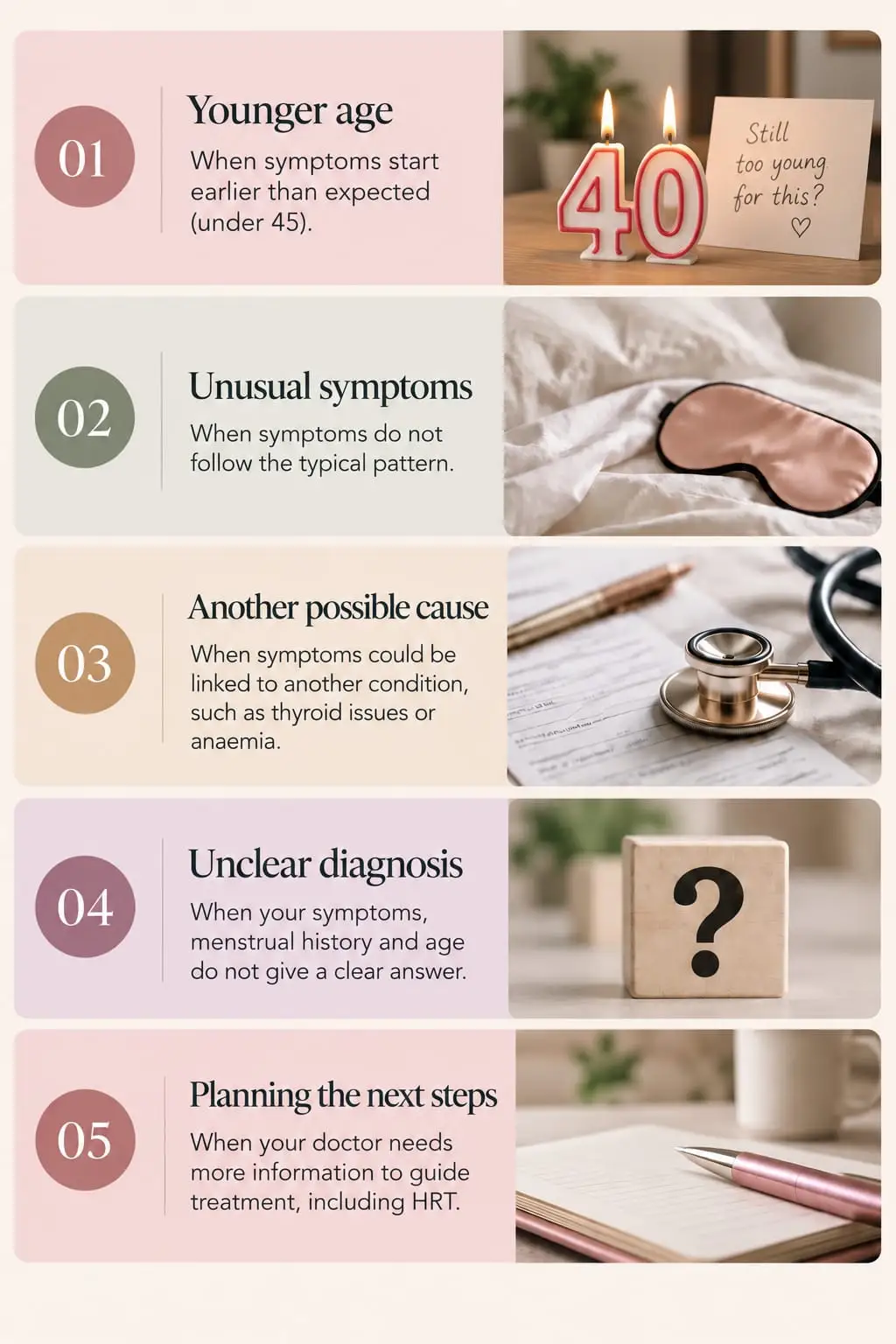
Your doctor may consider testing when there is a specific reason to look beyond the usual pattern of perimenopause or menopause symptoms.
(NICE)
The key point? A menopause blood test is not automatically a standard first step before HRT. The reason for testing matters just as much as the test itself.
“So, which menopause blood tests might your doctor actually recommend?”
Which Menopause Blood Tests Might Your Doctor Recommend?
There is no standard set of menopause blood tests that every woman needs before HRT. The tests your doctor recommends depend on your age, symptoms and medical history.
FSH: May be considered when menopause is suspected at a younger age, particularly between 40 and 45, or under 40 when menopause is suspected. It is not routinely used to diagnose menopause in women over 45 with typical symptoms.
Thyroid function tests: May be recommended when symptoms could also point to a thyroid condition.
Complete blood count (CBC): May be useful when symptoms such as persistent tiredness, weakness or heavy bleeding raise the possibility of anaemia or another blood-related cause.
Estrogen, progesterone and AMH: These are not routinely needed to diagnose menopause in women over 45. A single hormone result can also be difficult to interpret because hormone levels fluctuate during the menopause transition.
So, rather than asking for a long list of tests, the more useful question is: What does my doctor need to know, and will this test change what we do next?
Do You Need Blood Tests to Monitor HRT?
Starting HRT does not automatically mean you need regular hormone blood tests.
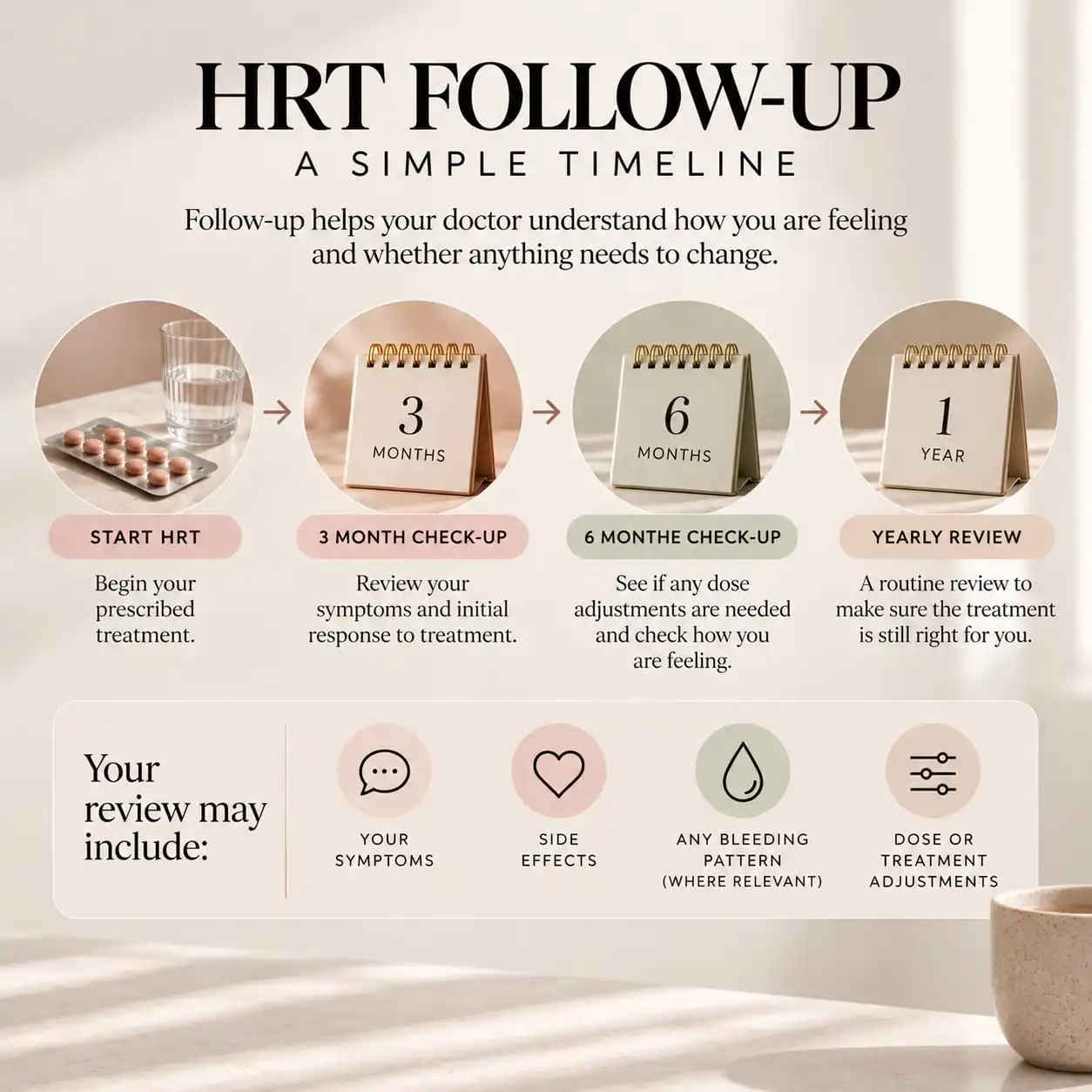
For most women using HRT, your doctor will usually assess how treatment is working by looking at your symptoms, side effects, bleeding pattern where relevant, and how you are responding to the treatment. Routine hormone testing is generally not needed simply to check whether HRT is “working.”
That does not mean blood tests are never useful after starting HRT. If symptoms continue despite treatment, or there is a specific clinical concern, your doctor may sometimes use a blood test to investigate further. For example, an estradiol test may occasionally be considered when there are ongoing symptoms and the doctor needs to assess whether the hormone is being absorbed adequately. Even then, a single estradiol result has limitations and needs to be interpreted alongside the clinical picture.
So if you have started HRT and are wondering, “Should I get my hormones checked every few months?” the answer is usually not as a routine requirement.
What matters more is whether your treatment is helping your symptoms and whether you are experiencing any problems that need to be addressed.
When Might Testing Be Considered During HRT?
Your doctor may consider further testing when:
– your symptoms are not improving as expected
– there is a specific concern about hormone absorption or treatment response
– another health condition could be contributing to your symptoms
– you are using testosterone as part of your treatment, where blood testing may be used to monitor levels
The important point is that the reason for the test matters more than the test itself. A blood test should answer a clinical question, rather than being ordered simply because you are taking HRT.
What Does HRT Follow-Up Actually Look Like?
Starting HRT is not the end of the conversation. Your first follow-up helps your doctor understand how you are responding to treatment and whether anything needs to change.
How MIROR Can Help With Your HRT
Understanding whether you need blood tests is only one part of making an informed HRT decision. The more important part is having the right clinical assessment and knowing which tests, if any, are actually relevant to you.
At MIROR’s HRT Centre of Excellence, women can access specialist-led HRT care with personalized treatment planning, diagnostics where clinically appropriate and ongoing follow-up. The focus is not on ordering every possible hormone test, but on understanding your symptoms, medical history and individual needs before deciding what comes next.
If you are considering HRT and are unsure about the tests you need, speaking to a menopause-focused healthcare professional can help you understand which investigations are relevant to your situation.
The Bottom Line on Menopause Blood Tests
If you are considering HRT, you do not necessarily need a long list of menopause blood tests before starting treatment.
For many women aged 45 and over with typical menopause symptoms, the diagnosis can be made from symptoms, menstrual history and clinical assessment. Blood tests may still be useful when your age, symptoms or medical history make the diagnosis less straightforward, or when your doctor is investigating another possible cause for your symptoms.
The same principle applies once you start HRT. Follow-up is important, but routine hormone testing is not usually needed simply to check whether treatment is working. Your symptoms, response to treatment and any side effects are often more useful in guiding the next step.
So rather than asking, “Which blood tests should I get?”, a better place to start is:
“What are we trying to find out, and will this test change what we do next?”
That conversation can help you avoid unnecessary testing while making sure a relevant concern is not overlooked.
The right menopause blood tests depend on what your doctor is trying to find out.