
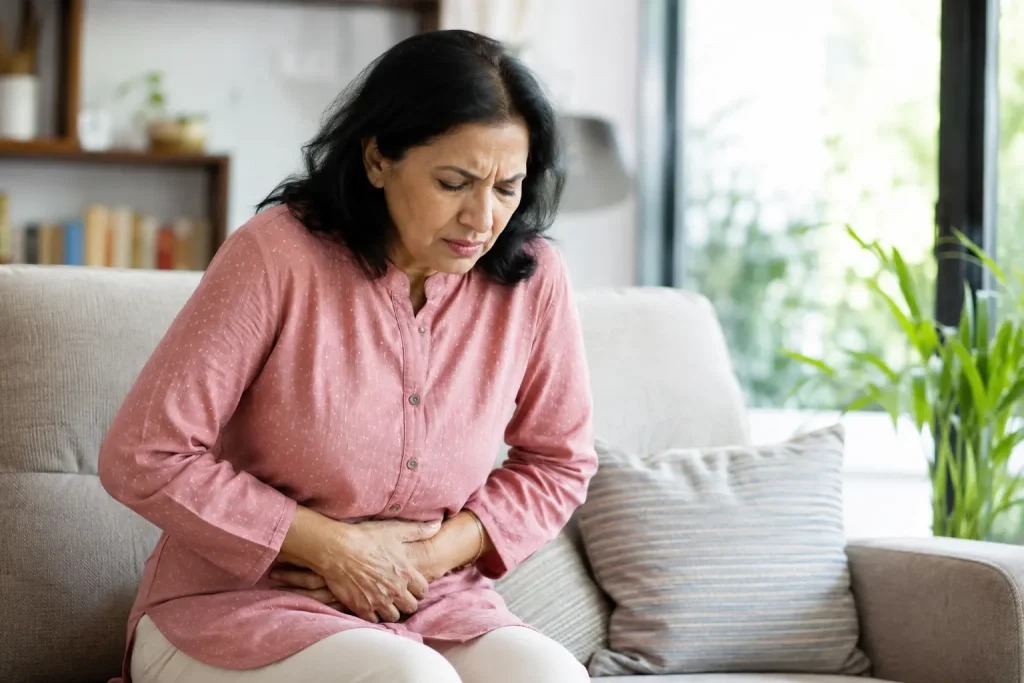
A familiar ache on one side of your lower abdomen. A cramp or twinge that reminds you of the ovulation pain you used to experience between periods.
If you are postmenopausal, it is understandable to wonder: “Am I ovulating again?”
But there is an important distinction.
During perimenopause, ovarian activity can be unpredictable and ovulation may still happen intermittently. Menopause, however, is confirmed after 12 consecutive months without a menstrual period, and postmenopause is the stage that follows. By this point, normal cyclical ovulation has ceased.
So, if you experience ovulation pain after menopause, the sensation may feel familiar, but the underlying cause is likely to be something other than normal ovulation.
That does not automatically mean something serious is wrong. Pelvic and lower abdominal pain can have many causes, including bowel, bladder, ovarian, uterine and musculoskeletal conditions. But new, persistent or unexplained pain deserves attention rather than being dismissed as “just ovulation.” For a broader understanding of pelvic discomfort during this stage of life, you can also read Menopause Pelvic Pain: Causes, Patterns and Red Flags.
Can You Still Ovulate After Menopause?
After established natural menopause, normal ovulation does not continue.
Menopause occurs as ovarian function declines and menstrual cycles eventually stop. Once a woman has gone 12 consecutive months without a period due to natural menopause, she is considered postmenopausal.
The situation is different during perimenopause.
Perimenopause is the transition leading up to menopause. Periods often become irregular during this time, but ovarian activity does not stop all at once. Ovulation may still occur intermittently, which is why pregnancy can still be possible during perimenopause.
This distinction matters because women sometimes use the word “menopause” to describe the entire transition.
If you are still in perimenopause, an ovulation-related sensation may still be possible. If you are postmenopausal, however, new ovulation-like pain should not automatically be attributed to ovulation.
What Can Feel Like Ovulation Pain After Menopause?
The pelvis contains several organs and structures close together. Pain arising from the ovaries, uterus, bladder, bowel, pelvic floor, abdominal wall or surrounding muscles can sometimes feel surprisingly similar.
That is why the location or character of pain alone cannot reliably tell you its cause.
Ovarian Cysts or Other Ovarian Conditions
Ovarian cysts can occur after menopause and may sometimes cause pelvic discomfort, pressure, bloating or pain.
However, cysts that develop after menopause are considered differently from the common functional ovarian cysts seen during the reproductive years. Functional cysts form as part of the menstrual and ovulatory cycle, so they are not the typical explanation once normal ovulation has ceased.
Most ovarian cysts are benign, but a cyst found after menopause may require assessment based on factors such as its appearance, size, symptoms and your individual medical history.
Uterine or Other Gynaecological Conditions
Not every pain felt near the ovaries actually comes from an ovary.
Conditions involving the uterus, cervix or other pelvic structures may cause lower abdominal or pelvic discomfort. Previous gynaecological conditions may also continue to influence symptoms after menopause.
A medical assessment can help identify where the pain is actually coming from.
Urinary Tract or Bladder-Related Causes
Bladder and urinary problems can sometimes cause pain or pressure low in the abdomen.
A urinary tract infection, for example, may cause pelvic discomfort along with symptoms such as burning when urinating, needing to urinate more frequently or feeling an increased sense of urgency.
Bowel or Gastrointestinal Causes
The bowel sits very close to the reproductive organs, which means bowel-related discomfort can sometimes be mistaken for ovarian pain.
Constipation, trapped gas and other gastrointestinal conditions can all cause lower abdominal or pelvic discomfort.
If the pain is accompanied by a persistent change in bowel habits, this is worth discussing with your doctor rather than assuming it is hormonal.
Pelvic Floor or Musculoskeletal Pain
Pain that feels deep in the pelvis does not always come from an internal organ.
The pelvic floor, abdominal wall, hips, back and surrounding muscles can all contribute to pelvic discomfort. Muscle tension, joint problems or nerve-related pain may sometimes create sensations that feel similar to menstrual or ovulation-related pain.
Infection or Inflammation
Some infections or inflammatory conditions affecting the urinary, gastrointestinal or reproductive systems can cause pelvic or abdominal pain.
Symptoms such as fever, unusual vaginal discharge, urinary symptoms or feeling generally unwell can provide useful clues and should be mentioned to your doctor.
What Does “Ovulation Pain” Usually Feel Like?
Ovulation pain is sometimes called mittelschmerz, meaning “middle pain.”
During the reproductive years, some women notice a dull ache, cramp, pressure or sharper pain on one side of the lower abdomen around the time an ovary releases an egg. It may last for a relatively short period and can sometimes alternate sides between cycles.
If you experienced this for many years, you may recognise a similar sensation later in life and naturally associate it with ovulation.
But symptoms can feel alike even when they have different causes.
After established menopause, the fact that pain feels like your old ovulation pain does not mean that ovulation has restarted. The sensation itself cannot tell us which organ or condition is responsible.
Why Pelvic Pain After Menopause Should Not Be Ignored
Occasional abdominal discomfort can happen for many everyday reasons. What matters is the pattern of the symptom and what else is happening alongside it.
If you develop pelvic pain after menopause, consider:
- How long has the pain been present?
- Does it keep returning?
- Is it always in the same place?
- Is it consistently on one side?
- Is it becoming more frequent or more intense?
- Is it interfering with normal activities?
- Are there changes in your bowel or bladder habits?
- Are you experiencing persistent bloating or abdominal swelling?
- Is there any vaginal bleeding or unusual discharge?
- Are there other new symptoms occurring at the same time?
Persistent or unexplained pelvic pain after menopause deserves medical assessment because there are several possible causes that cannot be distinguished by symptoms alone.
This is not the same as saying that postmenopausal pelvic pain is necessarily serious. In many cases, another non-cancerous explanation may be found.
The important point is simply: do not repeatedly label unexplained pain as ovulation once you are postmenopausal.
Could It Be an Ovarian Problem?
It can be, although ovarian conditions are only one possible explanation for ovarian pain after menopause.
Benign ovarian cysts and other ovarian conditions can sometimes cause pelvic pain, abdominal pressure, bloating or urinary symptoms. If symptoms persist, your doctor may decide that the ovaries and other pelvic structures need to be evaluated.
Understandably, some women immediately worry about ovarian cancer when they experience new pelvic pain.
Pelvic or abdominal pain can be one of the symptoms associated with ovarian cancer. Other recognised symptoms include persistent abdominal bloating or swelling, feeling full quickly or losing your appetite, and needing to urinate more urgently or frequently.
But these symptoms are not specific to ovarian cancer. They can occur with many much more common, non-cancerous conditions.
Having pelvic pain does not mean you have ovarian cancer.
What matters is whether symptoms are new, persistent, recurrent, worsening or unexplained. That is when it is sensible to speak with a doctor so that the cause can be investigated appropriately.
When Should You See a Doctor for Pelvic Pain After Menopause?
Arrange a medical review if your pelvic or abdominal pain is:
- persistent or keeps returning
- gradually worsening
- unexplained
- consistently located on one side
- accompanied by persistent bloating or abdominal swelling
- associated with changes in bowel or bladder habits
- accompanied by feeling full unusually quickly or a persistent loss of appetite
- associated with unexplained weight loss
- accompanied by unusual vaginal discharge
- associated with vaginal bleeding after menopause
One symptom deserves particular emphasis: any vaginal bleeding after established menopause should be medically assessed, even if it happens only once or is only a small amount of spotting.
When is pelvic pain more urgent?
Seek urgent medical attention for sudden or severe pelvic or abdominal pain, particularly if it is accompanied by symptoms such as:
- vomiting
- fever
- dizziness or fainting
- rapidly worsening pain
- feeling acutely unwell
Sudden severe symptoms can occasionally indicate an acute abdominal or pelvic problem that needs prompt assessment.
The distinction is important: persistent or recurrent pain needs evaluation, but not every episode of pelvic discomfort requires emergency care.
What Might a Doctor Check?
Your doctor will usually start by understanding the symptom rather than jumping immediately to a particular diagnosis.
They may ask:
- when the pain started
- exactly where you feel it
- how often it happens
- how long it lasts
- whether anything makes it better or worse
- when your periods stopped
- whether you have experienced any postmenopausal bleeding
- whether you have bowel, bladder or vaginal symptoms
- about your medical, surgical and family history
- about medicines or hormone therapy you may be using
Depending on your symptoms, examination and medical history, evaluation might include an abdominal or pelvic examination, urine or blood tests, or pelvic imaging such as an ultrasound.
Further investigations may be recommended if something needs a closer look.
Not every woman with postmenopausal pelvic pain needs every test. The appropriate evaluation depends on the individual situation and what the initial assessment shows.
Can Perimenopause Cause Ovulation-Type Pain?
Yes, and this is where terminology can become confusing.
During perimenopause, ovarian function becomes less predictable rather than stopping immediately. Hormone levels fluctuate, menstrual cycles can become irregular and ovulation may still occur in some cycles.
So a woman in perimenopause may continue to experience symptoms associated with ovarian activity, including discomfort that resembles the ovulation pain she experienced earlier in life.
But perimenopause is not the same as postmenopause.
Once natural menopause has been established and you are postmenopausal, normal cyclical ovulation is no longer the expected explanation for new pelvic pain.
If you are unsure whether you are in perimenopause or postmenopause, particularly because of irregular bleeding, hormonal contraception, HRT or a previous hysterectomy, discuss your individual situation with a healthcare professional.
What Should You Do If You Feel Ovulation-Like Pain After Menopause?
First, do not panic.
But do not automatically assume the pain is ovulation either.
It can help to keep a simple record of:
- where you feel the pain
- when it occurs
- how long it lasts
- whether it is constant or intermittent
- how severe it feels
- whether it is getting worse
- any bloating, bowel or urinary changes
- vaginal bleeding or discharge
- any other symptoms occurring at the same time
This information can be very useful during a medical consultation.
Most importantly, seek medical advice if the pain is persistent, recurrent, worsening or unexplained, or if you develop any of the warning symptoms discussed above.
Trying to diagnose the cause based only on how similar it feels to your old ovulation pain can be misleading.
If you are experiencing ovulation pain after menopause that is persistent, recurrent, worsening or simply feels unusual for you, it is worth discussing it with a healthcare professional rather than trying to work out the cause on your own.
If you would like to speak with me, you can download the MIROR app from the Google Play Store or Apple App Store and book an appointment with me directly through the app. A personalized consultation can help you better understand your symptoms and what the next appropriate step may be.
FAQs
After established menopause, normal ovulation has stopped. During perimenopause, however, ovarian activity can still be irregular and ovulation may happen occasionally. That is why it is important to distinguish between perimenopause and postmenopause when discussing ovulation-type pain.
Pain that feels like ovulation pain after menopause can come from the ovaries, bowel, bladder, pelvic floor or other pelvic structures. The sensation may feel familiar, but the cause may be different. Persistent or unexplained pain should be checked by a doctor.
Yes, ovarian cysts can occur after menopause and may cause pelvic pain, pressure or bloating. These cysts are assessed differently from the common functional cysts seen during reproductive years. A doctor may recommend evaluation depending on the symptoms and findings.
Yes. Constipation, urinary infections, bladder irritation and other bowel or urinary problems can sometimes cause lower abdominal or pelvic pain that feels similar to old ovulation pain. This is why the location of the pain alone cannot confirm its cause.
Hormone therapy can sometimes change how the pelvis or lower abdomen feels, but it does not restart normal ovulation after established menopause. New or persistent pain while using HRT should still be assessed on its own merits rather than assumed to be caused by ovulation or hormones alone.