

Perimenopause Anxiety Treatment Isn’t Just One Thing.
It is often presented as a shopping list:
Sleep better.
Exercise.
Try breathing exercises.
Cut caffeine.
Take supplements.
Try therapy.
Maybe consider hormones.
The problem is that a list doesn’t tell you where to start.
You try the easiest thing first. It doesn’t help enough. Then you try something else. Before long, you’re doing six things at once and have no idea what is actually making a difference.
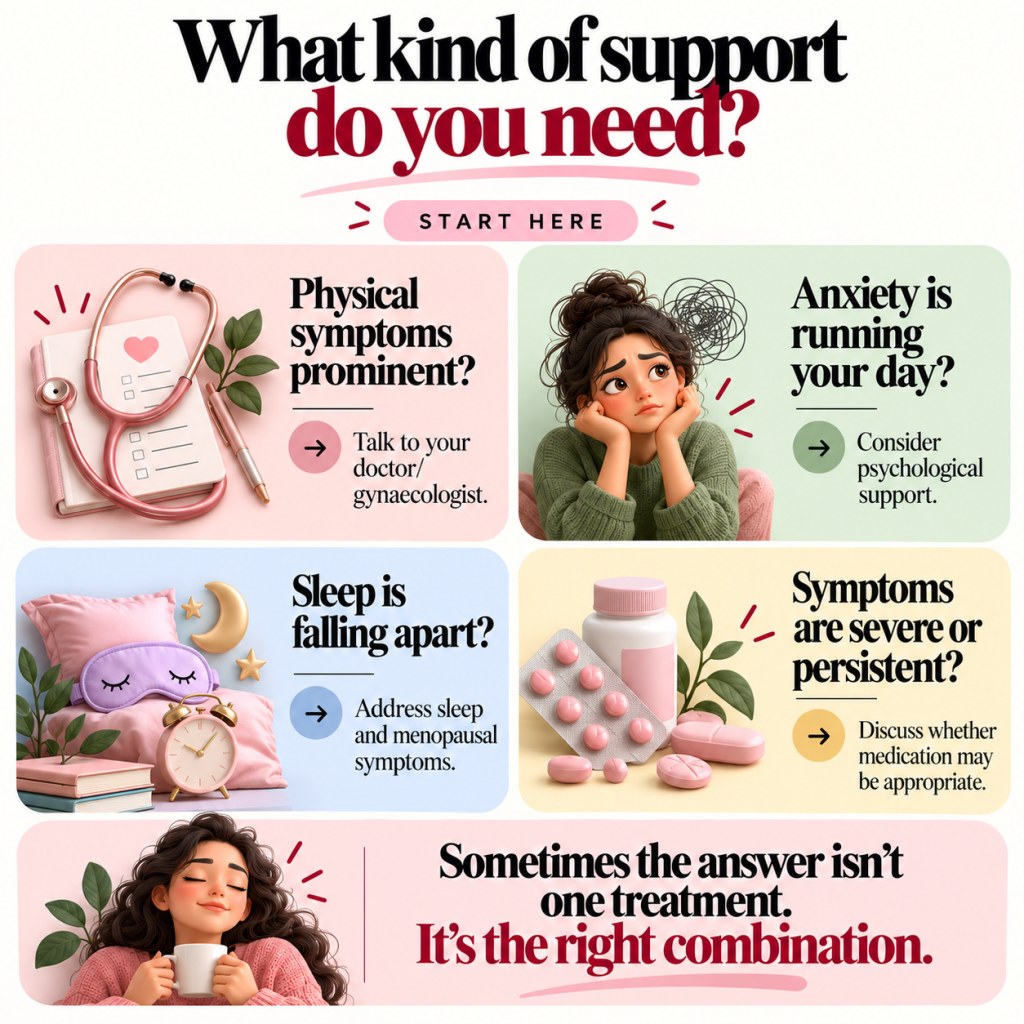
A better approach is to look at what is driving the anxiety, what is keeping it going, and what kind of support you need now.
There is no single treatment that works for every woman. The 2026 Indian Menopause Society guidance similarly emphasises individualised and multidisciplinary menopause care rather than a one-size-fits-all approach.
(PMC)
7 Powerful Ways to Break the Anxiety Cycle
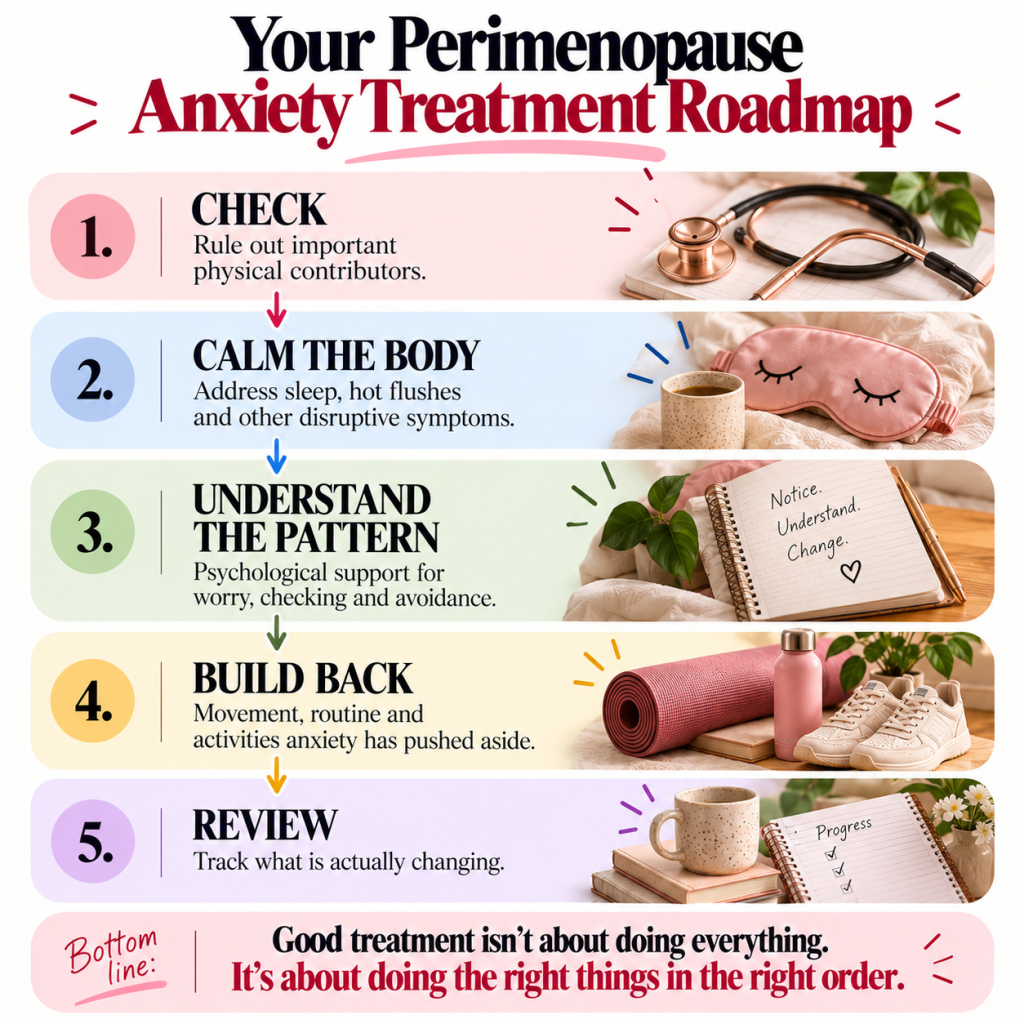
1. Make Sure Nothing Medical Is Being Missed
Before treating new or significant anxiety, it is worth speaking to a doctor about symptoms that could have another explanation.
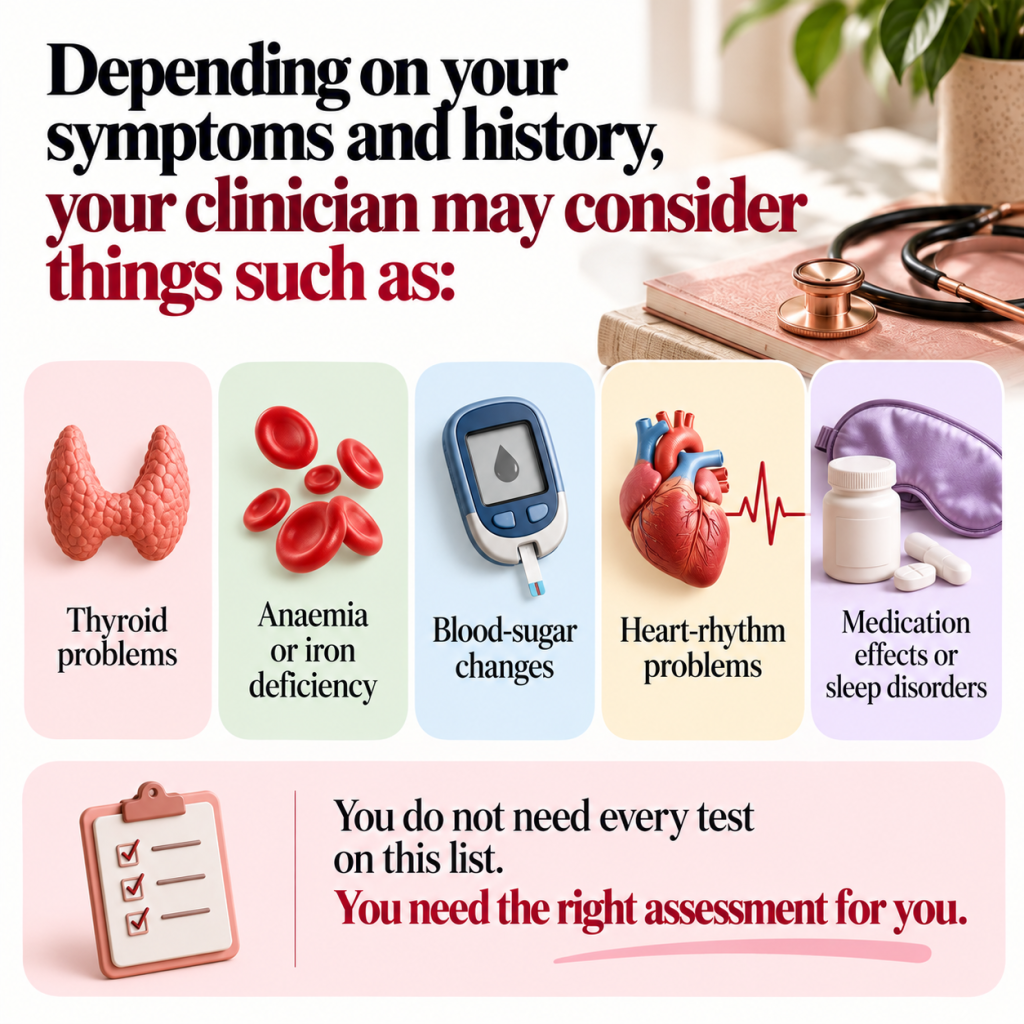
And once an appropriate medical assessment has been done, you can move on without spending your life wondering whether something was missed.
2. Treat the Things That Are Keeping Your Body on High Alert
Sometimes anxiety has a lot of physical fuel behind it.
Night sweats wake you repeatedly.
Hot flushes leave you uncomfortable.
Broken sleep patterns have exhausted you.
Your mind, heart and body changes are suddenly more noticeable.
That makes psychological work harder.
So if physical menopausal symptoms are prominent, discuss them with your gynaecologist as part of the bigger picture.
Hormone therapy may be appropriate for some women with menopausal symptoms, but it should not be treated as a universal anxiety medication. Evidence suggests its effect on anxiety is inconsistent, with possible benefit in some symptomatic women during perimenopause or early postmenopause.
(The Menopause Society)
The goal is not to blame everything on hormones.
It is to reduce the things that are genuinely making your body harder to live in.
3. Get Psychological Support When Anxiety Starts Running Your Life
Therapy can be useful when anxiety has become more than an occasional feeling.
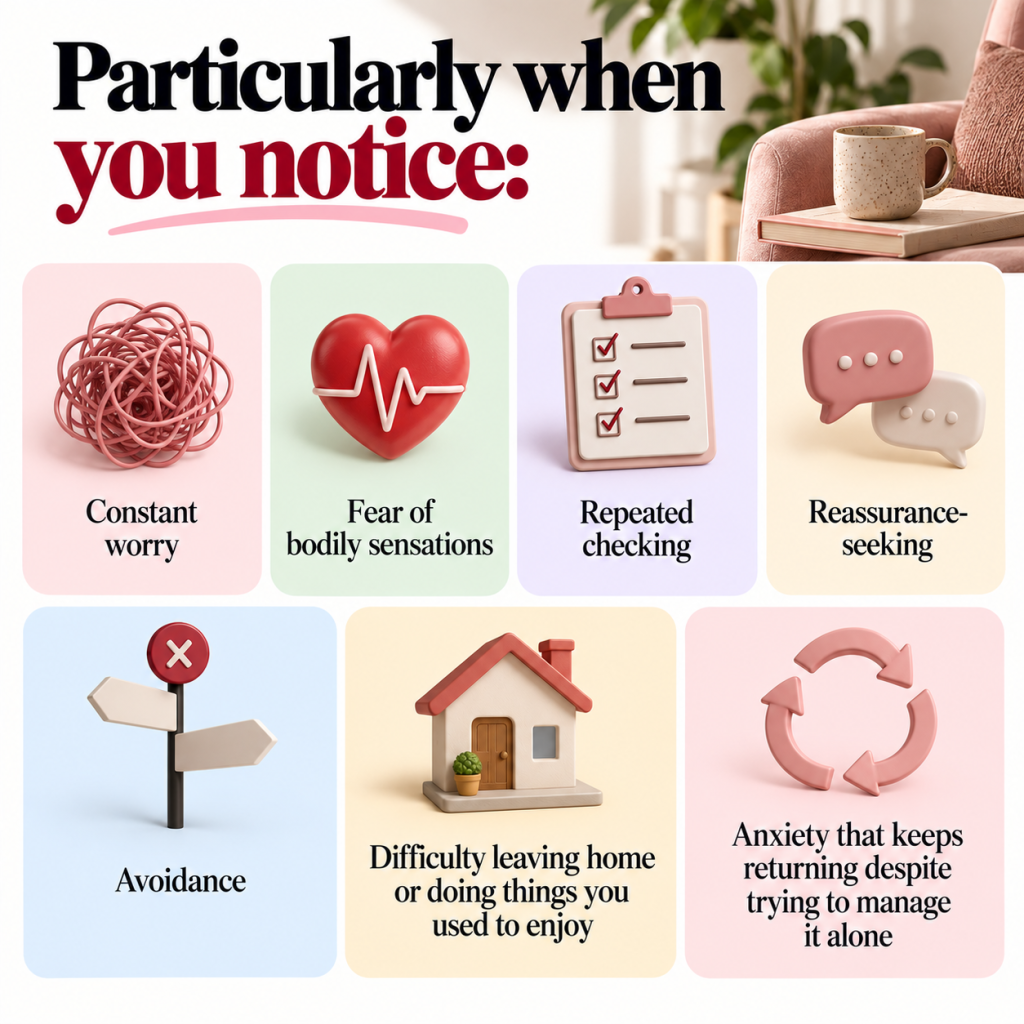
Psychological support can help you understand the pattern rather than simply trying to silence each symptom as it appears.
It can also help you rebuild confidence in situations that anxiety has gradually made smaller.
Recent research continues to support psychological interventions for psychological and sleep-related symptoms during the menopausal transition, although different approaches vary in their evidence and suitability.
(PubMed)
The right therapist doesn’t have to give you a perfect explanation on day one. They need to help you understand what is happening and what to do next.
4. Move Your Body, Even Before You Feel Ready
Exercise can help anxiety, sleep, energy and overall wellbeing.
But there is another reason movement can be useful here.
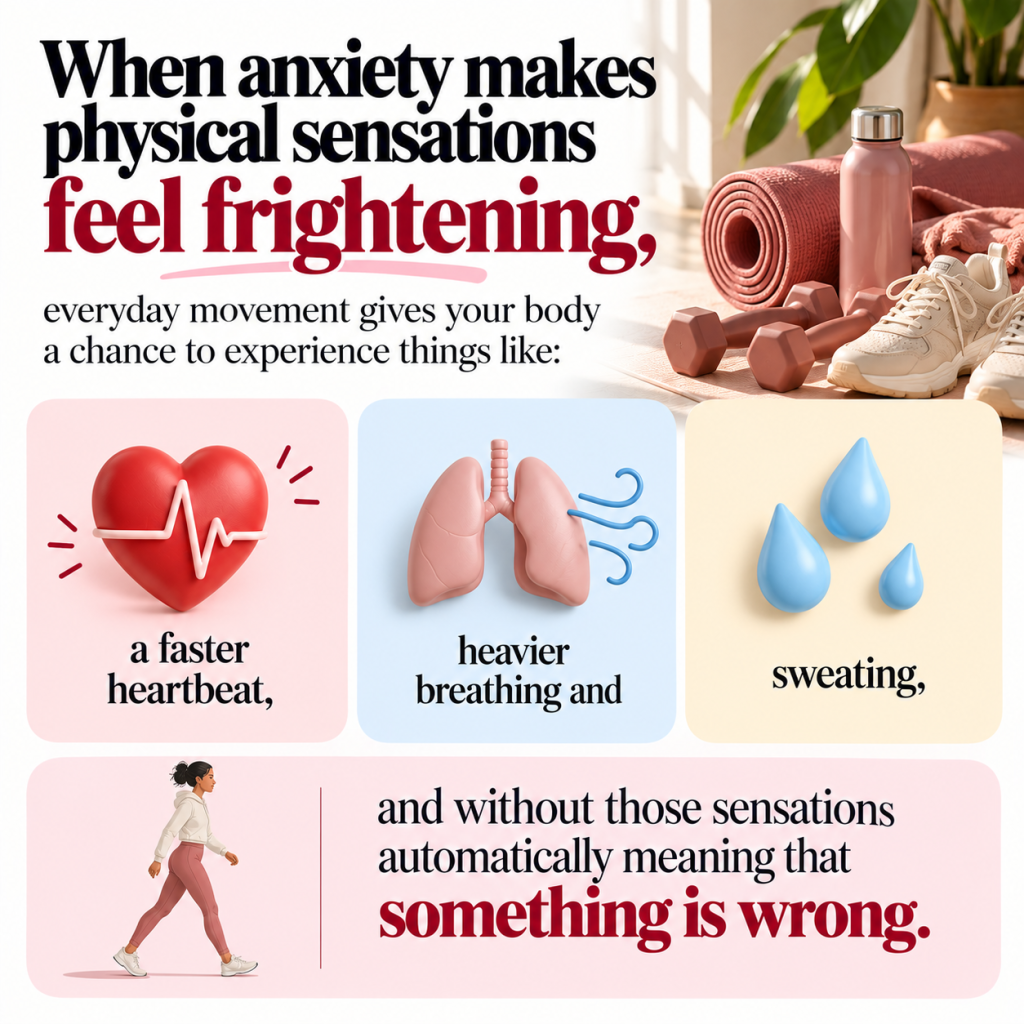
Start realistically.
A walk counts.
Strength training counts.
Dancing in your living room counts.
You do not need to become a gym person to benefit from moving your body regularly.
The Indian Menopause Society recommends lifestyle and supportive measures, including physical activity, as part of comprehensive menopause care.
(PMC)
5. Make the Everyday Triggers Quieter
This isn’t about living perfectly.
It is about noticing what makes your nervous system louder.
For some women, that means cutting back on excess caffeine.
For others, alcohol is the bigger issue, especially when it disrupts sleep.
And sometimes the most important change is simply having a more predictable sleep routine.
These things are not substitutes for treatment when anxiety is significant.
Think of them as reducing background noise.
You don’t fix a painful tooth by turning the music down.
But you might still turn the music down while you get it treated.
6. Medication Can Be Part of Good Care
Sometimes anxiety is persistent, severe or affecting your ability to function.
At that point, medication may be worth discussing with a psychiatrist or physician.
You do not have to “earn” medication by becoming extremely unwell first.
And taking medication does not mean therapy has failed.
Medication and psychological support can be used together, depending on the person’s symptoms, preferences and medical history. The decision should be individualised and made with a qualified clinician — not a symptom search, social-media post or online checklist.
7. Measure Whether You’re Actually Getting Better
This is the step people skip most often.
You start something.
You feel slightly better one week.
Worse the next.
Then you decide: “Nothing works for me.”
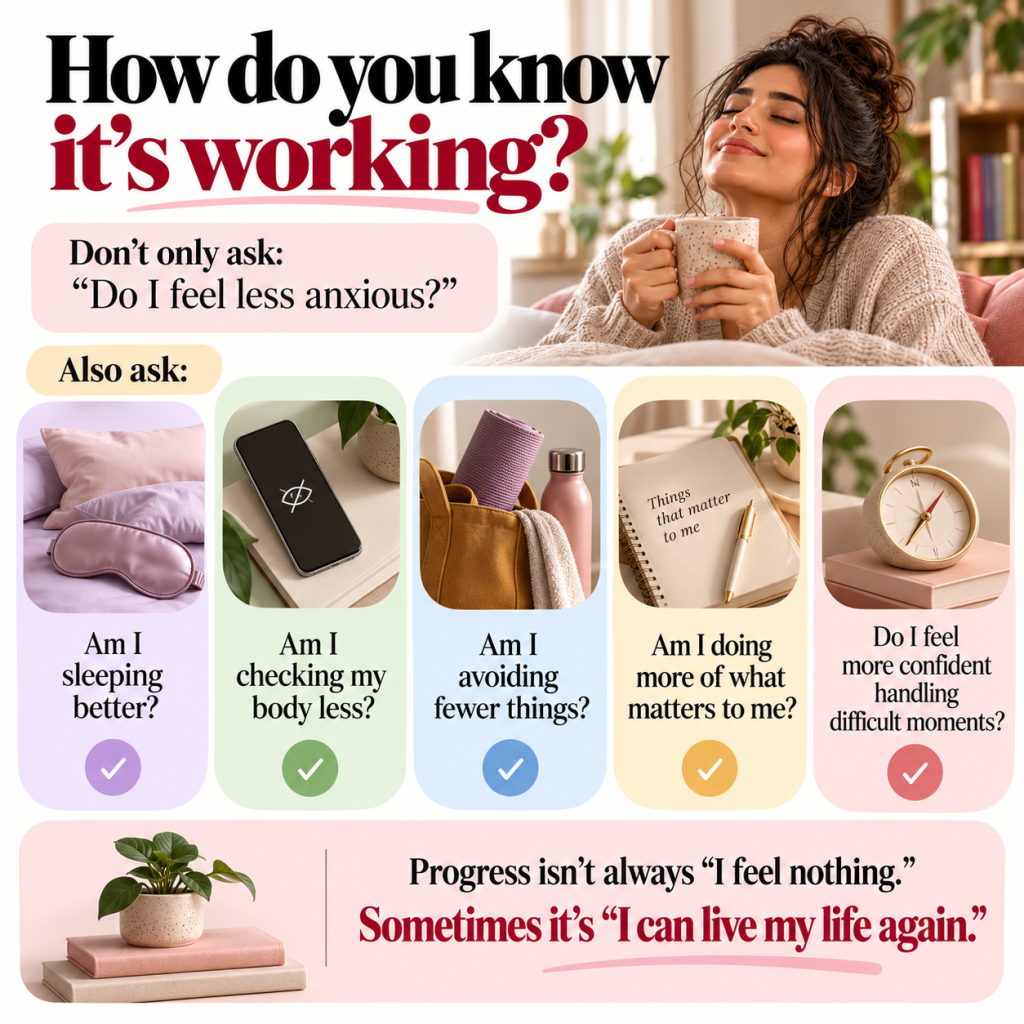
Instead, choose a few things to track.
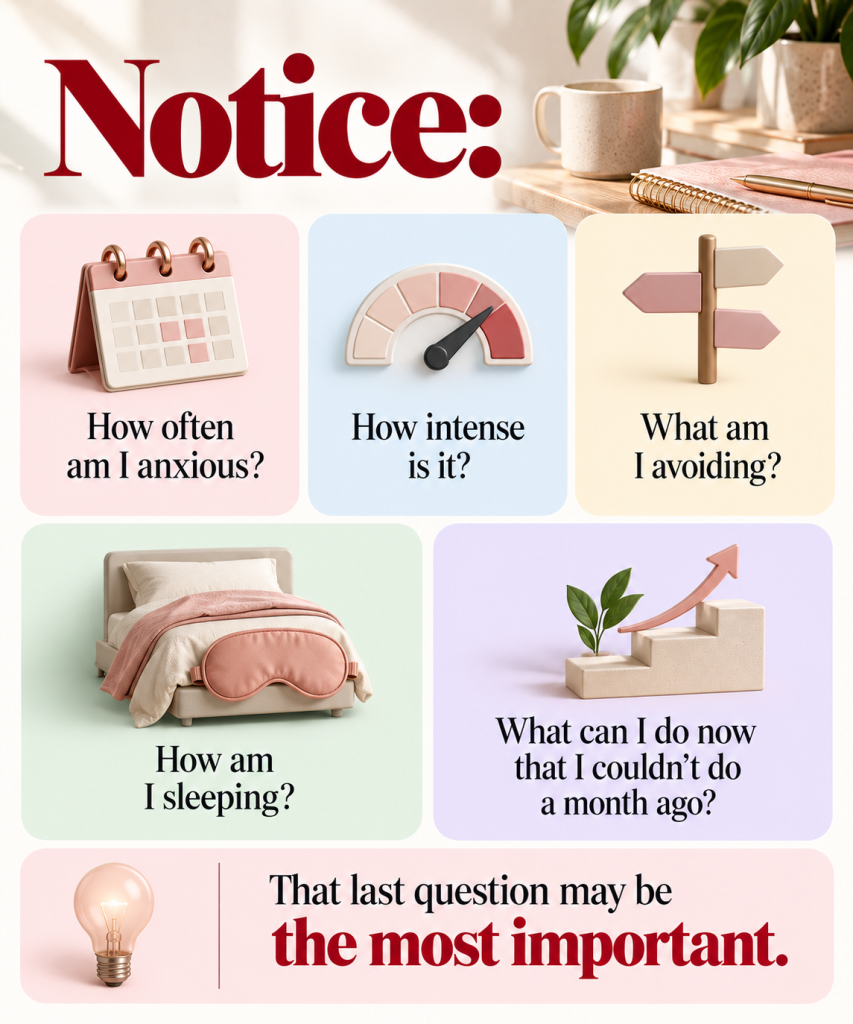
Maybe you’re still anxious; but you’re driving again.
You’re going out.
You’re sleeping better.
You’re answering messages.
You’re doing the work you had started avoiding.
Those are meaningful signs of progress too.
Can Supplements Help?
Supplements can be useful as part of a broader perimenopause routine, particularly when symptoms such as sleep disruption, hot flashes, mood changes and fatigue are also affecting you.
Miror Bliss is a daily perimenopause support supplement for women 40+, formulated to support hot flashes and night sweats, mood and stress, sleep and energy. It contains ingredients including magnesium glycinate, shatavari, lodhra, ashoka, zinc and vitamin D3.

But there is an important distinction: Miror Bliss is perimenopause support; not a treatment for an anxiety disorder.
If anxiety is persistent, severe or affecting your everyday life, psychological or medical support should be part of the picture too.
Think of supplements as support, not the whole treatment plan.
You Don’t Have to Fix Everything at Once!
One of the biggest mistakes women make is trying to overhaul their entire life in one week.
New supplement.
New diet.
New exercise routine.
New sleep schedule.
New therapist.
No caffeine.
No alcohol.
And then feeling like a failure when they can’t sustain all of it.
You don’t need twelve new rules.
Start with the thing causing the most disruption. If night sweats are destroying your sleep, start there. If anxiety is making you avoid normal life, start there.
If physical symptoms are new or unexplained, start with medical assessment.
Treatment works better when it is specific to the problem you’re actually having.
When Should You Seek Support Sooner?
Please speak to a qualified clinician if anxiety has been going on for months, is interfering with work or relationships, is making you avoid everyday activities, or is becoming increasingly difficult to manage.
And please don’t wait if low mood or loss of enjoyment has joined the picture.
If you’re having thoughts of harming yourself or feeling that life isn’t worth continuing, seek support today. In India, Tele-MANAS is available 24×7 on 14416.
How Miror Can Help?
Finding the right perimenopause anxiety treatment can feel overwhelming when physical symptoms, sleep, mood and everyday stress are all happening at once.
Miror is India’s largest and only 360-degree integrative women’s wellness ecosystem and community,
bringing expert guidance, trusted information and support together across the different stages of a woman’s life.
With 95,000+ women, Miror has helped women access expert help and insights at the tip of a button.
Whether you’re trying to understand perimenopause anxiety, looking for medical guidance, exploring psychological support or simply need someone to help you make sense of what is happening, you can connect with Miror doctors, health experts and mental-health experts through the app.
Consult Miror doctors.
Talk to Miror experts and mental-health professionals today.