


Your heart suddenly skips.
Then beats hard.
Then seems to race for no obvious reason.
You notice it. Your attention locks onto it.
And within seconds, a physical sensation can become a frightening question: “Is something wrong with my heart?”
For many women, perimenopause heart palpitations and anxiety become entangled. Palpitations are genuinely reported during the menopause transition, but not every palpitation is caused by hormones and anxiety should never be used to dismiss a new or unexplained cardiac symptom.
(Springer Link)
The interesting part is what can happen after you notice the heartbeat.
1. Palpitations Are a Real Midlife Experience
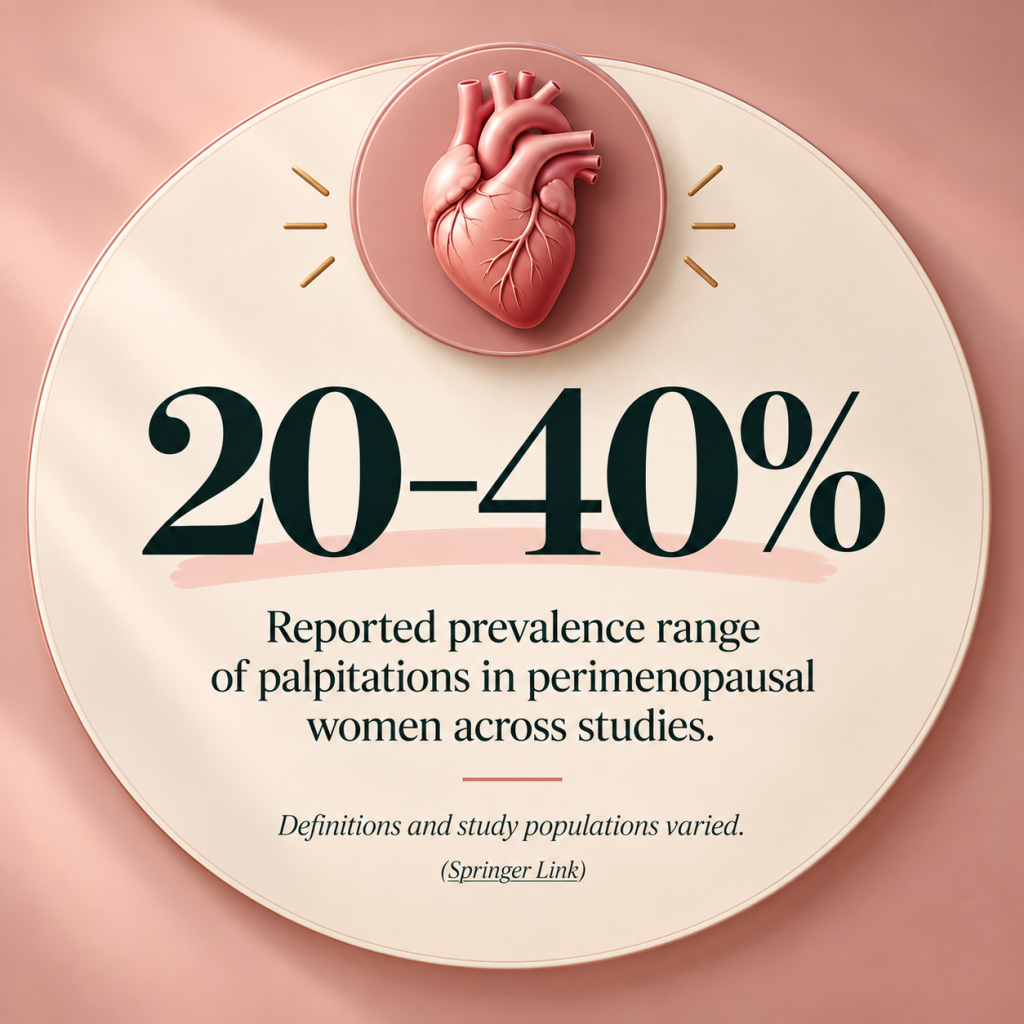
A systematic review found reported palpitation prevalence of 20.1% to 40.2% among perimenopausal women, although the studies used different definitions and were limited in number.
SWAN, which followed more than 3,000 women through the menopause transition, found that around 16% had a high-probability trajectory of palpitations during perimenopause and early postmenopause, while another 34% had a moderate-probability trajectory.
(PubMed)
 (
(That doesn’t mean every episode is harmless.
It means you’re not unusual for noticing your heart more during this stage.
2. The Question “Which Came First?” May Not Have a Simple Answer
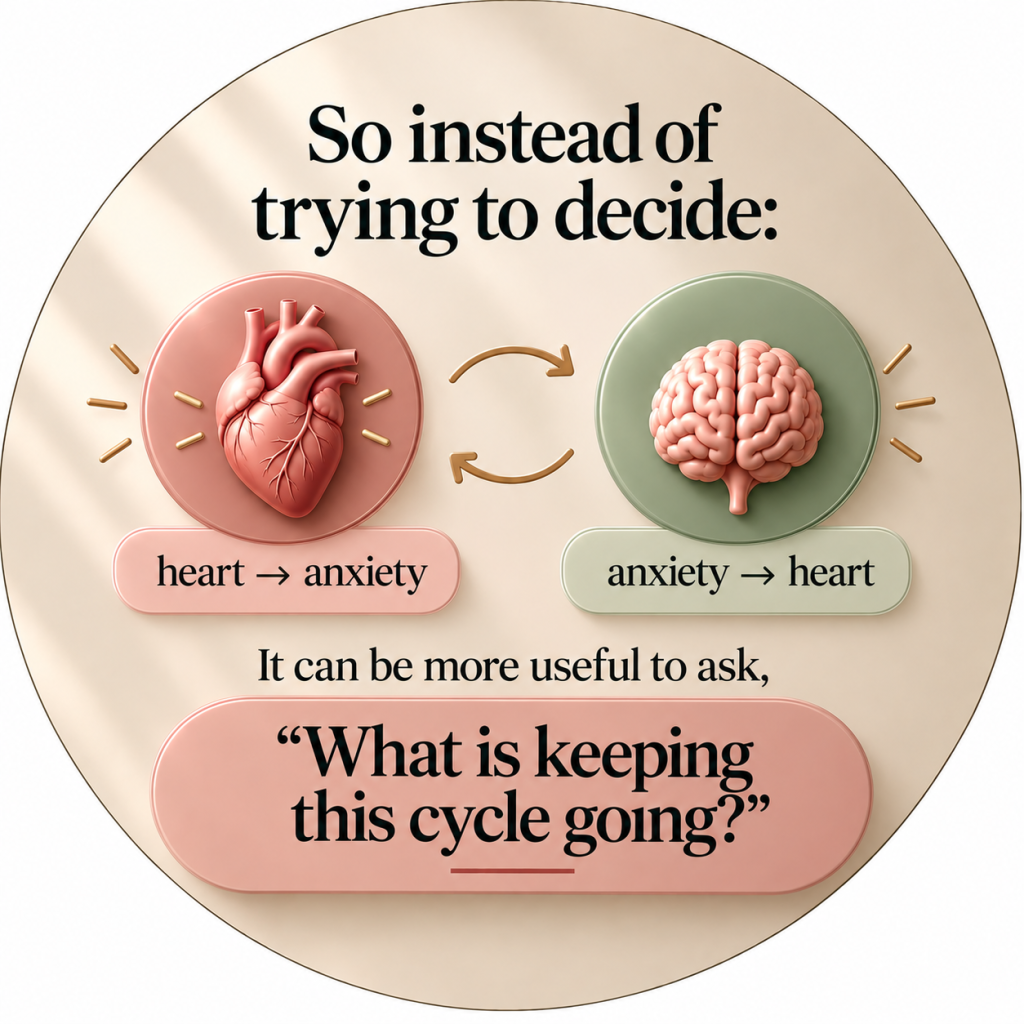
Anxiety can increase adrenaline and make your heartbeat faster or more noticeable.
A noticeable heartbeat can then trigger fear. And fear can increase your attention to the heart even further.
Research on menopausal palpitations has found associations with factors including vasomotor symptoms, poorer sleep, lower physical activity and poorer quality of life, while evidence for anxiety and stress as direct correlates remains less certain.
(PubMed)
3. The Heart Can Become the Thing You Start Monitoring
Your heartbeat naturally varies from moment to moment, and many changes go unnoticed until your attention becomes focused on them.
Most of the time, you never notice them.
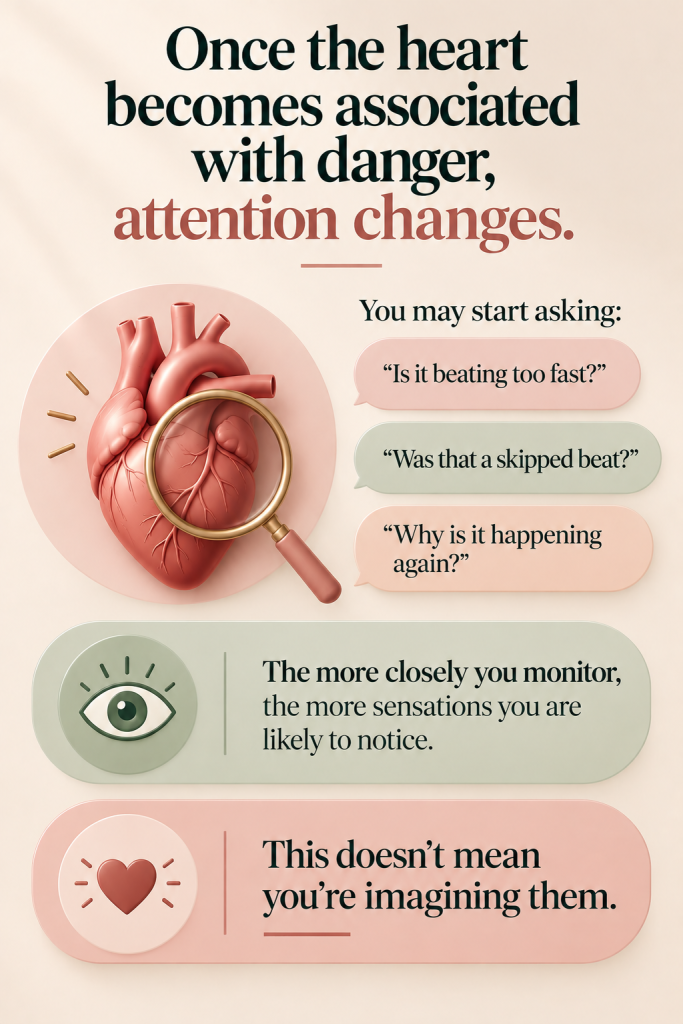
Your attention has simply become part of the experience.
4. This Has a Name: Heart-Focused Anxiety
Psychologists use the term heart-focused anxiety to describe anxiety centred on cardiac sensations and their perceived consequences.
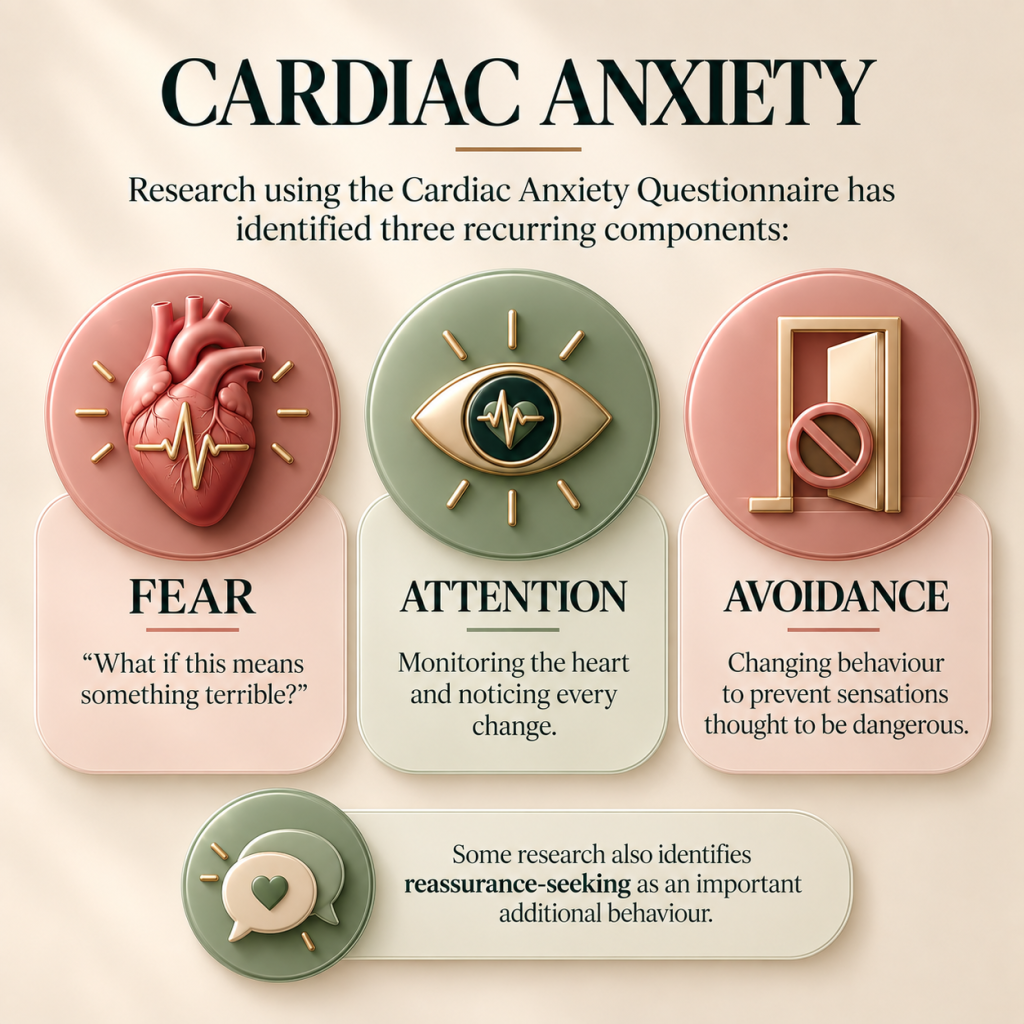
It isn’t a diagnosis of heart disease.
It’s a way of understanding the relationship you’ve developed with your heart sensations.
5. Your Smartwatch Can Become Part of the Cycle
This is particularly relevant now.
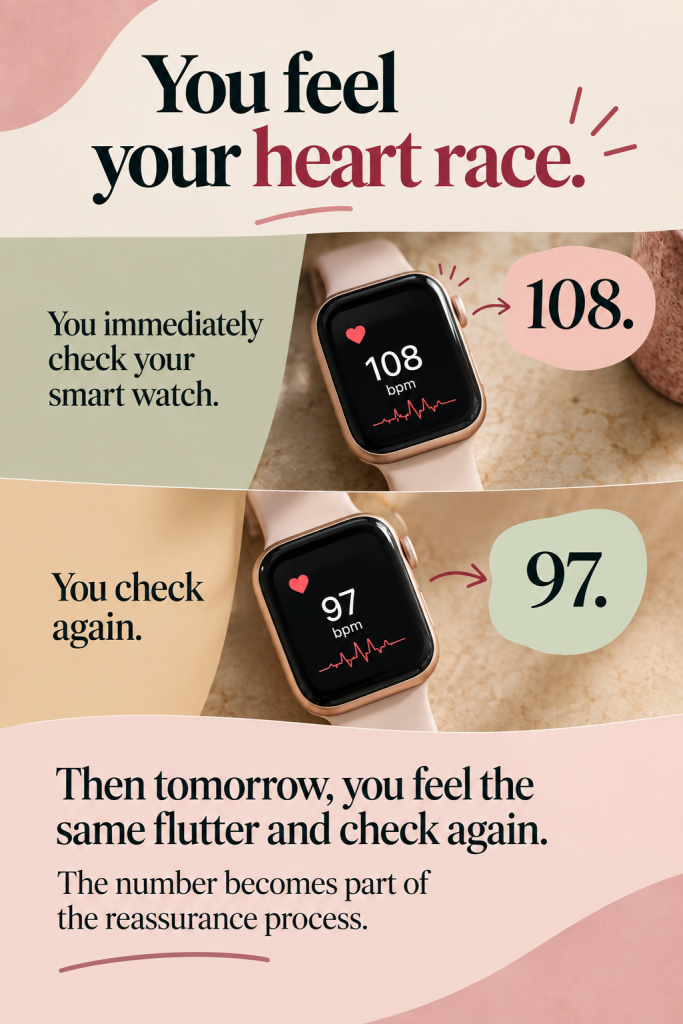
Wearables aren’t inherently problematic, and there is no reason for everyone with palpitations to stop using one. But when checking has become frequent and anxiety-driven, it’s worth asking:
“Am I using this device for information, or because I need reassurance?”
That distinction matters.
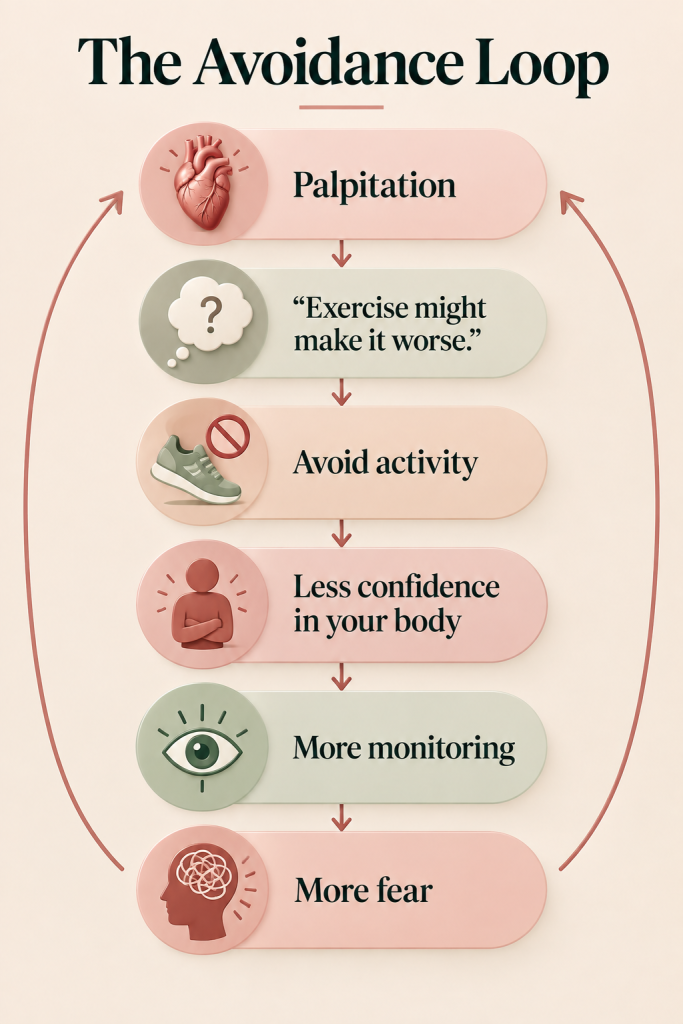
6. Avoidance Can Quietly Shrink Your Life
This is often where the problem becomes bigger.
You stop taking the stairs. Then the morning walk.
Then the yoga class. Then anything that makes your heart beat faster.
The intention is protection.
But avoiding normal increases in heart rate means you never get the opportunity to learn that a faster heartbeat during ordinary activity can simply be a normal response to exertion.
Research in cardiac populations has found that heart-focused avoidance is associated with lower physical activity and can predict lower activity later on. This evidence comes from people with cardiac and psychiatric comorbidity rather than perimenopausal women, so it should not be directly generalised, but it illustrates why avoidance deserves attention. (PubMed)
7. What Psychological Support Can Change
Once a doctor has appropriately assessed the palpitations, psychological work can focus on the fear surrounding the sensation, rather than repeatedly trying to prove that the heart is safe.
That can involve:
Understanding the pattern
What did you feel? What did you think it meant? What did you do next?
Reducing constant monitoring
Noticing when attention has become locked onto the heart.
Stepping away from reassurance cycles
Gradually reducing repeated checking, searching and asking for confirmation.
Working with avoidance
Once medically cleared, returning to activities in a measured way rather than letting fear make the decisions.
Building tolerance for uncertainty
Learning that you can notice a sensation without immediately needing to explain or eliminate it.
The goal isn’t:
“Never notice your heartbeat again.”
It’s:
“Notice it without automatically treating it as danger.”
Heart-focused anxiety is considered a potentially modifiable psychological problem, and research supports addressing fear, attention and avoidance as meaningful parts of care.
(PubMed)
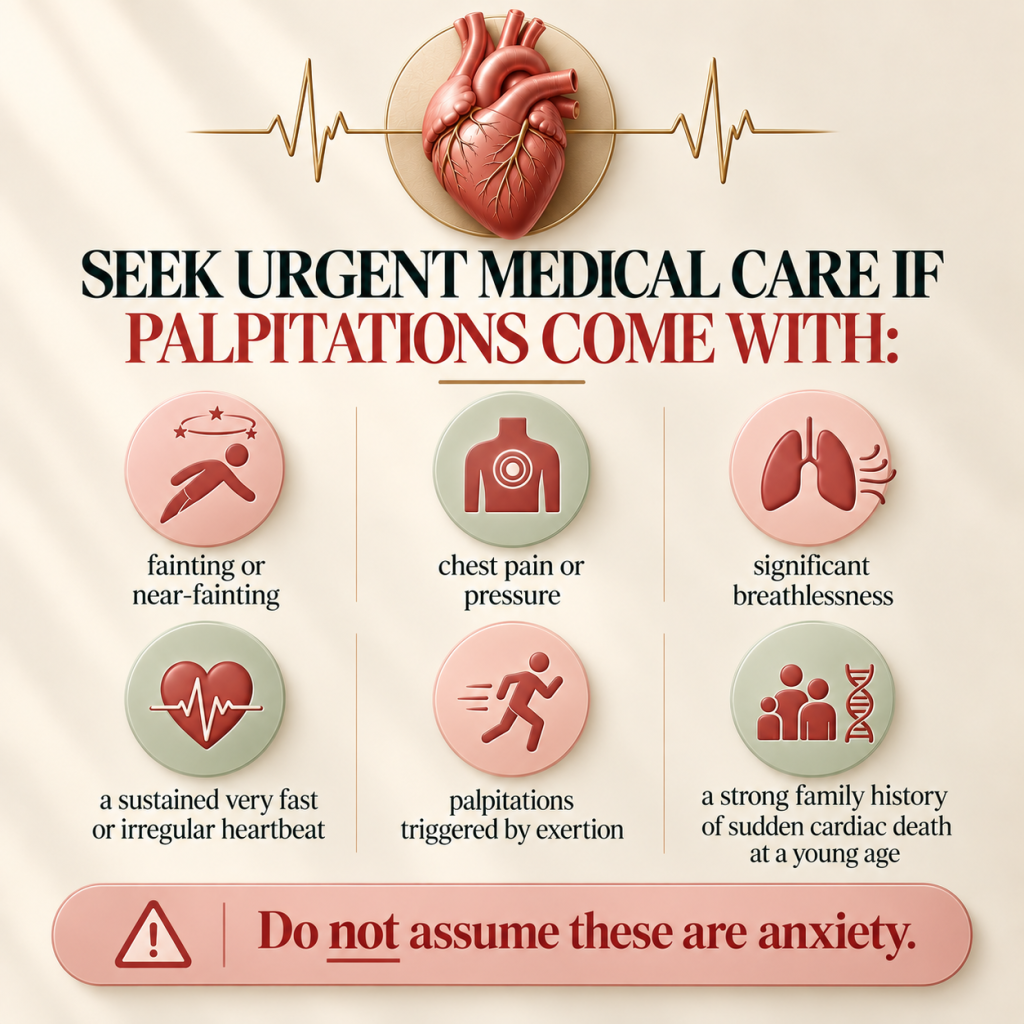
First, Make Sure the Heart Has Been Checked
Medical Assessment always comes first.
(Nice)
Where Psychological Support Fits In
The purpose of psychological support isn’t to tell you that your symptoms are imaginary.
It’s to help you understand what happens after the sensation appears — and whether fear, constant monitoring, reassurance-seeking or avoidance have started keeping the cycle alive.
Medical assessment and psychological care can work alongside each other.
This article is for general educational purposes and is not a substitute for medical or psychological assessment. New, persistent or unexplained palpitations should be assessed by a qualified clinician.