
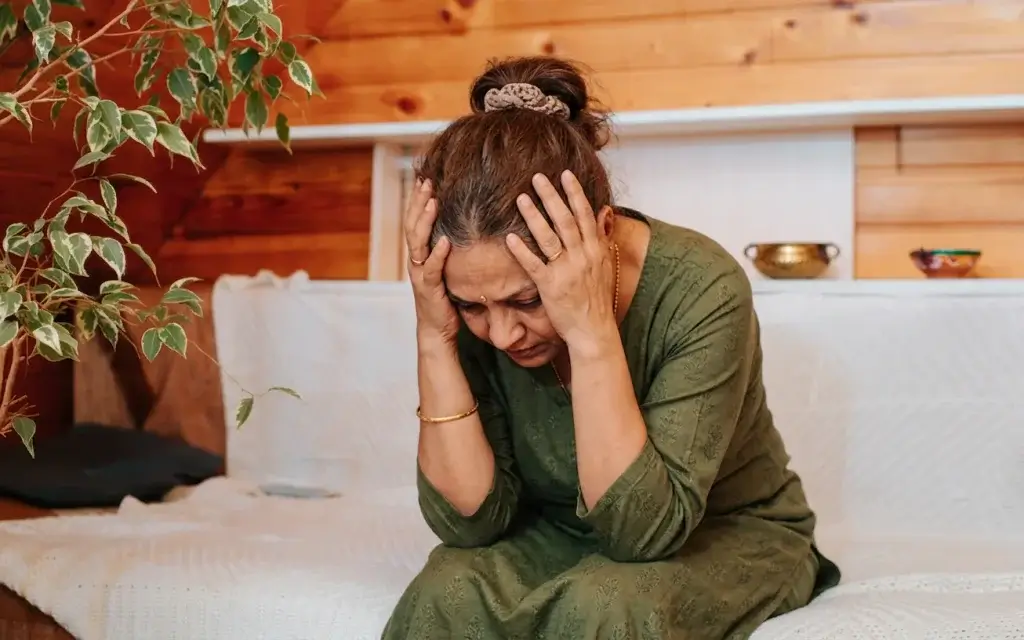
“Why Am I Suddenly Finding Everything So Difficult?”
You are still doing everything you have always done.
The work deadlines. The family WhatsApp groups. Your children’s needs. Your parents’ health. The grocery list. The bills. The appointments. The birthday reminders. The emotional needs of everyone around you.
You have carried this mental load for years.
So why does it suddenly feel so heavy?
Maybe you are crying over something that normally would not affect you. Snapping at someone you love. Sitting in your car for ten minutes because you cannot face one more demand.
And then comes the guilt: Am I overreacting? Why can’t I cope like I used to?
For many women, this is where perimenopause mental load becomes difficult to recognise.
The load may not have suddenly increased.
Your capacity to carry it may have changed.
Hormonal fluctuations, sleep disruption, physical symptoms, stress and emotional demands can all converge during perimenopause. And when one part of the system is struggling, it can affect everything else.
You are not necessarily becoming “too sensitive.”
Your system may simply be asking for a different kind of support.
What Is the Mental Load of Perimenopause?
Mental load is the invisible work of remembering, anticipating, planning, organising and emotionally managing everyday life.
It is knowing that your mother has a doctor’s appointment next Tuesday.
Remembering your child’s school deadline.
Thinking about what needs to be bought before the weekend.
Keeping track of work while also remembering who needs what at home.
You may not even think of this as work anymore.
It has simply become how life works.
But during perimenopause, hormonal changes can occur alongside sleep problems, mood changes, anxiety, physical symptoms and major life responsibilities. These can affect concentration, emotional wellbeing and how much stress feels manageable.
(Mirorpedia)
So the same life can suddenly feel much harder to carry.
Why Everything Can Feel Amplified During Perimenopause?
This is an important distinction:
Perimenopause does not create every problem in your life. It can amplify what is already there.
A stressful job may feel even more exhausting when you are sleeping badly.
Relationship tension may feel harder to navigate when your emotional reserves are low.
Physical discomfort can make you less patient.
Anxiety can make ordinary decisions feel overwhelming.
Poor sleep can affect concentration and emotional regulation.
And then the resulting stress can make sleep even worse.
This is why peri/menopause mental health cannot be separated neatly into “hormones,” “emotions” and “life stress.”
They interact.
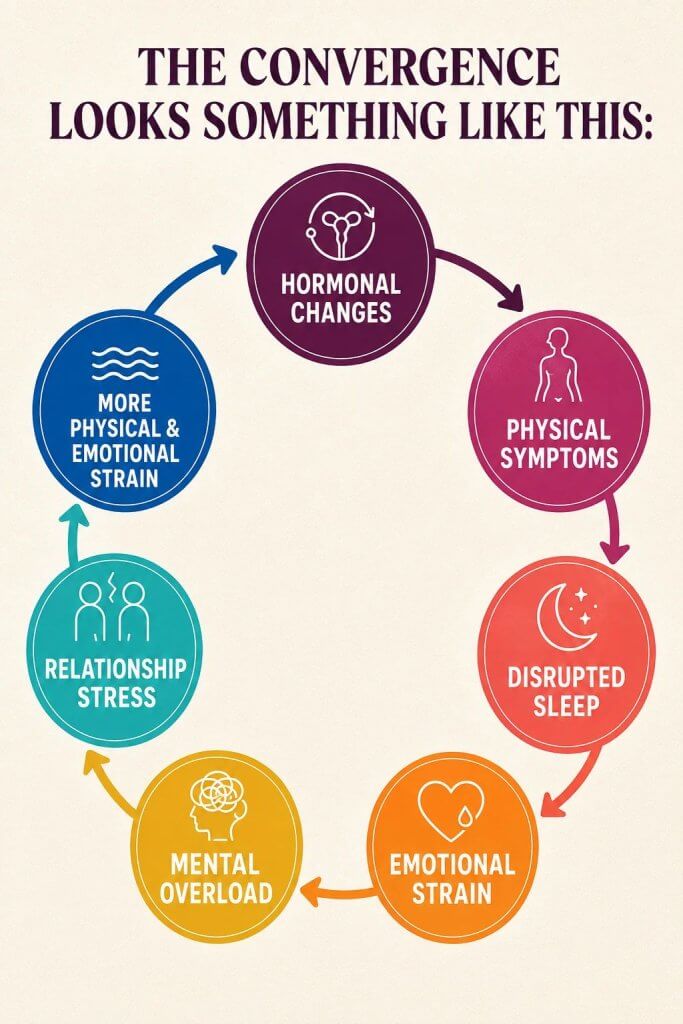
The starting point can be different for every woman.
But the experience can eventually feel like everything is happening at once.
(NIH)
Emotional Symptoms of Perimenopause Can Just Be Subtle Signals
Irritability.
Tearfulness.
Anxiety.
Feeling overwhelmed.
Emotional numbness.
Feeling unusually sensitive.
These are some of the emotional symptoms of perimenopause women commonly report but they do not automatically mean something is wrong with your character or your ability to cope.
Sometimes irritability is a sign that you have run out of emotional bandwidth.
Sometimes tearfulness is what happens when you have been holding too much for too long.
Sometimes feeling overwhelmed is your mind’s way of saying that the current demands are exceeding the resources available to manage them.
And sometimes the symptom has very little to do with the immediate trigger.
You may cry because your partner forgot something small.
But the tears may actually contain exhaustion, poor sleep, months of stress and the feeling that you have been carrying everyone else’s needs.
The trigger may be small. The load underneath it may not be.
(NHS)
When Physical Stress Becomes Emotional Stress
This is where the physical and psychological sides of menopause meet.
Imagine you have been waking several times every night because of night sweats.
You wake tired.
The next day, you have less patience.
Work feels harder.
You snap at someone.
You feel guilty.
The guilt increases your stress.
By evening, you are exhausted but mentally wired.
Then you sleep badly again.
The next day starts from an even lower baseline.
This is why treating one symptom in isolation is not always enough.
(John Hopkins)
Your body affects your mind. Your mind affects your body. And both affect how you relate to other people.
The Menopause Society similarly notes that mood symptoms around perimenopause can be influenced by hormone fluctuations as well as stressful life circumstances, sleep changes and other menopause symptoms.
The “Overreacting” Trap
One of the most damaging things a woman can tell herself is:
I’m just overreacting.
Because once you believe that, you may stop asking what the reaction is trying to tell you.
Instead of: “What is happening to me?”
you start asking: “What’s going on?”
That shift matters.
You may need to look at your sleep.
Your physical symptoms.
Your anxiety.
Your workload.
Your relationships.
Your boundaries.
Your mental health.
Your hormonal transition.
Often, it is not one thing.
It is the accumulation.
And if you have spent years being the person who remembers, organises, absorbs and adjusts for everyone else, recognising that your capacity has changed can feel like failure.
It isn’t.
It may simply mean your old way of carrying the load is no longer sustainable.
What Can Help?
You do not need another list of 20 things to “do better.”
Start small.
Do:
Name the load.
Write down everything you are mentally managing. Seeing it outside your head can make invisible work visible.
Notice the pattern.
Ask yourself: Is this happening more when I am sleep-deprived, physically uncomfortable, stressed or emotionally depleted?
Redistribute where possible.
Not every family responsibility needs to remain your responsibility simply because you have always handled it.
Create recovery time.
Rest is not something you earn after everyone else has been taken care of.
Ask for support early.
A psychologist can help you understand whether what you are experiencing is linked to perimenopause, anxiety, burnout, relationship stress, depression or a combination.
Don’t:
Dismiss persistent distress as “just hormones.”
Assume every emotional reaction is a character flaw.
Keep adding coping strategies without reducing the load.
Wait until you completely burn out before asking for help.
Diagnose yourself based on one symptom.
The goal is not to become the woman who can carry everything again.
The goal is to stop requiring yourself to carry everything.
When Should You Seek Professional Help?
Please speak to a qualified healthcare or mental health professional if emotional changes are persistent, worsening or affecting your work, relationships or daily functioning.
It is especially important to seek support if you are experiencing:
Persistent anxiety or low mood
Frequent crying or emotional shutdown
Severe irritability that feels difficult to control
Significant sleep disruption
Loss of interest in things you normally enjoy
Difficulty functioning at work or home
Feelings of hopelessness or thoughts of self-harm
Perimenopause can be a period of increased vulnerability to anxiety and depression for some women, particularly when combined with existing mental health concerns or significant life stress.
Getting assessed does not mean your symptoms are “all in your head.”
It means you are looking at the whole picture.
Where Miror Can Genuinely Help
At Miror, we believe women’s health cannot be divided into separate boxes.
You cannot always separate the physical woman from the emotional woman, or the hormonal woman from the woman carrying a family, a career, relationships and a hundred invisible responsibilities.
That is why Miror is built as a 360-degree integrative women’s health ecosystem—bringing together doctors, psychologists, health experts and a community of thousands of women navigating different stages of their health journey.
Sometimes you need a doctor.
Sometimes you need a psychologist.
Sometimes you need expert guidance.
And sometimes you simply need a community where you can say, “I am struggling,” without having to explain why. For women navigating perimenopause, Miror Bliss can be considered as part of a broader wellness routine. But the bigger support is the ecosystem around you.
If emotional overload, anxiety or other perimenopause changes are affecting your daily life, speak to a Miror expert for personalised guidance and connect with a community that understands what you’re going through.
A Final Word
You may not be overreacting.
You may simply be carrying too much with too little room to recover.
Perimenopause can amplify the physical, emotional and mental pressures that were already present—and when those pressures converge, even ordinary life can feel extraordinary difficult.
That does not mean you are failing.
It may mean it is time to stop carrying everything alone.
Medical Disclaimer
This article is for educational purposes only. It does not provide a diagnosis, treatment plan or replacement for psychological, psychiatric or medical care. If emotional symptoms are severe, persistent, affecting daily functioning, or accompanied by hopelessness or thoughts of self-harm, please seek professional help promptly.