
You can spend forty years thinking of yourself as the calm one.
Then, one day, your heart suddenly races. Your chest feels tight. You feel restless or overwhelmed. Your mind starts searching for an explanation.
“Why am I anxious? Nothing even happened.” That question matters.
“Hormonal anxiety” isn’t a formal medical diagnosis. It is a useful way of describing anxiety that appears or becomes more intense during the hormonal changes of perimenopause. Anxiety symptoms are common around this transition, although not every episode is caused by hormones.
(PubMed)
The psychological part is understanding what happens next.
1. Sometimes the Body Sounds the Alarm First
Anxiety doesn’t always begin with a worrying thought.
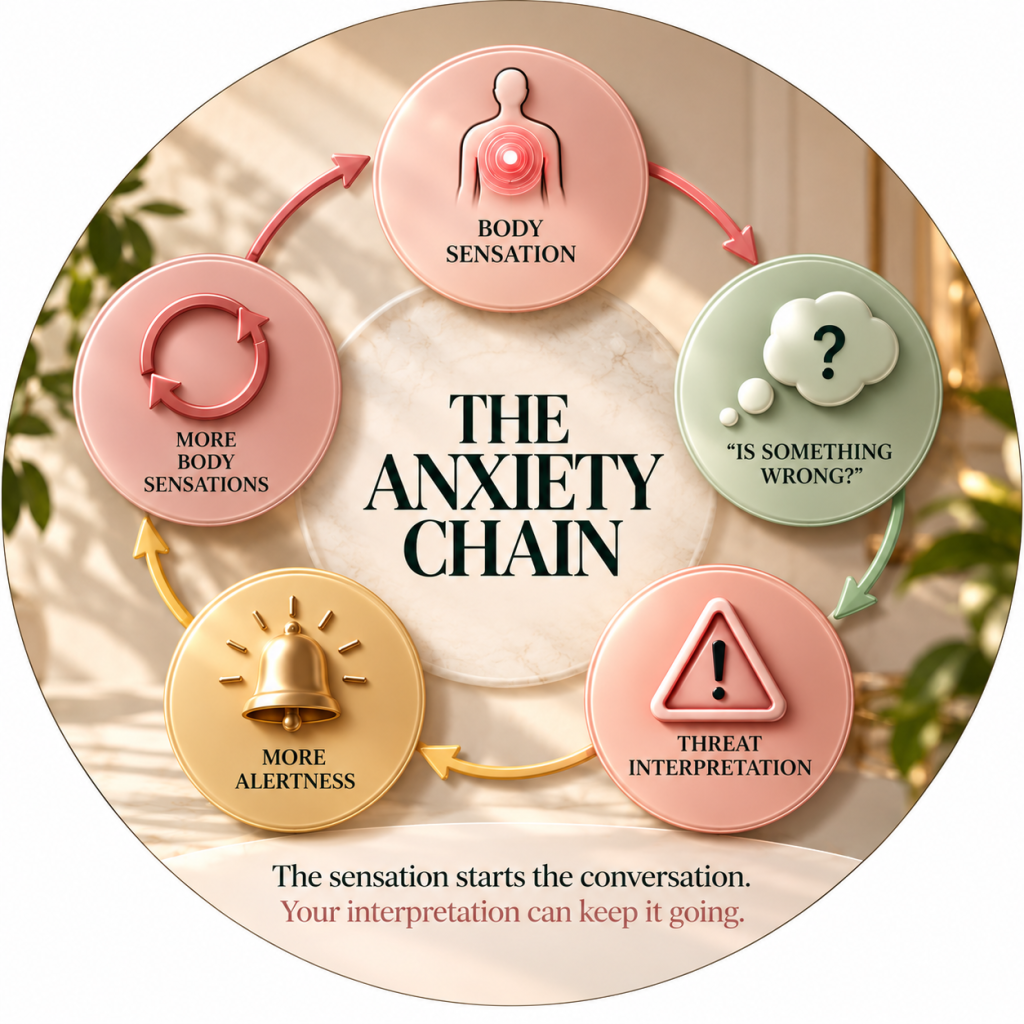
You may first notice: racing heart → tight chest → dizziness → shakiness → unease
Then your brain asks: “What’s wrong?”
And because the brain is designed to explain unusual sensations, it may attach a frightening story to them.
The sensation is real.
The interpretation is where anxiety can begin to escalate.
2. Perimenopause Can Make the Alarm System More Sensitive
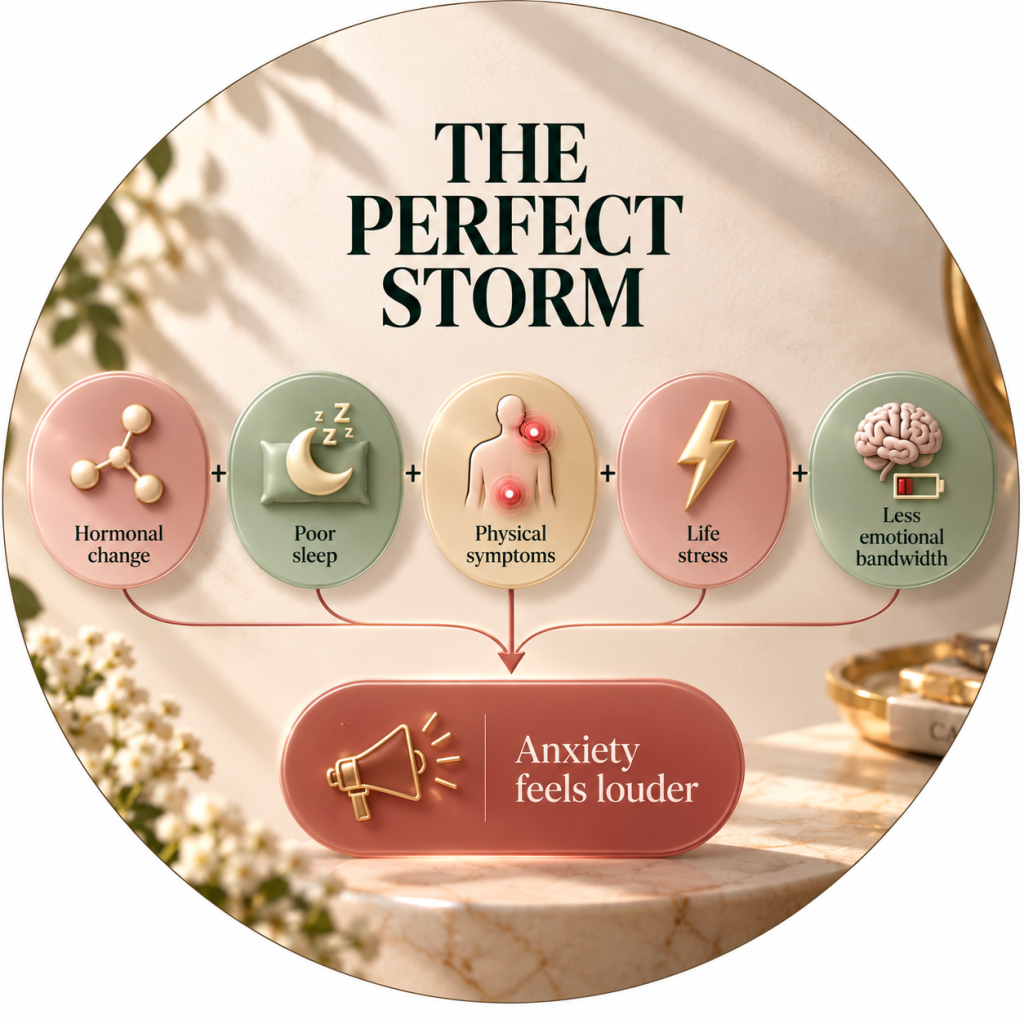
Hormonal fluctuations during perimenopause can interact with systems involved in mood, stress regulation and threat processing. At the same time, hot flushes, sleep disruption and other symptoms can add to psychological strain.
(PubMed)
That does not mean every anxious thought is “just estrogen.” It means several things can arrive at once.
3. The Scariest Part Can Be: “I Don’t Feel Like Myself”
For a woman who has never experienced significant anxiety, the symptom itself can become frightening.
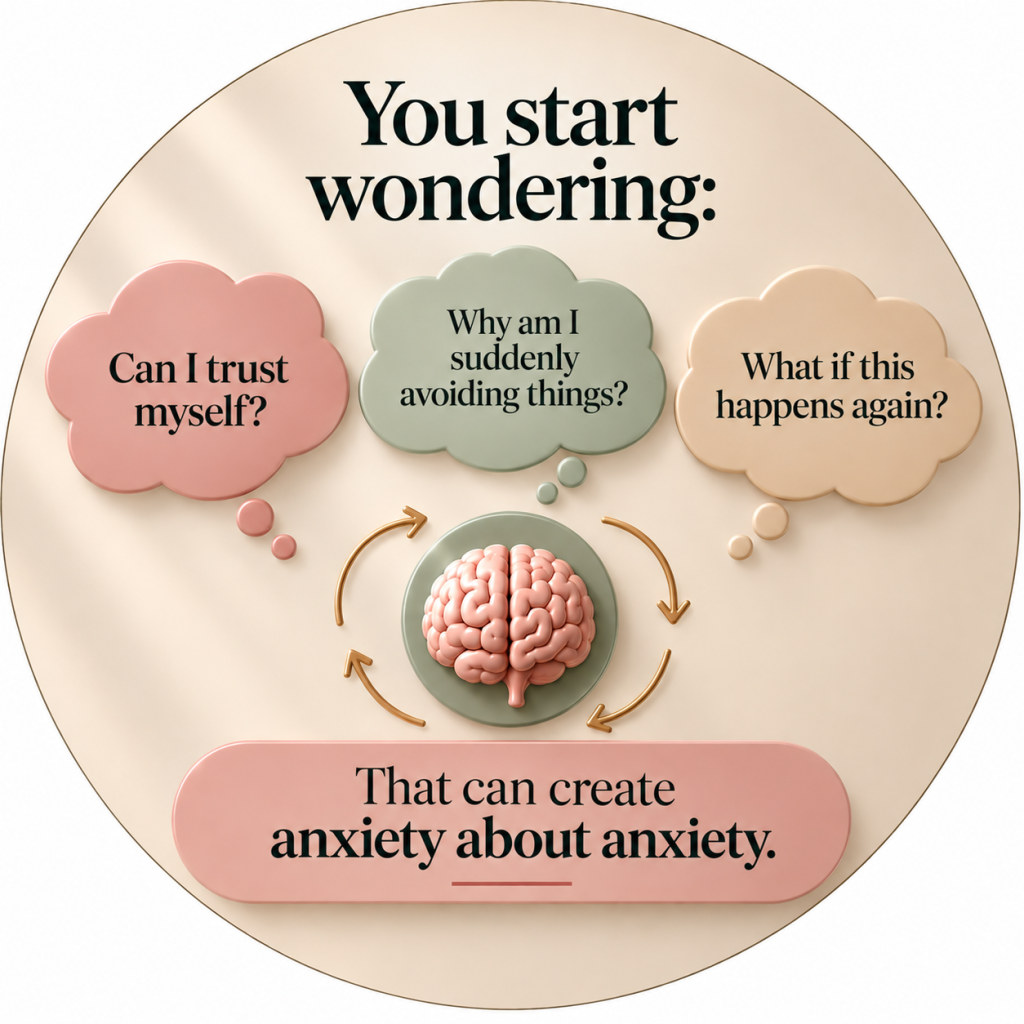
The more unfamiliar the experience feels, the more closely you may monitor yourself for the next episode.
And that brings us to one of the biggest psychological traps.
(Mirorpedia)
4. Reassurance Can Help Until You Need It Again
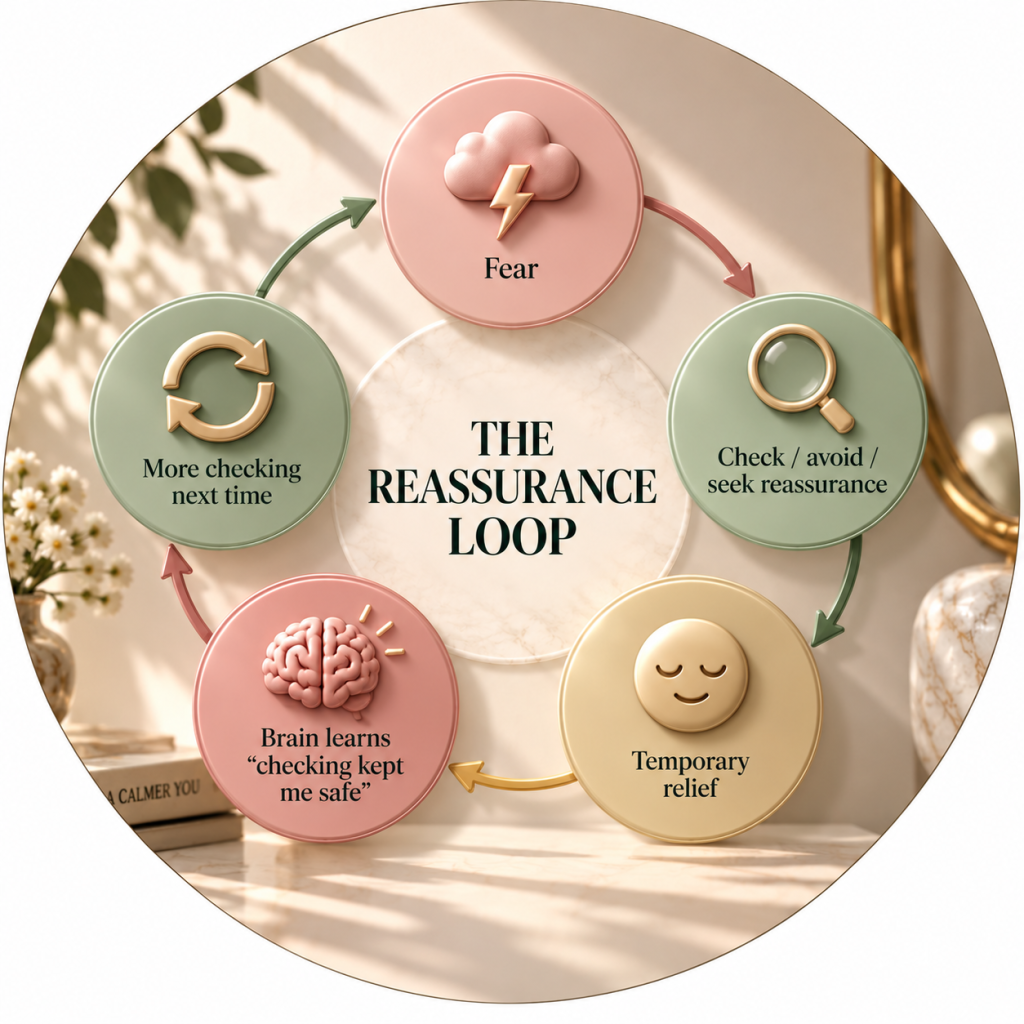
You feel your heart racing. So you check your pulse. Then Google your symptoms. Then ask your partner whether you look okay. Then cancel the meeting because you don’t want another episode.
The relief is real.
But repeated reassurance and checking can accidentally teach the brain: “I was only safe because I checked.”
These are called safety behaviours. They can maintain anxiety by preventing you from learning that the feared situation may be manageable without the ritual of checking or escaping.
5. Perimenopause Can Give Health Anxiety More Material to Work With
This is a particularly cruel combination.
Perimenopause can produce genuine sensations — palpitations, flushing, dizziness, breathlessness, tingling, sleep disruption.
An anxious brain scans for danger.
So the scan keeps finding something.
That doesn’t mean the symptoms are psychological.
It means that once your attention becomes locked onto your body, ordinary sensations can become louder and more threatening.
This is sometimes called hypervigilance.
6. This Is Where Psychological Support Can Help
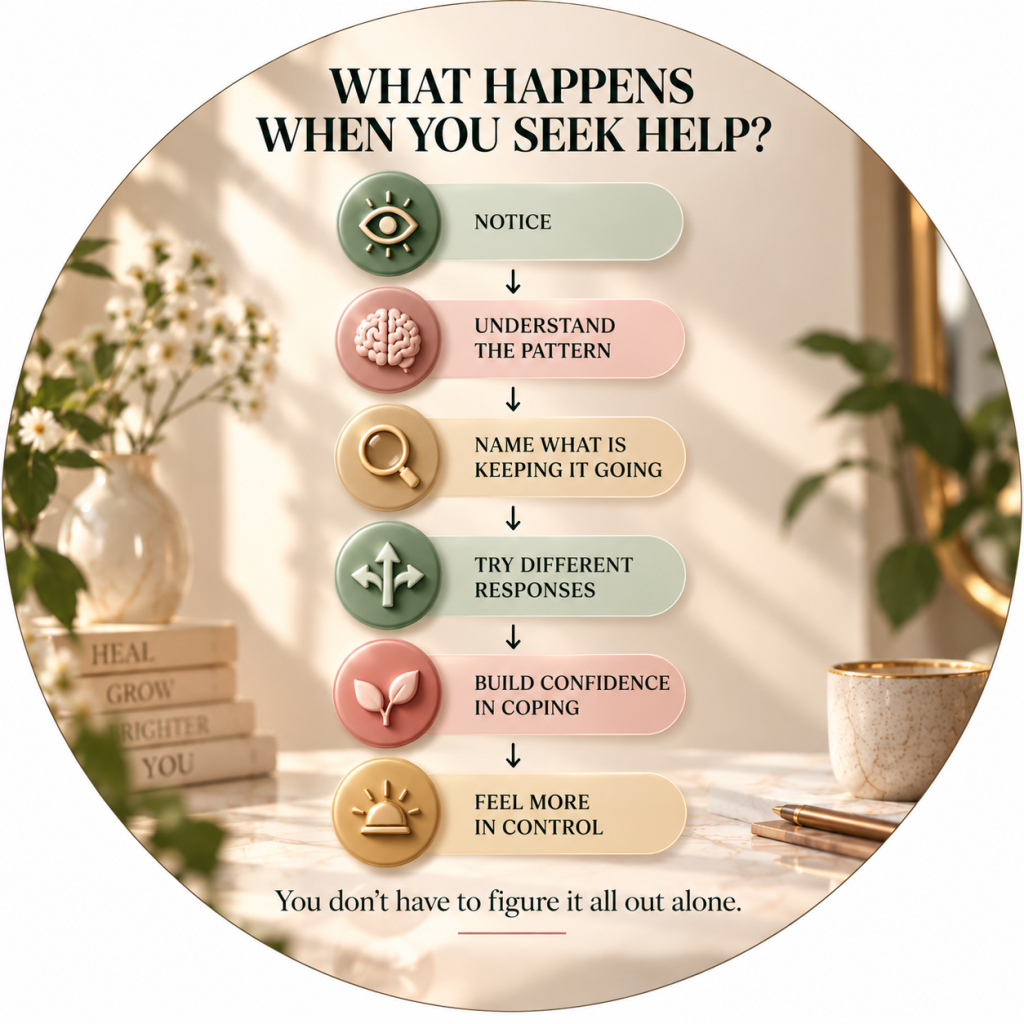
You don’t have to wait until anxiety becomes unmanageable before asking for help.
Psychological support can give you somewhere to understand what is happening, identify the patterns keeping the anxiety going, and work out what needs to change.
That might mean looking at:
What you’re feeling
What happens in your body when anxiety begins?
What you’re making it mean
Does a racing heart immediately become “something is wrong”?
What you do next
Do you check, avoid, seek reassurance or change your plans?
What the anxiety is costing you
Is it affecting sleep, work, relationships or things you used to enjoy?
What you actually need
More support? Better boundaries? Help with uncertainty? Space to process what has changed?
The goal isn’t to teach you to “think positively”. It’s to help you understand your own anxiety well enough that it stops running the entire system.
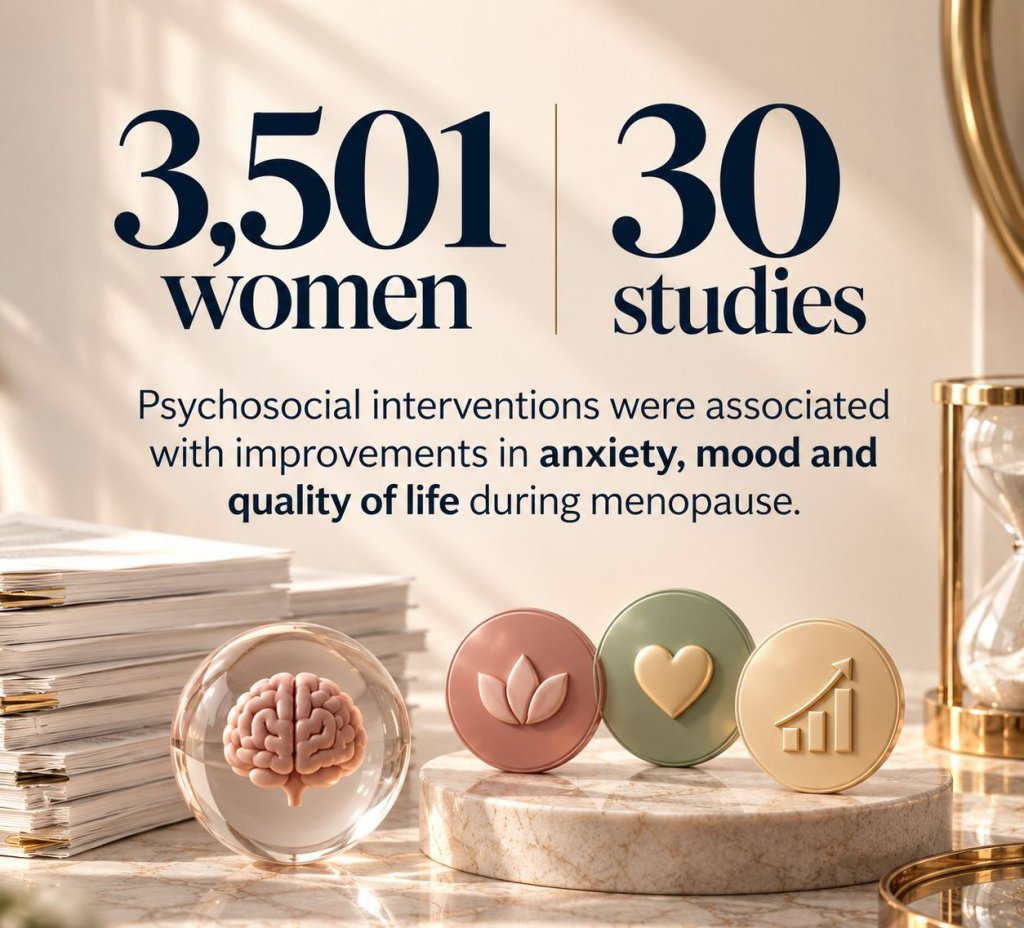
Evidence supports psychological and psychosocial interventions as a useful part of menopause care. A systematic review and meta-analysis of 30 studies involving 3,501 women found that psychosocial interventions improved anxiety, depression and quality of life, although the studies used different approaches and the overall evidence was heterogeneous.
(Science-Direct)
A newer 2026 systematic review similarly found that psychological interventions were generally associated with improvements in anxiety, depression and sleep during the menopausal transition, while noting variation between studies and approaches.
 (PubMed)
7. You Don’t Have to Choose Between Hormones and Psychology
This is probably the most important reframe.
Menopause management and psychological care are not competing explanations.
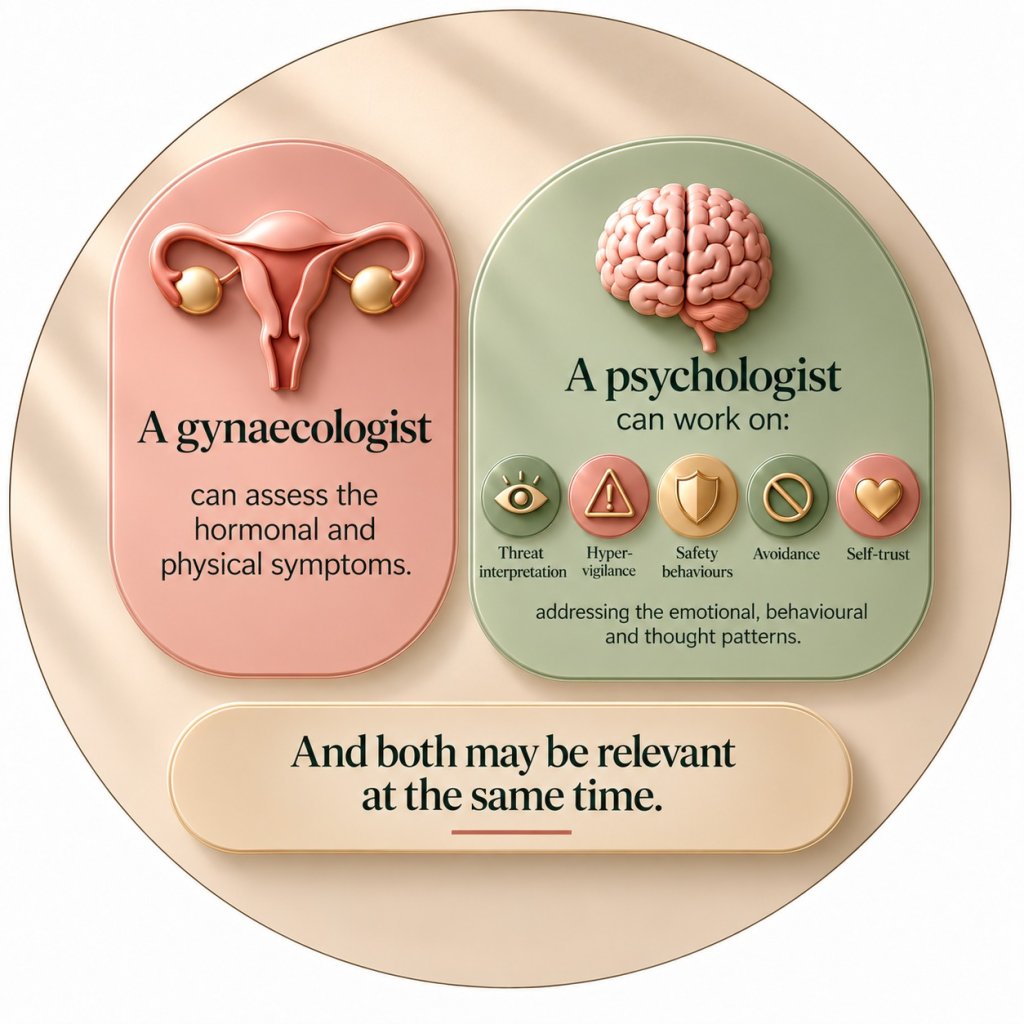
Current NIH guidance recognises therapy as an option for some menopause-related psychological and sleep symptoms, while also emphasising that anxiety or depression requiring diagnosis and treatment should follow appropriate mental-health pathways.
(PubMed)
What I’d Want You to Remember
New anxiety in your 40s does not automatically mean you’ve become an anxious person.
It may mean your body, brain, circumstances and coping system are interacting differently than they used to.
And that is important because systems can change.
You can learn to notice a racing heart without immediately predicting catastrophe.
You can experience uncertainty without checking. You can feel anxious without cancelling your life.
And, gradually, you can trust yourself again.
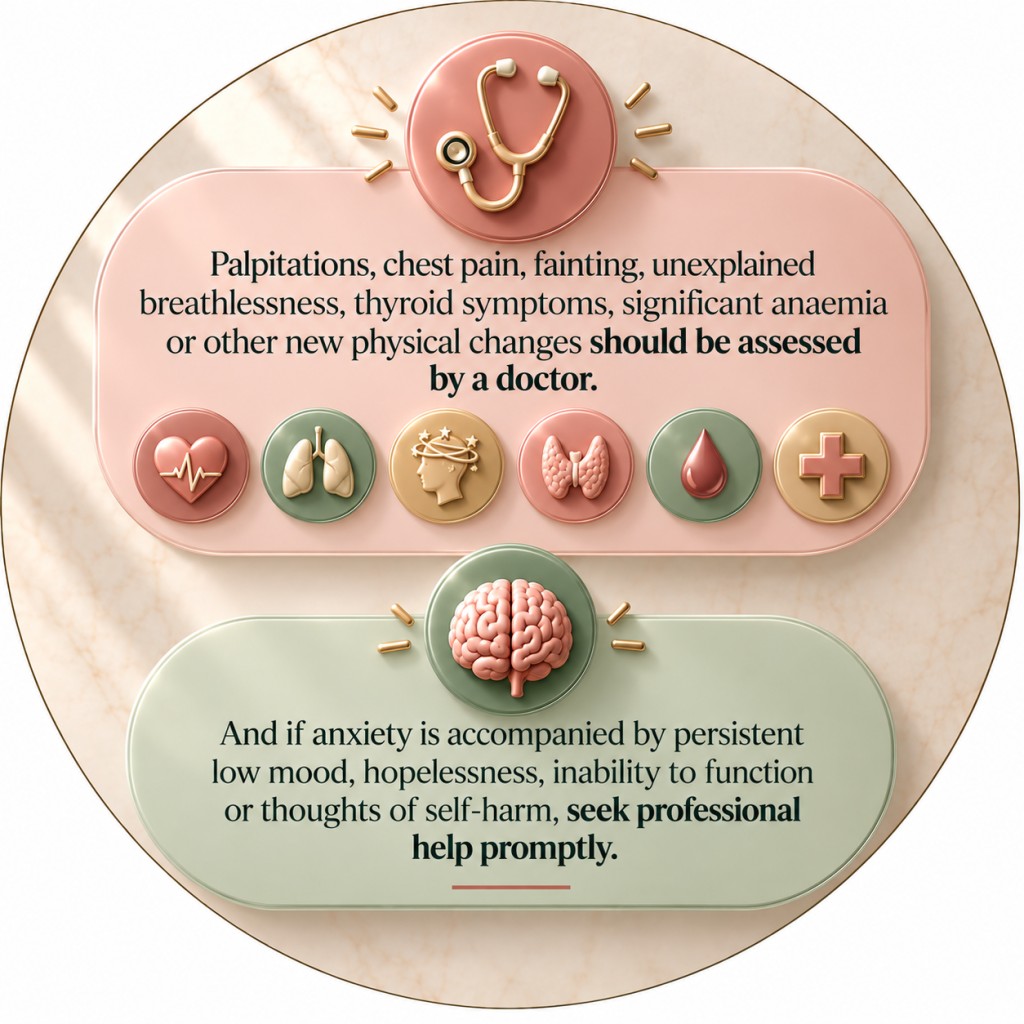
When to Seek Medical Help Too
Psychological treatment should not replace medical assessment of new physical symptoms.
Where Miror Fits In For You
Perimenopause anxiety can sit at the intersection of hormones, sleep, physical symptoms, stress and psychological patterns.
At Miror, the aim is to look at those pieces together, with medical care where appropriate and psychological support when the anxiety itself needs attention.
You don’t have to prove whether it is “hormones or your mind.” Both can be part of the same picture.
You are not “becoming an anxious person.”
You may simply be learning how to respond to a body and nervous system that feel different.
Explore support for your menopause and mental wellbeing and contact Miror’s expert panel of doctors and health professionals today.
Medical and mental-health disclaimer: This article is for general educational purposes and does not replace individual psychological or medical assessment. New or severe physical symptoms should be assessed by a qualified clinician. If you are in immediate distress or thinking about harming yourself, seek urgent professional help.