

Menopause anxiety can be especially confusing when it seems to arrive without a reason.
Perhaps your periods stopped years ago. You thought you had already got through the difficult part. Yet you still wake with a rush of fear, notice your heart beating harder than usual, worry about your health, or suddenly feel overwhelmed when nothing obviously bad has happened.
And then comes another thought: “Why am I feeling like this now?”
First, you are not failing at something you were supposed to have mastered.
Menopause is not a neat finish line. Emotional and physical symptoms can continue into postmenopause, and anxiety can have more than one contributor. The important question is not simply “Is this hormonal?” but “What is happening now, and what might be keeping it going?”
(Mirorpedia)
1. Menopause Doesn’t Mean Every Physical Symptom Suddenly Stops
The final period is not necessarily the final day of menopausal symptoms.
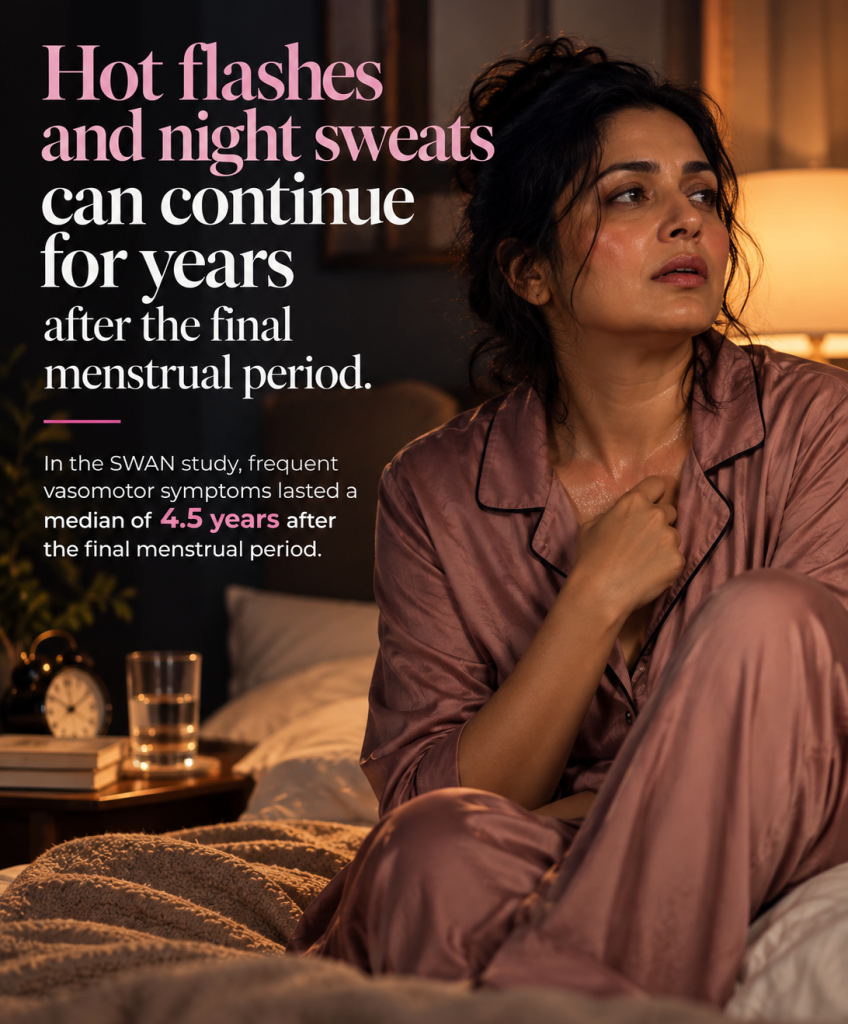 (SWAN)
That matters because physical sensations can be unsettling.
A sudden flush.
A night sweat.
A pounding heartbeat.
A broken night’s sleep.
Sometimes the sensation itself is uncomfortable.
Sometimes what follows is:
“What does this mean?”
And that question can turn a physical sensation into an anxious one.
2. What Started Your Anxiety May Not Be What Keeps It Going
This is an important distinction.
Perhaps hormonal changes, poor sleep or repeated physical symptoms made you more vulnerable to anxiety initially.
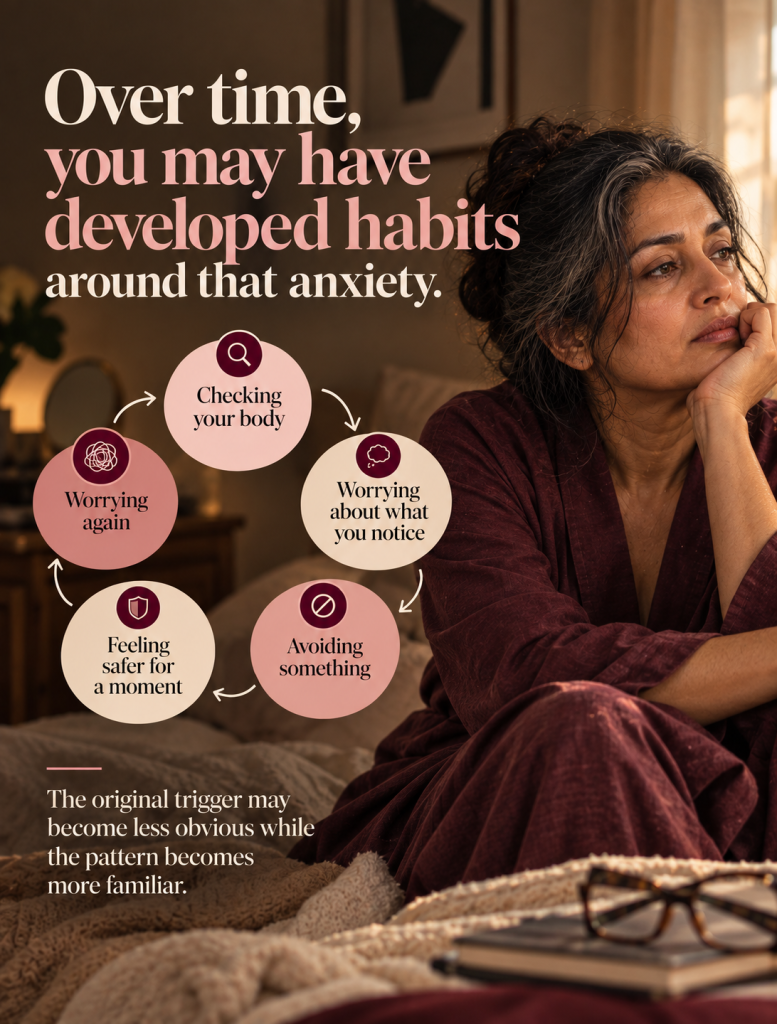
That doesn’t make the anxiety imaginary.
It simply means that what needs attention can change over time.
And that can actually be hopeful.
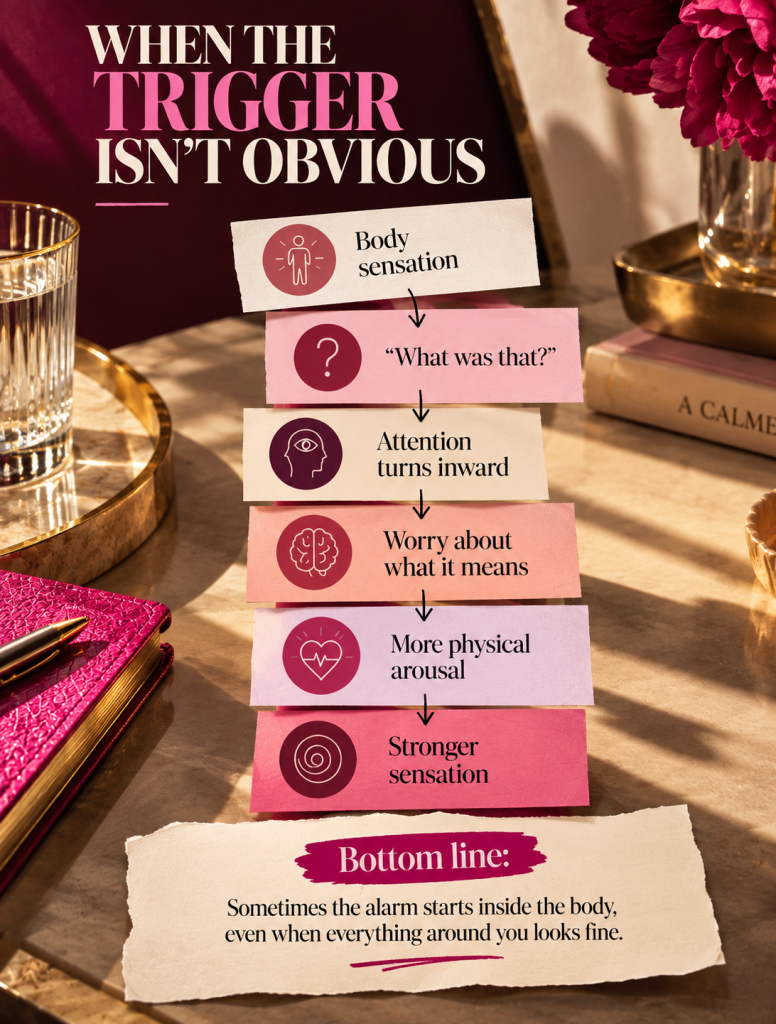
3. Sometimes the Trigger Is Inside Your Body
Anxiety does not always begin with a worrying thought.
Sometimes it begins with a sensation:
a skipped beat → dizziness → warmth → stomach discomfort → tension
Your brain notices it and asks:
“What was that?”
When you’ve been frightened by a sensation before, your attention can become very quick to spot it again.
So anxiety can seem to come from nowhere.
There may have been no argument. No bad news. No crisis.
The trigger was simply internal.
4. Avoidance Can Quietly Make Your World Smaller
You stop driving alone.
You avoid crowded places.
You sit near the exit.
You stop exercising because you don’t like the feeling of your heart racing.
You keep your phone, water or medication close because you are afraid you might need it.
None of these responses are ridiculous.
They make sense when you are frightened.
The problem is that, over time, you may begin to rely on them to feel safe. Your world can slowly become organised around avoiding anxiety rather than living your life.
Psychological support can help you understand that pattern and gradually rebuild confidence.
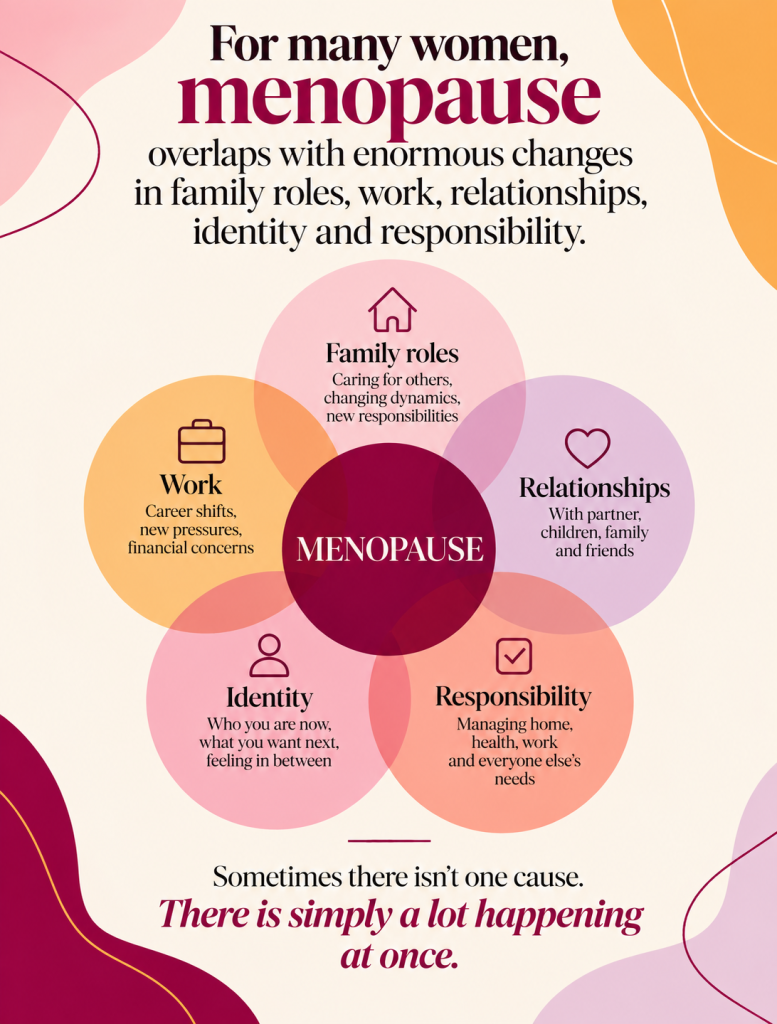
5. Anxiety Can Become More Noticeable When Life Gets Quieter
Sometimes anxiety becomes easier to notice after a demanding period of life has changed.
The children are more independent.
A long caregiving responsibility has changed.
A difficult chapter at work has ended.
A family crisis has settled.
And suddenly there is more room to hear your own thoughts.
That doesn’t mean the anxiety was secretly waiting there all along.
It simply means that when life becomes less noisy, internal distress can become harder to ignore.
6. Sleep Can Keep Anxiety Running
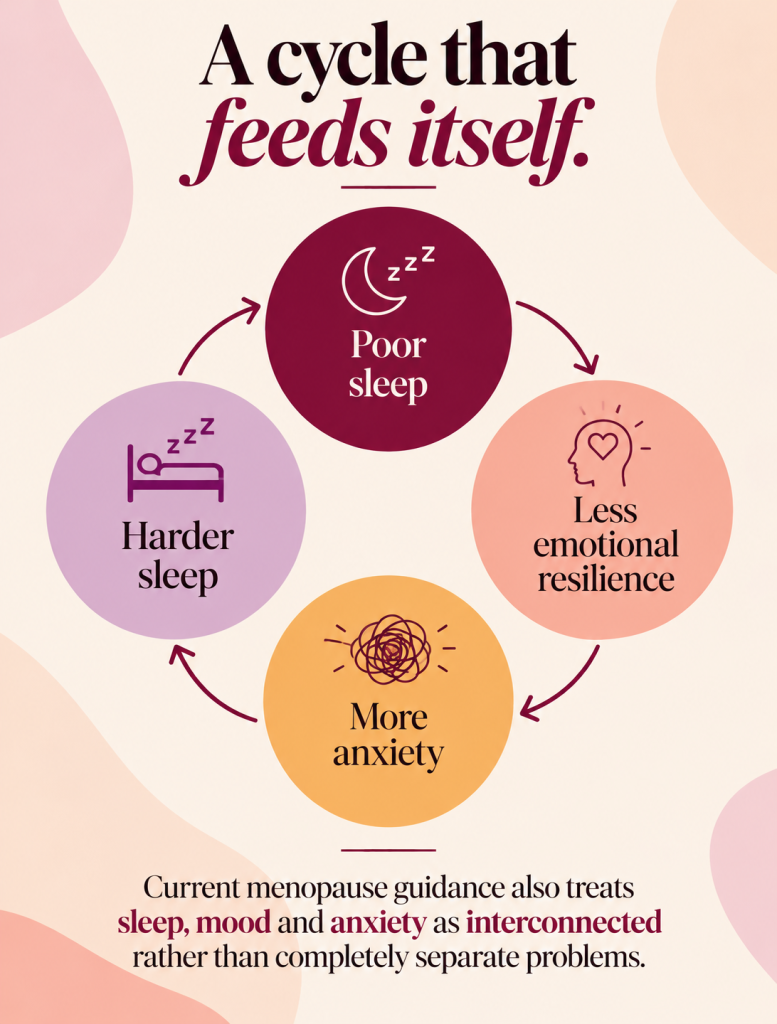
Postmenopause does not automatically mean better sleep.
Night sweats can continue, while other sleep problems may also emerge or become more noticeable.
And when you’re repeatedly tired, your emotional bandwidth can shrink.
You may feel more reactive.
More worried.
Less able to brush off a physical sensation.
Then anxiety makes it harder to settle at night.
7. Not Everything That Feels Like Anxiety Is Anxiety
This is where compassion also means not assuming.
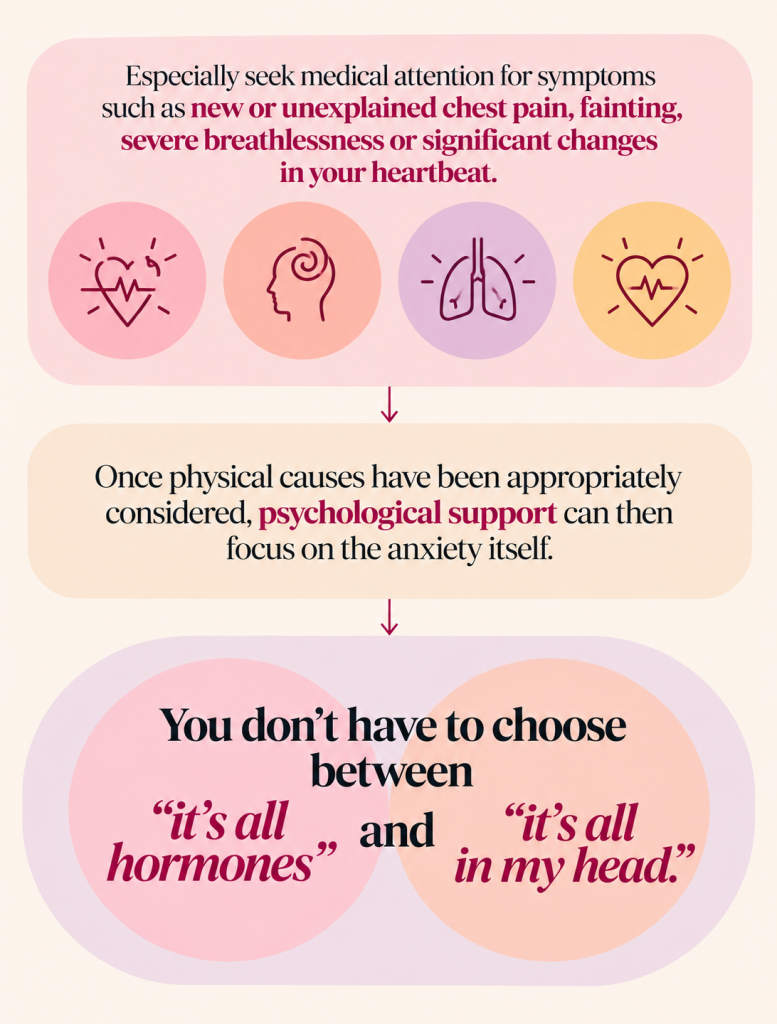
New or unusual symptoms can have medical causes, including thyroid problems, anaemia, heart-rhythm problems, blood-sugar changes, medication effects and sleep disorders.
So if something is new, persistent or concerning, it deserves proper assessment.
Real life is usually more complicated than either.
What Actually Helps?
The goal is not to spend your life trying to prove that you’re safe.
It is to understand what is happening when the anxiety appears — and what happens next.
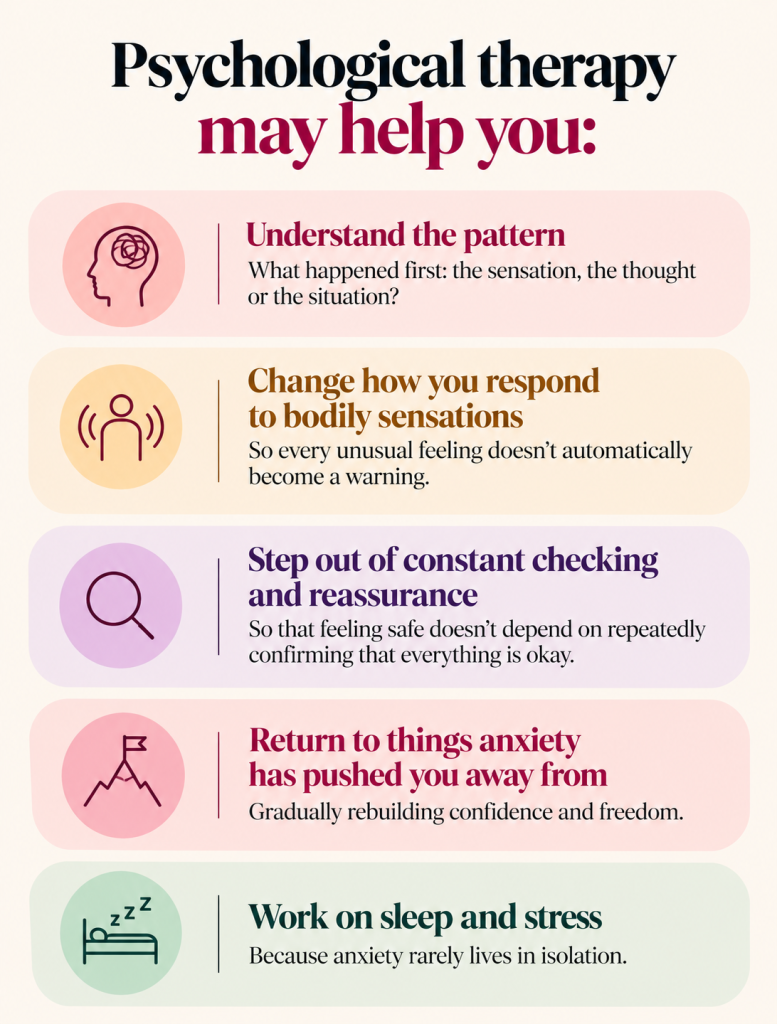
Medical care and psychological care can sit alongside each other. You don’t have to pick one.
Don’t Dismiss New Anxiety; But Don’t Fear It Either
You don’t have to tell yourself: “It’s just menopause.”
And you don’t have to tell yourself: “Something is seriously wrong with me.”
There is another possibility:Something is happening, and I can understand it.
Menopause may be part of the picture. So may sleep, physical symptoms, health worries, stress, life changes and patterns that have developed over time.
The useful question is: What is happening now and what is keeping it going?
That is often a much kinder place to begin.
What I’d Want You to Leave With
Anxiety after menopause does not mean you’ve missed your chance to feel better.
It doesn’t mean you’re weak. It doesn’t mean you are somehow failing at this stage of life. And it doesn’t mean you simply have to endure it.
Sometimes the original trigger changes while the alarm pattern remains.
And an alarm pattern can be understood, worked with and changed.
How Miror Can Help You?
You Don’t Have to Figure It Out Alone!
Menopause can affect much more than your periods. Anxiety, sleep changes, physical symptoms, emotional shifts and everyday stress can all overlap; and sometimes knowing where to begin is the hardest part.
Miror is India’s largest and only 360-degree integrative women’s wellness ecosystem and community, bringing together expert guidance, trusted health information and support across the different stages of a woman’s life.
With 95,000+ women, Miror has helped women access expert insights and support at the tip of a button, whenever they need it.
Whether you’re trying to understand what’s happening to your body, looking for support with menopause anxiety, or simply want to speak to someone who understands, you can connect with Miror doctors, health experts and mental-health professionals through the app.
Talk to a Miror Expert Today
Consult Miror doctors and experts. Get personalised guidance. Find mental-health support.
Download the Miror app today.
DISCLAIMER: This article is for general educational purposes and does not replace individual psychological or medical assessment. New, severe or unexplained physical symptoms should be assessed by a qualified clinician. In India, Tele-MANAS is available 24×7 at 14416.