


Perimenopause anxiety at night can feel completely different.
During the day, you may be busy, functional and relatively calm. Then you wake at 3am and suddenly the worry feels enormous.
Your health. Your children. Your relationship. Work. Money. Tomorrow.
Nothing has changed since bedtime. Yet everything feels more urgent.
 (PubMed)
1. Night Removes the Distractions
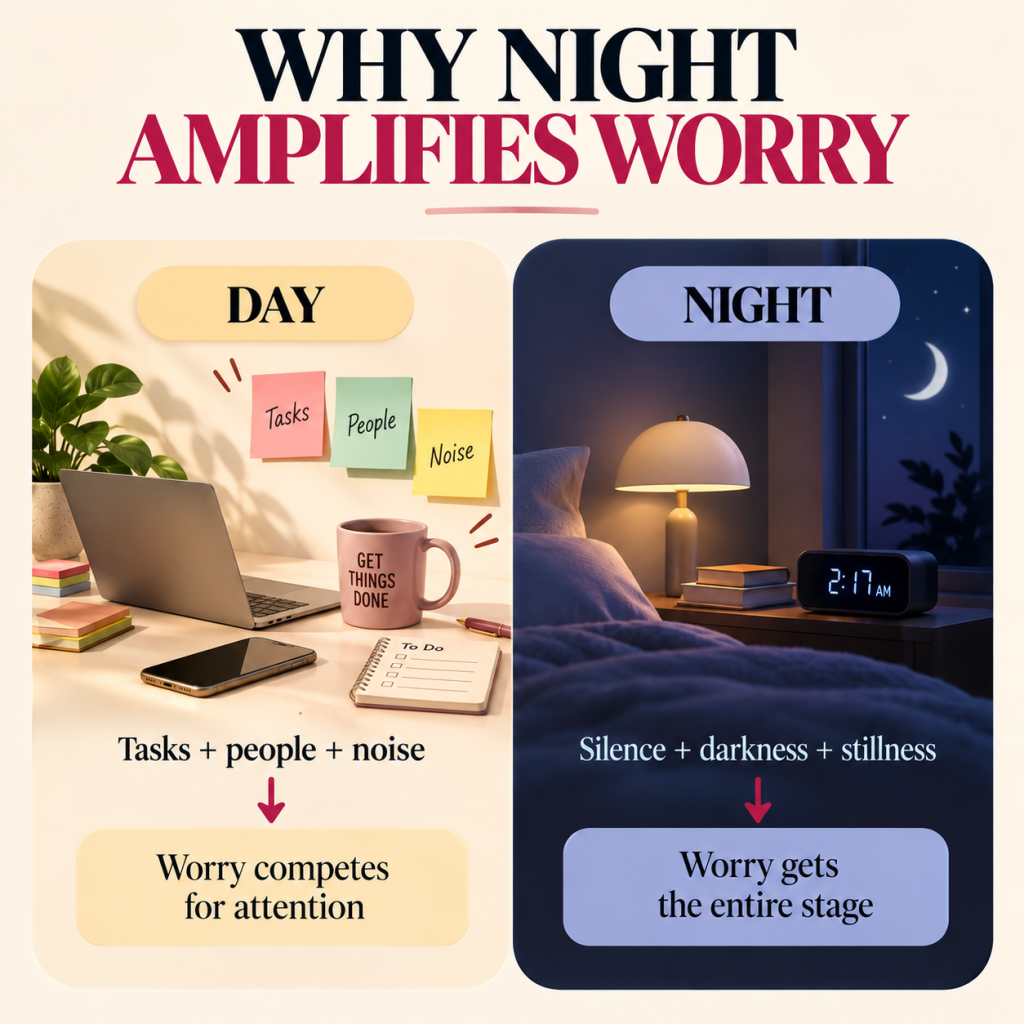
During the day, your attention is constantly occupied.
Messages. Meetings. Cooking. Traffic. Family. Work.
At 3am, all of that disappears. What remains is your internal world.
A worry that might occupy 10% of your attention at lunchtime can suddenly feel like the only thing in the room.
That doesn’t make the thought more important. It simply gives it more attention.
2. Your Body May Wake You Before Your Mind Starts Worrying
Perimenopause can bring hot flushes, night sweats, palpitations and other physical sensations that interrupt sleep. You may wake because your body has changed state first.
Then your mind catches up:
“Why am I awake?”
“Why is my heart beating like this?”
“Is something wrong?”
That sequence can turn a physical interruption into psychological alarm.
Sleep and vasomotor symptoms are closely linked during the menopausal transition, although recent research suggests neither hormones nor hot flushes alone explain all sleep disruption.
(PubMed)
Any new physical symptoms shouldn’t automatically be assumed to be anxiety or menopause related. A complete medical assessment should be done first.
3. A Tired Brain Has Less Emotional Perspective
This is one of the simplest explanations for why 3am thinking can feel so convincing.
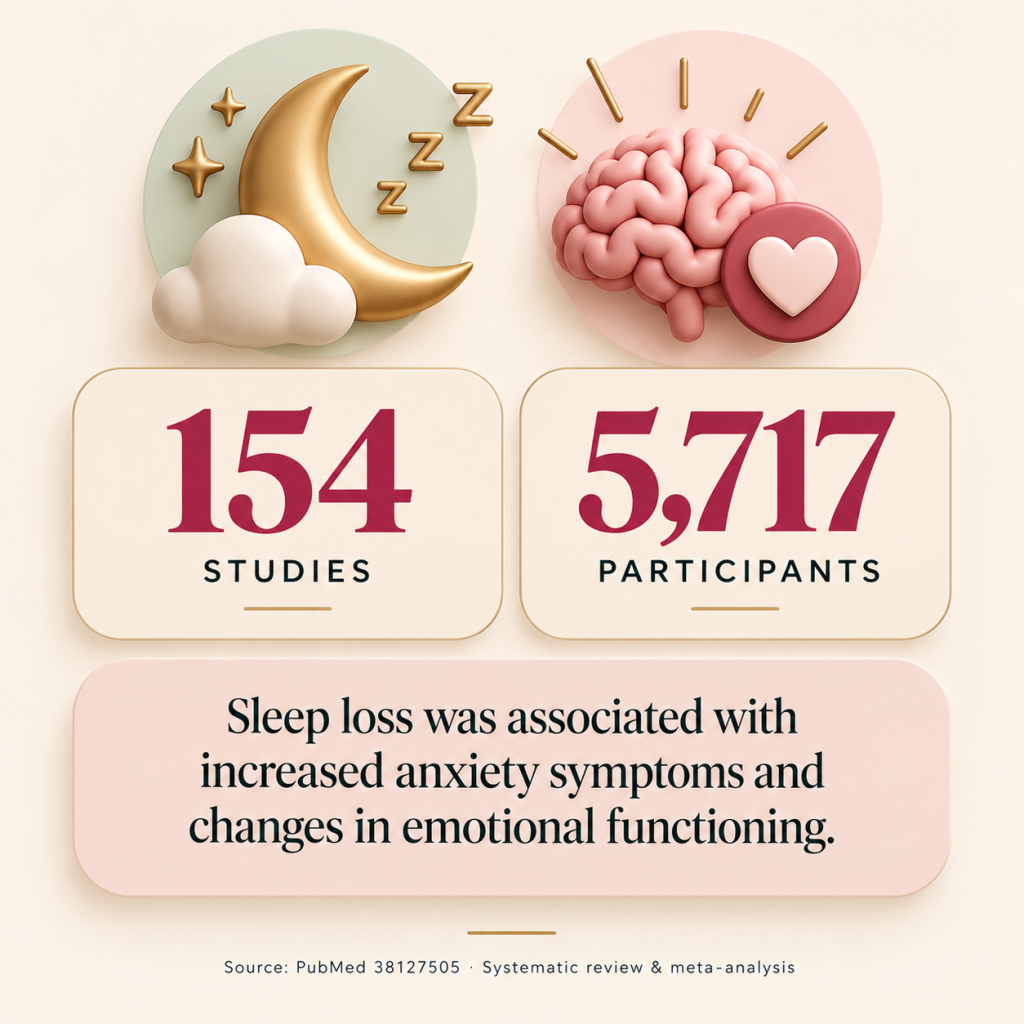
Sleep loss affects emotional processing and regulation. A 2024 meta-analysis covering 154 experimental studies and 5,717 participants found that sleep loss increased anxiety symptoms and negatively affected emotional functioning.
(PubMed)
So at 3am, the problem may not be that you’re suddenly discovering a terrible truth.
Your brain may simply have fewer resources available for perspective, inhibition and emotional regulation.
 (PubMed)
4. “What If I Can’t Sleep?” Becomes the New Worry
At some point, the original worry can become secondary.
Now you’re thinking:
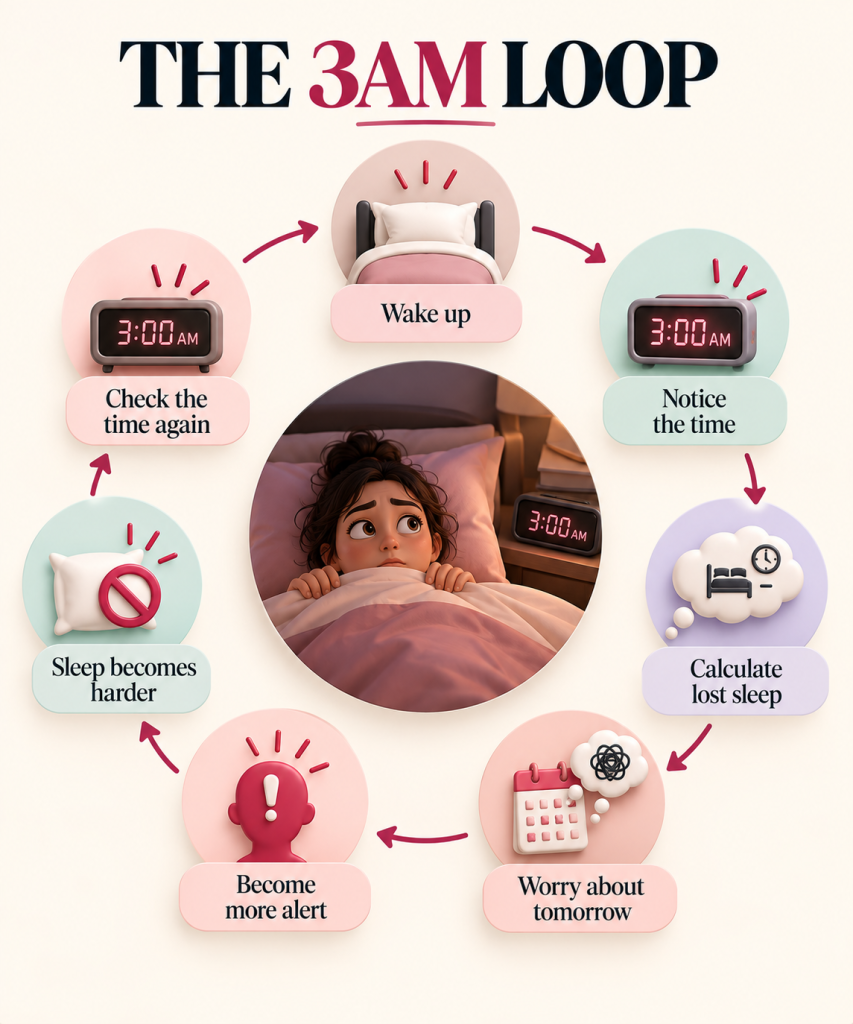
“It’s 3:20.”
“I have to be up at 6.”
“Tomorrow is going to be a disaster.”
And the sleep problem becomes a source of anxiety in itself.
This is sometimes described as sleep-related worry or arousal: the more important you make sleep in that moment, the more closely you monitor whether you’re sleeping.
5. The More You Monitor, the More You Notice
Anxiety changes attention.
You start listening for the next thought, the next heartbeat, the next sign that you’re not sleeping properly.
You check the clock.
You check your phone.
You check how tired you feel.
You check whether you’re still awake.
The problem is that monitoring produces more information — and an anxious brain tends to interpret that information as evidence that something needs fixing.
Attention can become part of the problem.
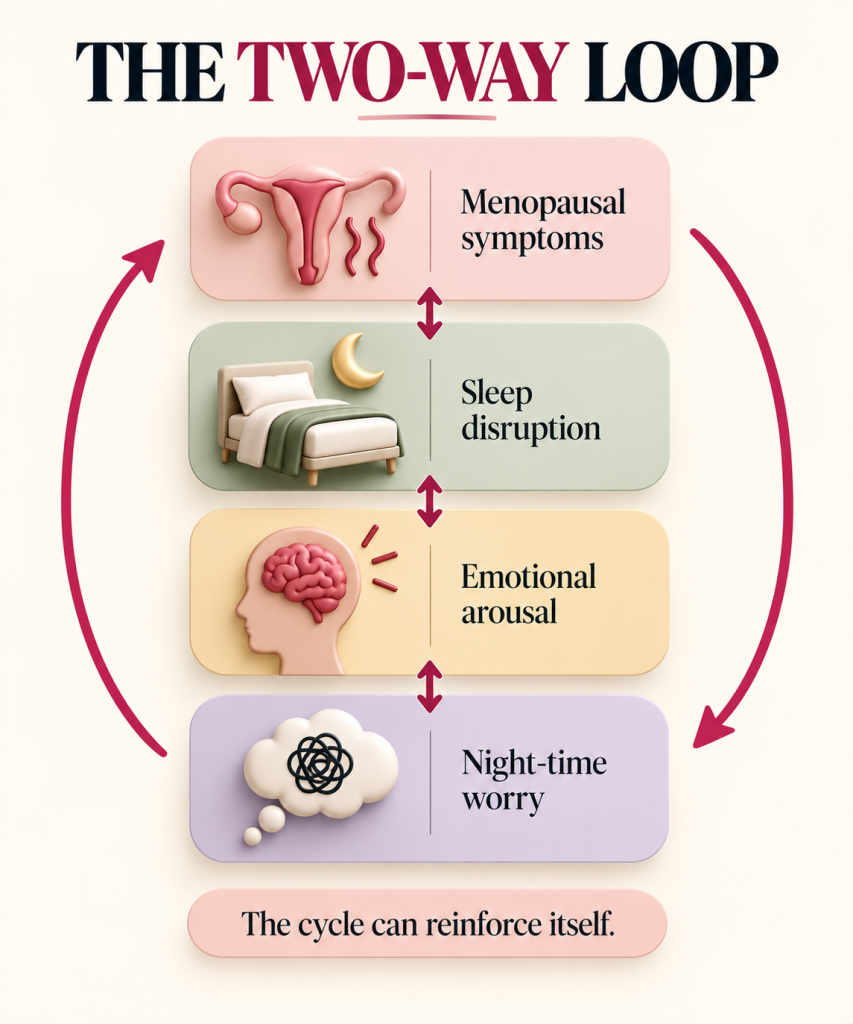
6. Perimenopause Can Create a Feedback Loop Between Sleep and Anxiety
This isn’t simply:
Hormones → anxiety
or:
Anxiety → insomnia
The relationship can run in both directions.
Poor sleep can increase emotional reactivity. Anxiety can make sleep harder. Night sweats can wake you. Worry can keep you awake after the physical symptom has passed.
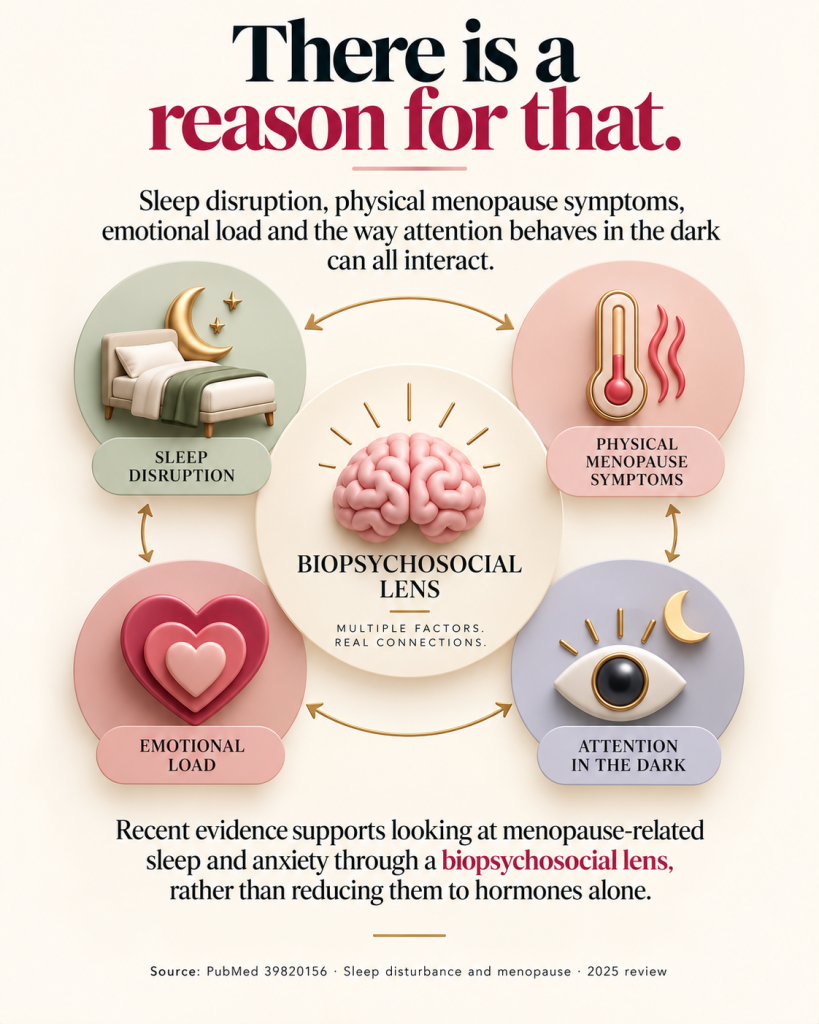
A 2025 review describes menopausal sleep disturbance as a biopsychosocial problem, with reproductive hormones and vasomotor symptoms contributing alongside psychological and environmental factors.
(PubMed)
7. The Content of the Worry Isn’t Always the Real Problem
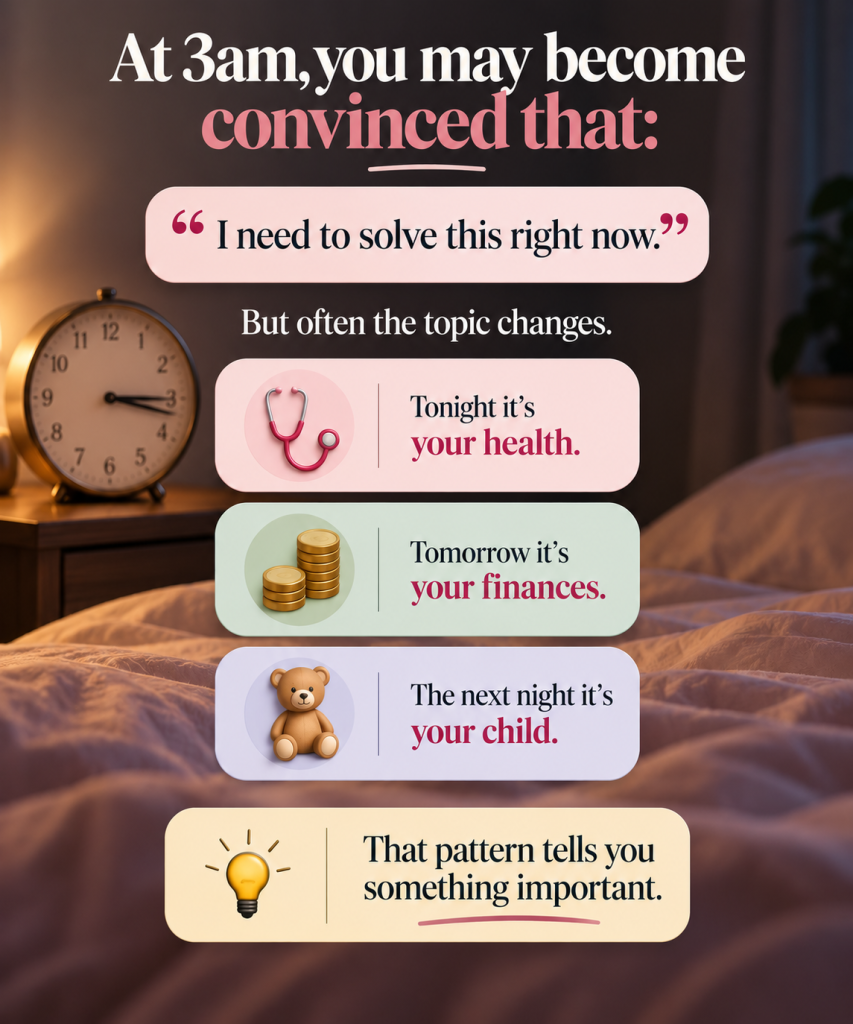
The problem may be less about which thought is true and more about a mind that has entered threat-monitoring mode.
That is why trying to completely solve every 3am thought can keep the cycle alive.
A more useful response is:
“I’m having an anxious thought. I don’t need to solve it tonight.”
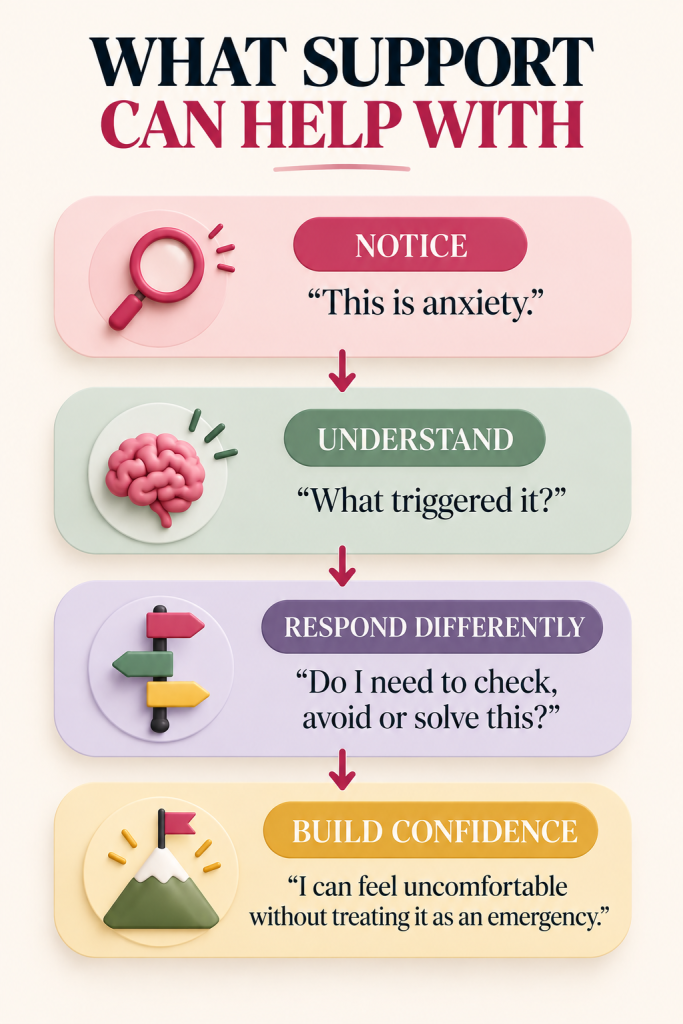
8. Psychological Support Can Change What Happens Next
The aim isn’t to make you stop thinking.
It is to help you understand the pattern between:
Physical Sensation → Interpretation → Attention → Worry → Behaviour
That can mean learning to recognise anxious pattern, reducing unhelpful checking, changing the relationship with uncertainty, and understanding accumulated emotional pressures, learning not to treat every thought as something requiring action.
Recent evidence continues to support psychological approaches as part of menopause care. A 2026 systematic review found improvements in psychological and sleep-related symptoms across several types of psychological intervention, while emphasising that results vary and treatment should be individualised.
(PubMed)
Why This Matters More Than You Think
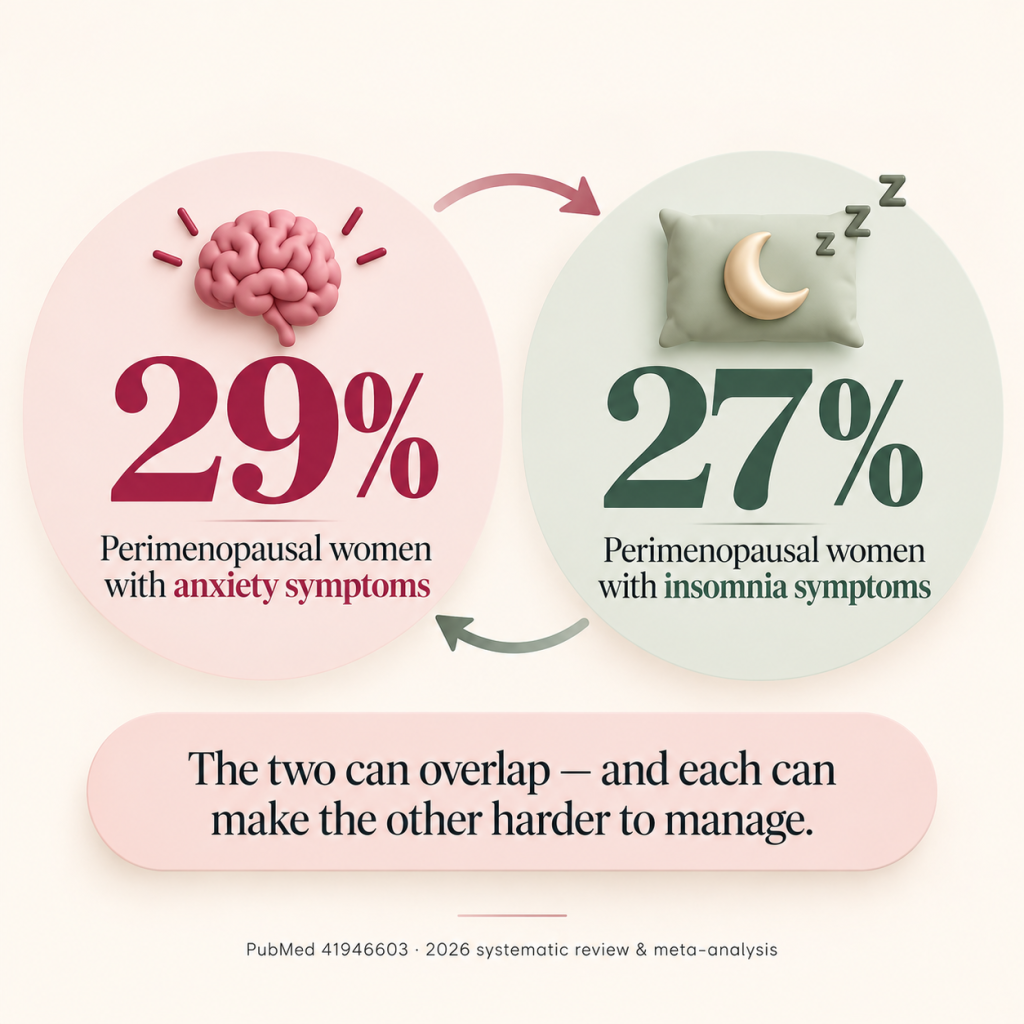
A 2026 meta-analysis of 102 studies involving 1,141,955 women found anxiety symptoms in approximately 29% of perimenopausal women and insomnia symptoms in approximately 27%. These are pooled point-prevalence estimates, not proof that menopause itself causes anxiety.
 (PubMed)
What to Do at 3 AM
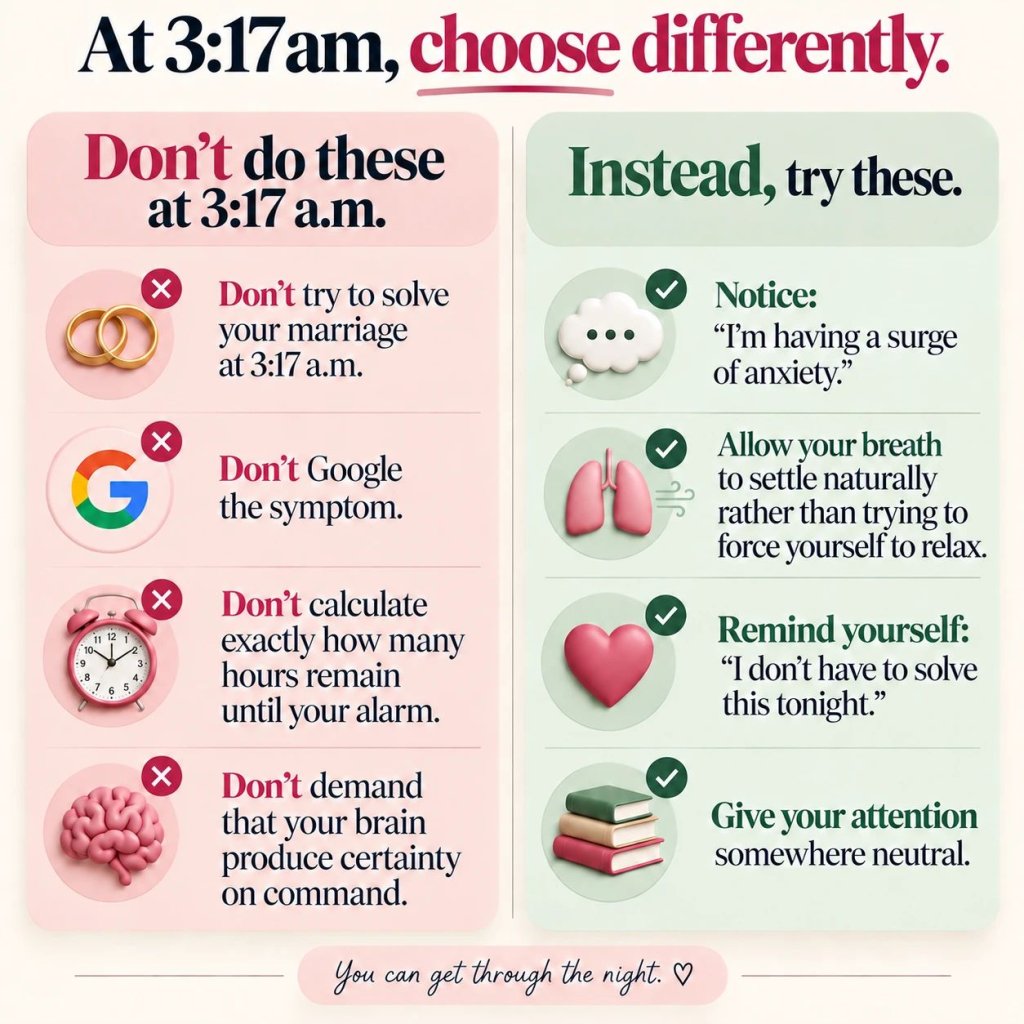
And if you remain awake and increasingly frustrated, getting out of bed briefly and returning when sleepy can be more useful than lying there fighting sleep.
When Night-Time Anxiety Needs More Attention
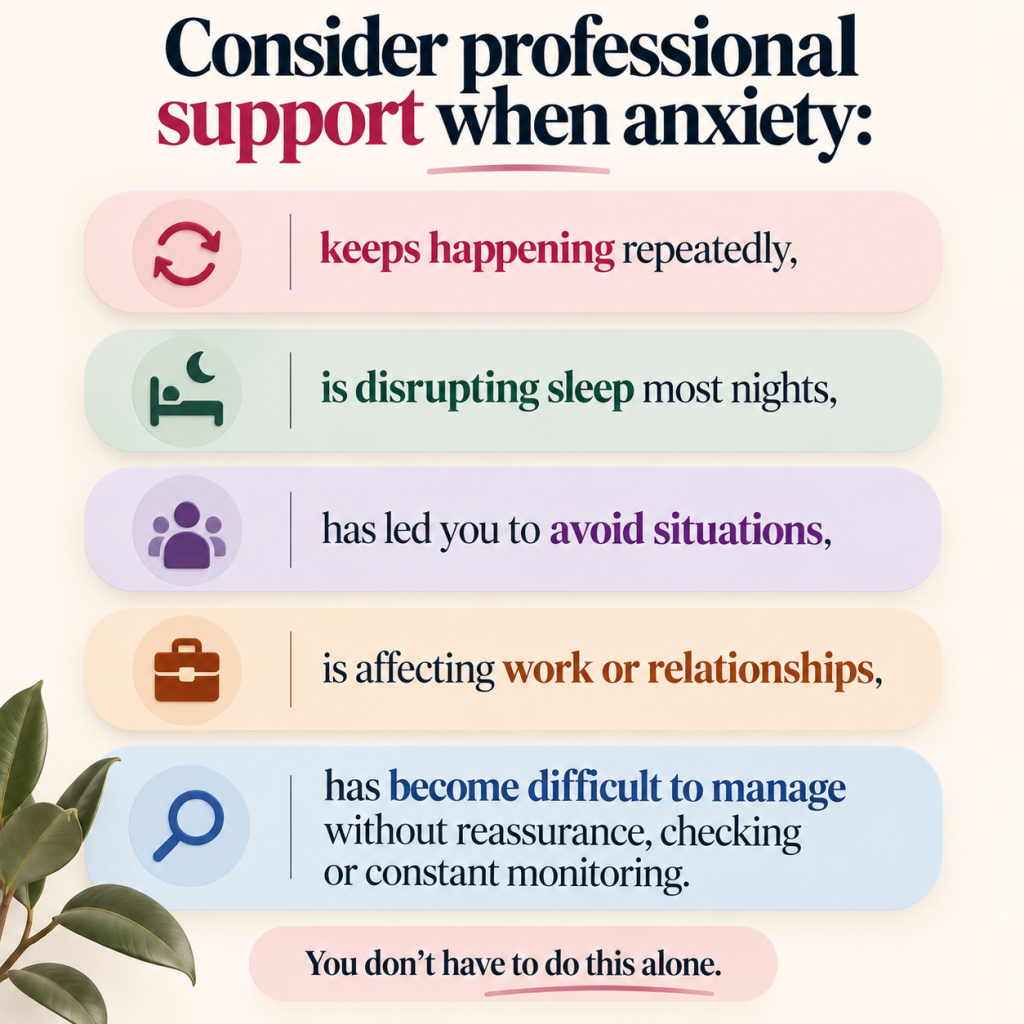
Also speak to a doctor when night waking is accompanied by significant night sweats, palpitations, breathing problems, persistent low mood or other new physical symptoms. Sleep disturbance in peri/menopause can have multiple causes, including sleep-related breathing disorders and movement disorders.
(PubMed)
If anxiety is accompanied by hopelessness or thoughts of self-harm, seek urgent professional support.
Where Psychological Support Fits In
Perimenopause anxiety can involve the body, sleep, stress, relationships, life circumstances and learned patterns of responding to uncertainty. Psychological support can help untangle those layers and identify the patterns that are keeping the anxiety active.
(Mirorpedia)
Medical assessment can address physical or hormonal contributors when appropriate.
The two approaches don’t cancel each other out. 3 AM anxiety can feel powerful. That doesn’t mean it gets to make your decisions.
Talk to Miror’s expert panel of doctors and mental health professionals today.
DISCLAIMER: This article is for general educational purposes and does not replace individual psychological or medical assessment. New or persistent physical symptoms should be assessed by a qualified clinician. If you are in immediate distress or experiencing thoughts of self-harm, seek urgent professional support.