


Perimenopause mood swings can leave you wondering whether you’re anxious,
depressed,
unusually irritable, or,
simply no longer feel like yourself.
One day you snap at someone over something tiny. The next, you feel worried about everything. Another day, you feel strangely flat.
That does not necessarily mean you are failing to cope.
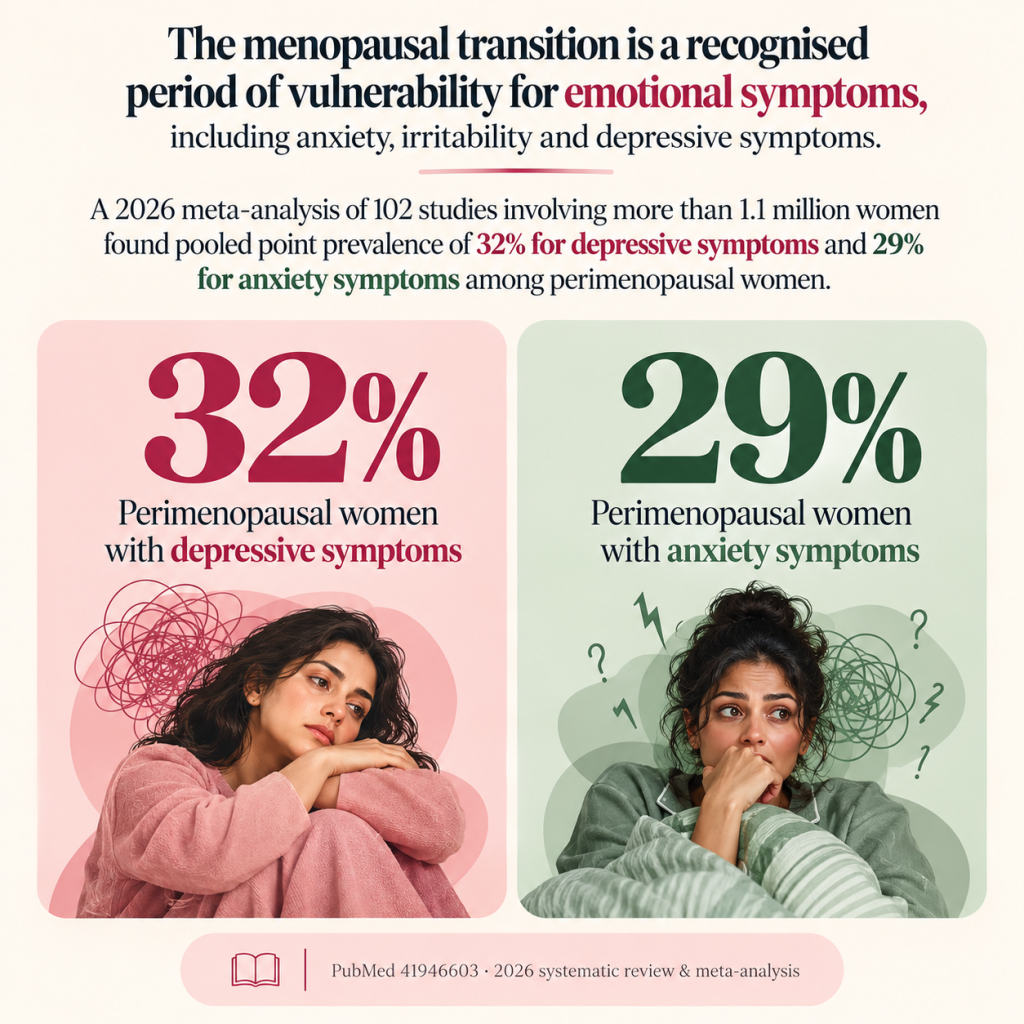 (PubMed)
The harder part is that these experiences can look very similar from the outside.
So what actually helps you tell them apart?
First, Look at the Pattern, Not Just the Intensity
One of the most useful questions is not “How bad is it?” but:
What happens, when does it happen, and what does your mind focus on?
There is no single symptom that can diagnose anxiety, depression or a mood disorder during perimenopause. But the pattern, duration, triggers and impact on daily life can provide useful clues.
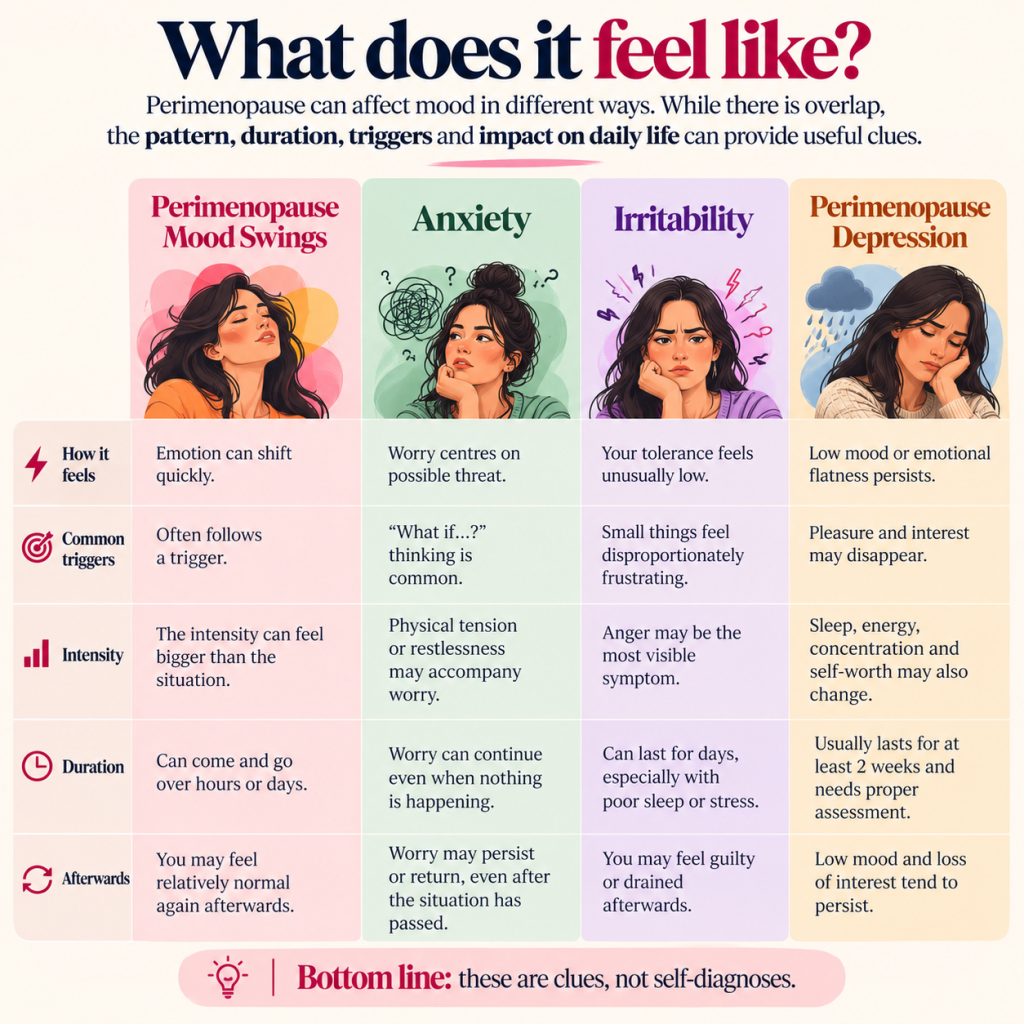
1. Perimenopause Mood Swings Can Feel Like an Emotional Whiplash
With a mood swing, the emotion can arrive quickly and feel much larger than the event that triggered it.
A delayed message.
A child’s messy room.
A colleague’s comment.
A partner asking one more question when you’ve already had enough.
You may suddenly feel furious, overwhelmed or tearful and then wonder an hour later: “Why did I react like that?”
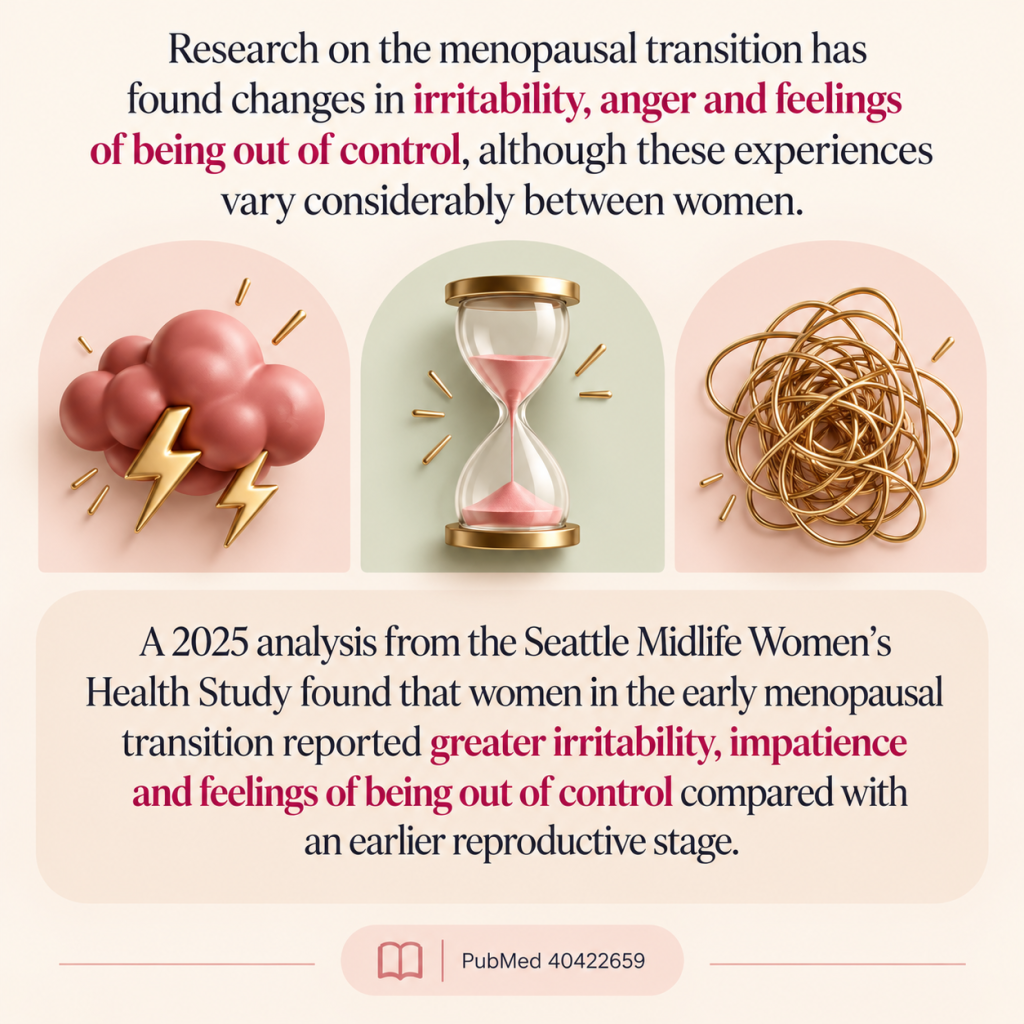
(PubMed)
That variability matters.
A mood swing is not the same thing as being angry all the time.
2. Anxiety Keeps Looking Ahead
Anxiety is often organised around threat.
The thoughts keep moving forward:
What if the test is abnormal?
What if something happens to my child?
What if I can’t cope at work?
What if this sensation means something is seriously wrong?
Your body may join in — racing heart, muscle tension, restlessness, stomach discomfort, breathlessness or difficulty settling. And during perimenopause, unfamiliar physical symptoms can give anxiety more material to focus on.
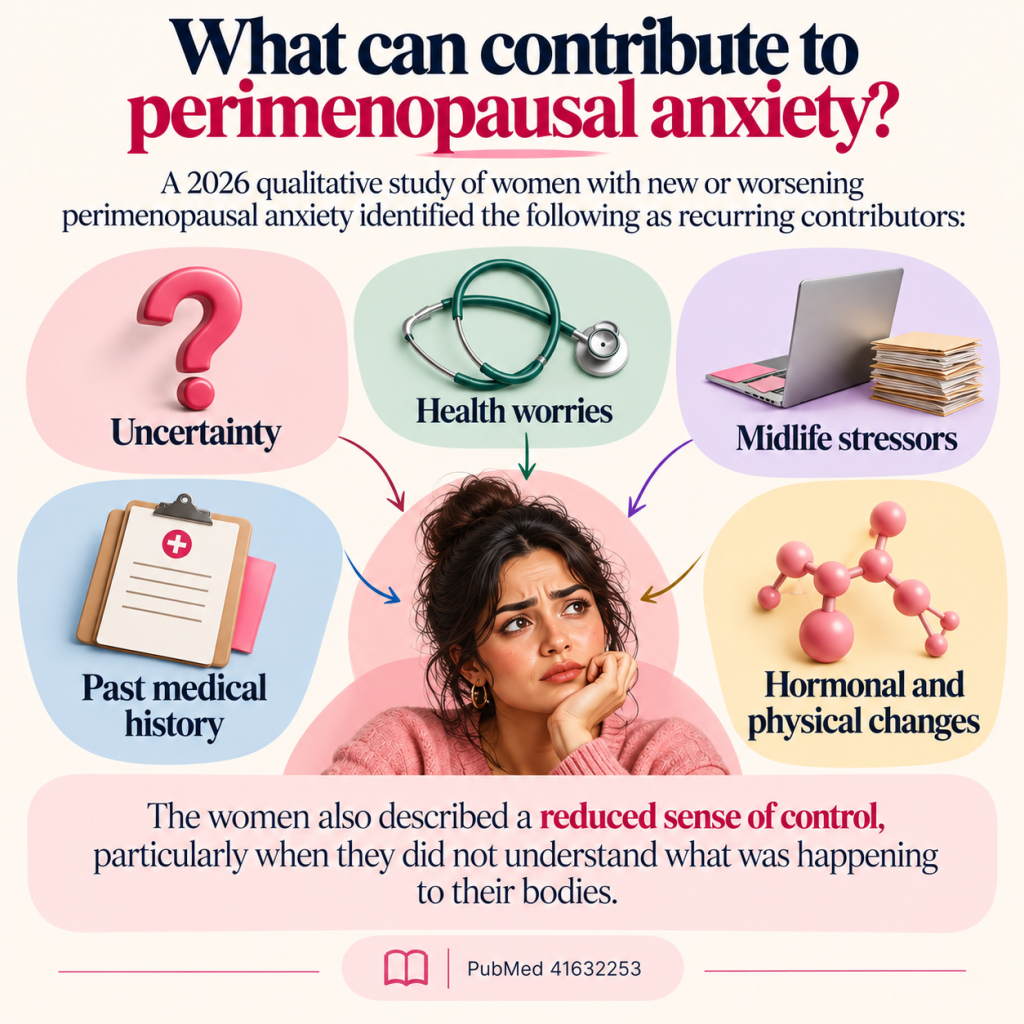 (PubMed)
That is one reason “hormonal anxiety” can feel so confusing. It is a useful descriptive phrase, but it is not a diagnosis.
3. Perimenopause Irritability Isn’t Always About Anger
This is the symptom many women find hardest to explain.
You may not actually be angry about anything.
You may simply have less emotional bandwidth.
Noise feels harder.
Interruptions feel harder.
Small inconveniences feel enormous.
Sleep deprivation, physical symptoms and ongoing stress can all lower your threshold further.
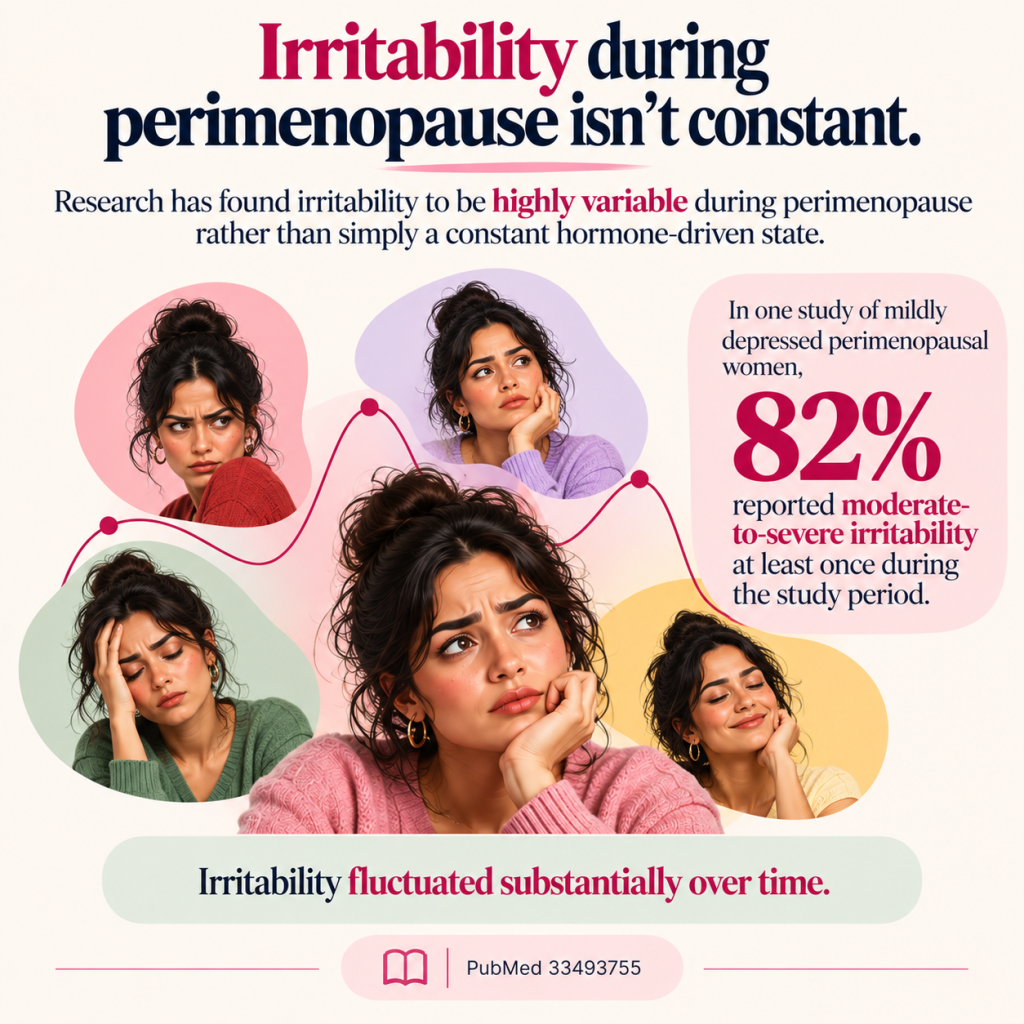 (PubMed)
So instead of asking only: “Why am I so angry?”
It can be more useful to ask: “What is leaving me with so little room to respond differently?”
4. Perimenopause Depression Feels Different Again
Depression is more than having a bad week.
One of the most useful things to notice is loss of pleasure.
Do you still enjoy the people, activities, food, music or routines that normally make you feel like yourself? Or has everything started to feel flat?
Perimenopause depression may also involve anxiety, irritability, low energy, sleep disruption, poor concentration, guilt or feelings of hopelessness. The symptoms can be mixed rather than looking like stereotypical sadness.
(Mirorpedia)
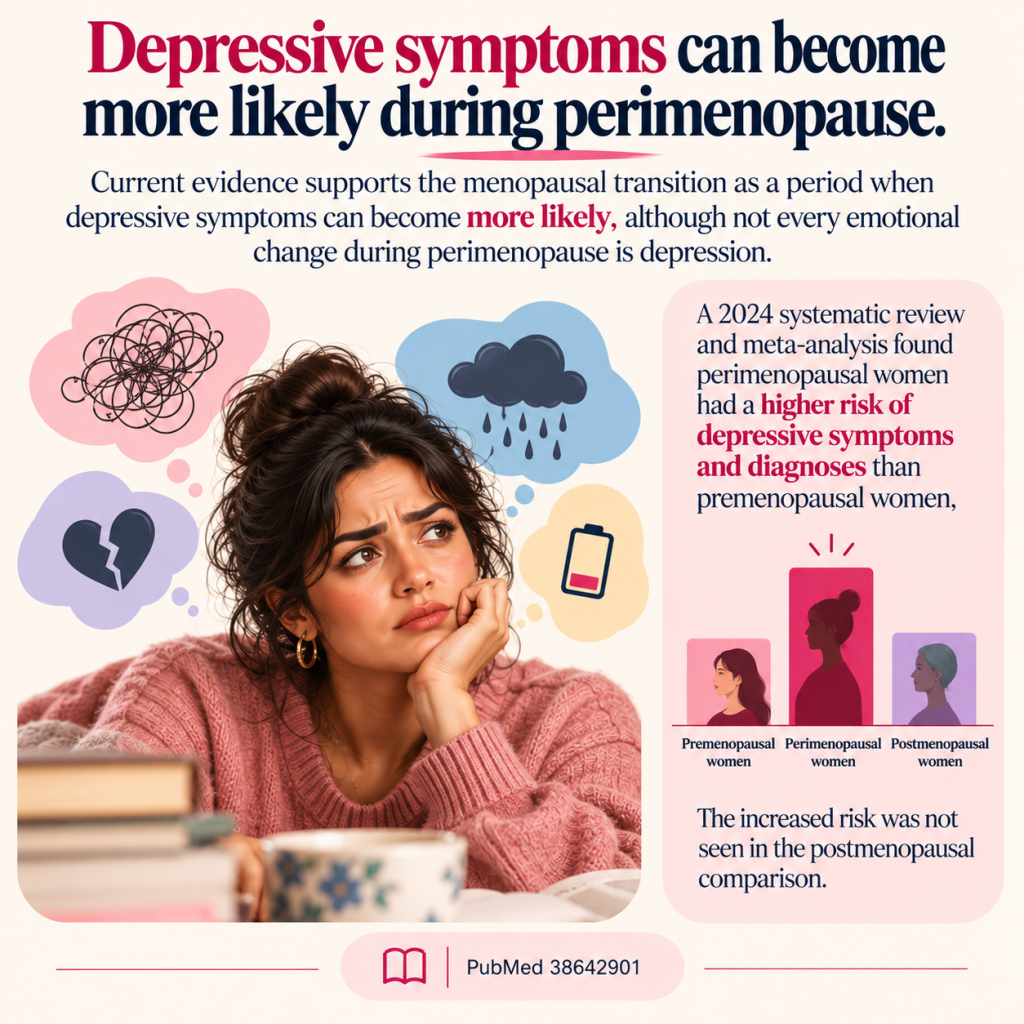 (PubMed)
These Experiences Can Exist Together
This is where neat labels stop being very useful.
You can be anxious and irritable.
You can have mood swings because you’re exhausted from weeks of broken sleep.
You can feel depressed while also worrying constantly.
Anxiety can interfere with sleep. Poor sleep can lower your frustration threshold. Irritability can strain relationships. Relationship stress can then feed anxiety or low mood.
It is a system, not a multiple-choice question.
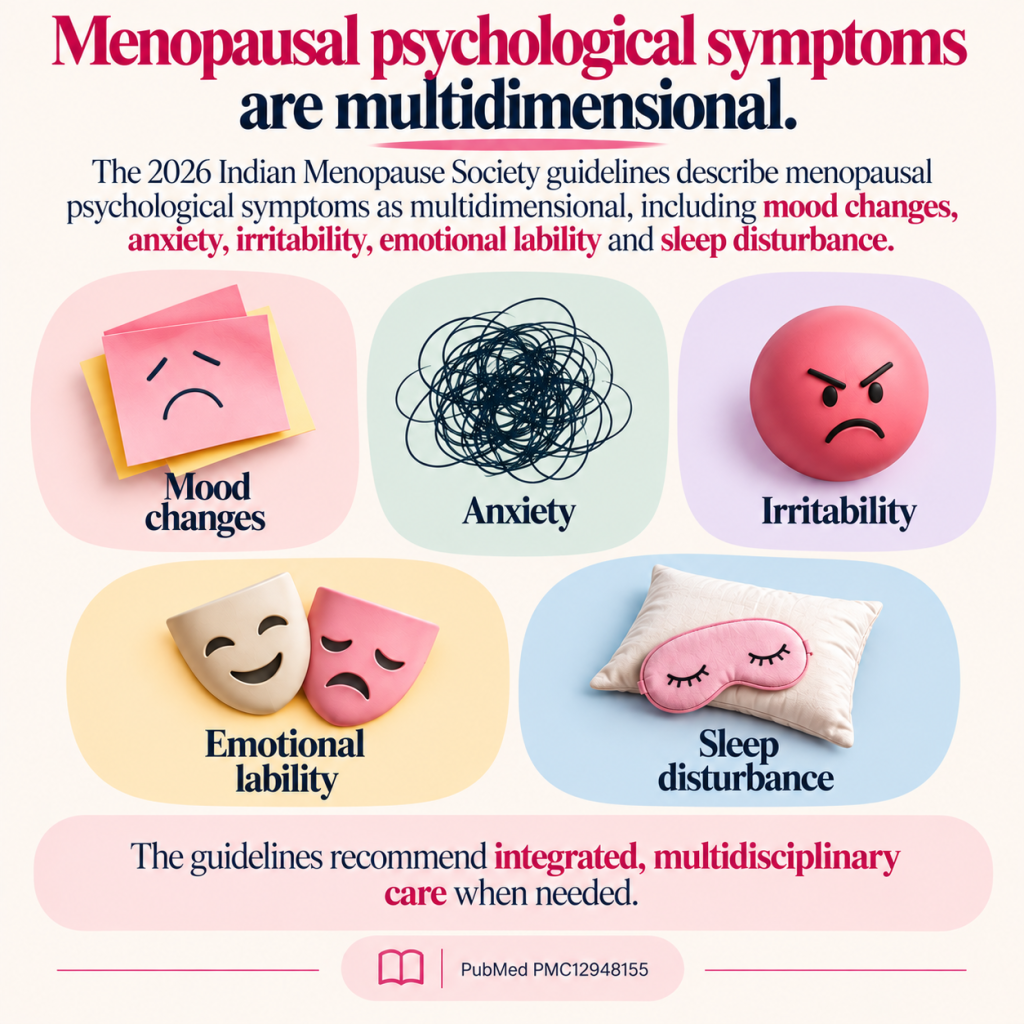 (PubMed)
WHY THIS CAN BE HARD TO NAME IN INDIA
There is another layer worth acknowledging.
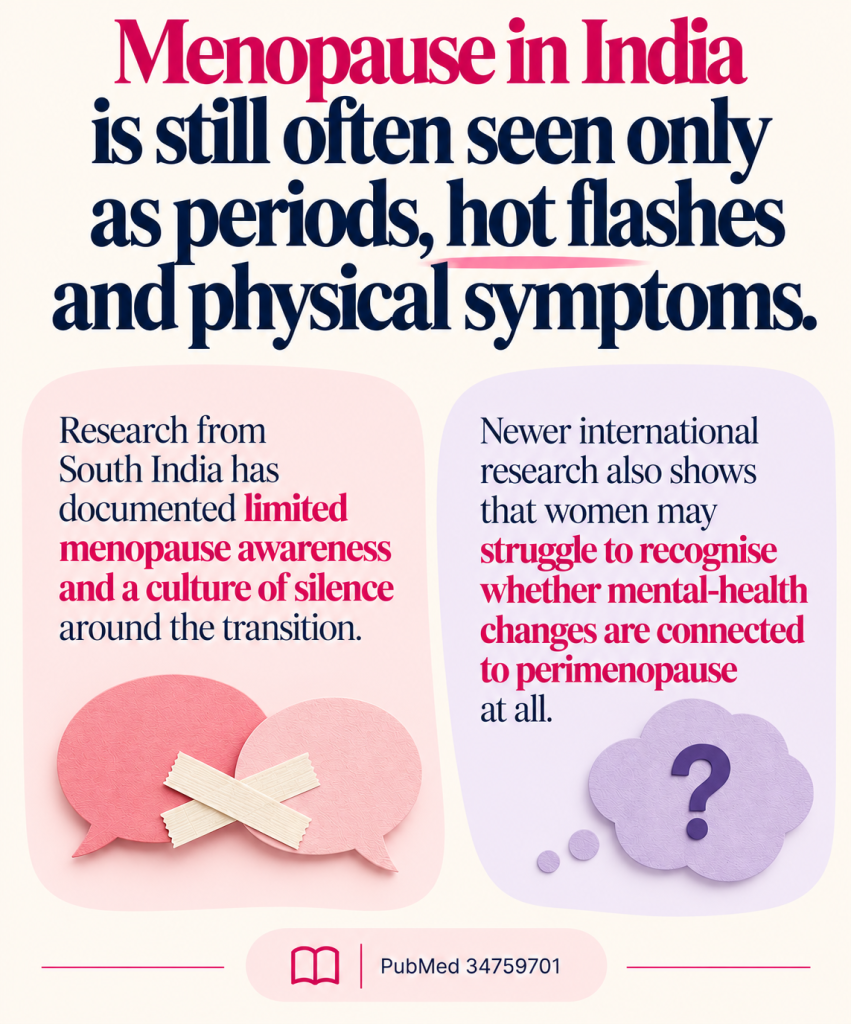 (PubMed)
So a woman may say:
“I’ve become short-tempered.”
When what she actually needs help with is:
“I’m exhausted, worried and struggling to regulate everything I’m carrying.”
The label isn’t about excusing behaviour. It is about understanding what is happening well enough to respond to it.
Why the Difference Matters?
The right question is not:
“Which label do I have?”
It is:
“What pattern is happening, and what kind of support does that pattern need?”
For anxiety, psychological therapy may focus on persistent worry, body-focused fear, avoidance and the habits that keep anxiety going.
For mood swings, the focus may be on recognising emotional surges, responding before they become actions, and understanding what makes your threshold narrower.
For irritability, it can be important to look underneath the anger: sleep, overload, anxiety, relationship strain, physical symptoms or prolonged stress.
And when symptoms suggest depression, a more formal mental-health assessment may be needed, sometimes alongside medical care.
 (PubMed)
Track It Before You Try to Name It
This is one of the most useful things you can do for yourself.
For 3–4 weeks, briefly record:
Mood: morning / evening
Main emotion: anxious, irritable, low, overwhelmed, calm
Trigger: what happened just before the shift?
Duration: minutes, hours or most of the day?
Sleep: how much and how well?
Cycle: where you are in your menstrual cycle, if periods are still occurring
Impact: did it affect work, relationships or usual activities?
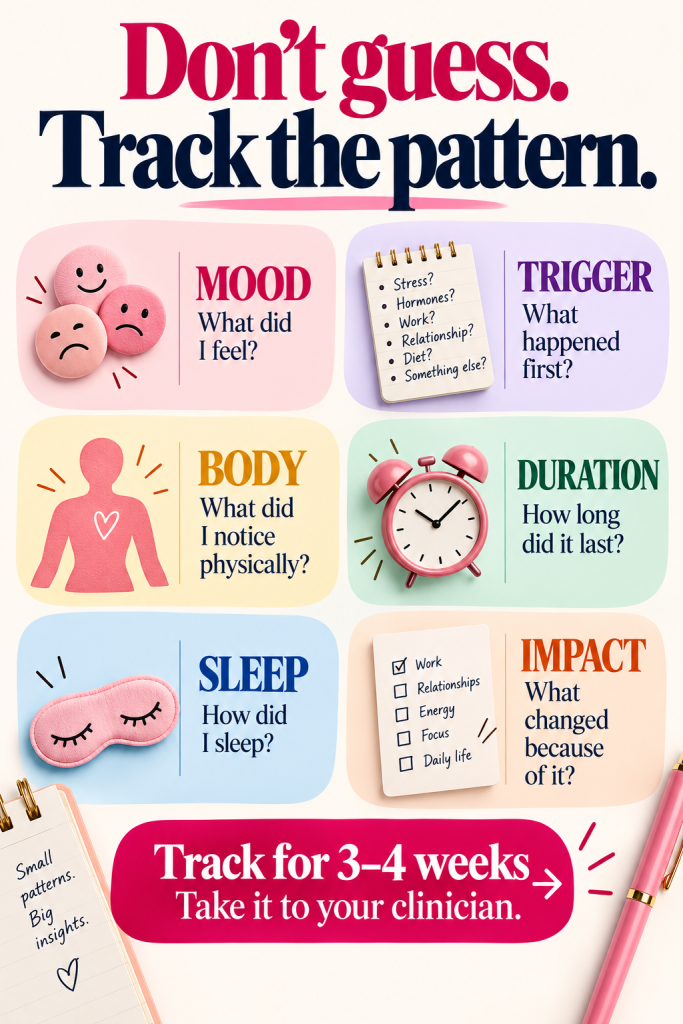
A symptom diary can turn “I don’t feel like myself” into information that a clinician can actually work with.
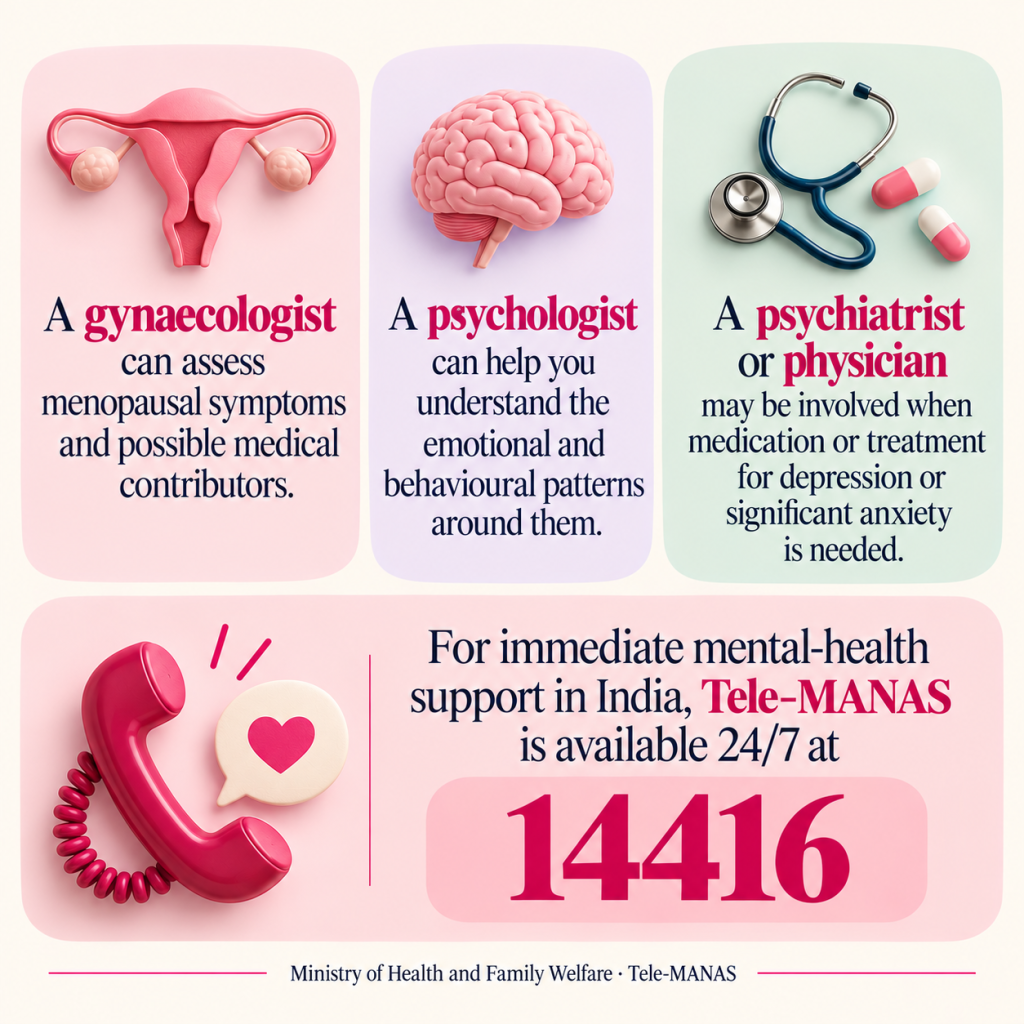
When Should You Seek Help?
Please seek professional support when emotional changes are persistent, are interfering with work or relationships, are making you avoid normal activities, or feel increasingly difficult to manage.
And don’t wait for a perfect label before asking for help.
What I’d Want You to Leave With
You don’t need to decide whether you’re “an anxious person,” “an angry person” or “a depressed person.”
Perimenopause can change how emotions feel, how quickly they arrive and how strongly your body responds to them.
The useful work is learning to recognise the pattern.
Because once you can name what is happening, you can start choosing what happens next.
Medical Disclaimer
This article is for educational purposes only. It does not provide a diagnosis, treatment plan or replacement for psychological, psychiatric or medical care. If emotional symptoms are severe, persistent, affecting daily functioning, or accompanied by hopelessness or thoughts of self-harm, please seek professional help promptly.